
For a first food trip to Hai Phong, start with banh da cua for a full meal, banh mi cay for a small savory snack, and dua dam for dessert. Add nem cua be or an afternoon market stop if you have more time. These give you a useful introduction without spending the whole day moving between restaurants.
Build your route around a few dishes and one neighborhood at a time. Some long-established stalls now operate from indoor shops, so use the current business address rather than an old pavement location. Check opening arrangements before making a special journey; a market’s general hours do not tell you when every food stall is serving.
Savory dishes to try
Banh da cua, crab noodle soup
Hai Phong’s characteristic bowl uses broad, reddish-brown rice noodles in a crab-based broth. Greens and toppings vary: you may see pork wrapped in la lot leaves, fish cakes, shrimp, or other seafood. The name does not mean the bowl contains only crab.
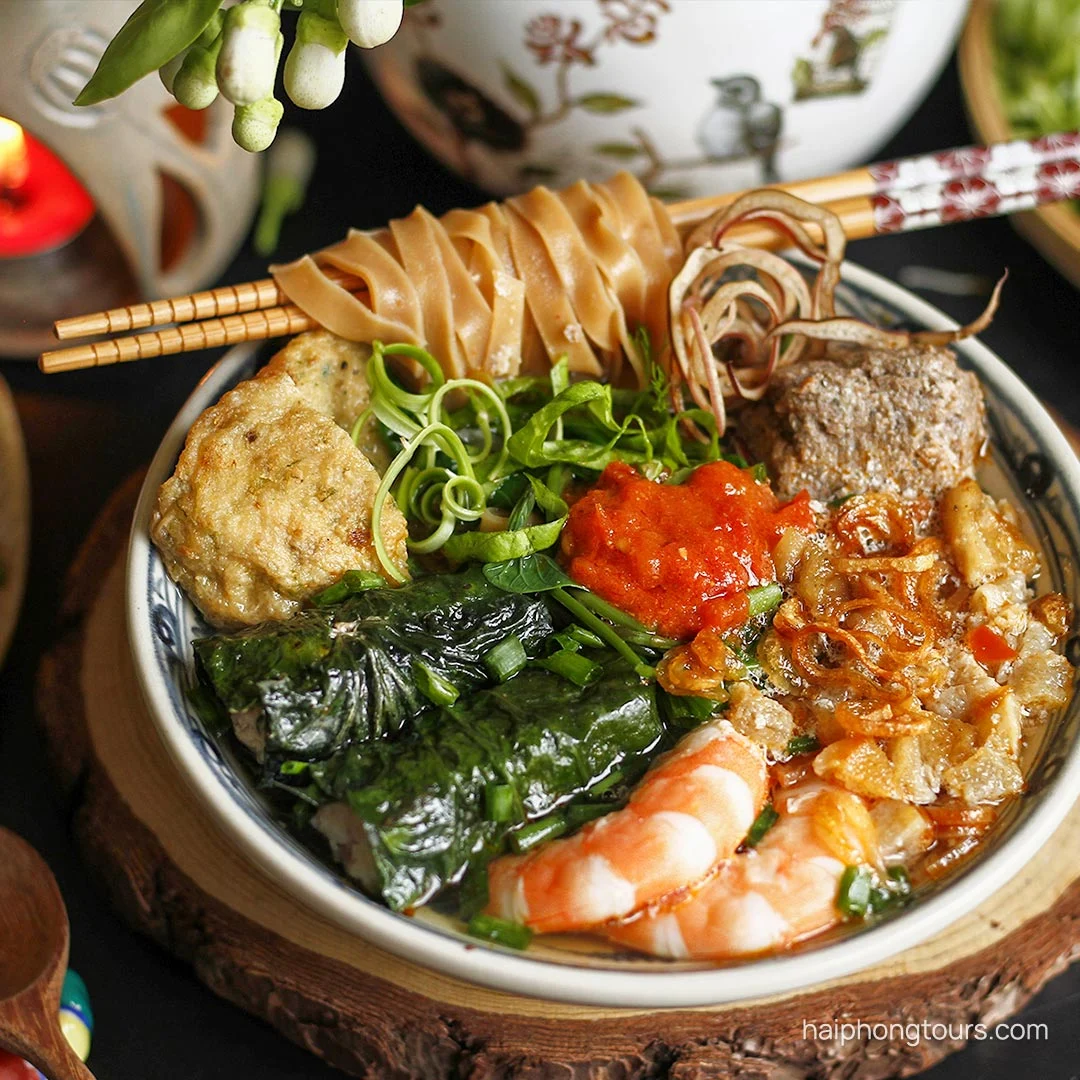
Choose it for breakfast or lunch. Ask what comes in the standard bowl before adding extra seafood; a simple bowl and one loaded with premium toppings are different orders.
Bun ca cay, spicy fish noodle soup
Bun ca cay uses rice vermicelli with fish, often including crisp fried pieces, in a broth with sour and spicy notes. Fish cakes, vegetables, and other toppings depend on the shop. It is a useful alternative when you want a fish-based meal rather than crab noodles.
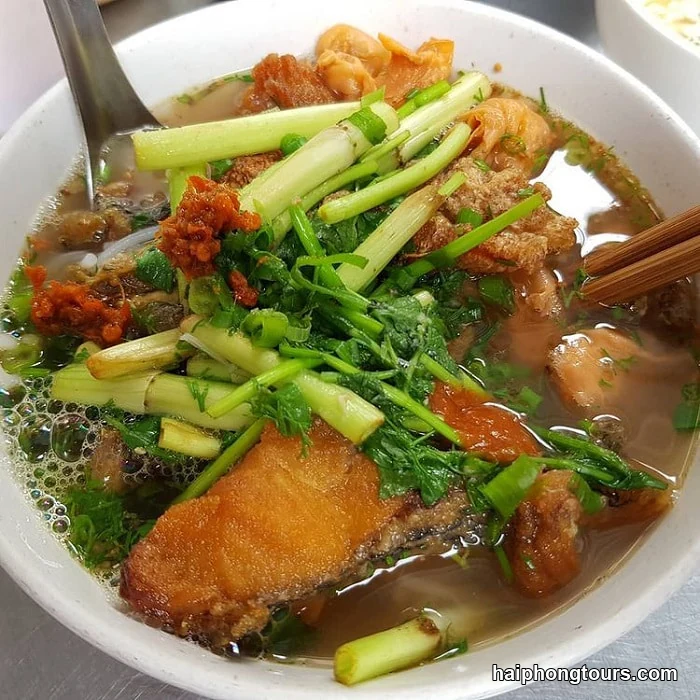
Ask for less chili before the bowl is assembled. If you are sensitive to heat, ask whether the broth itself is already spicy, rather than only declining the chili sauce on the table.
Bun tom, shrimp noodle soup
Bun tom uses white rice noodles with shrimp, greens and a savory broth that may also be made with pork bones. Some shops add tomato, seafood or other toppings, so the bowl is not standardized even when the menu uses the same name.
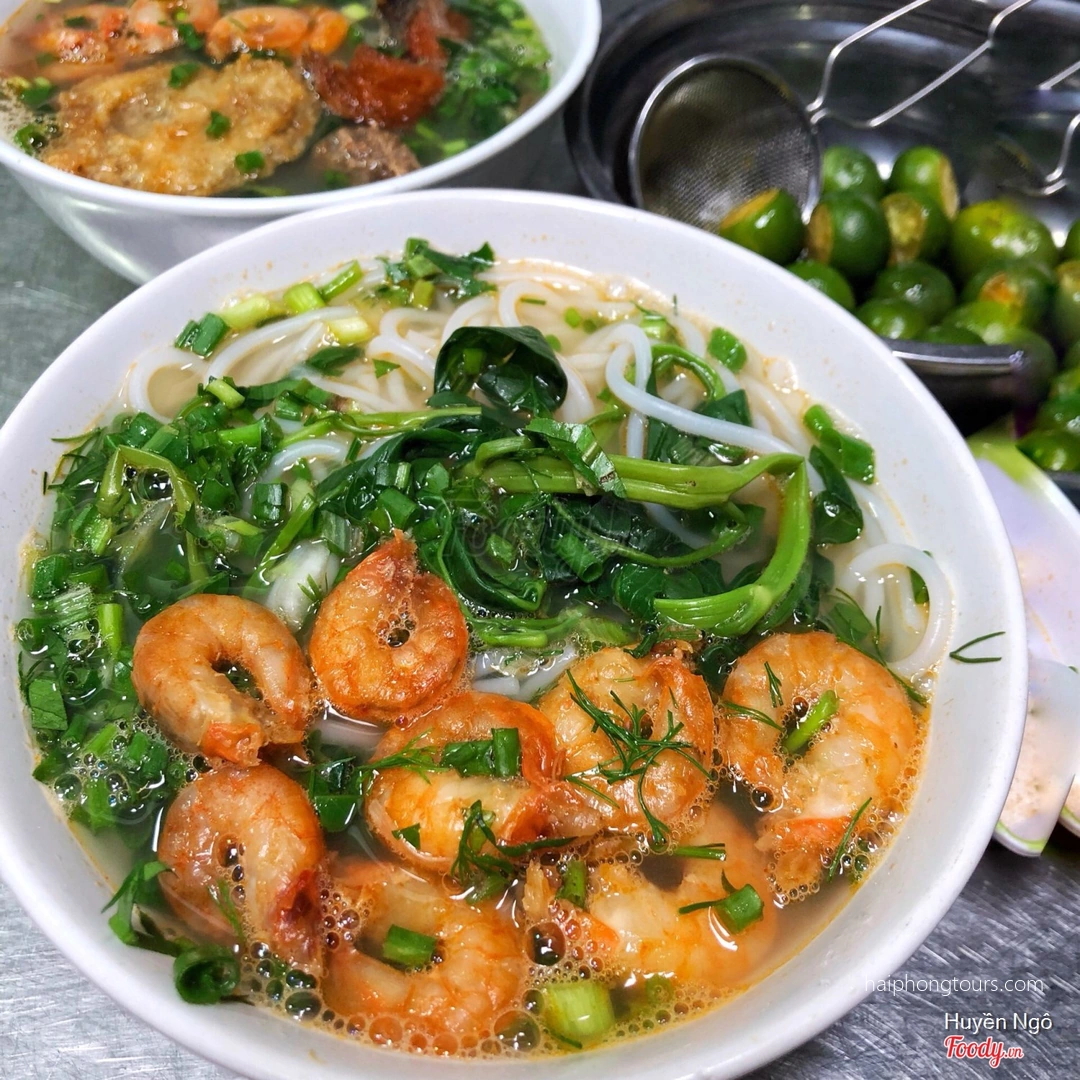
Choose it when you prefer white noodles and shrimp to the broad red noodles in banh da cua. If the shop also sells mixed seafood noodles, specify the shrimp bowl and ask which toppings belong to the standard serving.
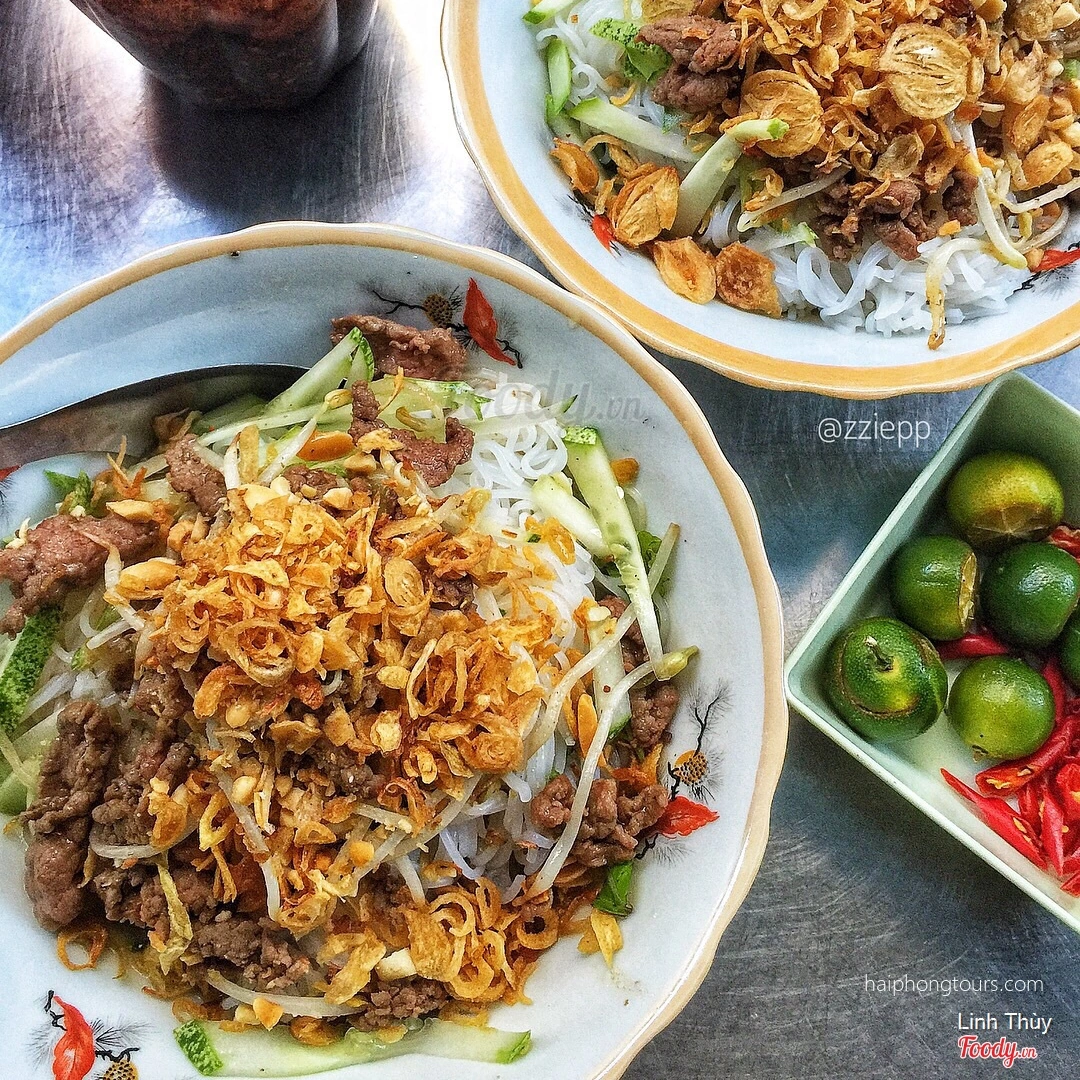
Bun bo giam, mixed beef noodles with vinegar dressing
This is a mixed noodle meal with cooked beef, vegetables and a sweet-sour vinegar dressing. Choose it when you want dressed noodles rather than hot soup, and request the dressing separately if you prefer to control the sourness. The Hai Phong bun bo giam guide explains regular and large bowls and how to find Co Thuy and Ba Phong around Cat Dai.
Nem cua be, square crab spring rolls
These fried rolls are commonly folded into a square parcel, with a filling that can combine crab, pork, shrimp, mushrooms, and glass noodles. They are often served with rice vermicelli, herbs, and dipping sauce.
A roll can be substantial, so share one as part of a tasting meal. Check whether you are ordering a roll on its own or a complete noodle-and-roll set.
For help choosing a roll-only portion or a full noodle set, see the nem cua be ordering guide, including filling details and the Co Dao dining area.
Cha chia Ha Lung, pork and squid on sugarcane
Chả chìa Hạ Lũng combines seasoned pork and seafood around sugarcane, then is steamed and often fried. Confirm whether a seller offers a hot portion or a chilled or frozen pack. The Bác Hoạt producer at 130 Chợ Lũng has squid and shrimp versions; check the ingredients and arrange suitable cold storage before buying takeaway.
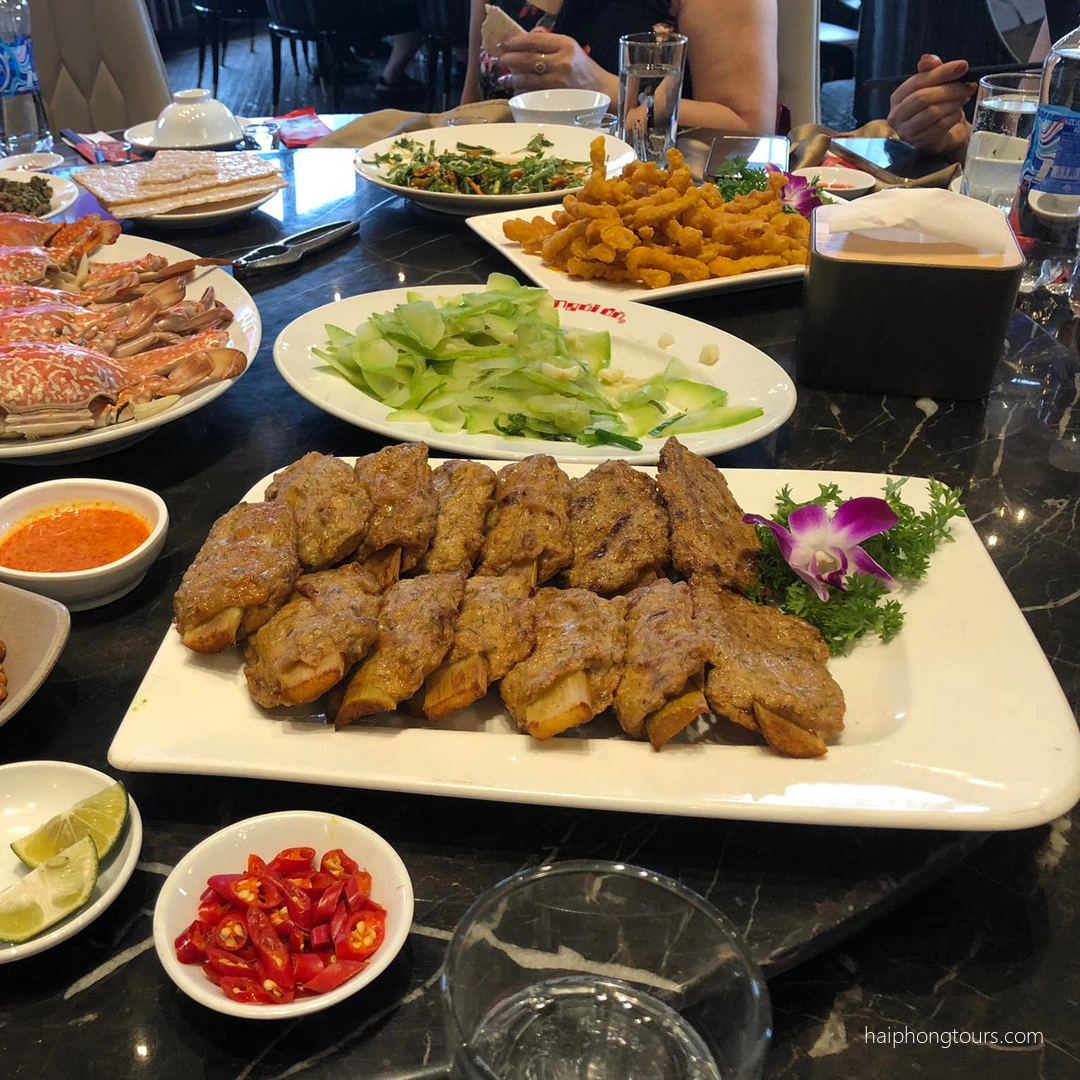
Banh mi cay, small pate baguettes
Hai Phong’s slim baguettes are filled with pate and served with a chili sauce known locally as chi chuong. They are much smaller than the fully loaded banh mi sandwiches common elsewhere in Vietnam.
Start with a few and order more if you want them. Request the sauce separately to control the heat. The pate makes this a meat-based snack, even though the filling may look like a simple spread.
Banh beo, steamed rice cake in a banana-leaf mold
Hai Phong banh beo is a substantial steamed rice cake with pork and wood-ear mushroom filling, made in a banana-leaf mold. It differs from the small dishes of banh beo associated with central Vietnam.
The cake is cut into pieces and eaten with a savory dipping broth or sauce. Choose it for an afternoon snack, especially when you would prefer something warm and soft to another fried dish.
Banh cuon, steamed rice rolls
Banh cuon consists of thin steamed rice sheets served plain or rolled around a filling, then finished with fried shallots. In Hai Phong, the dipping sauce may combine fish sauce with pork-bone broth, and pork sausage or meatballs can accompany the rolls.
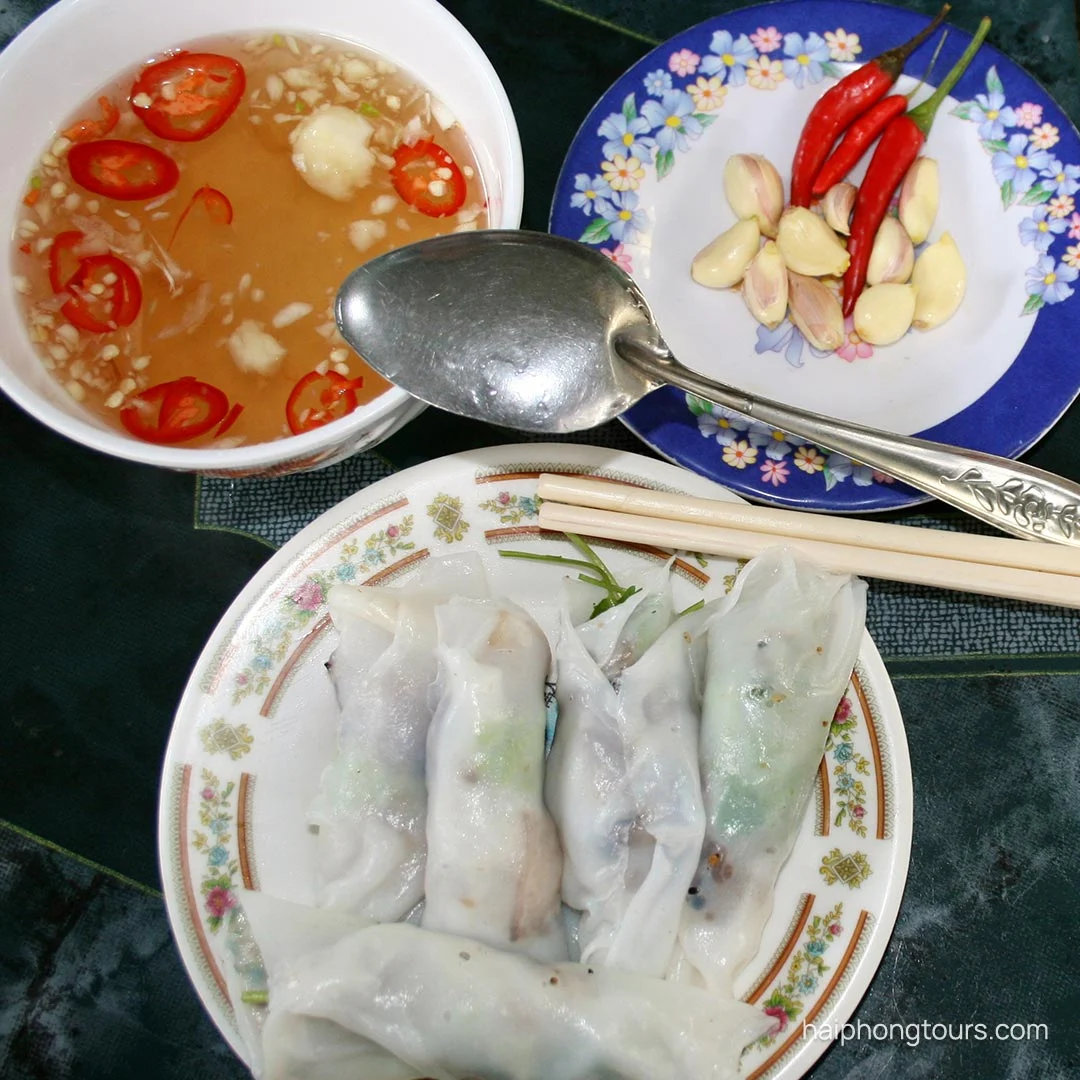
This is a softer breakfast or light-meal option. Check whether the listed price covers only the rice rolls or also includes the meat sides. Plain rice sheets do not make the complete serving vegetarian; the filling, sauce and accompaniments matter.
Banh duc tau, rice cake with savory toppings
Soft rice cake is cut into a bowl and topped with a mixture such as shrimp, pork, papaya, and wood-ear mushrooms, then dressed with a tangy fish-sauce mixture. Its appeal is the contrast between the smooth cake, savory toppings, and sharp sauce.
Choose the dressing before the bowl is assembled. The fish-sauce and vinegar mixture supplies sweet, salty and sour flavors as well as optional chili. For a first bowl, Hai Phong Tours recommends asking for less dressing so you can judge that balance: ít nước mắm giấm means less fish-sauce-and-vinegar dressing; không cay requests no added chili.
Ask whether the prepared toppings are already mixed before requesting a change. Asking the server to leave off visible shrimp does not establish a shrimp-free serving. Check the prepared topping and fish-sauce dressing before ordering if you need to avoid seafood or meat.
For the current Co Chuyen address, useful Vietnamese ordering phrases and a comparison with Hanoi’s softer version, use the Hai Phong banh duc tau guide.
Gia be xao, stir-fried shellfish
Gia be is a small shellfish, not bean sprouts. It is often served in a thick, seasoned sauce, with a distinctive chewy texture. Eating it can involve separating the small shells, so it suits a relaxed snack stop rather than a meal you need to finish quickly.
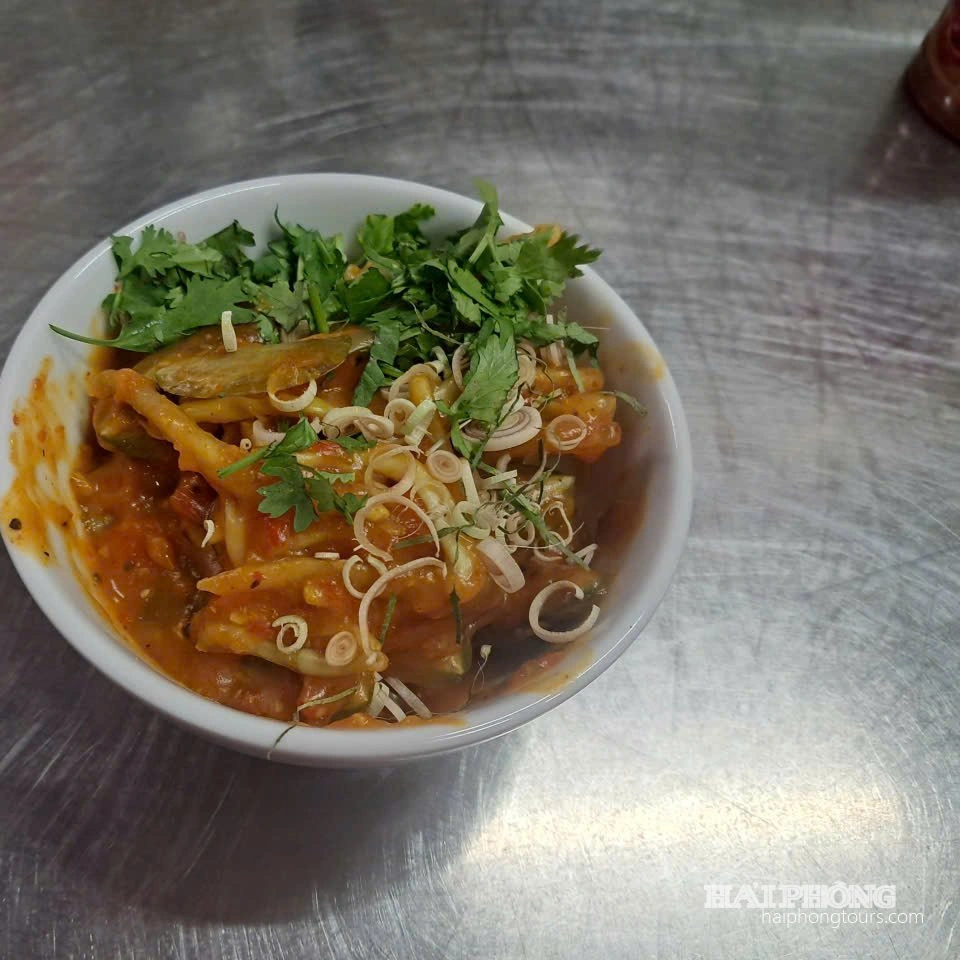
Order a small portion first if the texture is unfamiliar, and ask the vendor to show you which parts to eat.
Oc, snails and other shellfish
At an oc shop, choose both the shellfish and how you want it cooked. Offerings may include steamed preparations and richer sauces such as tamarind or coconut. The word oc on a sign does not describe one standardized dish or price.
Confirm the price and portion before ordering, particularly for unfamiliar seafood. This works well as a shared evening meal, with several small plates instead of a large order chosen all at once.
Chao cay, smooth rice porridge with savory toppings
Chao cay is a thick, smooth porridge made from finely ground rice, with savory broth and toppings that may include freshwater mussels, pork or eel. Fried dough sticks add a crisp contrast when dipped into the bowl.
The name means spicy porridge, but some vendors can reduce the chili. Ask before ordering and check the day’s toppings, because two bowls with the same name may contain different animal ingredients.
Desserts and drinks
Dua dam, iced coconut dessert
Dua dam combines coconut flesh with a creamy coconut mixture and additions such as jelly or pearls. It is served cold and can be quite filling. Choose it as dessert rather than assuming it is simply a glass of coconut water.
Toppings and sweetness differ between shops. If you avoid dairy, check the milk ingredients before ordering; a coconut-based dessert is not automatically dairy-free.
Ca phe cot dua, coconut coffee
Coconut coffee combines coffee with a sweet, creamy coconut component. It suits a longer cafe break between food stops. Ask about the milk and sweetness if either matters to you, and do not confuse it with the coffee-free dua dam dessert.
Sui din and che, a sweet finish
Sui din consists of glutinous rice balls with fillings such as sesame and peanuts, served in warm ginger syrup. It is especially associated with cool-weather evenings. Choose it when you want a hot dessert instead of an iced coconut dish.
Che covers many sweet bowls and cups with different beans, jellies, or other ingredients. Point to the version you want and ask about toppings rather than expecting one standard “Hai Phong che.”
Tra cuc, chrysanthemum tea
The local drink blends chrysanthemum with ingredients such as tea leaves and licorice. Its floral, slightly bitter flavor makes a change from the city’s richer coconut drinks. Ask whether it is served hot or cold and whether it is sweetened.
Because the blend can contain tea leaves, do not assume it is caffeine-free simply because it is called flower tea.
The Hai Phong tra cuc guide explains the different blends, hot and iced orders, and how to plan a tea stop around Phan Boi Chau or Minh Khai.
Food gifts: choose products that can travel safely
Nem chua An Tho, fermented pork
Nem chua An Tho is a local fermented pork product with sliced pork and pork skin in a looser texture than the compact sticks sold in some other parts of Vietnam. It is different from nem cua be, the hot fried crab roll described above.
Choose a product with an identifiable maker, production and use-by dates, and clear storage and preparation instructions. Fermentation does not provide the same protection as thorough cooking. This is a poor gift for a long journey when refrigeration or the destination’s food-entry rules are uncertain.
Dried squid from Cat Ba
Dried squid is commonly grilled and torn into strips before eating. Compare the stated origin, size grade, net weight and whether the price is per piece or per kilogram. Fully dried squid, partly dried squid and a ready-to-eat snack have different preparation and storage needs.
Prefer intact, labeled packaging and follow its storage instructions. A Cat Ba market location or the word “local” does not prove where a batch was caught or processed, and vacuum packing does not guarantee unlimited room-temperature storage.
Cat Hai fish sauce
Cat Hai fish sauce reflects the area’s fish-and-salt fermentation tradition. More than one producer may use the place name, so check the full producer, ingredients, bottle seal and suggested use rather than judging only by color or packaging.
Buy it only when you can transport a sealed bottle securely. Confirm airline rules for liquids and odorous products, along with the destination’s food-import rules. Commercial packaging helps with identification but does not guarantee that customs will permit the product.
Buy perishable gifts near the end of the day and keep the original label and storage instructions. Meat, seafood and fish sauce each require a separate travel-rule check.
A few addresses to build a route around
Use these as starting points for the dish you want, rather than a ranking. Confirm the current opening time and menu before traveling across town.
- Banh Da Cua Ba Cu, 179 Cau Dat: a starting point for crab noodles in the central area. Check the toppings and price of the bowl you select.
- Banh Mi Cay Ba Gia, 57 Le Loi: an option for the small pate baguettes. Order a few for tasting before buying a larger takeaway quantity.
- Banh duc tau, 159 Hai Ba Trung: a central stop for the rice-cake dish. Use the street number when locating the shop, rather than an old pavement pin.
- Dua Dam Hien Beo, 124 Lach Tray: a coconut-dessert stop. Check the shop name carefully; other dessert businesses use addresses within the nearby lane numbered 124.
Choose one market area
Cat Bi Market: an afternoon tasting stop
Cat Bi Market is on Ly Hong Nhat Street, commonly mapped at number 34. Its food section suits an afternoon visit for several small dishes, such as banh beo, gia be, and che. Stall selection and serving times vary, so arrive with a shortlist and choose from what is being prepared.
Make it a separate outing if you are staying in the center. Do not assume that a market with “Cat Bi” in its name is inside the airport or a convenient stop during every airport transfer.
Co Dao and Tran Nhat Duat: keep the route central
The Co Dao area around Tran Nhat Duat is another place to look for snacks and small meals while exploring the center. Some businesses have moved into shops as the street layout has changed. Follow the current shop address and ask where food is being served instead of expecting the pavement-stall arrangement shown in older photographs.
A manageable one-day food itinerary
- Breakfast: choose either banh da cua or bun ca cay. Leave the second noodle dish for another meal or another day.
- Late morning: take a walk and pause for tra cuc or coffee. If you are still hungry, share a few banh mi cay.
- Lunch: try nem cua be, checking whether noodles and herbs are included in the order.
- Afternoon: choose a Cat Bi food-market visit or central stops for banh beo and banh duc tau. Finish with dua dam if you have room.
- Evening: share shellfish plates, or keep dinner simple and try sui din when available.
For a half-day visit, choose one main dish, one snack, and one dessert. You will have more time to enjoy them and less need to rush between addresses.
Ordering and dietary details
- Say how much you want: ask for the price of one bowl, plate, roll, or portion. Seafood prices may depend on the selected item and quantity.
- Control the extras: confirm additional toppings and request chili or sauce separately where possible.
- Explain dietary needs: seafood, pork, fish sauce, peanuts, sesame, and milk can appear in dishes whose names do not reveal all the ingredients. Ask about the broth and sauces as well as visible toppings.
- Keep payment simple: carry some cash in smaller notes; a displayed local bank-transfer code may not work with your overseas payment app.
- Order takeaway thoughtfully: ask how a filled baguette, pate, or creamy dessert should be stored, and avoid buying more than you can transport and keep appropriately.
Hai Phong food is easiest to explore by choosing flavors and textures you enjoy, then adding one unfamiliar dish. A satisfying bowl, a small snack, and a drink can make a better first visit than trying to complete an entire food map.
Useful guides for your trip
Would you like to include local food in a city visit? Contact us with your destination, date, group size and dietary needs to discuss a suitable tour or private itinerary.