
The easiest first trip outside central Hai Phong is Đồ Sơn, where you can combine coastal scenery with Bảo Đại Villa, Bà Đế Temple, Tường Long Tower or K15 Wharf. Choose Elephant Mountain for a more active half-day, Bạch Đằng Giang for national history, Cao Linh Pagoda for religious architecture, or Bảo Hà for a craft visit arranged in advance.
These ten places are route options, not a one-day checklist. Most are on the mainland, while Hòn Dấu Island requires a separate boat journey and a weather-safe return. Build one area into a half-day or full day, then confirm the opening arrangements, transport and any boat trip close to departure.
Choose the right area
- First-time coastal day: select two or three Đồ Sơn sights, add a meal and keep time for the waterfront.
- Island and forest: make Hòn Dấu the main excursion; fit mainland stops around the confirmed return boat.
- Active countryside: reserve a substantial half-day for Elephant Mountain.
- Vietnamese history: choose Bạch Đằng Giang for the river-battle story or K15 Wharf for the Hồ Chí Minh Sea Trail.
- Religious architecture: visit Cao Linh when you want a spacious pagoda complex without a mountain hike.
- Living craft: visit Bảo Hà only after arranging a workshop or local host.
Đồ Sơn: the most efficient sightseeing route
Đồ Sơn lies roughly 20 km from the traditional center of Hai Phong. Its beach, temples, hilltop monuments and wartime heritage sit in the same coastal area, making it easier to combine several different experiences without repeatedly crossing the city.
1. Zone 2 Đồ Sơn Beach
Zone 2 is a practical waterfront base for a beach walk, sea air and a meal near the coast. It is close enough to Bảo Đại Villa to combine the beach with a short heritage visit, even when swimming conditions are unsuitable.
Swim only in an area open for bathing and follow flags, lifeguards and local warnings. Brown or cloudy water can occur along this sediment-rich coast, while wind and waves change quickly. Strong surf is a reason to stay ashore rather than a reason to choose this beach over another.
Agree the price of beach chairs, showers or other rented facilities before using them. At seafood restaurants, ask whether a price applies per dish, per kilogram or to a selected live item, and whether preparation is included.
Allow: about one to two hours for the waterfront, longer when adding a meal. Best for: travelers who want a flexible coastal stop rather than a beach-only day.
2. Bảo Đại Villa
Bảo Đại Villa stands on Vung Hill in Zone 2 and overlooks the Đồ Sơn coast. The house was built in 1928 for the French governor-general of Indochina and later became associated with Bảo Đại, Vietnam’s last emperor. It was restored in the late 1990s, so the attraction is a reconstructed period residence rather than a building preserved unchanged.
Spend time in the rooms and grounds instead of treating the villa only as a viewpoint. Access involves slopes and changes of level, so travelers who find stairs difficult should check which areas they can reach. Costume photography, meals and accommodation are separate services and should not be assumed to be part of a sightseeing ticket.
Allow: around 45–75 minutes. Best for: architecture, modern Vietnamese history and an elevated coastal view.
3. Bà Đế Temple
Bà Đế Temple sits beside the sea at the foot of Độc Mountain. It honors Đào Thị Hương, remembered through a local story about injustice, death and later worship. Treat the account as local tradition rather than a fully documented biography.
This is an active religious site. Cover shoulders and knees, keep voices low and avoid blocking worshippers or ceremonies. The shore beside the temple can be slippery or exposed when the sea is rough, so remain on the maintained visitor area and supervise children closely.
Allow: roughly 30–60 minutes on an ordinary day. Best for: local belief, a brief seaside stop and travelers already touring Đồ Sơn.
4. Tường Long Tower and Pagoda
Tường Long is a hilltop Buddhist and archaeological complex. Historical records date the original Lý-dynasty tower to 1058; the nine-story tower visible today is a reconstruction completed in 2017. The old foundations and archaeological displays explain the earlier monument, while the modern tower restores its presence on the Đồ Sơn skyline.
Use Chùa Tháp Tường Long when setting the destination. Expect slopes and steps around the complex, and do not assume that every level of the tower is open to visitors. Choose daylight and reasonably clear weather; the exposed hilltop is a poor place during a thunderstorm.
Allow: about one to two hours. Best for: Buddhist heritage, archaeology and broad views over the peninsula.
5. K15 Wharf
K15 Wharf is remembered as the starting point, or “kilometer zero,” of the Hồ Chí Minh Sea Trail, the maritime supply route used during the war. It forms part of the nationally designated special historical complex for the Sea Trail and completed a major restoration and visitor-development project in May 2026.
The site suits travelers who want a focused historical stop rather than a long scenic visit. Read the interpretation before walking toward the memorial structures; the context of the unnumbered ships is what makes the location significant. Ceremonies may limit access to individual spaces, so follow instructions at the entrance.
Allow: around 45–75 minutes. Best for: 20th-century history and a compact addition to a Đồ Sơn route.
6. Hòn Dấu Island
Hòn Dấu, also written Hòn Dáu, is a small island off Đồ Sơn with a shaded forest, Nam Hải Thần Vương Temple and a historic lighthouse compound. It is a separate destination from the mainland Hòn Dấu resort area, and reaching it requires a passenger boat.
Confirm the active departure pier, sailing conditions, life jackets, passenger limit, complete price and return meeting time before setting out. Do not assume a shared boat will be waiting on a quiet weekday. The crossing and lighthouse access depend on weather and the operating arrangement in place that day.
Wear shoes suitable for damp paths and bring drinking water and insect repellent. Stay on the visitor route, respect the temple and do not remove plants, stones or other natural material from the island.
Allow: at least half a day including boat logistics. Best for: visitors who can keep their schedule flexible around sea conditions.
Countryside, architecture and history beyond Đồ Sơn
7. Elephant Mountain in An Lão
Elephant Mountain, or Núi Voi, is a nationally recognized historical and scenic complex about 20 km southwest of central Hai Phong. Its present-day area extends across An Lão and An Trường communes. A useful route can combine Long Hoa Pagoda, Già Vị Cave, Elephant’s Back and Bàn Cờ Tiên.
This is an active limestone outing, not a quick roadside viewpoint. Wear shoes with grip, carry water and confirm the trailhead and descent locally. Cave access can change, and wet rock makes the upper path unsuitable after heavy rain. Travelers who need step-free access should choose another attraction.
If you prefer transport and local route support, the guided Hai Phong Hiking Tour at Elephant Mountain includes the pagoda, cave and ridge route. Confirm the day’s cave access, pickup point, luggage arrangements and return time before booking.

Allow: a half-day including road travel. Best for: active travelers comfortable on rough natural terrain.
8. Cao Linh Pagoda
Cao Linh Pagoda stands near the western approach to Hai Phong in present-day An Dương Ward. The site has a history of roughly three centuries, while the spacious complex seen today reflects extensive modern rebuilding. Its large gate, main hall, bell, memorial towers and Buddhist sculpture garden make it easier to explore than a small neighborhood temple.
Visit it as a living religious site. Dress modestly, keep worship areas clear and avoid photographing people at prayer without permission. Use the exact name Chùa Cao Linh for navigation; it is separate from the Bạch Đằng Giang memorial complex northeast of the city.
Allow: around 45–75 minutes. Best for: religious architecture, a quiet stop and travelers continuing west by road.
9. Tràng Kênh and Bạch Đằng Giang
Tràng Kênh is the broader limestone and river landscape associated with archaeology and the historic Bạch Đằng battlefield area. For the landscaped memorial route, set your destination to Khu di tích Bạch Đằng Giang in present-day Bạch Đằng Ward, northeast of central Hai Phong.
The visitor route includes temples honoring Ngô Quyền, Lê Đại Hành and Trần Hưng Đạo, an exhibition area, pagoda buildings and a riverside square. Begin with the historical interpretation so the monuments connect to the three major river victories commemorated here.
Displayed stake models help explain the battle method; do not assume that every wooden stake visible in the complex is an original archaeological object. The memorial route is broad and exposed in places, so carry water and use sun or rain protection.
Allow: roughly 1.5–2 hours. Best for: travelers who want a substantial Vietnamese-history visit in a scenic river setting.
10. Bảo Hà woodcarving village
Bảo Hà, in present-day Vĩnh Hải Commune, has maintained a woodcarving tradition for more than six centuries. Artisans produce religious statues, worship objects and puppets, while the village’s temple and pagoda provide cultural context for the craft.
Arrange a workshop visit through a local contact before traveling. Bảo Hà is a working village rather than a scheduled craft museum, so an address does not guarantee that an artisan will be available to demonstrate the process or explain it in English. Ask before entering a workshop or photographing people and unfinished commissions.
Keep clear of tools, machinery and dust-producing work. If you want to buy an item, ask whether it is ready to take away, what wood and finish were used, how it should be packed and whether a larger piece requires shipping. Do not expect a daily public puppet performance unless one has been specifically arranged.
Allow: one to two hours after a confirmed appointment, plus the longer road journey. Best for: craft-focused travelers with a host or interpreter.
Three realistic itineraries
Half-day Đồ Sơn heritage route
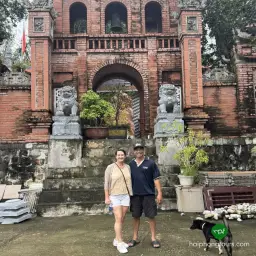
Combine Bảo Đại Villa, Bà Đế Temple, K15 Wharf and Tường Long Tower, shortening the route if a ceremony, weather or access delay occurs. The current Hai Phong City Tour in Đồ Sơn covers those four subjects with Hai Phong hotel pickup and drop-off. Its program does not include the Hòn Dấu Island boat, and meals are separate; confirm the departure and return time for your date.
Full-day coast and island plan
Arrange the Hòn Dấu boat first and let its return time anchor the day. Add one or two mainland stops and a meal before or after the crossing. Do not schedule a flight, cruise check-in or long road transfer immediately after the island trip because sea conditions can affect timing.
Focused countryside day
Choose one major destination: Elephant Mountain for hiking, Bạch Đằng Giang for history or Bảo Hà for crafts. Cao Linh can work as a shorter separate stop when it lies naturally on your road route. Avoid combining places on opposite sides of Hai Phong merely to increase the count.
Planning checks before departure
- Send the driver the exact destination and entrance, then agree on waiting time, extra stops and the return journey.
- Carry clothing suitable for temples even on a coastal day, along with water and walking shoes.
- Keep boat trips, swimming, caves and exposed hilltops dependent on weather and local guidance.
- Confirm admission, parking, boat hire and optional services separately; an old price rarely covers the complete visit.
- Use cash for small local expenses, but verify the amount before paying and keep any ticket issued.
- Build a time buffer before a flight, train, cruise or intercity transfer.
For most visitors, one area explored at a comfortable pace is more useful than trying to collect all ten names. Choose the experience you want first, then add nearby stops only when the route, opening arrangements and return time remain practical.