
AI can build a useful North Vietnam shortlist, compare route ideas and expose questions you have not considered. It should not make the final booking decision. Schedules, ports, road conditions, opening rules, visa requirements and live inventory can change, while a confident answer may combine old information from different operators.
Use AI for structure, then verify every fact that controls money, safety or timing with the current provider or official source. The most reliable workflow is: define your constraints, generate two or three route options, check the geography, verify each fixed booking, and keep the final plan offline.
What AI is good at
- Turning a long wish list into a smaller set of realistic priorities
- Comparing different trip shapes before you choose one
- Finding conflicts between pace, budget, mobility and transport preferences
- Creating questions for hotels, cruise operators and drivers
- Reformatting a confirmed itinerary into a day-by-day checklist
- Producing packing, dietary and accessibility lists from your stated needs
- Suggesting a backup day when weather changes the original plan
These tasks depend on reasoning more than live availability. AI becomes less dependable when the answer requires a current departure, exact price, named driver, cabin inventory, attraction rule or legal interpretation.
Give the planner real constraints
A vague request such as “plan the best North Vietnam trip” produces a generic route. Supply the facts that change the decision:
- arrival airport, landing time and departure flight;
- number of usable nights rather than calendar dates alone;
- adult and child ages;
- mobility, medical, dietary or sensory requirements;
- whether you will ride a motorbike, ride behind a driver, or avoid motorbikes entirely;
- whether overnight buses and trains are acceptable;
- preferred pace and maximum number of hotel changes;
- luggage quantity;
- private, shared or public transport preference;
- fixed cruise, flight or event reservations;
- activities you would regret missing;
- activities you do not want.
Ask the tool to label travel days, hotel nights and weather buffers separately. A route that looks comfortable on a map can still contain consecutive six-hour road journeys.
North Vietnam facts an AI plan often gets wrong
Distances are compressed
Hanoi is the main hub, but Sapa, Ha Giang, Cao Bang, Ninh Binh and the coast lie in different directions. Mountain kilometers are slow. Combining Sapa, Ha Giang and Cao Bang in a short trip creates more road time than the itinerary summary suggests.
Check every transfer as a door-to-door journey: hotel checkout, pickup, road time, rest stops, final drop-off and the time needed to reach the next activity.
A destination name is mistaken for a terminal
“Ha Long cruise” does not identify the port. Different vessels may use Tuan Chau, Ha Long International Cruise Port, Hon Gai or Cat Ba-area facilities. A driver needs the voucher, vessel, terminal and check-in contact.
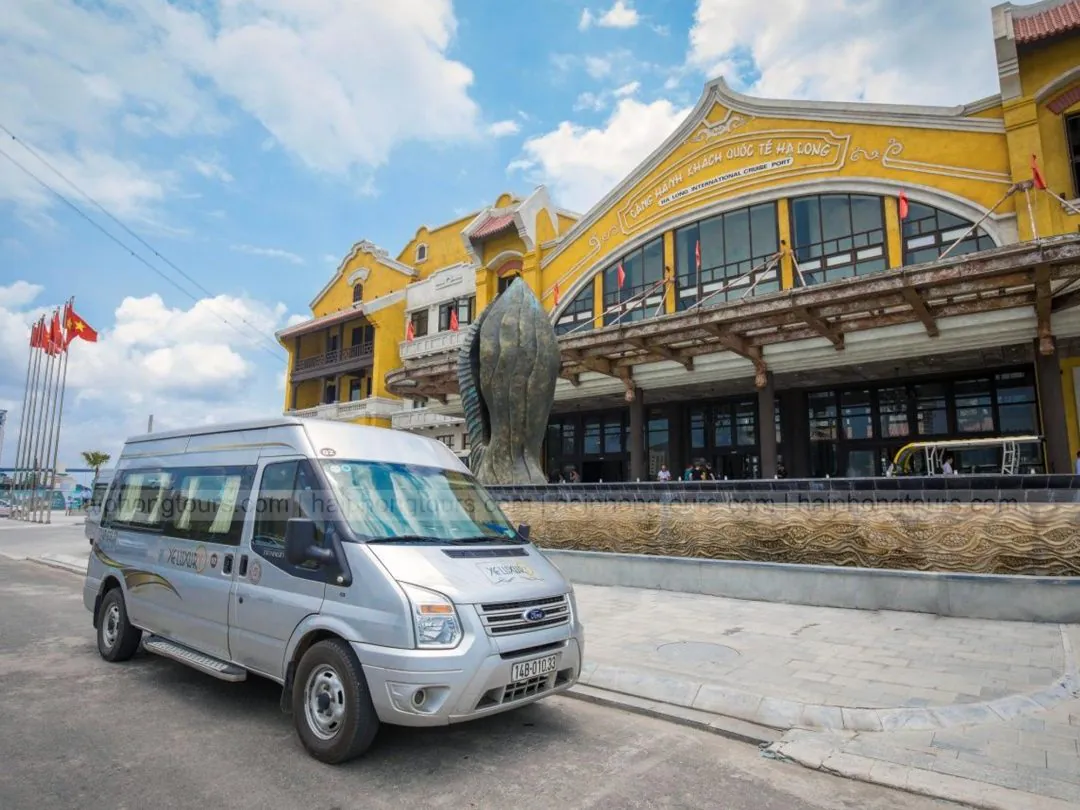
Do not ask AI to infer the port from the bay name. Confirm it directly with the operator before booking a transfer or hotel.
Day cruises are invented for the wrong bay
Ha Long and Lan Ha have established one-day options, but Bai Tu Long is too far for the Hai Phong Tours one-day program and is treated as an overnight-cruise destination. A generated itinerary that offers a routine Bai Tu Long day cruise may be mixing a bay label, a private boat claim and an old listing.

Use the live cruise catalogue to see which day and overnight products are actually offered, then open the exact vessel page.
Two days and one night is counted as two full days
An overnight cruise normally boards around the middle of the first day and disembarks during the second morning. It includes one night, but it is not 48 hours of sightseeing. Keep road transfers and check-in outside the advertised cruise duration.
Old product URLs are treated as current inventory
A search result can show a discontinued page, renamed product or redirect. A page loading successfully does not prove that the exact itinerary, vehicle or cabin remains on sale. Start from the current category page and follow the live listing.
The reverse transfer is assumed to be identical
Hanoi to Ninh Binh and Ninh Binh to Hanoi are separate travel needs. Pickup areas, departure windows and the next booking differ. Always verify the direction shown on the product page and confirmation.
Weather becomes a promise
Monthly climate patterns help with packing, but they cannot guarantee a clear Fansipan view, calm bay, rice color or open mountain road. Use the North Vietnam weather guide for regional patterns, then check the current forecast and operator decision near travel.
Motorbike advice ignores licence and insurance
A generated route may describe self-driving as the default way to experience Ha Giang. Your licence, insurance, experience, weather and vehicle class control that decision. A car with driver or an experienced local rider can be the better option.

Prices and opening hours look more certain than they are
AI may repeat an old fare, ticket or timetable without showing its date. Treat every exact price, schedule, weekly closure and phone number as unverified until the official seller or venue confirms it.
Use a verification hierarchy
- Official authority: entry rules, weather alerts, attraction controls, transport regulation and public safety notices.
- Exact operator: vessel, route, cabin, pickup, meals, cancellation terms and live availability.
- Current category or directory: products visibly offered now, not a remembered or indexed URL.
- Recent reputable local source: practical context when no primary source publishes the detail.
- AI summary: a starting point that must identify what still needs confirmation.
A review, forum answer or video can reveal useful questions, but it should not override the current operator on a departure or the competent authority on a restriction.
Verify the route before the attractions
First place every overnight stop on one map. Mark Hanoi, the chosen mountain block, Ninh Binh, the cruise port and the departure airport. Count complete travel days and identify where the route returns through Hanoi.
Use the North Vietnam itinerary guide to compare realistic seven-, ten- and fourteen-day shapes. The transport guide explains which corridors work by train, bus, car or combined transfer.
Remove destinations until the trip still works after adding one delayed transfer, one tired morning and one weather change. A robust itinerary has spare capacity.
Verify a cruise in the correct order
- Confirm the bay: Ha Long, Lan Ha or Bai Tu Long.
- Confirm the duration and actual boarding and disembarkation windows.
- Confirm the vessel name and whether a day boat is used.
- Confirm the exact port and check-in location.
- Confirm the cabin category, deck, bed, occupancy and private bathroom.
- Confirm transfers separately from the cruise.
- Confirm inclusions, drinks, activities, dietary requests and child terms.
- Read cancellation, weather and payment terms before sending money.
Do not let an AI-generated comparison choose a vessel from ratings alone. Compare the current itinerary and the practical constraint that matters to you.
Verify transport as a chain
For each leg, record:
- pickup address and accessible meeting point;
- vehicle type and whether it is private or shared;
- luggage allowance;
- estimated road time and rest stops;
- vehicle changes, ferry or station connection;
- final drop-off address;
- contact method on travel day;
- buffer before the next fixed booking.
The live North Vietnam transfer directory lists direction-specific routes. Select the actual origin and destination and share the next booking when a cruise, flight or train controls the arrival time.
Verify hotels by room and access
An AI recommendation may identify a suitable neighborhood but invent or confuse a property detail. Open the current listing and confirm the exact room. Check windows, bed configuration, stairs, elevator, heating, cooling, bathroom, late arrival and vehicle access.
In Sapa, measure elevation and slope as well as map distance. In Tam Coc, a field-view property may require a dark lane or arranged car. Near a cruise, match the hotel to the confirmed port rather than to the general phrase “Ha Long Bay.”
Handle food, health and accessibility conservatively
Ask AI to create questions, not guarantees. A menu marked vegetarian may still need clarification about fish sauce or stock. “Gluten-free available” does not prove control of cross-contact. “Accessible” does not describe steps from the road, bathroom layout or gangway slope.
Send the requirement in writing to the exact provider. For a serious allergy, medical condition or mobility need, require a specific response before payment and keep essential medication or equipment with you.
A better prompt pattern
Build two North Vietnam route options from the constraints below. Label every travel day, hotel night and buffer. Do not invent current schedules, prices, ports or availability. Put every fact that needs live verification in a separate checklist, and explain what would make each route fail.
Then add your dates, flights, pace, transport rules, luggage, ages and non-negotiable needs. Ask for one comfortable option and one more ambitious option. Do not ask for an “ultimate” itinerary; ask for trade-offs.
Red flags in an AI itinerary
- Three distant regions connected without a travel day
- A cruise named without a vessel, port or current product page
- A Bai Tu Long day cruise treated as a standard Hanoi excursion
- A train shown as arriving directly in Sapa
- A reverse transfer assumed to have the same pickup arrangement
- A mountain ride scheduled immediately after an overnight bus
- A flight on the same day a weather-dependent cruise returns
- Exact prices or opening hours without a current source date
- A claim that a venue is allergy-safe or wheelchair-accessible without details
- Links that redirect or do not appear in the current service catalogue
Final booking workflow
- Use AI to create and compare route shapes.
- Choose one primary purpose for the trip.
- Remove stops that require fragile connections.
- Verify entry permission through the official government portal.
- Confirm the cruise, flight or event with the least flexibility.
- Confirm every transport direction and terminal.
- Confirm room, dietary, child and accessibility needs in writing.
- Read payment and cancellation terms.
- Save confirmations, maps and contacts offline.
- Recheck weather and operating conditions shortly before each remote leg.
AI is most useful before you spend money. Let it organize the decision and challenge the route, then let current operators and official sources control the facts. A shorter plan with verified connections will outperform an impressive itinerary built from confident assumptions.
Would you like help fitting this experience into your trip? Contact us with your travel dates, starting point, available time and group size. Tell us about walking limits or special interests so we can suggest a practical itinerary.