
An Thanh, in the Tu Ky area of western Hai Phong, offers a different kind of countryside visit: rice fields that also support rươi and cáy, two local food specialties. Arrange a hosted visit if you want to understand the farming landscape and share a meal. Seeing a harvest requires a separate check of the season and the conditions on your actual date.
Use the local names bãi rươi An Thanh and Tứ Kỳ when discussing the trip. Older addresses place the area in Hai Duong province; An Dinh village and the local tourism and conservation cooperative now have a Chi Minh commune, Hai Phong address. This is inland countryside, separate from the port-city center and Cat Ba.
What makes the rice-and-ruoi landscape different
Rươi are small aquatic worms used in regional dishes; cáy are small crabs. Here, rice production and the management of these natural food resources share the same wet-field landscape. The interesting part of a visit is learning how growers manage soil, water and the farming calendar together.
Ask your host to show you where water enters and leaves a field, how the rice crop fits around the aquatic harvest, and what work is happening that week. These explanations give meaning to an otherwise ordinary-looking rice field. A visit during a quiet farming period can still be worthwhile if someone is available to interpret it.
The An Thanh Tourism and Ruoi–Cay Conservation Cooperative, known locally as Hợp tác xã Du lịch, Bảo tồn Rươi cáy An Thanh, is based in An Dinh village, Chi Minh commune. Its products include rice, fresh or processed ruoi and cay, and ruoi dishes such as patties, spring rolls and clay-pot preparations. A production address is useful for identifying the area, but agree on the actual visitor meeting point before traveling.
Choose the experience before choosing the date
- To understand the farming system: request a field walk with someone who can explain the rice, water management and aquatic species. Confirm English interpretation.
- To watch ruoi harvesting: ask the host to confirm a likely harvesting window close to your visit. Keep your timing flexible.
- To join rice-related activities: ask what is genuinely available that day. A village harvest festival is different from a private hands-on visit.
- To try the food: reserve the dish and meal time. Eating ruoi does not require seeing live ruoi emerge from a field.
The main ruoi harvest is closely associated with the ninth and tenth lunar months, with other harvesting periods possible. Lunar months do not match September and October on the Gregorian calendar. Water conditions and weather influence the actual harvest, so a general seasonal recommendation cannot guarantee activity on a particular afternoon.
Rice-harvest celebrations have taken place in late spring or early summer, featuring activities such as cutting rice, cooking competitions and traditional basket fishing. Those are organized events with their own programs. Check the current local announcement if the festival is your reason for coming; do not apply a past festival date or assume its activities operate every weekend.
Arrange a visit before setting out
For an initial inquiry, contact Tour de Bãi Rươi, a local page dedicated to visits to the An Thanh ruoi fields, on +84 915 246 835 or langthanh.hdg@gmail.com. Describe your date, group size, starting point and whether you want a field explanation, a meal or a seasonal harvesting experience. Wait for a specific arrangement before treating the trip as booked.
Hai Phong Tours recommends securing the person who will receive you before arranging the car. A driver can reach a village, but that alone does not provide field access, an explanation of the farming system or a prepared lunch.
Keep the booking clear on these points:
- Meeting place: the village name, map pin and contact for the person meeting you.
- Activities: what you will observe, what you may participate in and the alternative if harvesting does not happen.
- Language and group needs: English guidance, children’s ages, walking limits, shade, seating and toilet access.
- Food: the menu, dietary requirements, meal time and whether a cooking activity is actually included.
- Total price: hosting, interpretation, activities, meals and transport, with any deposit and cancellation terms.
Understand the meal you are ordering
Chả rươi is a cooked patty, while nem rươi is a spring-roll preparation and rươi niêu refers to a clay-pot dish. Ask for the preparation you want rather than requesting only “ruoi.” Tell the host about dietary restrictions before the menu is agreed, including whether you eat pork and eggs.
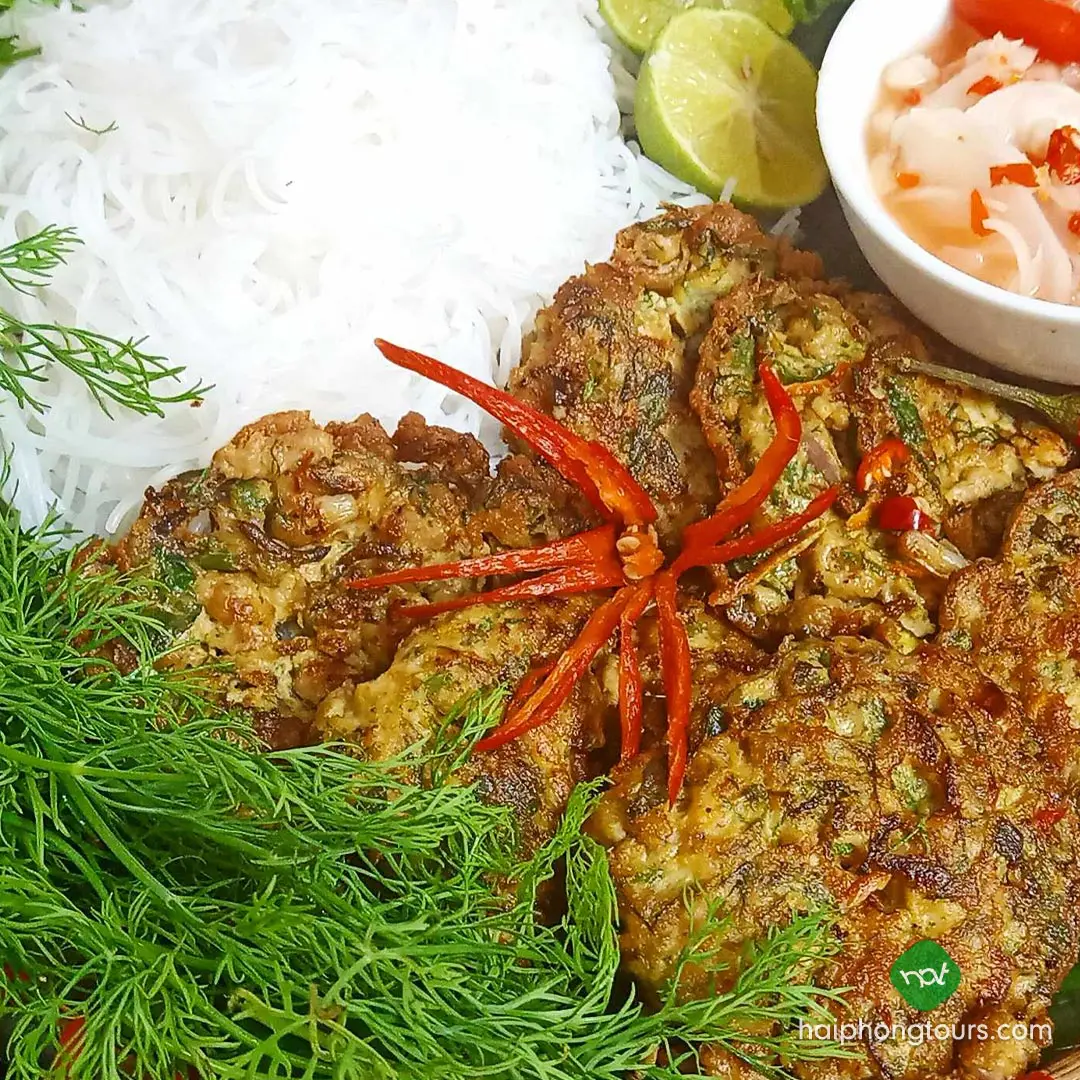
Ruoi dishes can be prepared from frozen stock outside the fresh harvest. That makes a meal possible at a different time of year, but it does not mean there will be a harvest to watch. If your main interest is tasting rather than farming, the Hai Duong food and specialties guide includes restaurant options and other dishes to try without arranging a field visit.
Plan the road journey and an unhurried visit
Send your accommodation pin and the confirmed meeting pin to the driver. Request a quote that includes waiting and the return journey. A broad “Hai Phong” address is not precise enough: accommodation in central Hai Phong, the Hai Duong urban area and Cat Ba produces very different travel plans.
For a field explanation and a meal, allow roughly two to three hours on site as a planning starting point, plus the road journey. Let the host adjust that allowance for the actual activity. A harvest-related visit may need a different start time from an ordinary lunch outing.
Wear footwear that can cope with muddy paths and bring sun or rain protection. Follow the host on field banks, keep children close around water and leave farming equipment and sluice controls alone. Ask before entering a plot or photographing people at work.
If you are using the Hanoi–Hai Phong railway, arrange a separate road pickup for the rural visit and confirm that it fits both trains before buying tickets. The Hai Duong train day-trip guide offers a simpler city-based alternative. Choose that itinerary or the hosted countryside outing rather than trying to squeeze both into a short station stop.
The strongest reason to visit An Thanh is the connection between a working landscape, the people tending it and the food they produce. A confirmed host and a realistic seasonal plan matter more than collecting several village stops in one day.