
Phu Yen is a woodworking village in Hanoi where carpenters make timber houses in traditional architectural styles, along with altar furnishings and household furniture. For a visitor interested in architecture, the main attraction is the craft itself: shaping structural timbers, fitting joints and carving the details that become part of a building.
This is Phù Yên in Phu Nghia Commune, formerly Truong Yen Commune in Chuong My District, also known as Buong Village. Use the full address when arranging a visit, because a search for “Phu Yen” can lead to several different places. Contact a workshop before traveling and ask what work you will be able to see.
Traditional house building and restoration
The village’s work includes constructing houses in older Vietnamese styles. A newly built timber house with traditional columns, beams and carved decoration is not necessarily a centuries-old house that has been conserved.
When discussing a project, ask whether the carpenters are making a new structure, replacing parts of an existing building or reassembling older components. That distinction makes the work easier to understand and avoids confusing a traditional design with the age of the timber or building.
What to look for in a workshop
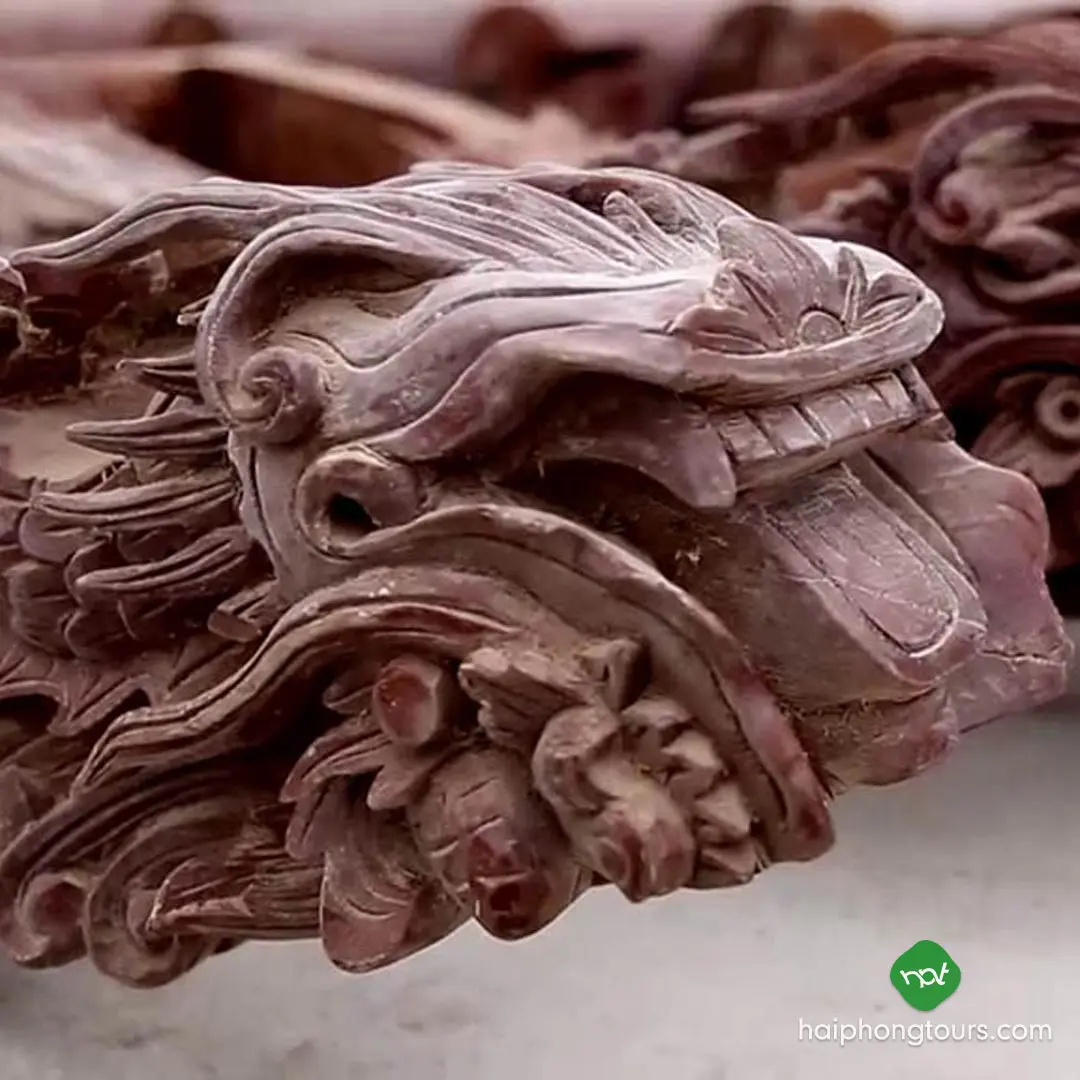
Mortise-and-tenon joinery is an important part of this craft: a shaped end of one timber fits into a corresponding opening in another. Carpenters also carve decorative details into beams and other components, including dragon motifs. Modern machinery can assist production alongside hand skills.
Ask the host to show you how an unfinished component relates to a completed house. A beam on a workshop floor can be difficult to interpret without knowing where it belongs. Large components may be prepared in the village and transported to a building site for assembly, so the work available to view depends on the current order.
Do not assume every structure uses an identical joint system or no metal fasteners at all. The construction details belong to the particular project.
How the house-building trade developed
The village’s carpentry tradition predates its expansion into larger house-building contracts. Carpenter Nguyen Chi Dien’s first such contract in 1991 was one part of that development, rather than the beginning of all woodworking in Phu Yen.
Hanoi has recognized Phu Yen as a traditional woodworking village. Its craft continues through house components, furniture and objects for worship; there is no need to visit only when a complete house is being erected.
Arrange a visit around the work
Before setting out, ask a workshop whether its carpenters will be in the village or away installing a project. Explain that you would like to learn about the work, and agree on a suitable time, the areas you can enter and any fee for hosting or interpretation.
- Confirm the focus: ask whether you can see timber preparation, carving, joinery or finished furniture that day.
- Arrange language help: a Vietnamese-speaking companion or interpreter can make an explanation of architectural details much more useful.
- Respect access: workshops and private homes are not automatically open to visitors. Ask permission before entering or photographing people and their work.
- Stay out of production paths: avoid cutting and finishing areas and leave space for workers moving heavy timber. Wear closed shoes and follow the host’s directions.
A village visit does not automatically include a class, demonstration or entry to a finished house. Confirm any of these experiences separately. Phu Yen is most rewarding when you have arranged to meet someone who can explain a real project and its place in Vietnamese timber architecture.
Useful guides for your trip
Would you like help fitting this experience into your trip? Contact us with your travel dates, starting point, available time and group size. Tell us about walking limits or special interests so we can suggest a practical itinerary.