
For a focused visit to ATK Cho Don, pair Nà Pậu with Khuổi Linh. These two forest sites explain different parts of Vietnam’s wartime administration: Ho Chi Minh’s living and working base, and the offices used by Truong Chinh and the Central Party Office. Choose this outing for an interest in history and modest reconstructed shelters, rather than a large museum collection.
Reserve a daylight half-day locally as a planning allowance for two stops, explanations and movement between them. Add the journey from your actual overnight base separately. Arrange access and interpretation before traveling: a car ride to a map pin will not, by itself, explain the history or secure entry to every structure.

Where ATK Cho Don is, and which name to use
ATK abbreviates An toan khu, meaning safe zone. Cho Don formed part of the wider Viet Bac network used by revolutionary organizations and, later, the leadership during the First Indochina War. The historical area contains dispersed sites; it is not a single building or one continuous walking attraction.
For these two stops, use Nghĩa Tá commune, Thái Nguyên Province in current arrangements. Older maps and accommodation information may retain Cho Don District and Bac Kan Province. Send the individual Vietnamese site names as well as the province, because a destination simply labeled “Cho Don” is too broad for a driver.
Nà Pậu: a working home, guards and shelter
Ho Chi Minh stayed and worked at Nà Pậu from late 1950 into early 1951. The structures visitors see include a reconstructed living and working hut, a guard hut and a shelter bunker. These reproduce a wartime setting; the wood, bamboo walls and palm-leaf roof should not be mistaken for an entirely untouched building from that period.
The main hut combines raised flooring with an earth-floor area, reached by a simple bamboo ladder. The guard hut occupies a separate position, while the bunker belongs to another part of the site. Ask the custodian to point out those relationships before following the paths.
Nà Pậu also connects military leadership with civilian government. Ho Chi Minh prepared his 1951 New Year message here and addressed adult literacy alongside wartime matters. For a family or non-specialist visitor, use this contrast to explore how correspondence and public administration continued from a modest forest shelter.
Khuổi Linh: the Central Party Office in the forest
Khuổi Linh is a separate historical compound in Thành Công hamlet. Truong Chinh and the Central Party Office worked here around 1950, within communication reach of other leadership bases. Its story concerns the organization behind political decisions and the movement of information between scattered offices.
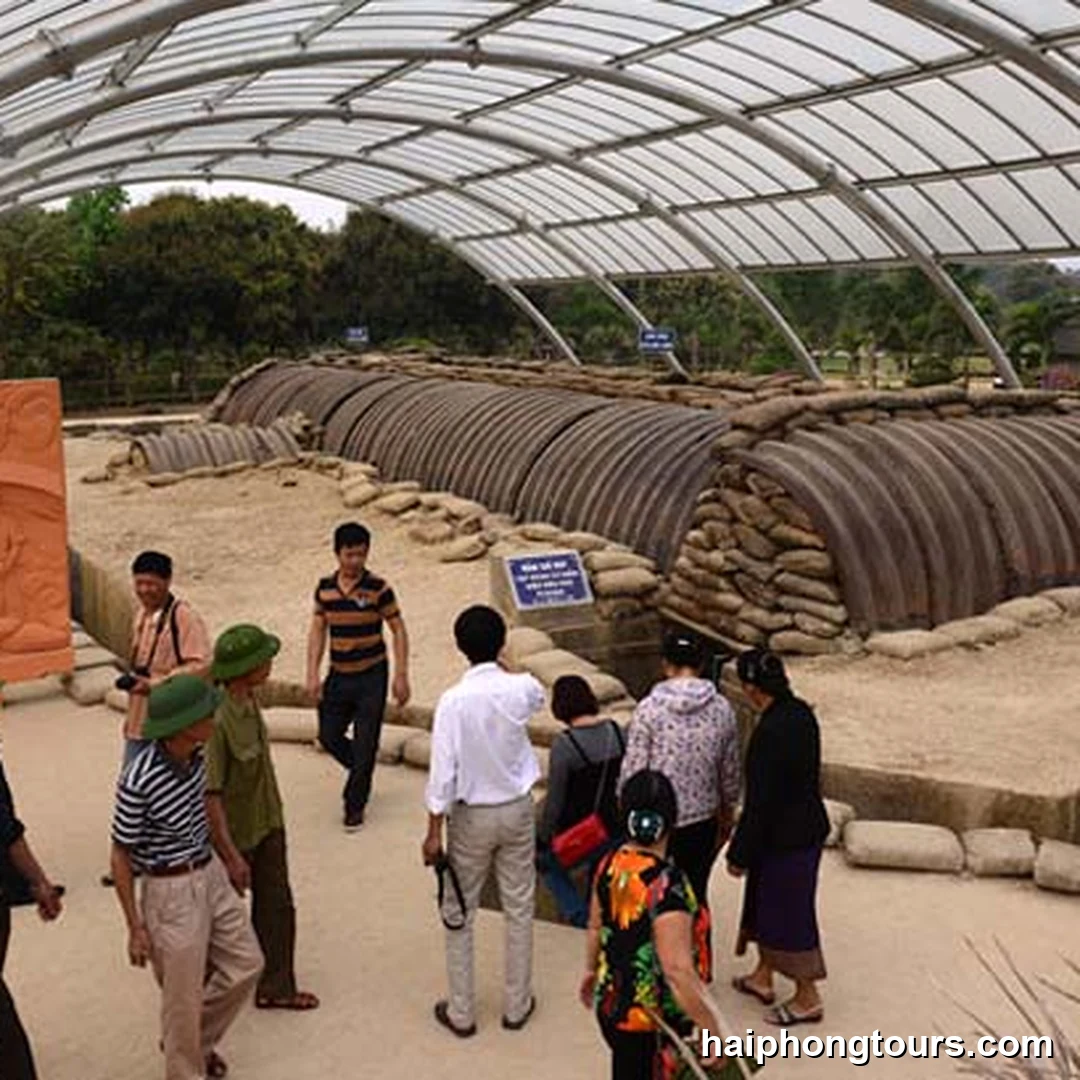
The restored setting includes living and working shelters, a meeting shelter and a bunker, with protective fencing and historical markers. Spend time distinguishing the spaces rather than treating the whole compound as another residence of Ho Chi Minh. Nà Pậu and Khuổi Linh explain connected but different roles.
Both sites have concrete approaches from provincial road ĐT254. This makes the road corridor useful for planning, but the sites still need separate destination pins and arrival arrangements. Do not assume that following a sign into one compound completes both visits.
Arranging a visit and someone to explain it
A practical starting point is the Nghĩa Tá commune office: . This is a local-government inquiry contact. Ask to be directed to the people responsible for Nà Pậu and Khuổi Linh; it is not a tour reservation service or a promise of an English-speaking response.
Send a short request with your visit date, group size, the two site names and any mobility needs. Have a Vietnamese-speaking host or guide follow up if necessary. Establish who will receive you, the meeting point and which areas can be entered that day before committing to a long drive.
Historical interpretation is worth arranging separately. If you need English, request a guide who can explain the different leaders, offices and wartime sequence, then agree where that person joins you. A driver who knows the road may not provide this service.
Ask about any admission or guiding charges and how to pay. Keep transport, waiting time and interpretation clear in the quotation. Plans for restoration or new visitor facilities should not be treated as facilities already available on an ordinary visit.
Building a realistic day around two stops
Use a car with agreed waiting and onward transport for the selected circuit. Ask the driver to calculate the day from your exact hotel, through both site entrances, to your final destination. A quote ending in central Thai Nguyen or a Cho Don town drop-off does not cover the same journey.
Choose the first stop according to the custodian’s availability and your approach direction. Keep the second visit flexible rather than attaching a fixed timetable to each hut. The local half-day allowance is a planning margin, not a published tour duration or a Hanoi return-trip estimate.
For limited mobility, request the actual distance from vehicle access to each hut, including slopes, thresholds and steps. A concrete approach road does not establish step-free access inside the grounds. A shorter explanation at an accessible point may be more useful than attempting every shelter.
Wear shoes with grip for wooded paths, and shorten the walk if rain makes footing poor. Observe barriers around reconstructed buildings and bunkers; their presence in the historical circuit does not automatically allow climbing inside. Give commemorative groups space and ask before photographing a ceremony.

Agree on a meal stop before departure, especially for dietary requirements, and carry water. Keep the site visits in daylight even if a map or general destination listing shows late opening hours.
Choosing between nearby travel plans
The ATK Dinh Hoa guide covers a different circuit, including Tin Keo and the decisions preceding Dien Bien Phu. Choose Cho Don for Nà Pậu and Khuổi Linh’s linked working bases; choose Dinh Hoa when those later strategic decisions are your main interest. Visiting both deserves a longer history itinerary with separate driving allowances.
For a journey continuing toward Ba Be Lake, keep the historical circuit and the lake boat day distinct. Settle the Cho Don-to-accommodation road leg before booking a boat departure, and protect a full lake day instead of squeezing the two experiences into one sightseeing checklist.
The ATK Cho Don night market is a separate cultural event associated with Cho Don’s town center and holiday programs. Do not extend your stay solely on the assumption that it operates every evening. Confirm an actual event date first; a daytime historical visit stands on its own.
Would you like help fitting this experience into your trip? Contact us with your travel dates, starting point, available time and group size. Tell us about walking limits or special interests so we can suggest a practical itinerary.