
Au Co Temple in Hien Luong is a village pilgrimage site devoted to the legendary mother of the Vietnamese people. Visit for its living worship traditions, a nineteenth-century wooden statue recognized as a national treasure, and the connection between the origin story and this particular community. It suits a cultural journey through Phu Tho better than a quick scenic stop.
Make sure you choose Đền Mẫu Âu Cơ, Hiền Lương, Phú Thọ. This is a different destination from the Au Co temple on Van Mountain inside the Hung Kings Temple complex. The shared dedication can make search results confusing, but the two sites need different travel plans.
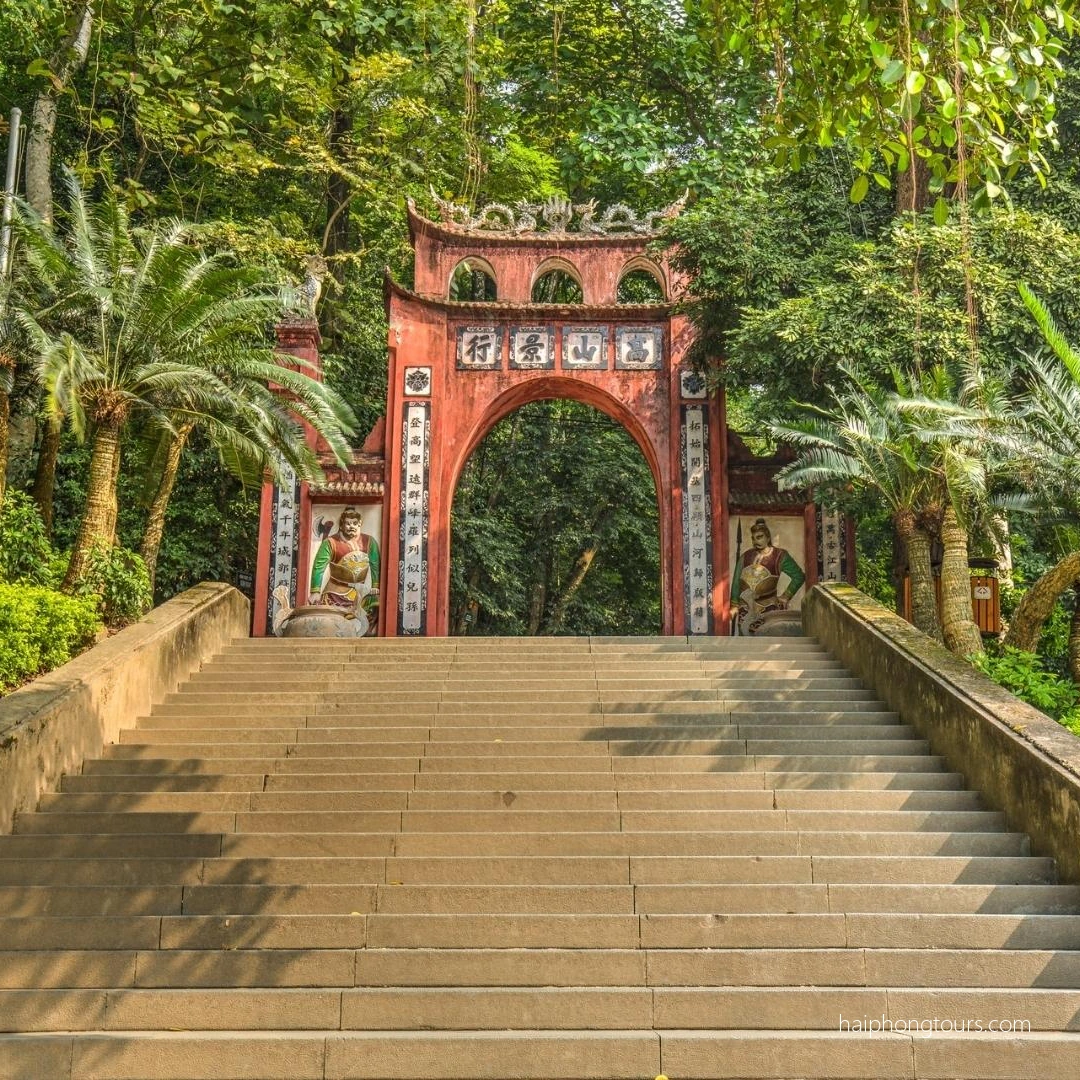
Which Au Co temple to visit
Hien Luong’s temple belongs to the former Ha Hoa area, beside the National Highway 32C corridor. It is roughly 75 km from central Viet Tri, so it deserves a separate block of travel time. Arriving at Den Hung does not put you a short walk from this shrine.
Choose Hien Luong if you are interested in the older village tradition, its national-treasure statue or the early-spring festival. Choose the Hung Kings Temple complex if your main purpose is the Nghia Linh pilgrimage climb and the temples associated with Vietnam’s ancestral kings. Its separate Au Co temple is the mountain site often pictured with a long stair approach.
The two can form part of a longer Phu Tho journey, but they should not be treated as interchangeable stops in a booking. Send the Hien Luong location and temple name together when asking a driver or guide to arrange this visit.

The story that gives Hien Luong its meaning
In Vietnamese founding tradition, Au Co and Lac Long Quan have one hundred children, with fifty following their mother toward the mountains and fifty following their father toward the sea. The story expresses a shared ancestry across different landscapes. It is a founding legend, rather than a literal account of an archaeological event.
The Hien Luong tradition adds a local chapter: Au Co is remembered for settling here and teaching people to cultivate rice, raise silkworms and weave. Those associations connect the mother figure with work, food and community life. They explain why the temple matters beyond the appearance of its buildings.
The shrine’s recorded tradition reaches back to royal recognition in the fifteenth century, with later repairs and additions. Its age should not be confused with the age of every object or building now present. A guide who can explain the local story and the way people worship will add more than a list of dynasties alone.
The wooden statue and what to look for
The Au Co statue is a nineteenth-century work in jackfruit wood, finished with red lacquer and gilding. It received national-treasure recognition in 2020 and remains a sacred object in the rear sanctuary of the main temple. It is not an archaeological statue surviving from the legendary Hung Kings era.
The figure sits enthroned, wearing a crown and richly decorated robes. The regal presentation is central to the work’s meaning: Au Co is honored as the nation’s mother. The crown, throne and carved ornament make the statue a useful focus for understanding the relationship between village devotion and royal recognition.
View from the areas opened to visitors and follow the attendant’s directions. Do not expect museum-style access around the statue or enter the rear sanctuary for a closer photograph. If seeing particular carving details is your main interest, arrange interpretation and ask about viewing conditions before making the journey.
A small heritage area, not just one doorway
The recognized cultural destination brings together the Au Co temple, the Duc Ong shrine and Linh Phuc Pagoda. They are distinct places within the local heritage area. Give yourself time to understand their roles instead of assuming that every building is dedicated to Au Co.
Duc Ong is particularly relevant to the festival procession, which moves toward Au Co Temple. A normal visit lets you look at the setting more quietly; a festival visit makes the connection between the sites more visible through the community’s ceremonies.
Allow approximately an hour for the main temple as a starting estimate, then add time if you want the neighboring religious sites and a guided explanation. Keep some flexibility around worship and any closed areas. This is a better place for a deliberate cultural visit than for a rigid checklist of photographs.
Visit quietly or come for the seventh day of the lunar year
The principal spring ceremony falls on the seventh day of the first lunar month, shortly after Tet. The broader festival program can start earlier; opening festivities and the main rite are not necessarily on the same day. Confirm the announced schedule for the year rather than relying on a fixed February date.
A distinctive feature is the procession from Duc Ong and the women’s ceremonial team, known as tế nữ quan. Participants are selected and prepared locally. For an international visitor, watching the movement, music and formal offerings can make the temple’s community role easier to understand.
These are religious observances. Stand outside the procession route, give participants room and avoid stepping into a ceremony for a photograph. Cultural games, food activities and other public events depend on that year’s program; they are not regular daily attractions.
Choose an ordinary day for more space and a quieter explanation of the site. Choose the festival for the communal occasion, accepting greater demand for transport and less freedom to move around. The day that offers the best cultural atmosphere may be the least convenient day for close architectural photography.
Plan the approach and the rest of your day
The road approach is via the National Highway 32C area. For a car arriving on the Noi Bai–Lao Cai expressway, the IC11 interchange and the Highway 70 connection provide a route toward the site. Let the driver check the actual route and local access for your date, particularly during the festival.
For a first Phu Tho trip, a night in Viet Tri can divide the travel into manageable stages. Its city museum provides historical context, while Hien Luong offers a living worship setting farther away. Give each its own time rather than adding both to an already full Den Hung climbing day.
Agree on return pickup and a meal stop before traveling. For regional dishes to consider along the journey, the Phu Tho food guide explains local specialties and their differences. A temple visit is not a guarantee that a particular dish or restaurant will be available at the gate.

For a scenic addition in the Ha Hoa area, the Ao Chau Lake boat guide explains the local landing, optional shore sights and arrangements to make before traveling.
Dress with shoulders and knees covered, carry water and use footwear suitable for temple thresholds and outdoor paths. If step-free access or English interpretation is essential, arrange those details for the intended visit. Choose daylight for a normal outing and follow posted access information; a festival’s extended program should not be used as the ordinary opening schedule.
Hien Luong is most rewarding when you come to understand the place of Au Co in Vietnamese community life. Confirm the correct temple, decide between a quiet day and the lunar festival, and leave room for the stories behind the shrine.
Would you like help fitting this experience into your trip? Contact us with your travel dates, starting point, available time and group size. Tell us about walking limits or special interests so we can suggest a practical itinerary.