
Ba Be Lake is best as a two- or three-night nature stay, not a rushed day trip from Hanoi. The core experience is a boat journey through the lake and Nang River landscape, combined with a Tay village stay and one walking, cycling or cave day. Travelers continuing to Cao Bang can use Ba Be as a separate stop, but should allow a full road stage between regions.
Ba Be belongs to Ba Be National Park and is recognized as a Ramsar wetland of international importance. It is a protected living landscape rather than a resort lake. Choose authorized boats and trails, wear the life jacket, and let water level and weather change the route when necessary.
Understand the lake, river and road before choosing a tour
| Experience | How it fits the geography | What to arrange |
|---|---|---|
| Ba Be Lake | Open lake sections between forested limestone slopes | Your boarding point, boat and chosen lake stops |
| Puong Cave | A river passage on the Nang River | A route that explicitly includes the river, not only a short lake circuit |
| Dau Dang area | A river and waterfall excursion with walking off the boat | The landing, walking section and whether it fits the day’s water conditions |
| Hua Ma Cave | A land-based cave visit outside the lake cruise | A separate road journey and walk |
| Pac Ngoi or Bo Lu | Village bases around the lake area | Accommodation location and transfer to the agreed boat departure |
Short boat-day sequence: agreed boarding point → lake → Nang River and Puong Cave, if included → selected lake stop → original or agreed finishing point. Land-day sequence: village base → road transfer or local ride → Hua Ma or a village walk → accommodation. These are schematic trip shapes, not an official navigation map or permission to land anywhere.
One listing may start from a tourism centre, another from a village-side boarding point. The words “Ba Be boat tour” do not make them interchangeable. The useful booking detail is the actual meeting point and pickup arrangement, especially if you are staying in a homestay and have no vehicle.

A current boat-tour example and what it covers
A commercial tour listing on BaBeNationalPark.com.vn, checked on 10 November 2026, advertises a half-day group boat trip at US$35 per person. Its stated programme is approximately 08:30–11:30 from Ba Be Tourism Centre, covering the lake and Nang River with Puong Cave, Cam Ha village and selected lake stops. It lists a motorboat and an English-speaking local guide; meals and accommodation are not included.
This is an operator’s per-person tour price. It is not an official national-park admission fee, a whole-boat charter tariff or a Hai Phong Tours quotation. Two adults at that advertised rate would pay US$70 for that product before excluded items. A private boat with a different route, pickup or guide arrangement must be quoted separately. Do not assume a specific landing remains possible when water or park conditions change.
When comparing another offer, write down the number of passengers, boat duration, guide language, lunch, entry charges, road pickup and finishing point. A shorter boat-only charter may have a lower headline price while covering a different experience. This guide does not publish an unverified current government entry tariff.
Choose a homestay area before choosing the room
Pac Ngoi suits travelers who want a village-based stay with homestay meals and a lake-area rhythm. Bo Lu is another village base to consider when matching a room with the operator’s pickup. A property overlooking water may sit above the shore, with steps and a separate drive to a pier. Ask for the route from the vehicle to the room if access matters.
For two nights, keep the same room and spend one full day on the lake. A third night is useful when you want a separate guided walk, Hua Ma visit or slow village day without fitting it around the long departure. It is less useful when the extra day simply repeats the same boat route. Set the evening meal with the host before leaving for the day, since this is not a city restaurant district.
Ba Be Lake at a glance
- Best first stay: two nights; three when hiking, cycling or a Cao Bang connection matters.
- Main experience: a lake and river boat route, with the exact stops determined by current water and park operations.
- Useful base: a verified homestay around Pac Ngoi or another authorized village near the lake.
- Landscape: freshwater lake, limestone forest, river cave, waterfalls and agricultural villages.
- Protected status: national park and Ramsar wetland; it is not a UNESCO World Heritage Site.
- From Hanoi: a long road journey, commonly planned as most of a day.
- Main planning risk: booking one fixed boat checklist without checking water level, cave access and the correct pier.
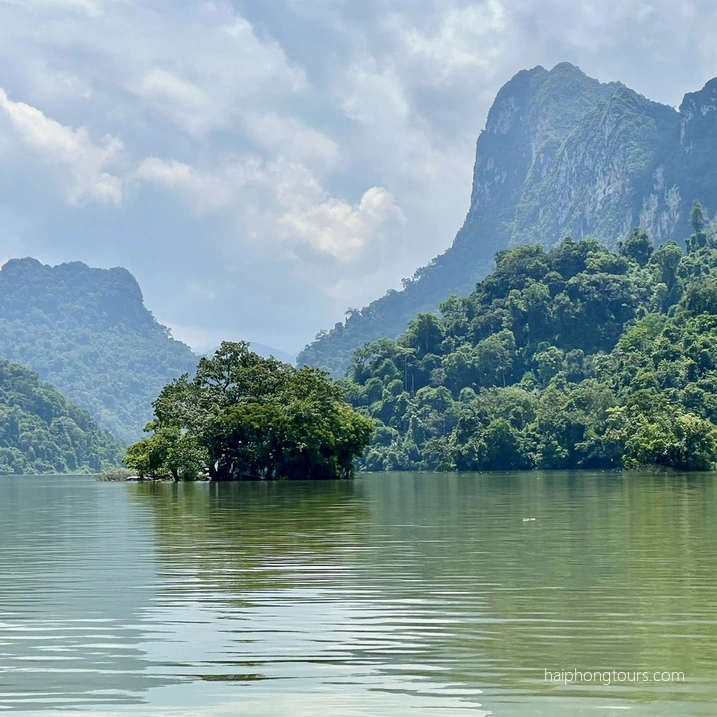
Where is Ba Be now?
Older travel content places Ba Be in Bac Kan Province. Bac Kan and Thai Nguyen merged in 2025, and current official addresses may use the expanded Thai Nguyen Province. The familiar names Ba Be Lake, Ba Be National Park and Pac Ngoi remain useful for travelers.
Save the exact homestay and pier pins. Do not assume a driver understands the destination from the province name alone, especially when an old booking and a new map use different administrative labels.
Why Ba Be is ecologically important
Ba Be is a natural freshwater mountain lake within a forested national park. It became Vietnam’s third Ramsar site in 2011, recognizing the wetland’s international importance. The lake also helps regulate water, supports local livelihoods and forms part of a wider river and cave system.
The protection has practical implications:
- use official boats and visitor routes;
- do not leave waste, soap or food in the water;
- keep noise low near caves and wildlife areas;
- do not collect plants, animals, rocks or cave formations;
- follow local limits on swimming, fishing, fires and drones.
A quiet lake does not mean the ecosystem is empty or unrestricted.
How many days do you need?
One day
A one-day visit works only from a nearby base and usually reduces the experience to a boat ride. It is not a practical day trip from central Hanoi because the road consumes too much of the day.
Two days, one night
This is the shortest useful stay. Arrive around midday, settle into the village, take a shorter lake or land walk, then use the next morning for the main boat route. The schedule remains vulnerable to a late Hanoi departure or poor weather.
Three days, two nights
This is the better first visit. Use one day for arrival and village life, one for the lake and river route, and one for hiking, cycling, Hua Ma Cave or departure. It gives the boat operator more freedom to choose the safest weather window.
Four days or more
Choose a longer stay for guided forest walking, slower community time, birding or a combined road trip. Do not add days simply to collect every named cave and waterfall.
A practical three-day itinerary
Day 1: Hanoi to Ba Be and village arrival
Use a direct vehicle, an organized transfer or a verified bus connection. Arrive with daylight to find the property, arrange the boat and understand meal times. Walk through the village or along a safe local road rather than starting a remote trail.

Confirm the next morning’s pier, departure, boat type, life jackets, route, lunch and weather fallback. A homestay described as “on Ba Be Lake” may still require a drive or walk to the boarding point.
Day 2: lake, Nang River and available boat stops
Use the main boat day for the lake’s scale and forested limestone setting. Routes may include the Nang River, Puong Cave, Dau Dang Waterfall or another authorized stop. Water level, current, maintenance and park rules can change the workable combination.
Do not make every named stop compulsory. A shorter route with safe boarding, good life jackets and enough time off the boat can be better than a long circuit completed in rain.
Day 3: land activity and onward travel
Choose a village walk, bicycle route, guided forest section or Hua Ma Cave when open. Keep enough time for the full road journey to Hanoi or Cao Bang. If a high-value flight or train follows, sleep in the connection city first.
The Ba Be boat experience
Boat types, capacity and routes vary. Some trips are private by boat, while others combine guests. The price may be per boat, per person or per route. Make the unit clear before comparing.
Ask the operator:
- Which pier will we use?
- Which lake, river, cave and waterfall stops are operating?
- How long is the route including time ashore?
- Is the price per boat or per passenger?
- What is the maximum passenger capacity?
- Are correctly sized life jackets available for every adult and child?
- Is lunch included, and where is it served?
- What happens in heavy rain, strong current or a park closure?
Wear the life jacket while the boat is moving. Keep hands inside, distribute weight as directed and use both hands during boarding. Protect passport, phone and medicine in a sealed bag.
Puong Cave
Puong Cave is formed where the Nang River passes through a limestone mountain. A boat route may travel through or near the cave when water and park operations allow. It is also a bat habitat.
Keep voices low, avoid flash or strong lights when instructed, and do not touch the cave. High water or safety work can change access, so treat Puong as a conditional part of the boat day rather than a guaranteed tunnel.
Dau Dang Waterfall
Dau Dang lies downstream in the river system and may be included in longer boat routes. Reaching the viewpoint can involve uneven and slippery walking. Water volume affects both appearance and safety.
Ask how much walking is required and whether the boat waits at the same point. Travelers with limited mobility can choose a shorter lake route without weakening the core Ba Be experience.
Hua Ma Cave
Hua Ma is a land-access cave in the wider Ba Be area rather than a stop inside the main lake boat route. It can add a useful dry or mixed-weather activity when the current access is open.
Expect steps, damp surfaces and changing light. Confirm the walking distance, opening access and transport from the homestay. Wear shoes with grip and do not touch formations.
For a more active cave day, the Tham Phay Cave expedition guide explains the forest approach, wet passages and booking decisions. Arrange it as a separate guided outing, with the route chosen for your group and the current water conditions.
Pac Ngoi and Tay village stays
Pac Ngoi is known for Tay stilt-house architecture and homestays near the lake. A village stay offers meals, local knowledge and an early start without returning to a distant town.
“Homestay” can mean a shared sleeping floor, a dormitory, a private room with shared bathroom or a private en-suite room. Confirm:
- room type and occupancy;
- mattress, mosquito net and bedding;
- private or shared bathroom;
- hot water and winter heating;
- dinner, breakfast and dietary requests;
- vehicle access and luggage handling;
- the distance to the boat pier.
Ask before photographing a home, person, ceremony or child. Follow the host’s guidance on shoes, private areas and quiet hours.
Hiking and cycling
Forest and village routes range from easy roads to remote trails. A generic map does not show land permission, river crossings, recent erosion or the guide requirement. Use a local park-approved guide for any route that leaves the obvious village road.
Before hiking, confirm:
- distance, elevation and expected hours;
- trail surface after recent rain;
- guide, permit or park-ticket needs;
- water and food availability;
- mobile coverage and emergency plan;
- the return vehicle or boat.
For cycling, ask whether the route uses sealed road, rough track or steep descent. Helmet fit, brakes and tire condition matter even when the village looks quiet.
Swimming and kayaking
Do not assume swimming is permitted or safe anywhere the water looks calm. Boat traffic, current, depth, submerged obstacles, water quality and seasonal rules vary. Use only an area approved by the park or accommodation on the day.
Kayaks, when available, require a correctly fitted life jacket and a defined operating zone. Ask where you may paddle, whether a guide follows, how weather is monitored and what signal means return.
The Ba Be kayaking guide explains the difference between a short local paddle and a guided lake-and-river day, including meeting points, shore stops and the return arrangement.
Best time to visit
November to April
The drier northern period usually supports easier road, boat and walking plans. Winter mornings can be cold and misty. Pack warm layers and do not expect a tropical swimming holiday.
May to October
The warmer rainy period brings green forest and fuller water. Heavy rain can alter river current, cave access, waterfall paths and roads. Keep the boat route flexible and avoid remote walking during storms.
Check the official weather warning and ask the boat operator about the actual lake and river. A city forecast does not replace a local water-level decision.
How to reach Ba Be from Hanoi
The dedicated Hanoi to Ba Be Lake transport guide compares tourist shuttles, buses with a connection and private cars. It explains the difference between a Cho Ra stop, a park entrance, your homestay and the boat pier, so you can arrange the complete journey before leaving Hanoi.
Private car
A private car offers direct hotel pickup, luggage control and stops. It works well for a family or small group. Confirm the exact rural property, driver costs, waiting time and whether the road continues to Cao Bang.
Bus or shared transfer
Current services may go to the Ba Be area, a district town or a transfer point requiring another vehicle. Verify the final stop, feeder arrangement and the last connection to the homestay.
A quoted departure from Hanoi may use an operator office rather than a public station. Save the Vietnamese address and map pin, and arrive early enough for traffic.
Motorcycle
The road trip is suitable only for a rider with the correct licence class, recognized permit, insurance and rural-road experience. Rain, trucks, fog and fatigue remain important outside the park.
Combining Ba Be and Cao Bang
The Cao Bang–Ba Be transfer guide explains city versus Ban Gioc pickups, local-bus connections and the difference between a lakeside homestay and a boat-pier drop-off. Confirm the direction and exact endpoints before booking.
Ba Be and Cao Bang form a logical northeastern journey when you have enough road days. Use two or three nights at Ba Be, a full transfer stage, then three sightseeing days in Cao Bang.
Do not assume a daily direct bus from the lakeside village. Confirm the actual service and pickup, or arrange a car. The Cao Bang travel guide explains how much time Ban Gioc, Pac Bo and the geopark routes require.
For a longer motorcycle expedition toward Ha Giang, treat every province link as its own mountain-road stage and verify current surfaces.
Food, cash and connectivity
Homestay meals are often the simplest option. Confirm dinner and breakfast in advance, especially after a late arrival. Explain allergies and vegetarian needs before the host shops or cooks.
Carry Vietnamese cash for boats, meals, local transport and small tickets. Do not depend on card payment, ATMs or continuous mobile data near the lake. Save the property, boat operator and driver’s contacts offline.
Mosquitoes, leeches and basic health
A wet forest and lakeside environment can have mosquitoes and, on damp trails, leeches. Use repellent, long clothing and a mosquito net where provided. Check skin and socks after walking.
Carry personal medicine and insurance details. Ask where the nearest appropriate clinic is and how long road transfer would take. A village first-aid kit is not a replacement for treatment of a serious injury or allergic reaction.
Accessibility and families
Boat boarding can involve steps, unstable gaps or a low seat. Village paths and cave routes may be uneven. Ask for photographs or a precise description of the pier, room and bathroom before booking.
For children, verify a correctly sized life jacket rather than accepting an adult jacket tightened loosely. Keep the boat day shorter, carry familiar food and protect naps from a long checklist.
Travelers with limited mobility can focus on a scenic lake route and an accessible village stay, removing waterfalls, caves and remote trails.
Responsible travel
- Refill water where safe and carry waste back.
- Use quieter voices on the lake and near bat caves.
- Choose locally run accommodation and boats that follow park rules.
- Ask before photographing residents.
- Do not buy wildlife products or remove natural material.
- Use only authorized fire, camping and swimming areas.
Common planning mistakes
- Attempting Ba Be as a same-day return from Hanoi.
- Booking a “full boat tour” without named stops or the correct pier.
- Treating Puong Cave access as guaranteed at every water level.
- Assuming every homestay has a private room and bathroom.
- Following an offline trail without local permission or a guide.
- Combining Ba Be and Ban Gioc in one sightseeing day.
- Leaving no buffer before a Hanoi flight.
Final planning checklist
- Book two nights for the first visit.
- Choose an exact village property and pier.
- Confirm the boat route, price unit and life jackets.
- Keep cave and waterfall stops conditional.
- Use a guide for remote forest routes.
- Carry cash, offline contacts and waterproof document storage.
- Give Ba Be–Cao Bang its own transfer day.
- Let water and weather change the itinerary.
Ba Be rewards a slower rhythm: one complete boat day, one land-based experience and enough village time to understand where you are staying. Protect that pace, and the lake becomes more than a stop on a long northern road map.
Using Bac Kan city as a transport hub
Bac Kan city and Ba Be Lake are different endpoints. If the city is your stop or connection, use the Hai Phong to Bac Kan city guide or the Bac Kan to Hai Phong guide. For a lakeside homestay, keep the Ba Be-specific plan.
Would you like help fitting this experience into your trip?
Contact us with your travel dates, starting point, available time and group size. Tell us about walking limits or special interests so we can suggest a practical itinerary.