
Ba Vang Pagoda is a large, active Buddhist complex on Thanh Dang Mountain above Uong Bi in Quang Ninh. It suits a focused visit to halls, sculpture, gardens and hillside viewpoints without committing to the full Yen Tu mountain pilgrimage. Allow roughly one and a half to two and a half hours for the main visitor areas, then add your road journey and any extra uphill walking.
Admission is free, and the pagoda’s parking service is free. The main decisions are how high to explore, where your vehicle will leave you, and whether your visit coincides with a ceremony. The buildings and courtyards span different levels, so arriving by road does not make the whole visit step-free.
Find Ba Vang, rather than a generic Uong Bi stop
Use the Vietnamese name Chùa Ba Vàng. The current address is Group 17B, Quang Trung 5A area, Uong Bi ward, Quang Ninh. Older directions use Quang Trung ward and Uong Bi city; the attraction itself has not moved.
For a private car, agree on the visitor drop-off and parking point before departure. With an intercity coach or limousine, establish whether the vehicle stops in Uong Bi, at the lower stone gateway, or farther up the approach. A service advertised as going to Ba Vang can still leave a final local ride to arrange.

Save the collection point and the driver’s number before entering. If you plan to leave separately from the rest of a group, arrange that ride yourself rather than assuming vehicles wait at every gate. A clear return plan is especially useful after a late ceremony or when arriving with luggage.
A main-area visit with enough time to look
Start with the areas below and around the main hall, then decide whether to continue uphill. You do not need to follow every stop in a long temple checklist. A slower visit to a few spaces gives more context than taking the same photograph at every staircase.
The approach: gateways, Quan Am and the pond
The stone gateway and the middle three-entrance gate mark stages of the approach. Near the latter, the Tu Bi waterfall feature adds a landscaped water element. Follow the signed visitor route rather than using a staircase simply because it appears to lead upward.
The standing Quan Am figure is one recognizable landmark. The pagoda also has its own One Pillar Pagoda beside Ban Nguyet Pond, inspired by the Hanoi structure. Look at the relationship between the small shrine, water and surrounding hillside; it is a separate feature from the much larger main hall.
The main courtyard, hall and Arhat corridor
The main hall is called Chinh Dien or Dai Hung Bao Dien. Its interior includes a sequence of 37 sculpted panels illustrating the Buddha’s life. Rather than trying to understand every scene, ask a guide to explain a few recognizable stages and how the panels relate to the objects of worship.
The surrounding corridor contains figures of the 18 Arhats. This is a useful place to compare expressions, posture and the objects held by different figures. Leave space for worshippers and check whether photography is allowed before approaching an altar or taking close pictures.
The broad courtyard gives a different view of the complex’s scale. Seasonal decorations may change its appearance considerably. Photographs of a festival installation are not a promise that the same display will be present during an ordinary visit.
Behind the main hall
Phung To Duong combines a memorial space on its lower level with the patriarchs’ hall above. The dedications differ from those in the main Buddhist hall. Take time to read the names or ask for an explanation rather than assuming every statue represents the same figure.
A small museum area beside the main hall presents material connected with the pagoda and its development. Ask reception which rooms are accessible that day. It is an optional part of the visit, not a separate regional museum requiring another long sightseeing block.
The upper areas are an extra walking choice
The route toward the Amitabha statue and relic-worship area involves further climbing. Bo De Mountain is another higher section reached by stone steps, with views back across the complex. Leave these until you have seen how your group handles the lower route and the day’s heat or rain.
For older relatives, young children or anyone who finds repeated stairs tiring, the main courtyard and hall can be a complete visit. Set a meeting place before part of the group continues uphill. Keep enough energy and daylight for the descent; going upward until tired leaves the return still to do.
Ask reception about the least demanding route from your actual drop-off, including toilets and any available assistance. Do not infer wheelchair access from the size of the courtyards or the presence of an uphill road. Monastic and retreat areas have their own access arrangements, so follow current signs and staff directions.
Vegetarian meals and visitor reception
The visitor reception is Ban Tri Khach, on the first floor of the main hall. Ask there about registering for a vegetarian meal, the serving location and the day’s arrangements. The pagoda offers meals without a charge, but this is organized hospitality rather than an all-day restaurant.
Register before the meal service instead of arriving at its end and expecting food to be available. Tell reception about allergies or ingredients you avoid. Keep an alternative lunch plan in Uong Bi if the timing or meal is unsuitable; a free meal should not be the condition on which the entire outing depends.
The temple does not require a donation in exchange for ordinary admission. If you choose to donate, use the pagoda’s designated arrangements. Transport supplied by an outside company remains a separate service even though temple entry and the pagoda’s parking are free.
When to go and how to behave
A daylight visit is easiest for seeing the grounds and assessing the steps. Morning also leaves more room for rest and a meal afterward. Lunar New Year, Buddhist celebrations and announced gatherings can bring a much busier visit; choose the event for its religious atmosphere or visit another day for more space.
For very early or evening plans, confirm that day’s visiting window first. Closing arrangements vary around the temple’s programs, and an old festival timetable is not a year-round schedule. Arrange any English interpretation in advance.
- Dress for both worship and stairs: cover shoulders and knees and wear shoes with a secure grip.
- Keep food appropriate to the place: do not bring meat dishes or alcohol into the temple grounds; ask where eating is permitted.
- Keep worship spaces calm: silence your phone, avoid blocking processions or prayers, and follow instructions about shoes and photography.
- Keep the visit voluntary: observing respectfully is sufficient; ask for an explanation before joining a ritual you do not understand.
Ba Vang or Yen Tu: choose the shape of the day
Ba Vang concentrates much of its sightseeing around a road-accessible temple complex, with higher areas optional. Yen Tu Mountain is a more dispersed pilgrimage through forest, pagodas and mountain paths, with cable-car choices and a demanding final summit approach.
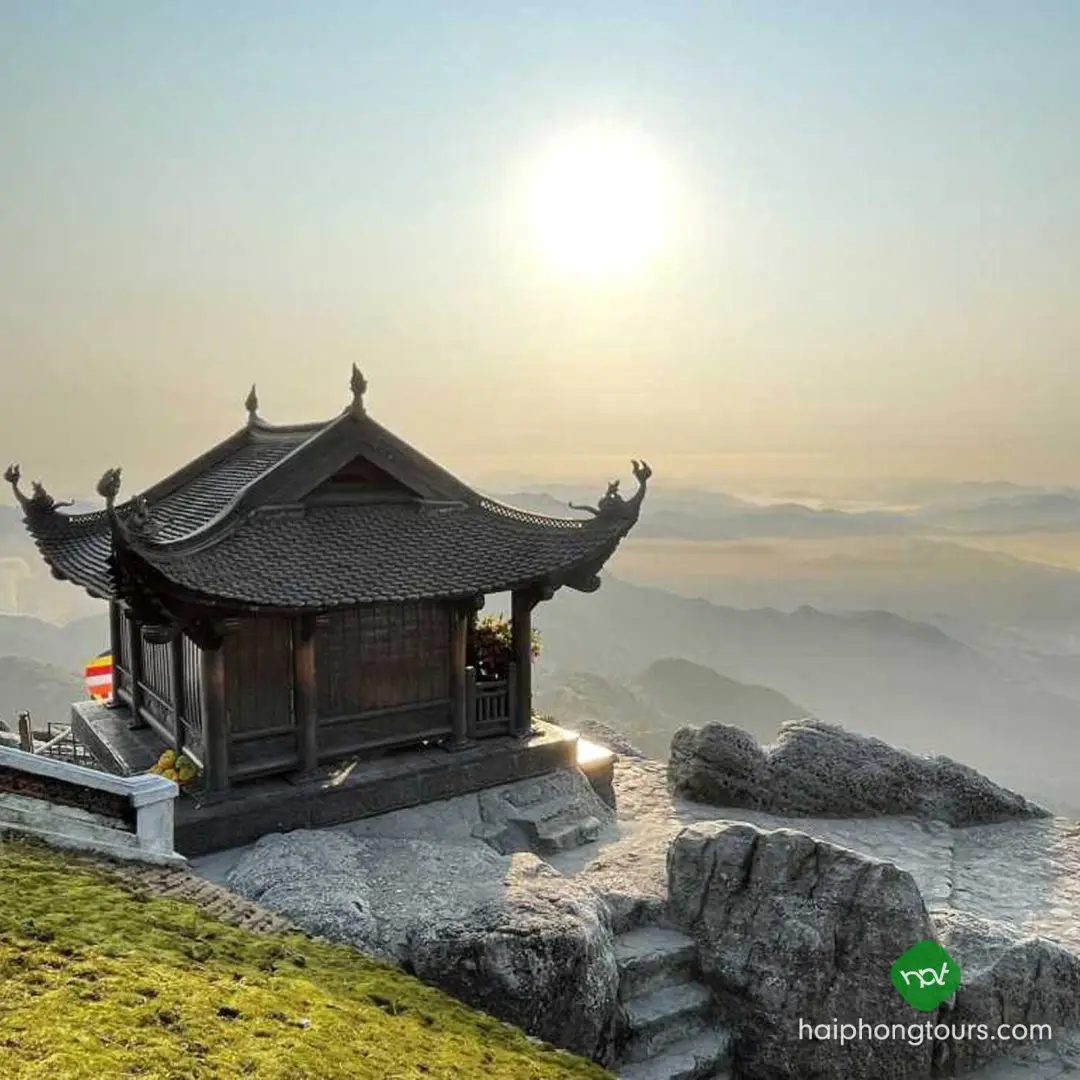
If you want to reach Dong Pagoda on Yen Tu, give that journey its own generous sightseeing day. Adding Ba Vang afterward may leave you rushing through both. A shorter Yen Tu foothill visit can be combined with Ba Vang when you deliberately allow for the drive, walking, lunch and return.
For a shorter cultural stop elsewhere in the province, compare the Quang Ninh temple and pagoda options. Ba Vang works best when its main halls and setting interest you enough to pause, rather than when it is merely another name to fit between Hạ Long and your next fixed departure.
Would you like help fitting this experience into your trip? Contact us with your travel dates, starting point, available time and group size. Tell us about walking limits or special interests so we can suggest a practical itinerary.