
Ba Vi National Park is one of the easiest forest day trips from Hanoi when you have a private vehicle and are comfortable with steep roads and long stair climbs. A strong first visit combines the old French ruins with one summit route. Staying one night is useful for an early start or a slower family trip, but most visitors do not need more than two days.
Ba Vi is not a single trail. A winding park road links entrance areas, pine forest, French-era ruins and the upper trailheads for King Peak and Tan Vien Peak. Choose the day’s main climb before entering, then leave enough time for weather and the descent to Hanoi.
Ba Vi National Park at a glance
- Best for: a self-contained forest and mountain day close to Hanoi.
- Minimum useful time: one full day.
- Best first route: old church and French ruins, then one upper summit trail.
- Main effort: long stairways rather than a continuous wilderness trek.
- Main road risk: steep bends, fog, rain and weekend traffic.
- Best transport: a car with driver or a properly licensed, experienced rider.
- Most important check: current road, trail, fire-safety and opening conditions.
Is Ba Vi worth a day from Hanoi?
Ba Vi is worth the trip if you want forest, cooler air and a physical outing without adding a distant mountain province. The main entrance is roughly 60 to 70 kilometres west of central Hanoi, but city traffic and the mountain road make journey time more important than distance.
The park is less suitable for travelers looking for a flat nature walk or a viewpoint guaranteed to be clear. The final summit approaches use many steps, and cloud can remove the panorama. French ruins and misty forest can still be atmospheric in poor visibility, but they need shoes with grip.
Choose Ba Vi when:
- you have a spare full day in Hanoi and want nature;
- you prefer stairs and forest to a technical trek;
- you can arrange transport that waits inside the park;
- you accept that weather may change the summit plan;
- you want to combine natural and historical sites in one protected area.
Understand the park before planning
Ba Vi National Park was established in 1991. Its current official area is nearly 9,702 hectares across Hanoi and Phu Tho. Ba Vi mountain has three principal peaks: King Peak at 1,296 metres, Tan Vien Peak at 1,227 metres and Ngoc Hoa Peak at 1,131 metres.
Visitors normally drive from the gate through different elevation zones. Places that look close on a schematic map may be separated by steep road and limited parking. A useful day plan groups stops in the order they appear rather than driving repeatedly up and down.
The park contains protected forest as well as visitor sites. Admission does not mean every track is open for independent walking, camping or vehicle access. Check the day’s instructions at the gate and use marked routes.
How many days do you need?
One day: enough for the main experience
With an early departure from Hanoi, one day is enough for the French ruins and one summit area. Add short forest stops only if parking and weather cooperate. Trying to climb both main peaks, explore every ruin and hold a picnic usually turns the afternoon into a rush.
Two days and one night: better for a slow pace
Stay near the park if you want an early upper-forest start, travel with children or plan a longer environmental activity. An overnight also removes the need to descend to Hanoi immediately after a tiring climb.
Confirm whether the accommodation is inside the park, near the gate or elsewhere in Ba Vi District. The destination name covers a large rural area, and a property can require another long road transfer.
More than two days
A longer stay needs a separate purpose, such as a structured environmental program, additional countryside sites or rest at a resort. The national park’s common visitor route does not require three full sightseeing days.
The main places to visit
Old French church and ruins
The roofless stone church is the park’s best-known French-era ruin. Moss, roots and cloud create the atmosphere, but the remains are historical structures rather than a maintained indoor attraction. Stay outside unsafe or closed sections and do not climb walls for photographs.
Other ruins are scattered through the forest at different elevations. Some are easy roadside stops; others need walking. Ask which sites are open and marked on the day rather than following a vague pin into vegetation.
Best for: history, forest photography and a moderate stop before the summit climb.
King Peak and the Ho Chi Minh Temple
King Peak is the highest point of the Ba Vi range at 1,296 metres. The upper approach involves a long, steep stairway to the Ho Chi Minh Temple and Bao Thien Tower. The route is shaded but strenuous, especially in humidity or after rain.
The temple is a solemn memorial site. Dress respectfully, keep voices low and allow worshippers space. Cloud may hide the long-distance view, so value the climb and forest setting as part of the experience.
For a separate historic-site visit, consider K9 Đá Chông.
Best for: active visitors who want the highest summit and a cultural destination.
Tan Vien Peak and Thuong Temple
Tan Vien Peak is associated with Tan Vien Son Thanh, a central figure in Vietnamese mountain worship. The route to Thuong Temple also involves a substantial stair climb through humid forest. It is a separate commitment from King Peak.
The cultural meaning is more important than treating the two summit routes as a race. Visitors should dress respectfully and follow any ceremony or access instructions.
Best for: travelers interested in local spiritual history and a demanding forest stairway.
Pine forest and lower visitor areas
Lower forest areas can provide picnic or short-walk options with less climbing. Their opening, parking and camping rules may vary by zone. Use only designated areas and carry all rubbish out.
Best for: families, groups and visitors who want forest air without a summit.
Wild sunflower season
Ba Vi’s yellow da quy, commonly called wild sunflowers, bloom in late autumn and early winter. The precise flowering stage varies, so check conditions near your travel date if seeing the flowers is the main purpose of the trip. A weekday is a better choice when you want to avoid peak-season queues on the mountain road.
For the flower-forest walk, continue approximately 200 meters beyond the pine forest at the 400-meter elevation zone, park where directed, then turn left and walk about 300 meters to Rung hoa Da quy. The flower area has more than 3 kilometers of walking paths; choose a manageable out-and-back rather than assuming you must complete every path.
This lower-elevation stop can be the main outing if you do not want a summit stair climb. Allow separate time for any upper-park visit, keep cars off road bends and leave the flowers on the plants.
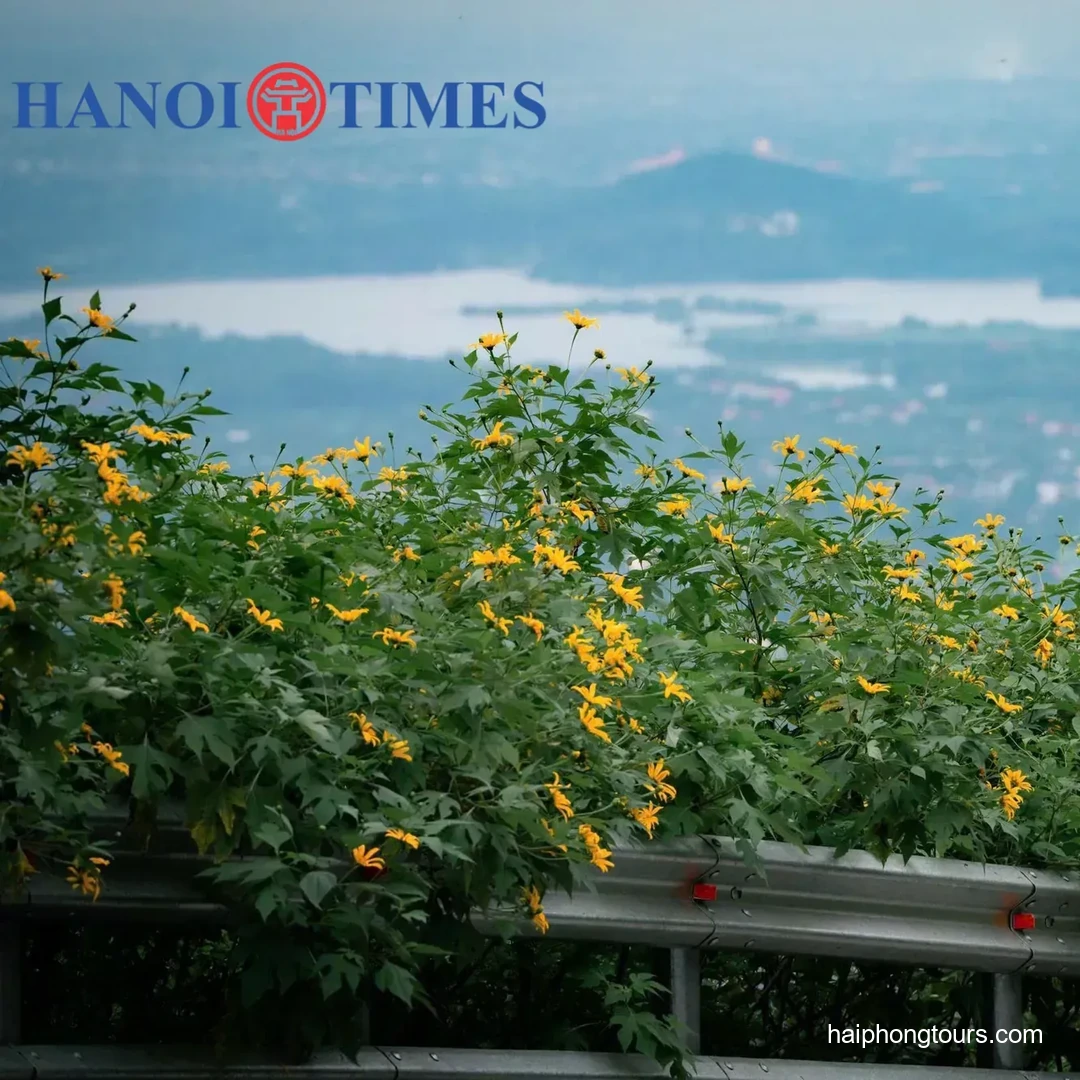 Wild sunflowers along the mountain road in Ba Vi National Park.
Choose one summit, not both
King Peak and Tan Vien Peak start from the upper part of the park but lead to different cultural sites. Both use long stairways. A first-time visitor should usually select one based on interest and fitness.
- Choose King Peak for the highest point, Ho Chi Minh Temple and Bao Thien Tower.
- Choose Tan Vien Peak for Thuong Temple and the mountain-deity tradition.
- Choose neither if wet steps, knee pain, poor balance or heart concerns make a long climb unsafe.
Ask gate staff about current trail condition and last safe starting time. Allow for the return descent; reaching the temple is only the halfway point of the walk.
A realistic Ba Vi day-trip itinerary
Morning
- Leave central Hanoi early enough to avoid the worst traffic.
- Buy the correct visitor and vehicle tickets at the official entrance.
- Confirm road, summit and weather conditions.
- Drive to the French ruins and old church for a focused visit.
- Continue upward without adding every roadside stop.
Midday and afternoon
- Eat a prepared lunch or use a confirmed food outlet before the main climb.
- Choose King Peak or Tan Vien Peak.
- Carry water and use a steady pace on the steps.
- Return to the vehicle with enough daylight for the mountain descent.
- Leave a traffic buffer before any evening booking in Hanoi.
If the summit is clouded or officially closed, spend more time at the ruins and lower forest. Do not replace a closed marked path with an informal track.
Best time to visit Ba Vi
Spring
Spring brings mild temperatures, cloud and damp forest. Mossy ruins photograph well, but steps can remain wet. Carry a light rain layer and accept limited views.
Summer
The forest offers shade from Hanoi’s heat, though the climbs remain humid. Afternoon showers and thunderstorms can develop quickly. Start the summit route in the morning and avoid exposed or high areas during lightning.
Autumn
Autumn often gives the easiest balance of temperature and walking conditions. Late-autumn flower season increases weekend traffic. Visit on a weekday when possible.
Winter
Winter can be cold, windy and foggy at the upper levels even when Hanoi feels moderate. Bring warm layers and a waterproof shell. Short daylight makes an early start more important.
Weather and visibility
Ba Vi creates its own mountain conditions. A clear forecast for central Hanoi does not guarantee a clear summit. Fog can reduce visibility on the road and make stone steps slick.
Check three things before leaving:
- the park’s current notice for road, trail or fire restrictions;
- rain and thunderstorm timing for the mountain area;
- the condition of the group, especially anyone driving back.
Turn back if staff close an area, lightning approaches or visibility becomes unsafe. A summit photograph is not worth extending the climb into severe weather.
Getting to Ba Vi from Hanoi
Private car with driver
For a national-park day trip, book a vehicle that stays with you through the visit and returns to Hanoi. A one-way quote to the entrance does not cover the winding road between the lower forest, French ruins and upper parking areas, or the journey home.

Send the official park entrance pin and the intended stops before accepting the quote. Confirm the total hours, any distance allowance, waiting during your walk, overtime rate, vehicle entry and parking charges. Ask the provider to confirm that the chosen vehicle can use the intended internal roads under the day’s restrictions.
A useful booking brief is: Hanoi hotel pickup, park entrance, old church and ruins, the parking area for one chosen summit route, then return to the same Hanoi hotel. Keep the summit optional if rain or access restrictions change the plan. Food, guiding and admission should be identified separately rather than assumed to be included with the car.
Agree on the meeting point and return time before leaving the driver to walk. Save the vehicle registration and contact details offline. If the group separates, decide who returns to the car first and how the remaining walkers will be collected.
For an overnight stay, quote the actual property. A resort inside the forest, a homestay near the gate and a farm elsewhere in Ba Vi can require different driving and entry arrangements. Arrange the return pickup in advance rather than depending on an available app car at the mountain.
Motorbike
A motorbike gives flexibility but demands experience. The park road becomes steep and winding, with fog, wet leaves, buses and limited sight lines. Ride only with a licence and insurance valid for the motorcycle in Vietnam.
Wear a certified helmet, use low gear on descents and avoid riding after dark or during heavy rain. An automatic scooter carrying two people and luggage can perform poorly on steep sections.
Public transport: reaching the area is only the first leg
Bus 110 runs between Son Tay bus station and Khanh Thuong in the Ba Vi area. Check its current stop list in the official Tim Buyt journey planner and confirm where to leave the bus for your specific accommodation or the national-park entrance. Plan the connection from your Hanoi hotel to Son Tay separately.
Do not confuse bus 107 to the Vietnam National Village for Ethnic Culture and Tourism at Dong Mo with transport to the national park’s mountain road. The cultural village is a different attraction. A ticket or map result simply labeled Ba Vi is not enough to identify the correct final stop.
A public-bus journey still needs an arrangement for the park’s internal road. Before leaving Hanoi, have your host or a local transport provider confirm the collection point, entrance-to-sightseeing journey and return to the bus stop. Ask for the cost of the complete outing; a cheap bus fare alone is not the whole transport budget.
Check the last return departure and the time the bus reaches your boarding stop, allowing for your descent and the local pickup. The park’s seasonal evening entry hours do not mean public buses run equally late. If you cannot arrange that final connection and return confidently, a prebooked car that waits is more practical for a one-day visit.
Arriving from Cat Ba
If Ba Vi follows an island stay, compare a coordinated mainland car with a connection in central Hanoi. The Cat Ba to Ba Vi transfer guide explains ferry handovers, luggage changes and how to book through to your resort reception.
Tickets and payments
The official park sells visitor admission and applies separate vehicle or service charges. Reduced categories may require identification. Prices can change, so use the park’s current ticket page or official counter rather than copying an old screenshot.
Before paying, confirm:
- adult and child or student admission;
- car or motorbike entry and parking;
- which road and summit areas are open;
- any separate charge for camping or organized activities;
- accepted payment method and ticket validity.
Keep the ticket until leaving. Bring cash as a backup because mobile signal and payment systems can be unreliable in mountain areas.
Seasonal admission hours and late arrivals
From October 5 through December 13, 2026, the park’s ticket-sales and visitor-entry window is 5 a.m.–7 p.m. Monday through Thursday and 4 a.m.–8 p.m. Friday through Sunday. These seasonal gate hours do not mean every trail, temple or service operates throughout that window. For travel after December 13, check the replacement schedule.
Hai Phong Tours recommends planning the upper-park drive and stair climbs for daylight, even when the gate admits visitors earlier or later. If you are staying inside the park and need entry outside the published hours, have your accommodation arrange access with the gate ranger station beforehand; a room reservation alone is not an after-hours entry pass.
Food, water and toilets
Food and drinks may be available in visitor zones, but choices and weekday hours can be limited. Carry enough water for the climb and a simple backup meal. Do not depend on finding a restaurant at a summit trailhead.
Use toilets before beginning the upper routes. Carry tissue and hand sanitizer, and take all waste back to a proper bin. Feeding monkeys or other wildlife with snacks changes their behavior and creates risk.
Camping and picnics
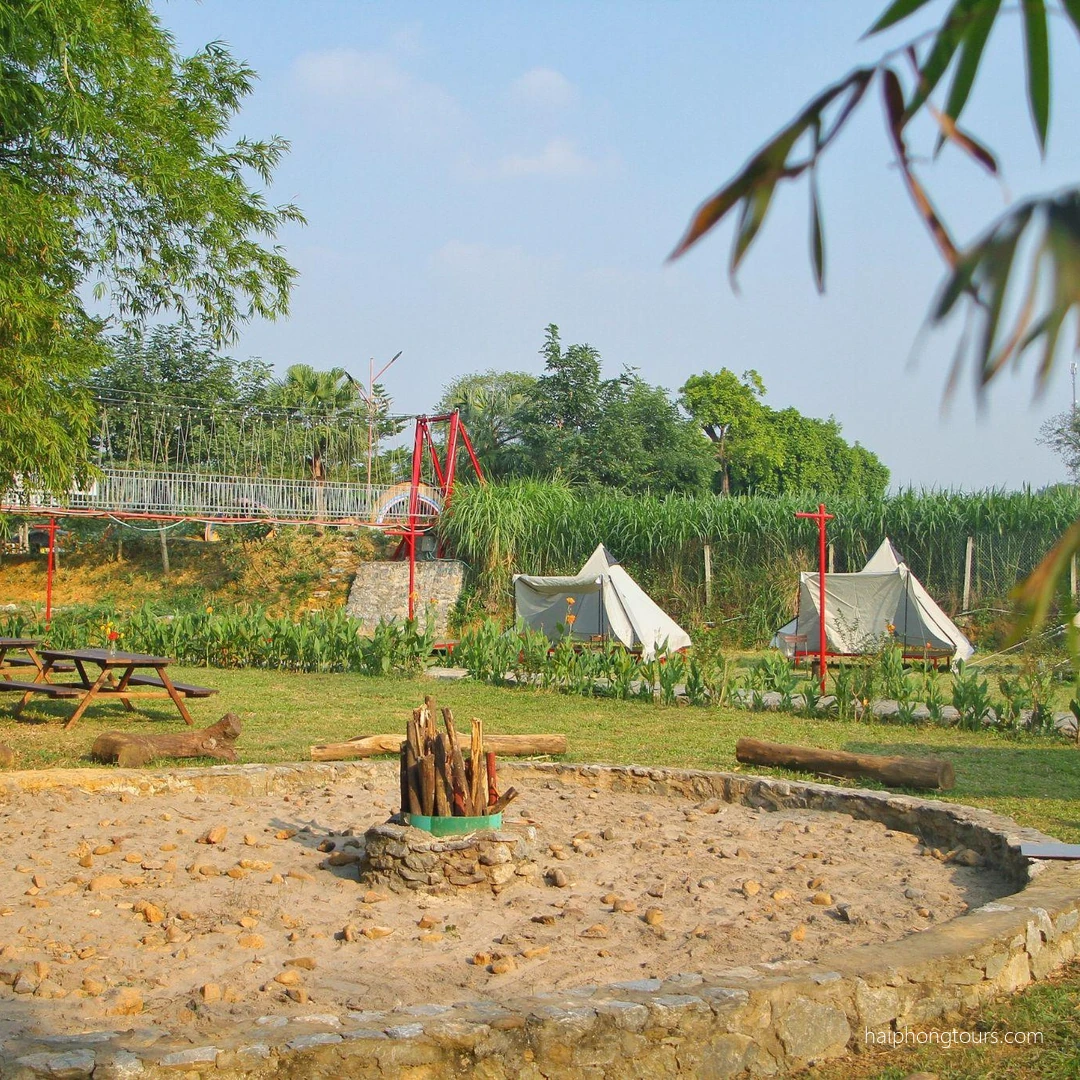
Ba Vi is popular for group picnics and camping, but permission, location and fire rules can change with weather and forest-fire risk. Confirm the designated site, overnight access, cooking rules, toilets, lighting and security with the park.
Never light a fire outside an approved area. Gas stoves may also be restricted. Keep food contained, remove every item of rubbish and do not play amplified music in the forest.
A day picnic is simpler than camping for most international visitors because it avoids equipment, overnight temperature and transport problems. Bring a ground sheet and rain cover, then choose a designated lower area rather than blocking a roadside shoulder.
Safety and what to carry
- Closed shoes with grip for mossy stone and wet steps.
- A light waterproof layer and a warm layer in cool months.
- At least enough water for the selected climb.
- A packed snack or lunch.
- A charged phone, power bank and offline map.
- A small first-aid kit and personal medication.
- Insect repellent and sun protection.
- A flashlight if the schedule could approach dusk.
Stay on marked stairs and paths. Old ruins can contain loose stone, drops and unstable surfaces. Do not enter closed buildings, climb walls or stand on roof remnants for photographs.
Mobile coverage may weaken. Share the route and return time with the driver or another person. The group should turn back when the slowest walker needs to, even if the summit is close.
Wildlife and responsible behavior
Ba Vi protects a diverse mountain ecosystem, but wild-animal sightings are unpredictable. Quiet early walks may reveal birds, butterflies, insects or calls. Do not expect large mammals beside the visitor road. For a guided outing, compare the Ba Vi birdwatching formats from Hanoi.
Keep distance from monkeys and other animals, never feed them and store food securely. Avoid flash, playback calls and handling plants or insects. Take only photographs and leave forest objects where they are.
Ba Vi with children
Families can enjoy the lower forest, French ruins and a short picnic. The full summit stairways suit older children who are steady walkers and closely supervised. A stroller is not useful on ruins or upper routes.
Keep young children away from road edges, moving vehicles and unstable structures. Carry water, warm clothing and a change of clothes. Choose one main climb and stop before fatigue affects the descent.
If your family mainly wants rides and water play, consider Ao Vua family leisure park at the foot of the mountain instead. It has a separate entrance and ticket from the national park. Choose one as the main outing rather than rushing between an amusement day and a summit climb.
For streamside walks, camping and a resting place with water activities, consider Thien Son Suoi Nga. Its managed leisure facilities use a separate booking and entrance from the national park summit route; choose it as the main outing when your group wants less climbing.
Accessibility and fitness
The internal road lets vehicles reach several elevations, but the principal temples and summit points require stairs. Paved access does not make the full visit wheelchair-friendly. Ask the park which lower sites can be reached by vehicle and whether accessible toilets are available.
Travelers with knee, balance, heart or breathing concerns can still enjoy the lower forest and ruins without completing a summit. The day should match the least mobile person, not the strongest climber.
Can you combine Ba Vi with Duong Lam?
Ba Vi and Duong Lam Ancient Village are both west of Hanoi, so they appear together in tour descriptions. The combination is possible by private car, but only as a selective day. Use a short lower-park visit plus the village, or give Ba Vi its own day for a summit.

Do not schedule a full mountain climb, the French ruins and a detailed Duong Lam visit before returning to Hanoi. That plan depends on ideal traffic and leaves little time to understand either place.
For a visit focused on traditional houses and rural objects, consider Long Viet Cultural Park in Ba Vi as the main outing. Its collected and reconstructed cultural settings have separate admission and activity arrangements from the national park.
Common planning mistakes
Starting both summit routes
Choose King Peak or Tan Vien Peak. Long stairs and weather make both a poor default for one day.
Expecting a flat national-park walk
The easiest sightseeing uses a vehicle between zones, while the upper attractions require climbing. Select lower sites if stairs are unsuitable.
Booking transport only to the entrance
The internal road is central to the visit. Confirm that the vehicle waits and can reach the intended parking area.
Using Hanoi weather alone
Check mountain rain, cloud and wind. Conditions can differ sharply from the city.
Assuming camping is always allowed
Forest-fire risk and park operations can change the rules. Obtain current permission for the named zone.
Frequently asked questions
Can Ba Vi be visited without a guide?
The common road-linked visitor sites and marked summit stairs are generally planned independently, subject to current park instructions. A guide adds value for biodiversity, specialist routes or areas beyond the standard circuit.
How long is the drive from Hanoi?
Allow roughly 1.5 to 2.5 hours each way depending on pickup location, traffic and conditions on the mountain road. Build the day around the slower estimate.
Which summit should first-time visitors choose?
King Peak suits travelers who want the highest point and Ho Chi Minh Temple. Tan Vien Peak suits those more interested in Thuong Temple and local spiritual history. Both require substantial stair climbing.
Is Ba Vi good in rain?
Light mist can suit the forest and ruins, but heavy rain makes roads and steps hazardous. Skip upper climbs during storms or when the park restricts access.
Can you see wild sunflowers all year?
No. The display is seasonal, usually associated with late autumn, and timing varies. Check current park reports before traveling mainly for flowers.
Is one night necessary?
No. One full day covers the main route. Stay overnight for an early climb, children, a picnic or a slower schedule.
Build the simplest useful day
Arrange transport through the park, visit the old church and French ruins, then climb either King Peak or Tan Vien Peak. Carry food, water and weather protection, and begin the descent with daylight to spare.
Ba Vi works because it places forest, history and a mountain climb within reach of Hanoi. Its value comes from a focused route, not from collecting every pin on the map.
Useful guides for your trip
Would you like help fitting this experience into your trip? Contact us with your travel dates, starting point, available time and group size. Tell us about walking limits or special interests so we can suggest a practical itinerary.