
Nong Xa is a rice-noodle-making village in An Duong Ward, Hai Phong, associated with the flat noodles used inbánh đa cua, the city’s crab noodle soup. Its white and reddish-brown bánh đa are cooking ingredients, rather than the grilled rice crackers that share this Vietnamese name elsewhere.

A visit suits travelers interested in how a local food is made. Arrange access with a noodle producer before setting out: production takes place in working premises among homes, and a village visit does not automatically include a demonstration, tasting or cooking class. If your main aim is to eat the noodles, a bowl of bánh đa cua in the city is the more straightforward choice.
Red and white bánh đa: what is the difference?
Both types begin with rice. White bánh đa retains its pale color, while Nong Xa’s traditional red version uses concentrated cane sugar to give the noodles their reddish-brown appearance. The name “red noodles” describes their color; it does not mean they are spicy or made from red rice.
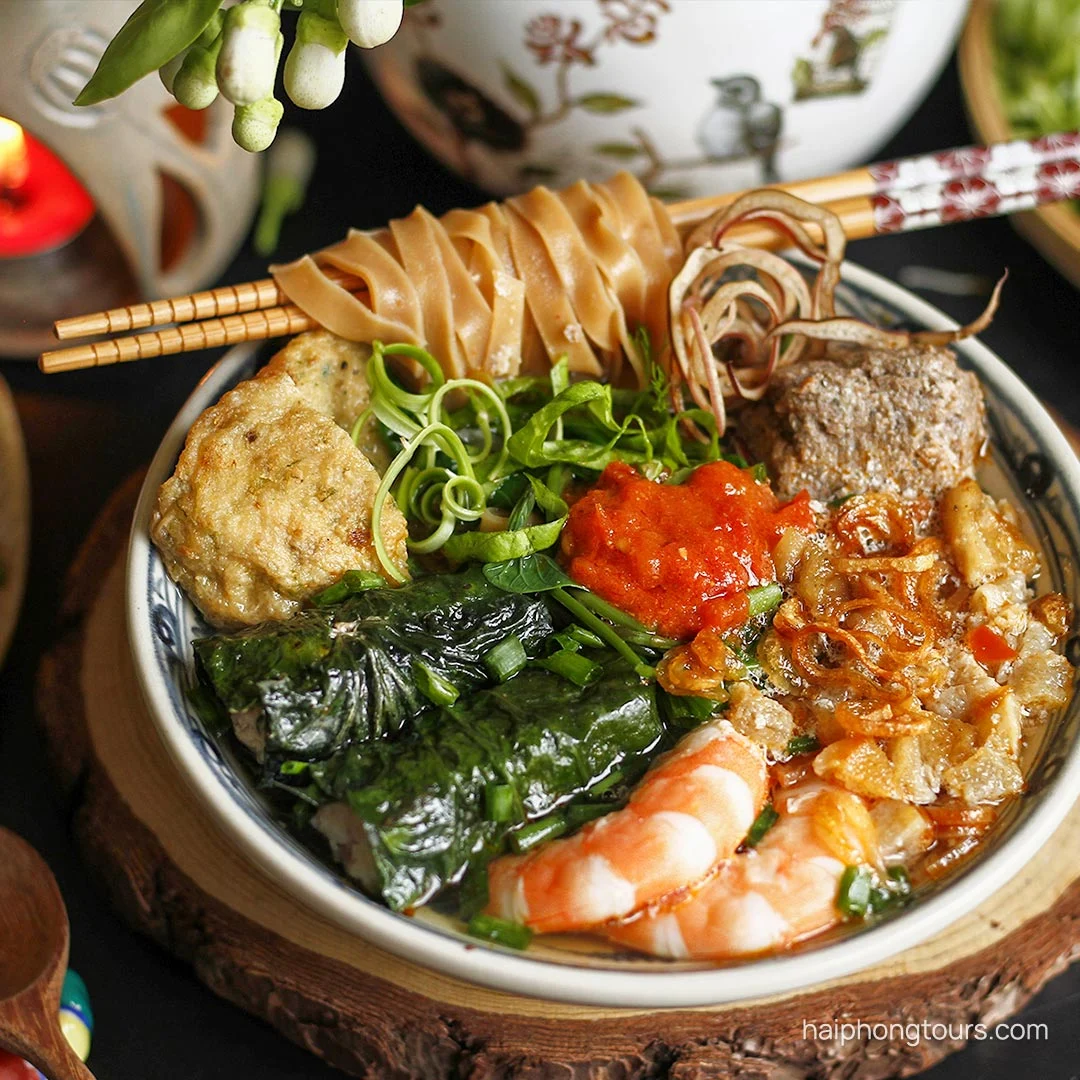
For cooking, the important qualities are the width of the strands and their texture after heating. The noodles should soften while retaining some bite. Do not choose solely by how dark they look: check the maker’s ingredient list and preparation directions.
Bánh đa cua names the finished crab noodle dish, not a guarantee that a packet of plain noodles contains crab. The soup may also contain pork, shrimp, fish sauce and other ingredients, so explain any dietary restrictions to the cook before ordering.
How Nong Xa noodles are made
The process turns rice into thin cooked sheets before cutting them into strands. Traditionally, white and red sheets spread on bamboo racks have been a distinctive sight around the village. Some producers now use modern machinery, so the equipment and stages you see will depend on the workshop.
- Prepare the rice: the maker selects, soaks and grinds it into a smooth batter.
- Steam the sheets: a thin layer of batter is cooked with steam until it holds together.
- Dry and cut: the sheets lose moisture before being cut to the required noodle width. Sun-drying depends on suitable weather.
- Prepare for sale: noodles are supplied fresh or dried, with different handling and cooking needs.
Ask which stages will be running when you visit. Arriving on a sunny day may help if outdoor drying is your interest, but it does not guarantee that every stage will be visible.
Choosing noodles to take home
- Fresh noodles: consider these if you can cook them soon and follow the seller’s storage instructions. Confirm when they were made and how to keep them during your journey.
- Dried noodles: usually the more practical choice for a longer trip. Look for a sealed, labeled package with the producer, ingredients, storage directions and use-by date.
- Nong Xa origin: check the producer’s address if buying a village-made souvenir matters to you. A packet labeled “Hai Phong bánh đa” does not by itself identify Nong Xa as its source.
Follow the instructions for the particular noodles you buy. Fresh and dried bánh đa should not be treated as interchangeable when soaking or cooking; thickness also affects how quickly they soften. Keep the package intact if taking it overseas, and check the destination’s food-entry requirements before packing.
Planning a village visit
Use the Vietnamese name làng nghề bánh đa Nông Xá when asking for directions. Older addresses refer to Tan Tien Commune, An Duong District; the current locality is An Duong Ward. Ask your host for the exact workshop pin and an agreed meeting point, rather than traveling to a general village marker.
Before booking transport, confirm whether the producer can receive visitors, the production time, any visit charge and whether small retail purchases are possible. If you need an English explanation, arrange someone to interpret. Agree on the return pickup as well.
Inside a workshop, let the owner guide you around hot steaming equipment, cutters and drying racks. Ask before touching food or entering production areas. Nong Xa is most rewarding when you can connect what you see being made with the noodles you later eat; a confirmed host matters more than a tightly packed sightseeing schedule.
Would you like to include local food in a city visit? Contact us with your destination, date, group size and dietary needs to discuss a suitable tour or private itinerary.