
Banh duc tau is Hai Phong’s savory bowl of cut rice cake, usually topped with shrimp, pork, green papaya and wood-ear mushrooms, then finished with a fish-sauce-and-vinegar dressing. Choose it for a small meal or a snack when you want a smooth rice base with a sharper, tangier accompaniment than noodle soup.

For a central-city starting point, look for Bánh đúc tàu Cát Dài Cô Chuyền at 159 Hai Ba Trung. Use that street number to find the shop; older photographs of a pavement stall can lead you to the wrong spot. Order one bowl with the chili level settled before it is dressed.
What is in the bowl?
The cake is made from rice flour and cut from a larger tray. It holds its shape but is soft enough to eat with a spoon. The topping can combine fried shrimp and pork belly with shredded wood-ear mushrooms and small pieces of green papaya.
The papaya is a savory accompaniment here, not ripe dessert fruit. The dressing brings the sweet, salty and sour elements together, while chili supplies heat. Recipes and the balance of sauce vary by seller, so judge your first spoonful before adding anything from the table.
Find Co Chuyen on Hai Ba Trung
The longstanding Co Chuyen shop now serves from 159 Hai Ba Trung, Hai Phong, after moving indoors from its former pavement location. Its map name includes both Cat Dai and Co Chuyen; save the full shop name and street number together.
Treat it as a daytime food stop and confirm service before traveling across the city. If the shop appears quiet from the road, check the doorway and number instead of expecting the old outdoor setup.
Ask the price of the standard bowl and whether any extra topping costs more. Carry small Vietnamese dong notes. A displayed local bank-transfer code is not a guarantee that your overseas payment app will work.
How to order your first serving
- Một bát bánh đúc tàu: one bowl of banh duc tau.
- Không cay: no added chili; also check whether the prepared dressing is already spicy.
- Ít nước mắm giấm: less of the fish-sauce-and-vinegar dressing.
- Để nước mắm riêng được không? ask whether the dressing can be served separately.
- Một bát bao nhiêu tiền? ask the price of one bowl.
Hai Phong Tours recommends asking for the dressing separately on a first visit if you are unsure about the sourness or heat. Add a little to the rice cake, taste it with a topping, then add more to suit you. Make the request before the seller finishes the bowl; a dish already mixed with sauce cannot simply be made mild afterward.
If you are tasting several foods, start with one serving before ordering a second. This is a rice-based dish with substantial toppings, so leave room for the other stops you actually want rather than ordering one of everything at once.
Seafood, pork and vegetarian requests
The rice base does not make the finished bowl vegetarian. Shrimp, pork and fish sauce are common parts of the dish. Asking for no visible shrimp is different from asking whether shrimp has touched the topping mixture or serving utensils.
If you have a food allergy, name the ingredient clearly and ask about the prepared topping, dressing and shared preparation. A simple không tôm means no shrimp; it does not explain a severe allergy or establish that a serving is safe for you. Choose another meal when the seller cannot confirm the preparation you need.
For a vegetarian order, the rice cake, topping and dressing all need to work together. Removing pork alone leaves other animal ingredients. Ask before paying instead of trying to pick ingredients out afterward.
How it differs from Hanoi’s banh duc nong
The Hai Phong version arrives as cut pieces of cake with toppings and a tangy dressing. Hanoi’s banh duc nong is a softer, hot rice-flour preparation spooned into a bowl, commonly accompanied by minced meat, mushrooms and a savory liquid.
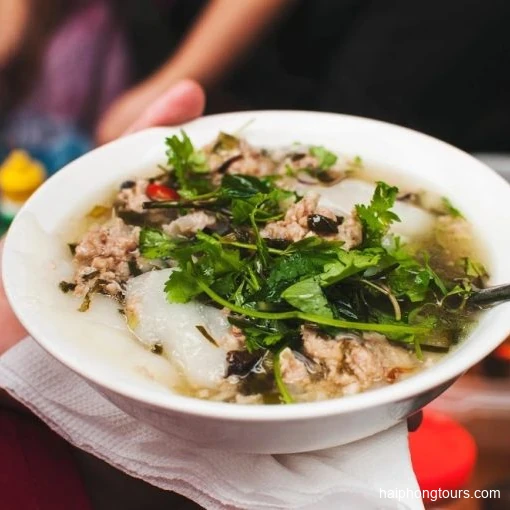
Both are savory foods, but the texture is a different reason to order each one. Say the complete Vietnamese name when asking for directions: banh duc tau in Hai Phong and banh duc nong for the Hanoi style. The English description “rice cake” is too broad to identify the dish on its own.
Fit it into a Hai Phong food walk
Make this one focused stop in the central area. A practical tasting day might use crab noodles as the main meal, banh duc tau as the smaller savory stop and a drink or dessert later, depending on your appetite. The Hai Phong food guide helps you compare those dishes without turning the day into a race between shops.
For takeaway, ask for the dressing in a separate container and plan to eat soon. Check that the order includes a spoon before leaving. For a first taste, eating at the shop makes it easier to adjust the dressing and ask what is in the bowl.
Useful guides for your trip
Would you like to include local food in a city visit? Contact us with your destination, date, group size and dietary needs to discuss a suitable tour or private itinerary.