
Can Cau Market takes place on Saturday morning in the Si Ma Cai area of Lao Cai. For an unhurried visit, stay in Bac Ha on Friday night, travel to Can Cau early the next morning, then return to Bac Ha for its separate Sunday market. This makes a useful two-market weekend without changing accommodation between the gatherings.
Can Cau is a working market for food, clothing, household goods and regional trade. Livestock is part of its identity, but the visit should not depend on seeing a particular number of buffalo. Give the ordinary shopping and breakfast areas time, and choose the trip for its Saturday rhythm rather than expecting a staged cultural show.
Get the market name and day right
Use the full name Chợ Cán Cấu when arranging transport. The market is now within Si Ma Cai commune, but the separate market commonly called Si Ma Cai Market meets on Sunday. A booking that says only “Si Ma Cai market” can therefore send you to the wrong gathering.
- Can Cau: Saturday morning; a road excursion from a Bac Ha base.
- Bac Ha: Sunday morning; convenient if you sleep near Bac Ha’s center.
- Si Ma Cai Market: another Sunday market, distinct from Can Cau.
On other days, do not expect Can Cau to reproduce the weekly gathering. A map pin identifies a place, not a promise that the Saturday traders will be there.
Arrive early enough to see the trading
Activity begins around daybreak, and an ordinary market session can thin out by midmorning. Aim to arrive around 7:30–8:00 a.m. as a practical visiting target, rather than treating that as an official opening time. Allow roughly two hours for browsing, breakfast and conversations, with more flexibility if you are particularly interested in textiles.
A busy pre-Tet session may run much longer, but an exceptional holiday market is a poor model for an ordinary Saturday. Arriving after a leisurely hotel breakfast and several roadside photo stops risks missing the reason you came.
For a holiday visit, confirm the session before committing to transport. Festivals can also use the Can Cau cultural-market site; a festival program and the weekly market are different events.
Getting there from Bac Ha
The approach follows the road from Bac Ha toward Si Ma Cai, associated with Provincial Road 153. Bac Ha is a useful base because you can leave luggage in your room and return after the market, instead of carrying everything through the stalls.
Arrange a return car or a locally organized trip the previous day. Give the driver the market name, desired arrival time and return destination. Agree on where the vehicle will wait or meet you again; “pickup at the market” is too vague when roadside trading and parked vehicles obscure the arrival point.
A driver and an English-speaking guide provide different services. A driver solves the road journey; a guide can help you understand what is being traded, ask about textile-making and communicate with food vendors. If those conversations are central to your visit, confirm that interpretation is included rather than assuming it comes with a car.
Starting from Sapa adds a much longer approach than starting in Bac Ha. Judge a proposed day trip by its expected arrival at Can Cau and the time actually allowed there. A late morning arrival is a weak trade-off for a long drive, even if the itinerary lists several attractive stops.
What to spend time on inside the market
Everyday goods reveal its local purpose
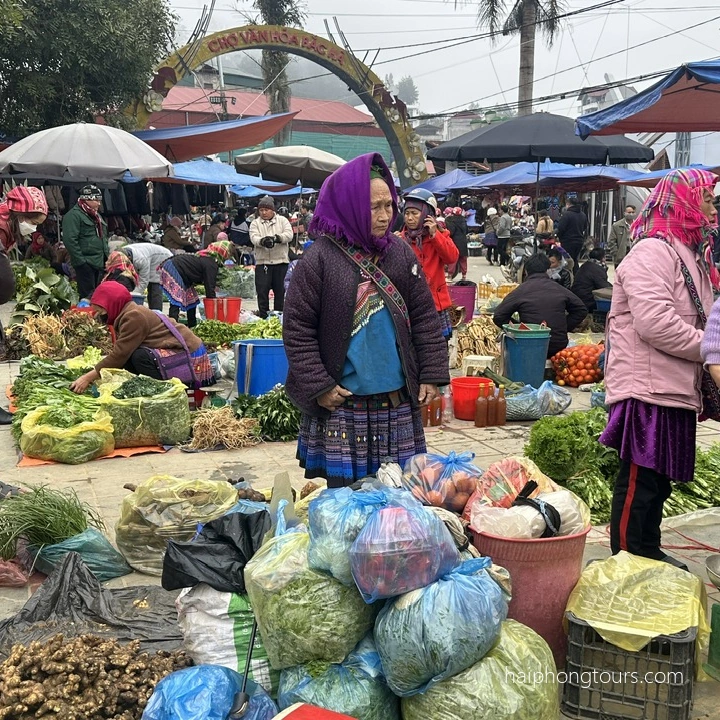
Walk past the souvenir displays to see produce, practical clothing and household purchases. Modern goods belong to the market as much as decorated textiles do. A visitor looking only for traditional dress can miss the more useful picture of what residents actually buy and sell.
Watch from the side of an active stall, leaving space for customers to approach. It is easier to understand a transaction when you are not standing between the seller, their scales and the next buyer.
Textiles: buy a process you understand
Clothing, scarves, bags and decorated accessories are a substantial part of the browsing. Hand embroidery and ready-made pieces can be sold in the same market, so color or a high price alone does not establish how something was produced.
For a meaningful purchase, ask which part was made by hand, who made it and whether the decoration is embroidered, appliquéd or printed. With permission, examine the reverse, seams and lining. An embroidered panel attached to factory-made cloth is a different product from a fully handmade garment; either may suit you when the description and price are clear.
If you want to photograph someone demonstrating their work, ask before recording. Buying one small item does not grant unlimited permission to photograph the seller, their family or neighboring stalls.
Breakfast: choose a dish before choosing a photograph
Look for phở chan, noodles served with broth, and phở trộn, mixed noodles, alongside dishes such as thắng cố and mèn mén. Availability varies between stalls, so use the names to start a conversation rather than expecting a fixed menu.
Check the meat, toppings, portion and price before ordering. Ask where you may sit and keep your camera away while people are eating. If you prefer a familiar breakfast, eat before departure and browse the food area without feeling obliged to order something unfamiliar.
Livestock: observe the trade from a sensible distance
Buffalo trading is associated with Can Cau, but animal numbers and the active trading area can change. Treat it as one possible part of the morning, not a guaranteed spectacle or a reason to push into a handler’s working space.
If livestock is being moved, wait at the side and follow handlers’ directions. Do not pass between an animal and its handler, touch animals for a photograph or encourage children to approach. Travelers who find this area uncomfortable can spend the whole visit among food and general goods instead.
A Friday-to-Sunday plan that keeps both markets useful
- Friday: reach Bac Ha, settle in and arrange the Saturday return journey. This is the essential extra night if Can Cau is part of the plan.
- Saturday morning: go directly to Can Cau, browse several sections and return when the visit feels complete. Keep optional roadside stops for the return leg.
- Saturday afternoon: stay in Bac Ha for a slower town visit, Hoang A Tuong Palace or a rest. There is no need to turn one market morning into an all-day driving circuit.
- Sunday morning: visit Bac Ha Market, then collect luggage and take your onward transport with a realistic buffer.
The Bac Ha Market travel guide covers the Sunday gathering, town accommodation and connections through Lao Cai. Its usual Saturday-arrival plan needs to move forward to Friday if you want Can Cau as well.
If you only have Saturday, Can Cau provides the weekly-market experience without waiting for Sunday. If you only have Sunday and are already staying in Bac Ha, the town’s own market is the simpler choice. Visiting both is worthwhile when you enjoy comparing trading patterns; it is optional for someone who mainly wants one introduction to a highland market.
Cash, photographs and an easier morning
Bring Vietnamese dong in small denominations for food and modest purchases. QR payments are increasingly visible in regional markets, but do not assume that the displayed code works with your overseas bank or that a vendor accepts an international card.
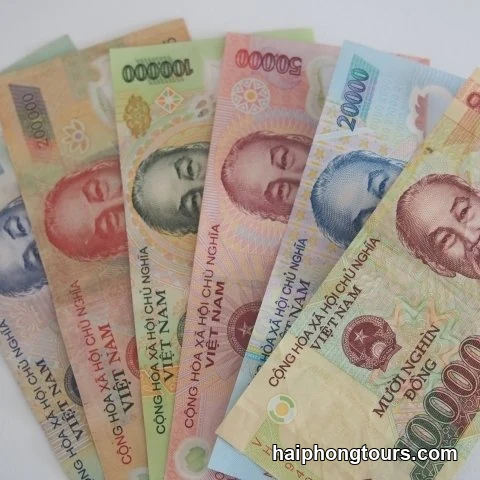
Agree on the price before a purchase or food order. When an item has a clearly stated price, begin with questions about quality and origin rather than assuming every transaction requires bargaining. Carry purchases in your own bag so your hands remain free in crowded sections.
For portraits, make a clear request and accept a refusal immediately. A useful guide can explain the request, but cannot promise that everyone wants to be photographed. Avoid photographing children without a parent’s permission or turning a purchase into pressure to pose.
Wear shoes suited to wet or uneven ground and keep rain protection close. If steps, walking surfaces or a crowded drop-off would limit your visit, arrange the easiest stopping point and a shorter route through the general-goods area. The livestock section need not be part of the route.
For comparisons with city, night and other weekly gatherings, use the North Vietnam markets guide. For Can Cau itself, the key decision remains simple: reach Bac Ha on Friday, protect Saturday morning for the market and leave the rest of the weekend flexible.
Would you like help fitting this experience into your trip? Contact us with your travel dates, starting point, available time and group size. Tell us about walking limits or special interests so we can suggest a practical itinerary.