
Yes, you can swim in Ha Long Bay, but only at an open, managed swimming stop that your exact itinerary includes. On the classic main-bay route, Ti Top Beach is the clearest currently verified option. Do not assume you may jump from a cruise at anchor or enter the water wherever the scenery looks calm.
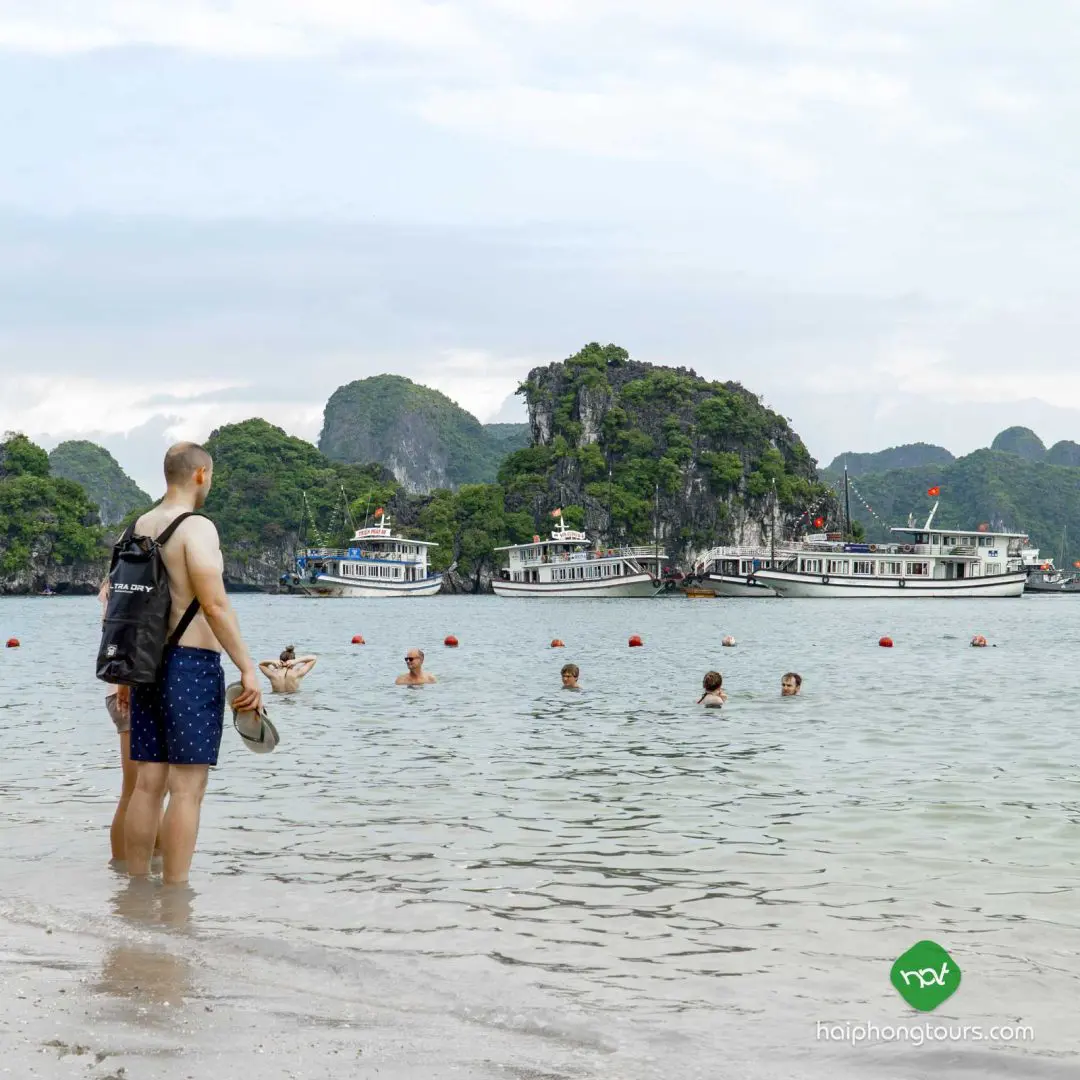
Treat swimming as a conditional activity, not a guaranteed inclusion. Weather, lightning, currents, tide, water conditions, boat traffic or an instruction from the authorities can cancel the swim even when the cruise itself continues. If swimming matters to your trip, confirm the named stop in writing and decide again with the crew or beach staff on the day.
Where can you swim in Ha Long Bay?
Ti Top Beach: the practical main-bay cruise stop
Ti Top Island, also written as Titov Island on some itineraries, is on Ha Long Bay’s popular Route 2. Its small crescent beach is a managed visitor stop, and the same island has a steep stairway to a viewpoint. This makes it useful for mixed groups: some travelers can swim while others remain on the beach or choose the hike.

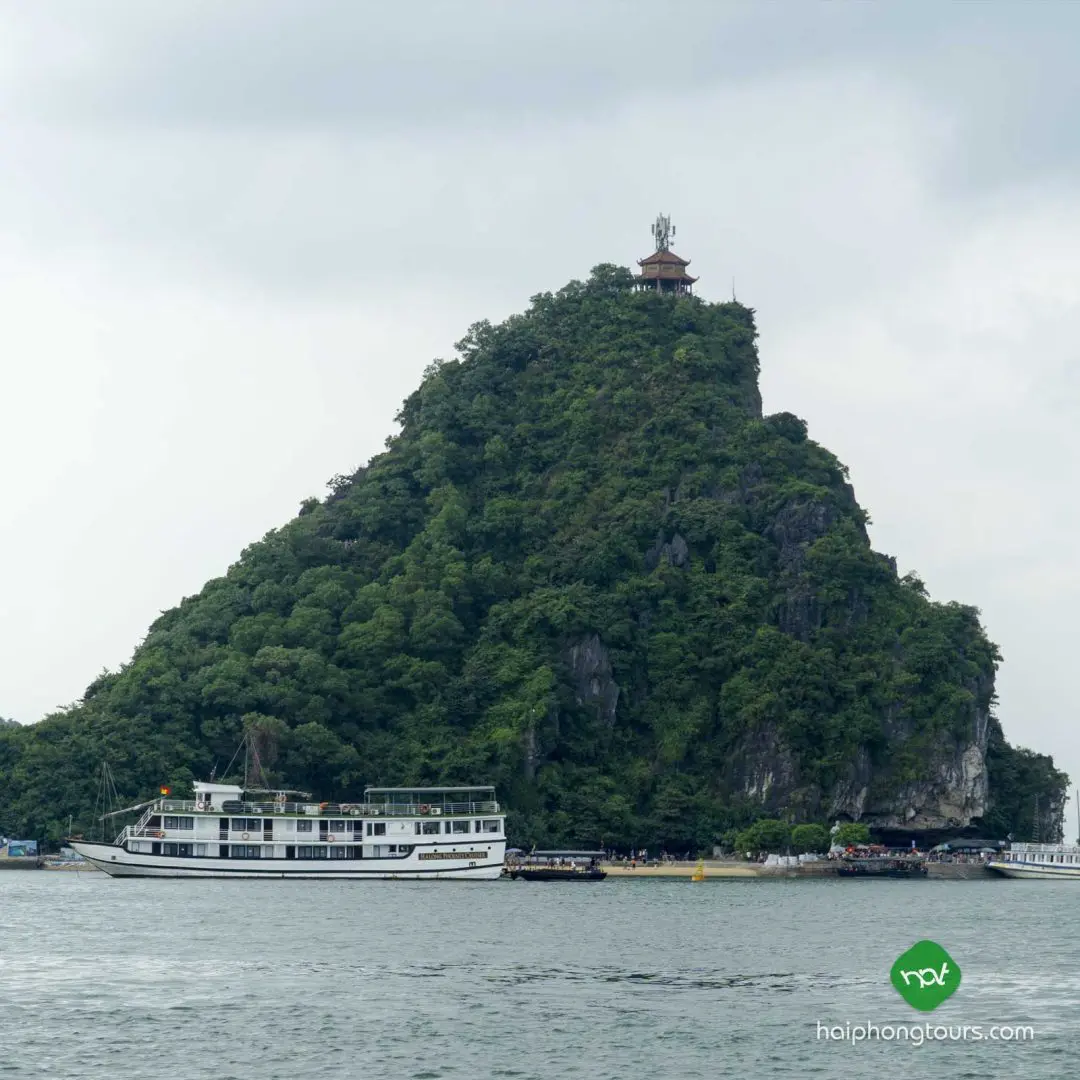
Cruise boats and limestone islands seen from Ti Top viewpoint, with the island itself viewed from the water.
A route number is not enough. A boat may visit only part of the official route, so look for Ti Top Island by name in the itinerary. Once ashore, stay inside the marked bathing area, follow staff instructions and return when the crew calls the group.
Soi Sim Beach: confirm an official reopening first
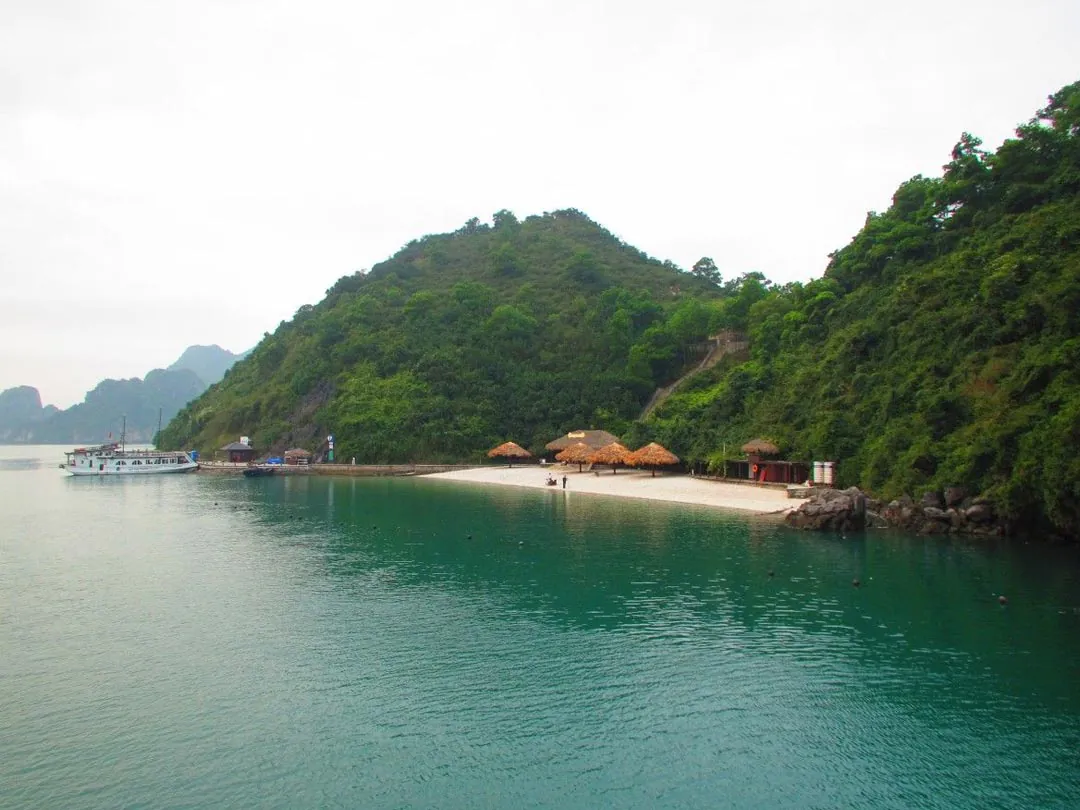
Soi Sim appears in older Route 2 descriptions, but it has been temporarily closed to visitors while infrastructure, rescue arrangements and operating conditions are completed for reopening. Do not choose a cruise because an old page mentions Soi Sim. Treat it as unavailable unless your operator confirms that the authorities have officially reopened it for your travel date.
Bai Chay Beach: a land-based alternative
Bai Chay is an urban beach in the Ha Long tourism area, not an island stop on a cruise. It can be a fallback if you are staying in the city and your boat has no swimming session. Use the managed bathing section, obey the posted flags and avoid any water visibly affected by a drainage outlet, floating waste, foam, oil or an unusual odor.
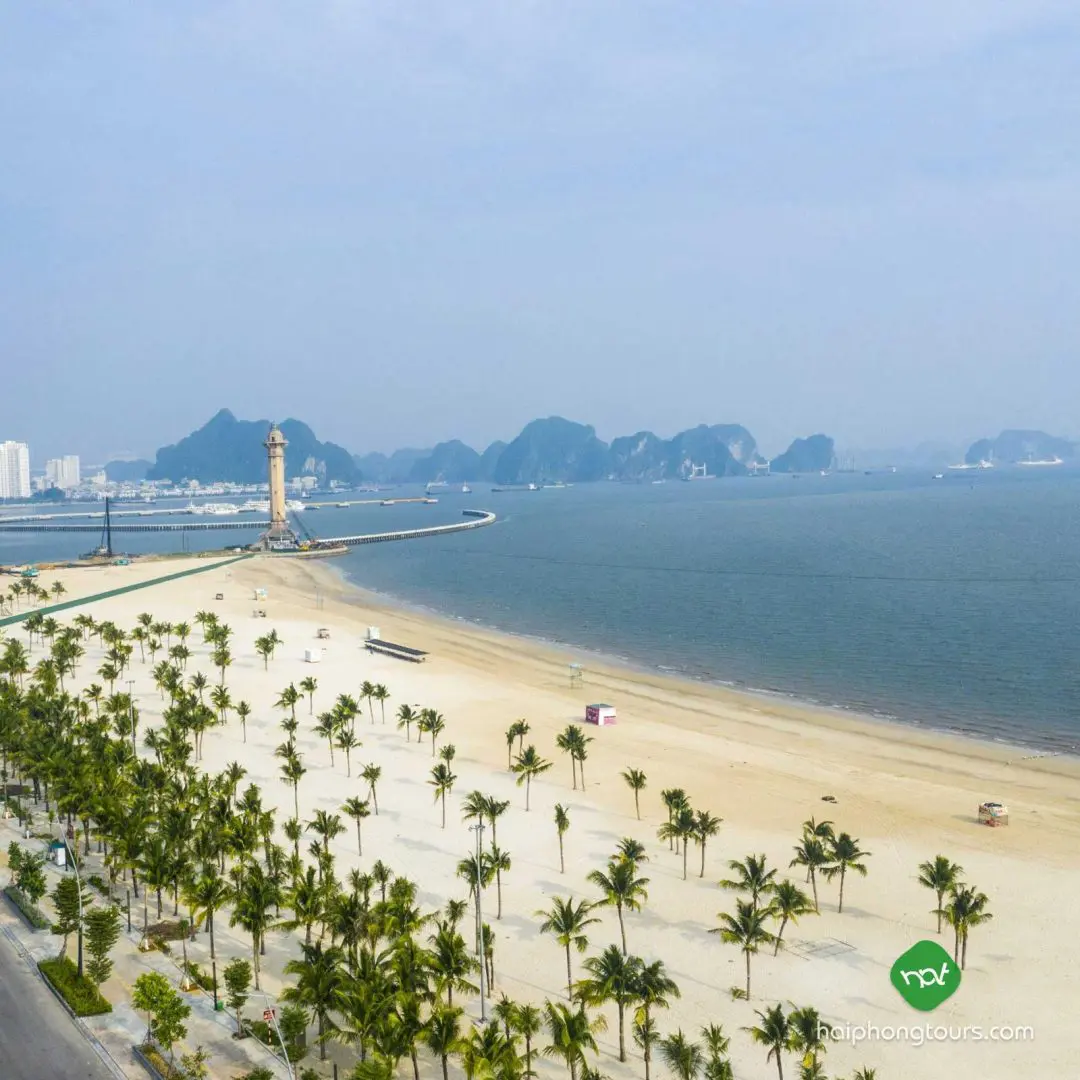
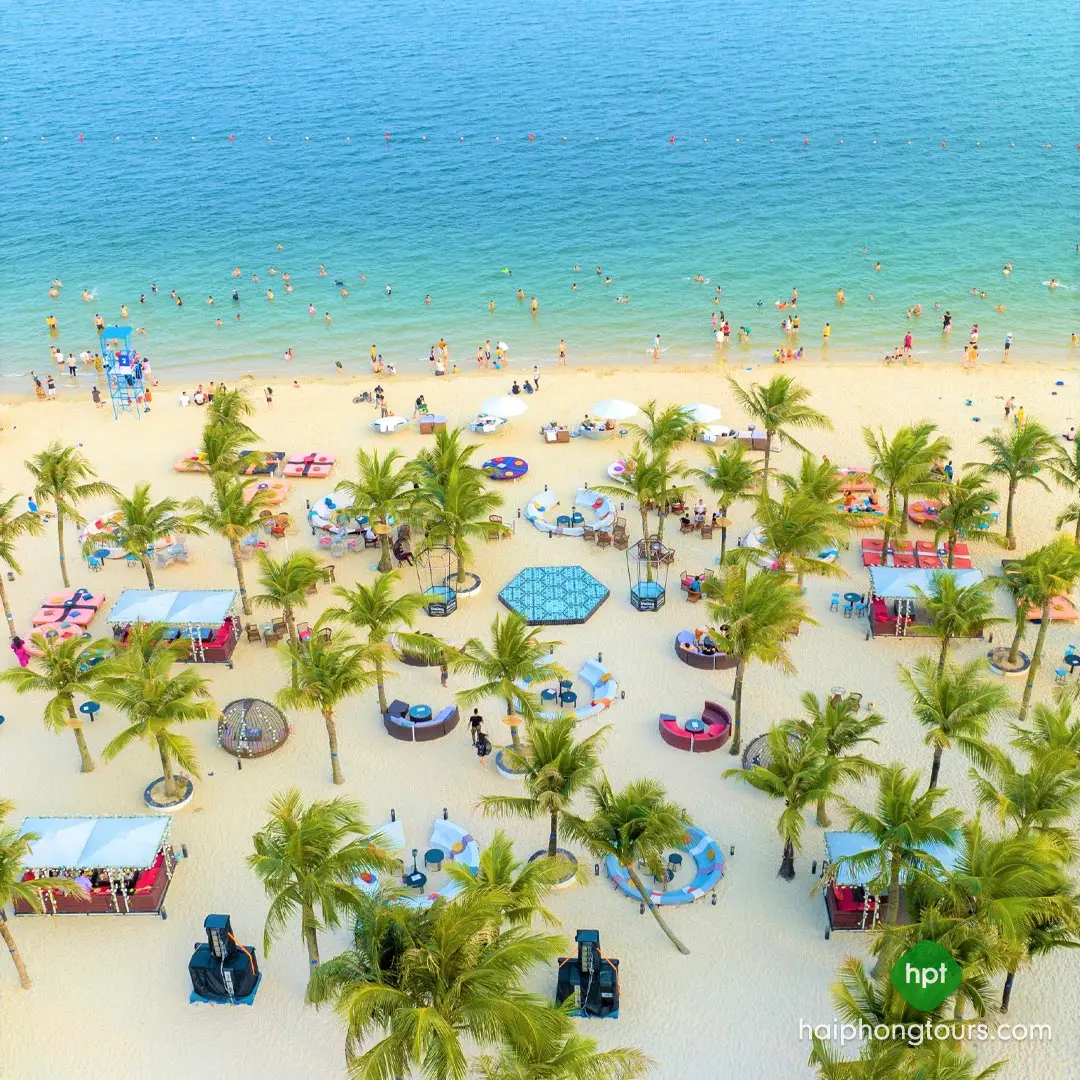
Two views of Bai Chay urban beach.
Is Ha Long Bay water safe for swimming?
There is no honest permanent yes-or-no answer for the entire bay. Water quality changes by location and time. Provincial monitoring can find broadly stable conditions while also recording localized exceedances at individual points, and periodic sampling cannot guarantee the condition of a particular beach several days or weeks later.
Water color is not a laboratory test. Clear or emerald water can still contain hazards that you cannot see, while tide and suspended sediment can make seawater look cloudy without proving contamination. Use the beach’s current status and staff instructions first, then make a simple visual check before entering.
Skip the water if it is unusually discolored or cloudier than the surrounding area, smells bad, has foam or scum, contains dead fish, shows an oil sheen, or has concentrated floating waste. Stay well away from pipes and drainage outlets. Take extra care after heavy rain because runoff can change conditions quickly.
When should you skip swimming?
- The stop is closed or the crew says no. A canceled swim is a safety decision, even if the beach looked open in a recent photo.
- You hear thunder or see lightning. Leave the water and beach immediately; do not wait for heavy rain to begin.
- Wind, waves, current or visibility are worsening. Sheltered-looking water between limestone islands can still move with the tide.
- There is no marked swimming area. Do not enter beside a tender, near moving boats or at an unapproved cove.
- Staff report jellyfish or you see them. Do not touch a jellyfish in the water or on the sand, even if it appears dead.
- The water looks or smells wrong. Discoloration, scum, oil, sewage odor, dead animals or a visible discharge are reasons to stay out.
- You have an open wound, recent piercing or healing surgery. Natural seawater can introduce germs into damaged skin.
- You have diarrhea, feel unwell or have been drinking alcohol. Do not swim, and ask a medical professional before entering natural water if illness or medication weakens your immune system.
Which season is better for swimming?
Warm weather does not guarantee an open swim. May through September is generally hotter and more humid, but it also brings heavier rain, thunderstorms and tropical-weather disruption. A cruise can operate while an exposed activity or beach landing is suspended.
November through March is generally cooler, cloudier and mistier. Swimming may still be offered on a suitable day, but many travelers find the air and water less comfortable. April and October are transitional months, so use the forecast only as a starting point and let same-day conditions decide.
How to swim more safely on a cruise stop
- Confirm the exact place. Ask for the beach or swimming area by name, not simply whether the cruise has “water activities.”
- Wait for permission. Enter only after the crew or beach staff opens the session. A boat stopping near an island does not create a swimming area.
- Stay within the marked zone. Do not swim around the vessel, tender lane, floating dock or limestone edge.
- Enter feet first. Never dive into unfamiliar water. Depth, submerged rocks and other obstacles may not be visible.
- Use a properly fitted life jacket when required or when staff recommends one. A flotation ring is not a substitute for swimming ability, close supervision or a controlled area.
- Never swim alone. Keep children within immediate reach and maintain active supervision rather than watching from a deck or distant patch of sand.
- Protect your feet and belongings. Secure sandals or water shoes can help on rough entries, while a waterproof pouch keeps your phone from becoming a distraction.
- Avoid swallowing the water. Rinse and dry off after the swim when facilities are available.
What should you know about jellyfish?
Jellyfish can occur in northern Vietnamese coastal waters, but you should not rely on a fixed online “jellyfish season” for Ha Long Bay. Local presence changes with conditions. Ask the crew or beach staff before entering and skip the session if a warning or sighting is reported.
If you are stung, leave the water, alert trained staff and do not rub the area or handle attached tentacles with bare hands. First aid can depend on the species and the reaction, so follow local medical guidance rather than an improvised remedy. Breathing difficulty, chest pain, fainting, vomiting, severe swelling or a widespread reaction requires urgent medical help.
How to book if swimming is important
Read the current itinerary instead of relying on a gallery photo or an old review. The Hai Phong Tours Halong Bay Day Tour is one verified example whose six-hour program currently names Ti Top Island for swimming, sunbathing or hiking. The stop remains subject to weather, local instructions and the final operating program.

Before paying, ask these questions:
- Which named beach or swimming area is planned?
- Is it a beach landing or an open-water session?
- Is swimming scheduled for my exact route and travel date?
- What can I do if the swim is canceled or I decide not to enter?
- Are towels, a changing area and suitable life jackets available?
Pack a swimsuit as an option, along with a towel if the operator does not provide one, a dry change of clothes, sun protection and secure footwear. Do not make a tight onward plan that depends on a weather-sensitive activity finishing exactly as advertised.
Frequently asked questions
Can you swim directly from a Ha Long Bay cruise?
Only when the exact vessel and crew open an approved swimming session. Many main-bay itineraries use a beach stop such as Ti Top instead. Never jump from the ship or tender without explicit permission.
Is Ti Top Beach suitable for non-swimmers?
Non-swimmers can remain on the sand or choose the island viewpoint instead of entering the water. Shallow-looking water, an inflatable ring or a life jacket does not remove current, depth and supervision risk. If you are not comfortable in open water, skipping the swim is the sensible choice.
Should you avoid Ha Long Bay if swimming is canceled?
No. The main experience is the limestone-island landscape, caves and boat journey; swimming is only one possible stop. If beach time is your top priority, stay flexible and add a land-based beach option rather than treating a cruise swim as guaranteed.
You can swim in Ha Long Bay when the right itinerary, an open managed area and suitable conditions line up. Confirm Ti Top or another officially operating stop by name, follow the crew on the day, and be ready to skip the water without losing the rest of the bay experience.
If you want the bay scenery but do not swim, use the North Vietnam guide for non-swimmers to compare staying aboard, a rowed bamboo boat and other low-stress choices.
Useful guides for your trip
Would a private transfer make this journey easier? Contact us with your travel date, exact pickup and drop-off, number of travelers and bags. Include any flight, train or cruise deadline so we can assess a suitable plan and quotation.