
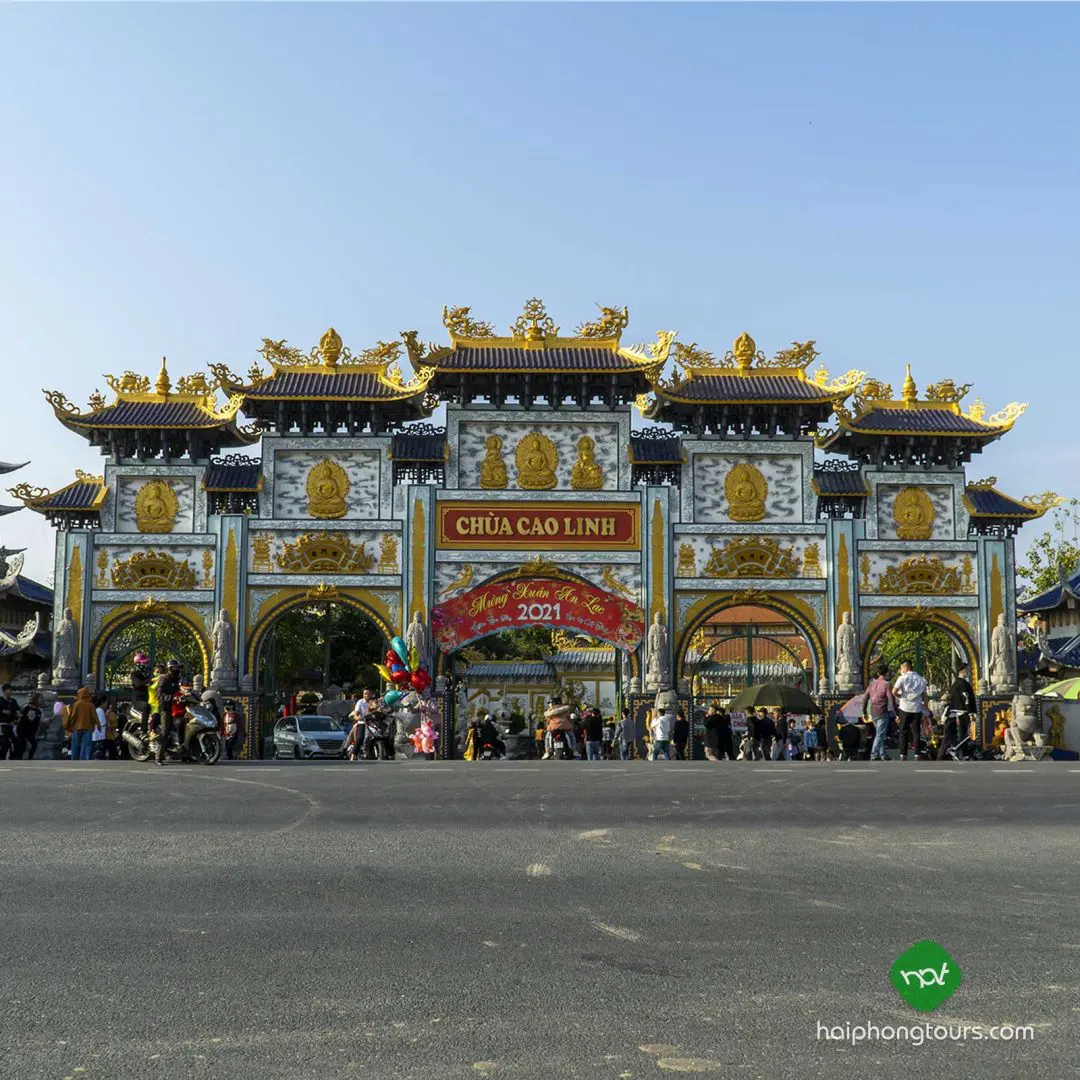
Cao Linh Pagoda is a large Buddhist temple in An Duong, west of central Hai Phong. Its five-opening entrance gate, main prayer hall, stone memorial stupas and sculpture garden make it an interesting stop if you enjoy temple architecture. It is also a working place of worship, so plan to look around quietly and follow the arrangements in use when you arrive.

The pagoda is in the Bac Ha area, beside National Highway 10, roughly 12 km from central Hai Phong. A taxi or arranged car is a practical way to visit. Allow about an hour at the pagoda as an initial planning guide, plus travel time and any waiting you arrange with your driver.
What to see at Cao Linh Pagoda
The Ngu Quan gate
The entrance has five openings, curved roofs, carved decoration and Buddhist motifs. Its yellow facade and broad proportions are among the complex’s most recognizable features. Stand clear of people entering for worship when taking photographs.
The main prayer hall
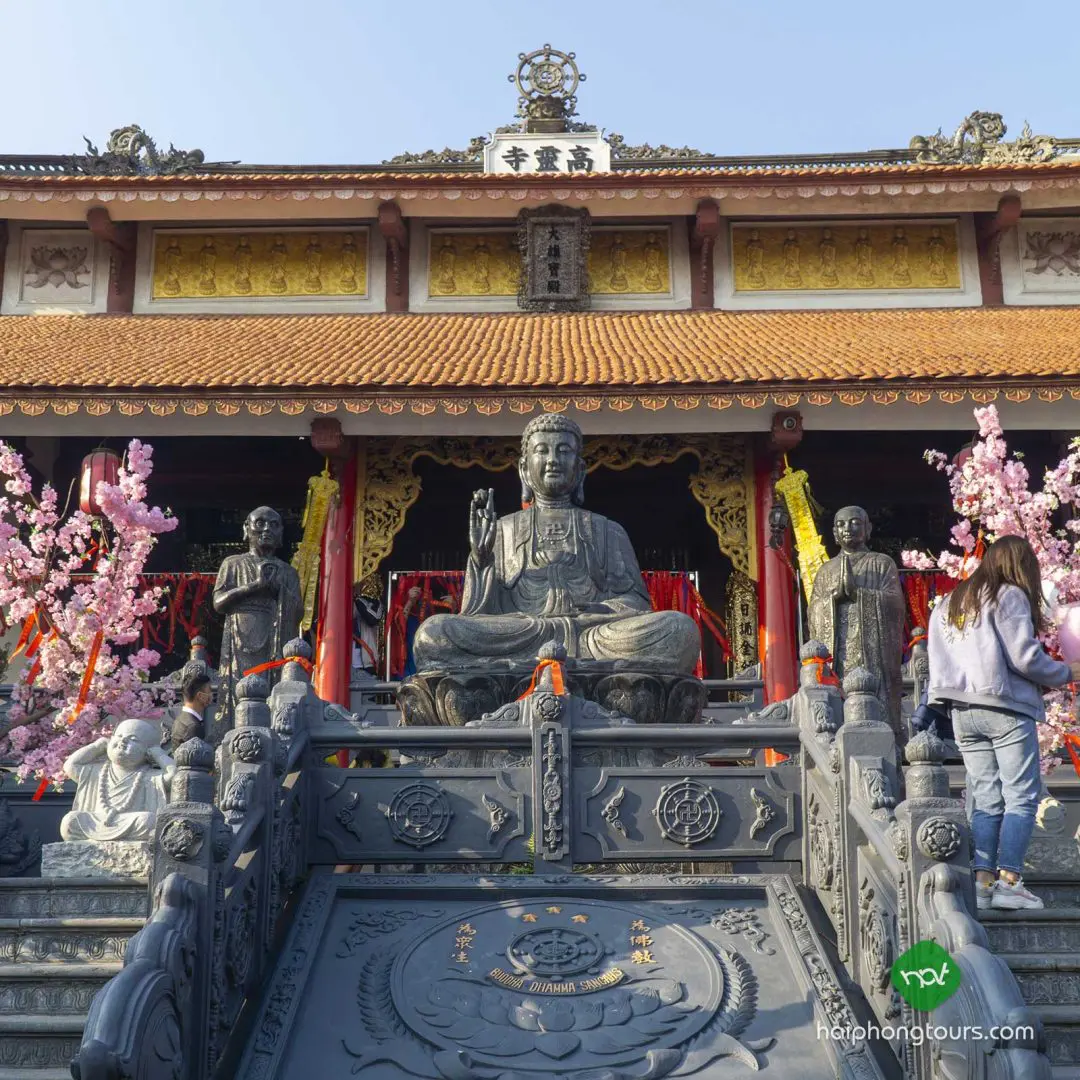
The Dai Hung Bao Dien is the central worship hall. Its layout follows the shape of the Chinese character Đinh, with a front hall and rear sanctuary. Inside are images of Shakyamuni Buddha, Manjushri and Samantabhadra, together with traditional inscribed panels and paired verses.
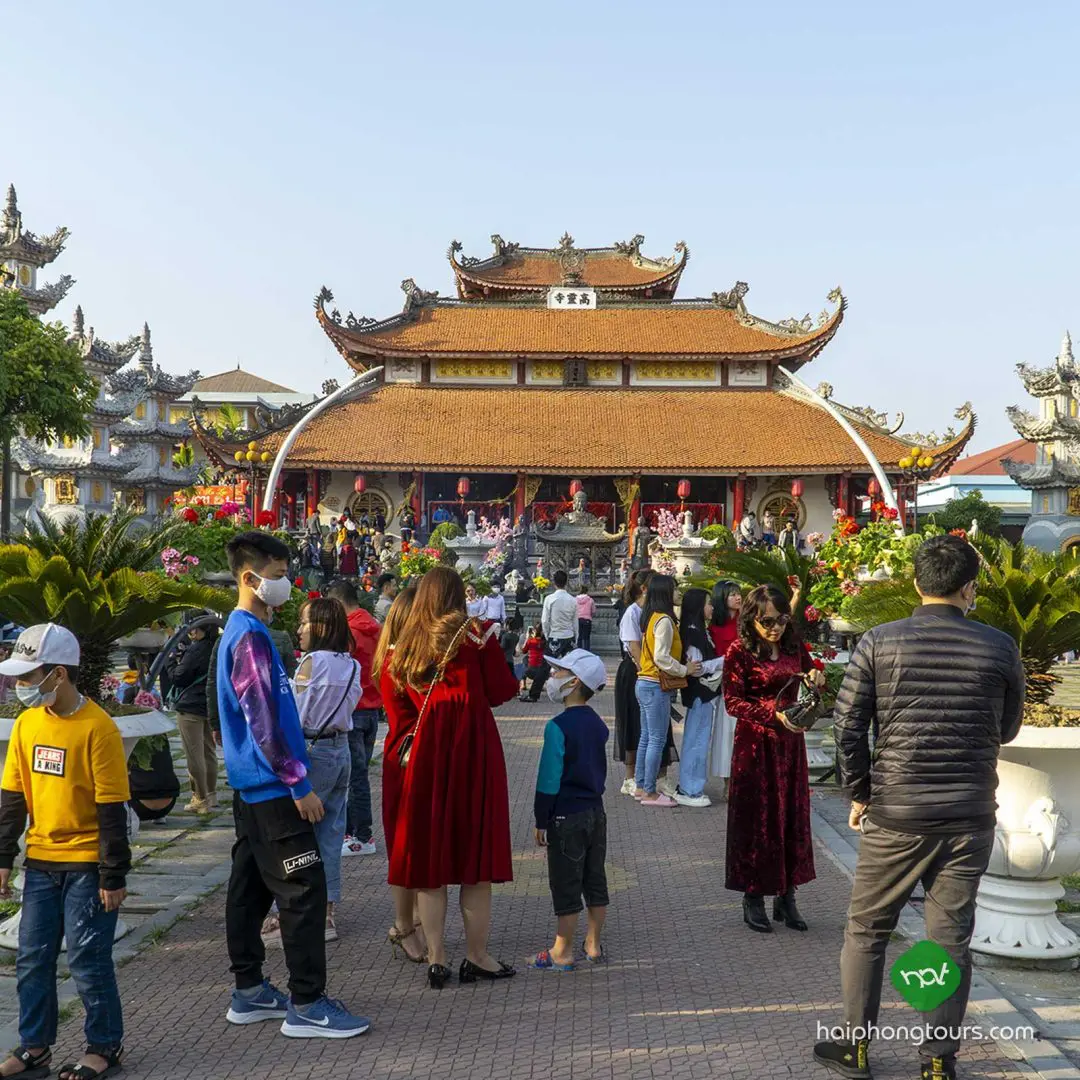
If a service is taking place, observe from a respectful distance and ask before entering or photographing the interior. Do not treat every doorway as a sightseeing entrance.
Memorial stupas and the teaching garden
Stone stupas commemorate earlier abbots, while the sculpture garden depicts the Buddha teaching his disciples around a fountain. These details give you a reason to continue beyond a photograph at the main gate. The complex also has a large bronze bell and rows of Buddhist sculpture.
Take your time in the grounds, but keep memorial structures and religious objects clear of bags, drinks and climbing children.
An old pagoda with a largely restored complex
Cao Linh’s history is associated with the Later Le period, although its exact founding date is uncertain. The pagoda suffered damage during the war against French colonial rule and has undergone substantial restoration.
Large-scale rebuilding and new construction began in 2011, including major features of the complex visible today. Its long religious history should therefore be understood separately from the age of its present buildings.
Getting there and choosing your visit
Search for Chùa Cao Linh, Bắc Hà, An Dương, Hải Phòng and confirm that the map pin is beside Highway 10. Older maps may describe the address as Bac Son commune, An Duong district. Agree on the return pickup point or driver waiting time before leaving central Hai Phong.
For a quieter look at the architecture, choose an ordinary daytime visit. Tet, full-moon observances and Vu Lan can bring more worshippers. If you want to attend a ceremony or retreat, check the pagoda’s current program, registration and language arrangements before making a special trip.
Travelers with little time in the city center may find Du Hang Pagoda easier to fit into a local outing. Cao Linh needs a separate road journey, so leave enough time for the return rather than treating it as a quick stop on a central walking route.
Dress and behavior
- Cover your shoulders and knees, and wear shoes that are easy to remove where requested.
- Follow signs or staff guidance about shoes, incense, hall access and photography.
- Keep voices low and avoid posing in front of people who are praying.
- Ask about parking arrangements before leaving a vehicle, and use only designated donation points if you wish to contribute.
Useful guides for your trip
Would you like help fitting this experience into your trip? Contact us with your travel dates, starting point, available time and group size. Tell us about walking limits or special interests so we can suggest a practical itinerary.