
On current Renea itineraries, and on Larissa itineraries published ahead of the ship’s announced October 2026 opening, “Cap La” means a first-afternoon water-activity stop around Cap La Island. The published plan pairs kayaking with possible swimming or relaxation on a natural beach. It does not promise a visit inside Cap La Cave.
Pack for kayaking and an optional wet landing, but treat the swim and beach access as conditional. Weather, tide, operating conditions, and the crew’s safety instructions can change the session even when the cruise itself still sails.
What does a Cap La stop usually include?
The current Renea and Larissa programs place Cap La after embarkation and lunch on day one. The main activity is kayaking among the limestone islands. Their detailed operator itineraries also describe swimming or relaxing on a natural beach and advertise a tender ride for travelers who do not kayak.
This is better understood as an activity window than a fixed attraction visit. You may launch a kayak, go ashore if the beach is usable, take the tender alternative if it operates, or return to the ship when the crew calls the group. A stop near the island does not give you permission to swim independently from the main vessel or tender.
Cap La Island and Cap La Cave are not the same promise
English-language pages use several spellings, including Cap La, Cặp La, and Cạp La. The accents vary, but the more important distinction is between the island or surrounding activity area and the cave located on that island.
Official destination material describes Cặp La Cave as a separate elevated cave feature on Cặp La Island. The official Route 4 page names the cave and also says its infrastructure was still being developed. Unless your exact itinerary says Cap La Cave and confirms that the landing is operating, do not expect a cave walk from the words “Cap La” alone.
This also explains why route descriptions can look inconsistent. The management authority lists Cặp La Cave on a route it calls Ha Long Bay Route 4, while cruise companies market Renea and Larissa as Bai Tu Long Bay journeys. For planning purposes, rely on the named stop, activity, vessel, and dated day-by-day program rather than trying to settle the route from the bay label alone.
Which current HPT itineraries name Cap La?
Renea Cruise
- Renea Cruise 2 day 1 night publishes a day-one Cặp La kayaking and natural-beach swimming stop.
- Renea Cruise 3 day 2 night uses the same Cap La first afternoon, then adds a separate extended program on day two.
 Overnight Cruise
Bai Tu Long Bay
Renea Cruise 2 day 1 night tour
Overnight Cruise
Bai Tu Long Bay Renea Cruise 3 day 2 night tour
Choosing the longer Renea trip does not buy a different Cap La visit. The extra day is valuable for its later route and activities, while the Cap La session remains part of the shared first-day program.
Larissa Cruise
- Larissa Cruise 2 day 1 night publishes a first-day Cap La kayaking and possible natural-beach stop.
- Larissa Cruise 3 day 2 night publishes the same Cap La first afternoon before a longer second-day route.
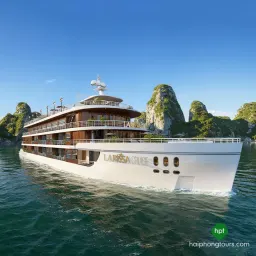 Overnight Cruise
Bai Tu Long Bay
Larissa Cruise 2 day 1 night tour
Overnight Cruise
Bai Tu Long Bay Larissa Cruise 3 day 2 night tour
Both Larissa pages advertise a new opening in October 2026. If you are considering an early sailing, confirm that the ship has started operating and ask for the final launch-period itinerary before paying.
The current Signature 2-day and 3-day programs use Vung Vieng or Cong Do instead of Cap La. A product being sold as a Bai Tu Long Bay cruise therefore does not mean Cap La is included.
How reliable is the kayaking plan?
Kayaking is the most consistent part of the published Cap La description. It appears in the activity program and inclusion wording for the linked Renea and Larissa products. The primary operator pages also advertise a tender ride around the area for guests who cannot or do not want to paddle.
Still, ask whether the alternative tender will run on your departure. Tender availability, the launch point, session length, and the number of guests sharing equipment can change with the operating plan. Wait for the safety briefing, use the life jacket provided, and follow the guide’s return time.
Is swimming at Cap La guaranteed?
No. The current product descriptions plan swimming or relaxation on a natural beach, but a natural sand strip is not a fixed resort beach. Tide can reduce the usable shore, while wind, visibility, currents, rain, boat movement, or a local operating instruction can close the water session.
If swimming is a major reason for choosing the cruise, ask for more than a general promise of “water activities.” Request written confirmation that your exact departure currently plans a Cap La beach landing or swim, and ask what the substitute will be if it cannot operate. On the day, enter the water only when the crew opens the activity.
What should you pack for Cap La?
You do not need specialist paddling gear, but you should be ready for both a kayak and a wet or sandy landing:
- Wear swimwear under quick-drying clothes if you hope to enter the water.
- Bring a dry change of clothes and secure sandals or water shoes.
- Use sun protection and a strap for prescription glasses.
- Carry only essential items during the activity and keep electronics in a proper dry pouch.
- Confirm whether the ship provides towels and waterproof bags rather than assuming every vessel follows the same practice.
Non-swimmers can still choose a Cap La itinerary. Ask about the tender alternative, remain on the ship if conditions or mobility make the transfer uncomfortable, and skip the swim without treating the entire stop as lost.
Questions to ask before booking
- Does the day-by-day itinerary for my exact date still name Cap La Island?
- Does “Cap La” mean kayaking near the island, a beach landing, or an actual Cap La Cave visit?
- Is kayaking included, and is a tender alternative available for a non-kayaker?
- Is swimming planned at a natural beach, and what replaces it if the beach is unusable?
- What weather, tide, or operating conditions can change the session?
- For Larissa, has the vessel begun operating, and is this the final post-launch itinerary?
Who should choose a Cap La itinerary?
A Cap La route suits travelers who want kayaking to be part of the first day and are comfortable treating beach time as a possible bonus. It is a weaker choice if your priority is a guaranteed swim or a confirmed cave walk.
The simplest booking rule is to separate the three ideas: Cap La Island is the place name, kayaking or a possible beach stop is the published activity, and Cap La Cave is a distinct attraction that requires explicit confirmation. Get those details in writing, then let the crew make the final safety call on the day.