
A rainy day on Cat Ba is not automatically a lost day. If the rain is light and steady, there is no thunder or dangerous-weather warning, roads are clear, and attractions confirm they are open, keep the plan compact: stay near Cat Ba Town or consider one staffed cave.
Postpone bay trips without confirmed clearance, kayaking, swimming, exposed viewpoints, long forest routes, and nonessential cross-island rides when there is lightning, strong wind, rough sea, prolonged heavy rain, flooding, or an official restriction. Conditions matter more than the rain symbol in a weather app.
Start with the hazard, not the rain icon
Use three practical levels when deciding what to do:
- Light, steady rain: there is no thunder, strong wind, flooding, closure, or official warning affecting your route. A short town plan may work, and a cave may be possible after confirmation.
- Thunderstorms or deteriorating conditions: thunder, lightning, strong gusts, rough water, rising water, poor visibility, or a newly blocked road are reasons to stop exposed and water-based activities.
- Formal suspension or emergency instruction: cancel sightseeing and follow directions from your accommodation and the competent authorities. Do not look for an unofficial boat or try to pass a barrier.
A forecast can help you prepare, but it does not tell you whether a particular vessel, cave, trail, or road is operating. Check official short-term warnings and ask the responsible operator or site on the same day.
What can still work in light rain
Keep a compact town plan
Cat Ba Town is the easiest place to protect a flexible day because you can keep travel distances short and return to shelter quickly. Choose one or two nearby stops such as a meal, a café, or a prebooked indoor service, and confirm that each business is open before walking over.
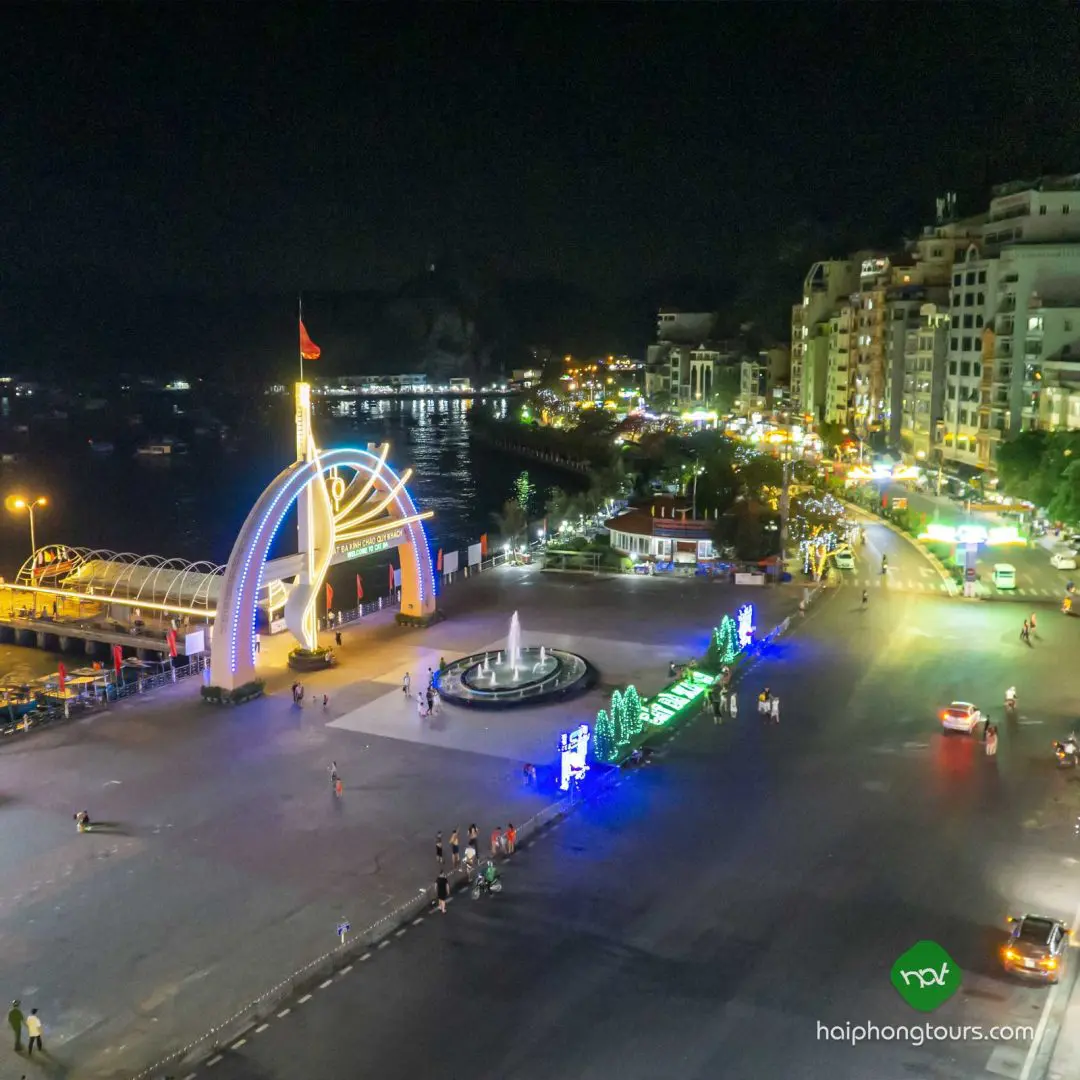
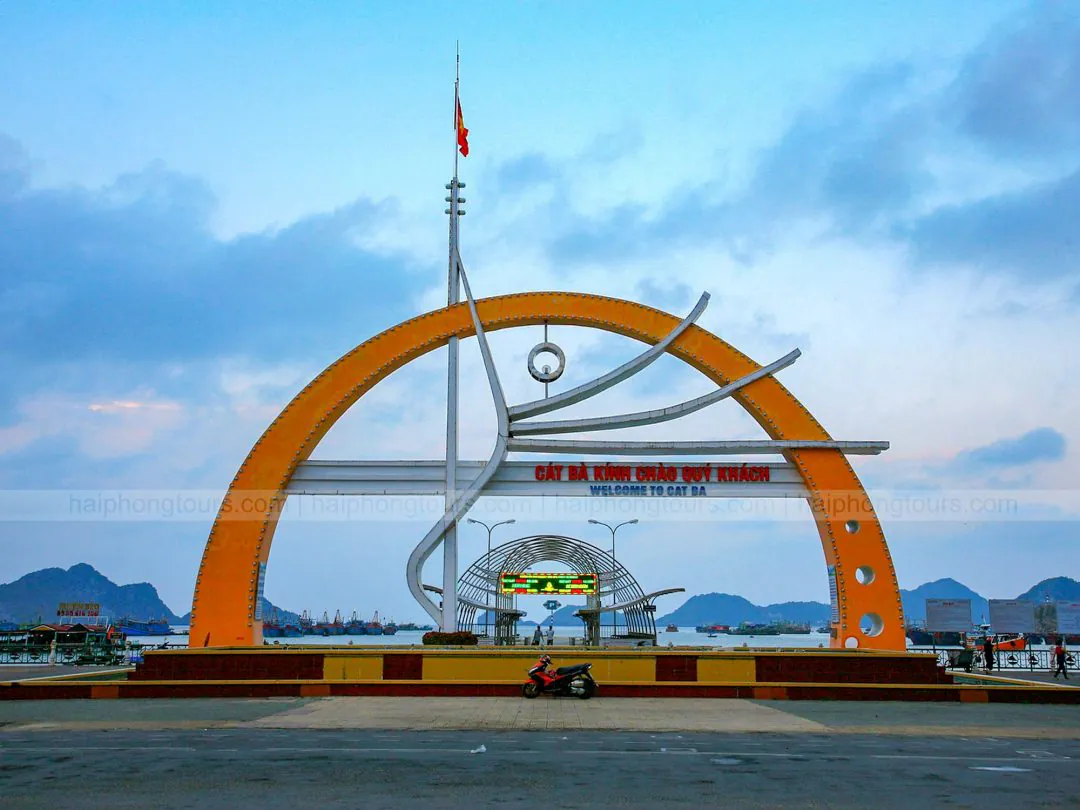

Cat Ba waterfront, harbor entrance and night market after dark.
Leave space for ordinary trip tasks: laundry, charging devices, reorganizing luggage, confirming onward transport, or moving a rest block forward. These are better uses of a wet afternoon than forcing a remote attraction into unsafe conditions.
Reserve a cooking or calligraphy session
A Cat Ba cooking class gives a light-rain day a practical focus: Quiri Kitchen offers a morning format, Linda Kitchen combines a market visit with dinner, and Ann Garden Retreat offers spring-roll making followed by a shared meal. Ask whether any outdoor market portion can be adjusted and confirm that the journey is still suitable.

For a non-food activity, Ann Garden Retreat advertises Friday brush-and-ink calligraphy with tea in its traditional meeting house. It is on Hung Son Street in the Ang Soi area, just outside town. Contact or for your date’s start time, price, teaching language and whether visitors staying elsewhere can join.
Hai Phong Tours recommends choosing a safely reachable, confirmed session and arranging the ride back before setting out. A weekly workshop is not a walk-in service every afternoon, and an indoor venue does not make flooded roads or a storm journey suitable. Keep these options for manageable rain; follow local shelter instructions when conditions worsen.
Consider one cave only after checking access
Trung Trang Cave and Hospital Cave can be possible light-rain choices, but neither should be treated as an all-weather shelter. Both require a road transfer from town, and cave entrances, steps, or walking surfaces may be wet.
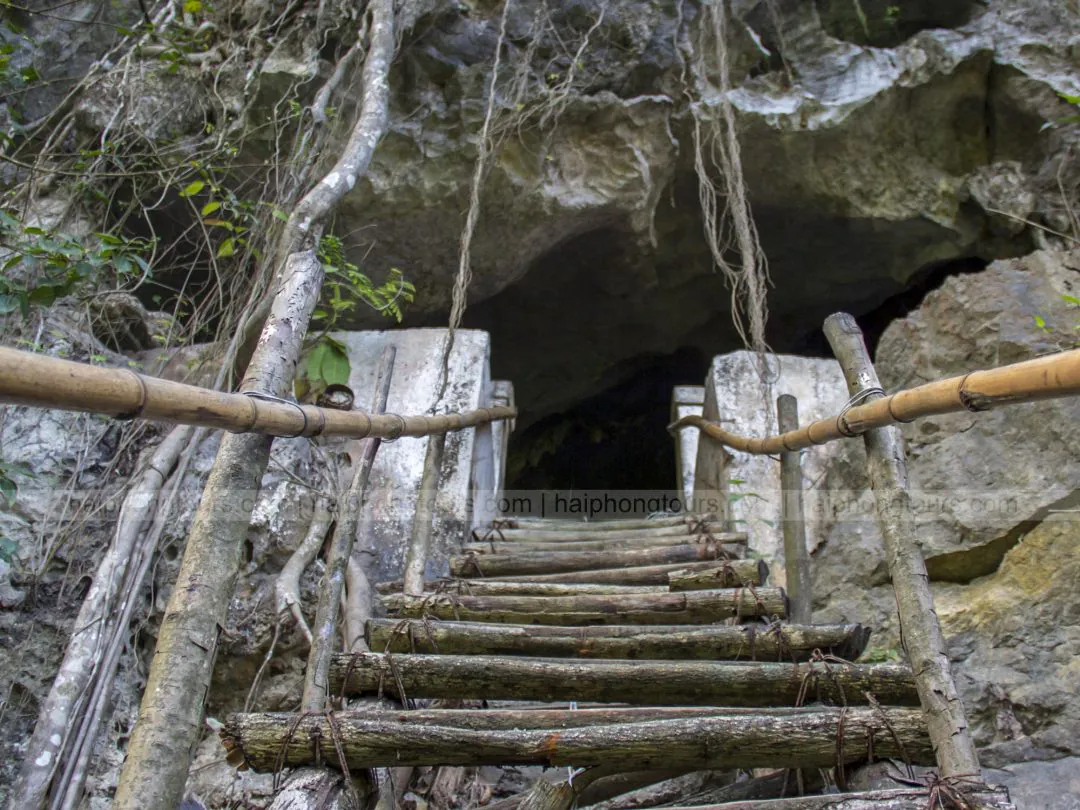
Before leaving, ask whether the attraction is open, whether the access road is clear, and whether staff consider the visitor route suitable. If heavy rain, thunder, flooding, falling-rock warnings, or a closure affects the route, postpone the visit. Do not combine a cave with a long forest hike simply because you have already traveled across the island.
Use sheltered views without approaching the water
In mild conditions, you can enjoy the landscape from your hotel, a covered café, or another secure indoor space. If wind or waves are increasing, stay away from exposed shorelines, piers, cliff edges, and beach paths. A dramatic sea is not a reason to stand in an unsafe place for a photograph.
What to postpone when conditions worsen
- Bay cruises without same-day confirmation: wait for the operator to confirm that departure is permitted and the trip is proceeding.
- Kayaking, swimming, and beach time: stop when there is thunder, lightning, rough water, strong wind, a warning flag, or staff instructions to leave the water.
- Ngu Lam and longer National Park routes: wet limestone, forest surfaces, exposed sections, and changing weather make a forced hike a poor contingency plan. Ask the park about current conditions before any route.
- Remote island stops: Viet Hai, Gia Luan, Phu Long, and other cross-island destinations need reliable road or boat access. Do not use them as improvised rainy-day substitutes.
- Nonessential scooter rides: reduce road travel when rain is heavy, visibility is poor, water is collecting, or wind is affecting control. Never ride or drive through floodwater or around a barrier.
Can a Lan Ha Bay boat trip operate in rain?
It may operate in some rainy conditions, but a rain forecast is not a departure confirmation. The vessel must meet current safety requirements, and dangerous-weather warnings or an authority decision can stop departures. The operator may also change the route or remove water activities when conditions require it.
Ask these questions before you leave your hotel:
- Is today’s departure officially confirmed?
- Has the departure port, boarding time, or pickup point changed?
- Are kayaking, swimming, or cave stops still planned?
- Is the return transfer confirmed under the latest conditions?
- If the trip is delayed, shortened, or canceled, which written booking term applies?
If the trip proceeds, wear the provided life jacket correctly from boarding and keep it on as instructed throughout the visit. Do not pressure the crew to depart, launch a kayak, or add a stop after they have said conditions are unsuitable.
Road travel needs a separate check
Prolonged heavy rain combined with high tide can flood low sections and interrupt cross-island roads. A cave or National Park plan may therefore fail because of the journey, even when the attraction itself is covered.
Ask your accommodation, driver, or attraction about the complete route immediately before departure. If you see standing or moving water, a barricade, falling debris, or water running strongly from a hillside, turn back and move to a secure place. Do not judge floodwater by apparent depth.
If you are leaving the island for a flight, train, or another fixed booking, protect a larger buffer than you would on a clear day. Reconfirm every transport leg rather than assuming the usual ferry, vehicle, or pickup sequence will run unchanged.
If crossings stop before your flight or train
If you cannot leave Cat Ba for an onward booking, first establish what has stopped. A vehicle-loading queue, a restriction on particular vehicles, a delayed sailing and an official weather suspension require different responses. Ask your booked transport provider which crossing, direction and services are affected, and whether a reopening time is confirmed or only expected.
For the mainland ferry route, you leave Cat Ba from Cai Vieng and arrive at Dong Bai. The Dong Bai–Cai Vieng ferry guide explains the separate road legs and vehicle arrangements. Moving from a car to a foot-passenger ticket may help with a vehicle queue only when passenger crossings are operating; it does not overcome a suspension.
Contact the people who can change each part of your journey
- Your accommodation and transport provider: ask your hotel to help interpret the local notice and identify a safe place to wait. Ask the transport provider to confirm your pickup status, the affected crossing and the next update time. If you booked through an agent, keep that agent in the conversation.
- Your airline, railway ticket seller or booking agent: contact them as soon as the connection becomes doubtful, before the ticket’s change or no-show deadline. Explain that your island crossing is interrupted, give the booking reference and ask about the available changes, charges and any effect on later segments. Do not wait for the ferry refund before protecting the next ticket.
- Your hotel and insurer: if departure is not realistically confirmed, arrange a safe place to stay. Ask about the room rate and cancellation terms before extending. If you intend to claim additional costs, ask the insurer which expenses need approval and what evidence it requires.
If an airline or railway service is also canceled, ask its seller to handle that cancellation separately. A ferry suspension does not by itself confirm that your flight or train has stopped or that its fare rules have been waived.
Decide whether to leave early or stay
Before restrictions begin, moving to the mainland earlier can protect a critical connection, but only when the full road-and-crossing journey is operating and local instructions allow it. Once a suspension is in force, stay in suitable accommodation or the waiting location directed by staff. Avoid an unnecessary trip to an exposed pier to see whether someone will take you.
Do not treat the cable car, a speedboat or the Gia Luan–Tuan Chau route as an automatic escape route. Each has its own operation, access and onward road connection. Use an alternative only after the responsible operator confirms that the complete journey is permitted and running. Decline offers of an unofficial boat around a closure.
When services restart, reconfirm space, pickup and the onward vehicle before committing to a tight replacement flight or train. Reopening does not reserve you a place or remove the waiting backlog. Save the interruption notice, messages, original tickets and receipts, and request an itemized explanation of any refund or rebooking charge. Keep documents and medication with you while your luggage arrangements change.
Three workable rainy-day plans
Plan A: light rain with normal access
- Check the latest official weather warning and local notices.
- Confirm one cave and the full road route before leaving town.
- Return for lunch and keep the afternoon close to shelter.
- Recheck the next day’s boat or onward transport in the evening.
This plan is suitable only while conditions remain stable. If thunder begins or water starts collecting on the route, skip the cave and return indoors.
Plan B: persistent rain or thunderstorms
- Stay in Cat Ba Town and choose nearby indoor stops that confirm they are open.
- Postpone the forest, beaches, viewpoints, caves, and nonessential road travel.
- Use the day to rest and move a weather-dependent activity to the clearest confirmed window.
- Ask for written updates on any booked boat or transfer rather than relying on rumor.
Plan C: official restriction, flooding, or cyclone instructions
- Follow instructions from your accommodation and local authorities.
- Keep your phone charged and your passport, medication, water, and essential items together.
- Do not travel to the port, beach, forest, or a remote village unless instructed that the route is safe.
- Contact each booked provider and record the status in writing before rearranging the next leg.
Same-day checklist before going out
- Read the latest short-range warning from Vietnam’s National Center for Hydro-Meteorological Forecasting and any Cat Hai local notice.
- Ask your accommodation whether flooding, a road barrier, or a local instruction affects your route.
- Ask the boat, cave, or park directly whether today’s operation is confirmed.
- Check the outbound and return legs; do not verify only the first half of the trip.
- Carry a charged phone, power bank, drinking water, personal medication, and a dry pouch for documents.
- Wear footwear with useful grip and a rain layer that leaves your hands free.
- Be willing to turn back. A paid ticket or short itinerary is not a reason to continue into unsafe conditions.
Frequently asked questions
Should you cancel a Cat Ba trip because the forecast shows rain?
Not automatically. Check the timing and hazards behind the rain symbol, then verify transport and activities. Light rain may allow a compact town-and-cave plan, while thunderstorms, strong wind, rough sea, flooding, or an official restriction require a much smaller plan or a postponement.
Are Cat Ba’s caves safe rainy-day attractions?
They are possible options, not guaranteed shelters. The access road, entrance, steps, and visitor route all need to be open and suitable. Confirm on the same day and postpone if staff or authorities advise against the visit.
What if you have only one full day on Cat Ba?
Protect the trip by choosing the safest confirmed option, not by trying to preserve every booking. In light rain, one cave and a compact town plan may still give the day structure. In dangerous conditions, an indoor rest day is the correct choice even if the bay, beach, and forest must wait for another visit.
Plan around conditions, not sunk costs
The most useful Cat Ba rain plan is deliberately flexible. Keep light-rain options close to shelter, confirm caves and roads before crossing the island, and treat every boat departure as a same-day operational decision. When lightning, rough sea, flooding, or an official restriction appears, postponing the outdoor plan is part of traveling well.
Useful guides for your trip
Would you like help fitting this experience into your trip? Contact us with your travel dates, starting point, available time and group size. Tell us about walking limits or special interests so we can suggest a practical itinerary.