
Take bus 90 from its Hào Nam end beside Cat Linh Metro Station for the simplest public journey to Noi Bai Airport. Transerco’s schedule effective from 1 April 2026 shows departures from Hào Nam between 05:00 and 21:10. Most gaps are about 20 minutes, with some 30-minute gaps in the published pattern.
Hào Nam is the bus-90 endpoint beside Cát Linh metro station. Buying the bus ticket does not include a metro ticket, and the final bus can run later than the metro. For an evening arrival, compare the bus arrival with the station’s last train in the required direction and keep a direct-to-hotel alternative.
Hanoi Metro’s normal published operating window is 05:30–22:00. Weekday service is every six minutes during 06:30–09:00 and 16:30–19:30, every fifteen minutes after 19:30, and normally every ten minutes at other times; weekends normally use ten-minute intervals. The 05:00 bus 90 departure from Hào Nam leaves before normal metro service begins. A late airport bus can also arrive after the metro closes, so the final train from the actual station and direction determines whether the connection works.
This is an ordinary city bus connection, not an airport express with a protected flight transfer. Work backward from your airline’s check-in deadline, add road and waiting time, and use a direct car when missing the flight would be a serious risk.

Quick decision
- Lowest-cost practical option: route 90 from Hào Nam/Cat Linh to Noi Bai.
- First scheduled Hào Nam departure: 05:00 under Transerco’s April 2026 timetable.
- Last scheduled Hào Nam departure: 21:10 under the same timetable.
- Frequency: mostly about 20 minutes, with several 30-minute gaps.
- Current vehicle: an electric, low-floor Green Bus 8 operated by Transerco.
- Use a car: for early flights, large luggage, limited mobility or a tight check-in deadline.
Where route 90 starts
Hanoi Metro lists route 90 as a public-bus connection at Cat Linh station and identifies its route as Hào Nam–Noi Bai Airport. Follow station signs to street level, then use the current Timbus route information to locate the Hào Nam departure stop.
Do not ask only for “Cat Linh,” because that name can refer to a street, neighbourhood or metro station. Use route 90 to Noi Bai Airport and show the current stop pin if you need directions from station staff.
Reach the stop before the scheduled departure. The bus does not wait for a delayed metro train, and a timetable entry is not a reservation. If the stop has moved because of traffic control or construction, follow the posted notice or contact Transerco rather than waiting at an old map pin.
Current route 90 timetable from Hào Nam
Transerco’s operating chart effective from 1 April 2026 shows the following Hào Nam departure pattern:
- Early departures: 05:00, 05:30, 05:50, 06:10, 06:30, 06:50, 07:10, 07:30 and 07:50.
- Daytime pattern: departures continue mostly every 20 minutes, with a 30-minute gap shown between 07:50 and 08:20.
- Evening departures: the published sequence continues through 20:10, 20:30, 20:50 and 21:10.
The same chart shows 90 one-way trips per day across the two directions and nine vehicles in daily operation under the service plan. Transerco later announced eleven new electric vehicles assigned to route 90 from 23 April 2026. Use Timbus on your travel date in case the working timetable has been adjusted again.
Noi Bai Airport currently displays a route 90 fare of VND 15,000 per trip. Carry small Vietnamese banknotes and confirm the fare displayed on the bus, because a city fare can change independently of an older travel article.
Can you reach the 05:00 bus by metro?
For an early flight, stay near Cat Linh and walk or use a short car ride to the bus stop, or book a direct airport car. Do not design a connection that requires a metro train before the published opening time.
For later departures, Line 2A can bring you to Cat Linh from Yen Nghia, Ha Dong, Van Quan and other stations along the elevated line. Allow time to exit the metro, find the correct street level and reach the bus stop. A six- or ten-minute train interval does not include the walking and road-crossing time.
Choose T1 or T2 before leaving Cat Linh
Noi Bai has two passenger terminals. T1 handles domestic flights and T2 handles international flights. Check the terminal printed by the airline rather than choosing from the destination name alone.
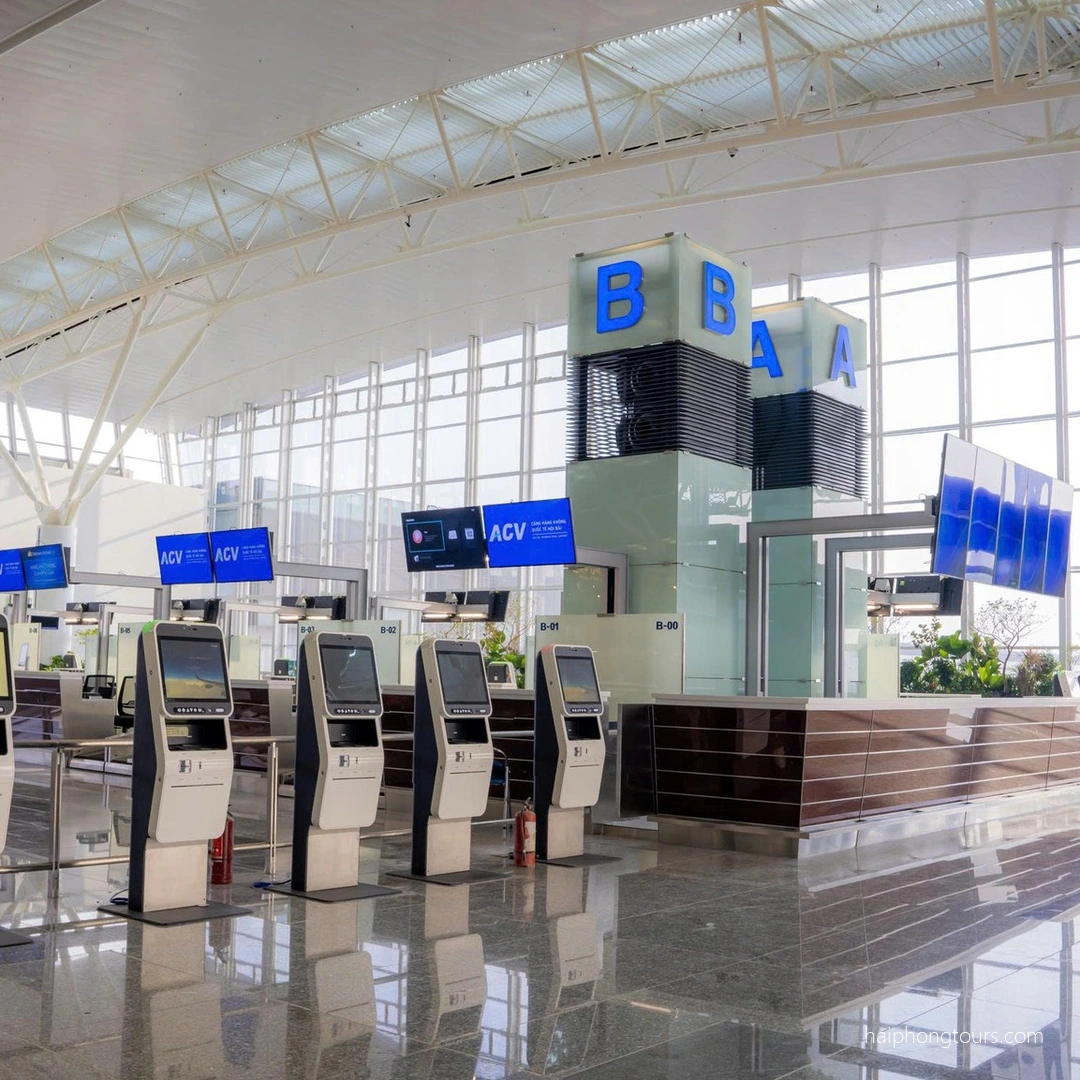
Tell the bus staff whether you need T1 or T2 and watch the terminal signs as the bus enters the airport. Do not remain aboard or get off based only on another passenger’s movement. Codeshare, charter and operational changes can make an assumption costly.
If you reach the wrong terminal, Noi Bai operates a free electric shuttle between T1 and T2. The published pickup points are T1 level 1, Hall A, and T2 level 1, lane 2 near columns 11–12. The shuttle normally operates from 05:00 to 01:00, but correcting a terminal mistake still consumes time.

How much flight buffer do you need?
Start with the airline’s required check-in or bag-drop cutoff. Then add time for the bus ride, the wait before departure, the walk from Cat Linh station, airport terminal access and a road-delay margin. Use a larger margin during weekday commuter periods, rain, public holidays and major Hanoi events.
A scheduled flight departure is not the same as the latest safe airport arrival. Bag drop, document checks, immigration and security happen before boarding. Follow the airline’s stated reporting time for your flight and fare type.
If the bus you planned does not appear and waiting for the next one threatens the cutoff, switch to a direct car while the fallback still has enough time to work. Saving a small fare is not useful after the check-in desk has closed.
What the 2026 electric bus changes
Transerco introduced eleven Green Bus 8 electric vehicles on route 90 from 23 April 2026. The operator states a capacity of 60 passengers per vehicle and describes low-floor access plus equipment intended to assist passengers with disabilities.
These features improve boarding, but route 90 remains a city bus. It does not advertise a reserved seat or a dedicated luggage hold. A crowded vehicle may be difficult with several cases, a stroller or mobility equipment.
Ask before boarding when you need a wheelchair space or assistance. A low floor does not prove that every temporary pavement, stop or crossing between the metro station and bus is step-free.
Luggage rules in practice
Bring only luggage you can move without blocking the aisle, doors or priority area. Keep passports, phones, medication, cash and flight documents in a small bag attached to you. Count every item before boarding and again at the airport terminal.
A medium suitcase may be manageable outside peak periods, but several large cases can make a taxi or larger app car the better choice. Do not assume an empty seat is permission to occupy passenger space with baggage.
When booking a car, state the passenger count and approximate suitcase sizes. A four-seat vehicle can still have insufficient boot space. Ask for the destination terminal and include the airline or flight number in your own notes.
When a direct car is safer
Use a licensed taxi or app-booked car when:
- your flight requires airport arrival before route 90 begins;
- the last suitable bus leaves too little road-delay margin;
- you have several large suitcases or special equipment;
- a child seat or particular accessible vehicle is required;
- the weather makes the walk and bus wait impractical;
- missing the flight would cause a costly rebooking.
Set the correct Noi Bai terminal as the destination. Match the licence plate and driver in the app or use a clearly licensed taxi. A direct car reduces handoffs but cannot eliminate congestion, so it still needs a real flight buffer.
Contact numbers
- Noi Bai International Airport: for 24-hour terminal and airport transport information.
- Hanoi Metro: call to check Line 2A operations, fare questions or accessible station use.
- Use Transerco’s Timbus service for the current route 90 stop and departure display.
Each operator controls only its part of the journey. Hanoi Metro cannot hold bus 90, Transerco cannot protect an airline check-in deadline, and the airline is not responsible for a delayed city bus.
Hai Phong Tours does not list Cat Linh–Noi Bai as a private transfer product. This guide therefore presents route 90 as a Transerco service and does not imply HPT operates the bus. For journeys beyond the capital, the North Vietnam transport guide explains how to compare the complete first mile, main route and final connection.
Departure checklist
- Confirm the flight date, departure time and terminal.
- Read the airline’s check-in and bag-drop deadline.
- Check the live route 90 departure in Timbus.
- Allow time to exit Cat Linh station and find the Hào Nam stop.
- Carry a small fare payment and keep luggage manageable.
- Tell bus staff whether you need T1 or T2.
- Switch to a direct car early if waiting threatens the flight buffer.
Route 90 is a strong budget connection because it starts beside Cat Linh and runs directly to Noi Bai. Its value depends on using the current Hào Nam timetable, choosing the correct airport terminal and leaving enough time for Hanoi traffic.
Would a private transfer make this journey easier? Contact us with your travel date, exact pickup and drop-off, number of travelers and bags. Include any flight, train or cruise deadline so we can assess a suitable plan and quotation.