
Chau Khe is a gold- and silver-working village in Duong An commune, Hai Phong, with a craft tradition closely connected to Hanoi’s Hang Bac Street. A visit is most useful if you want to understand jewelry-making and can arrange access to a specific workshop before traveling.
Allow for a working village rather than a scheduled visitor attraction. Confirm who will receive you, what you can observe and whether the business sells finished pieces to individual customers. If your main aim is simply to buy jewelry, establish those retail arrangements before making the journey.
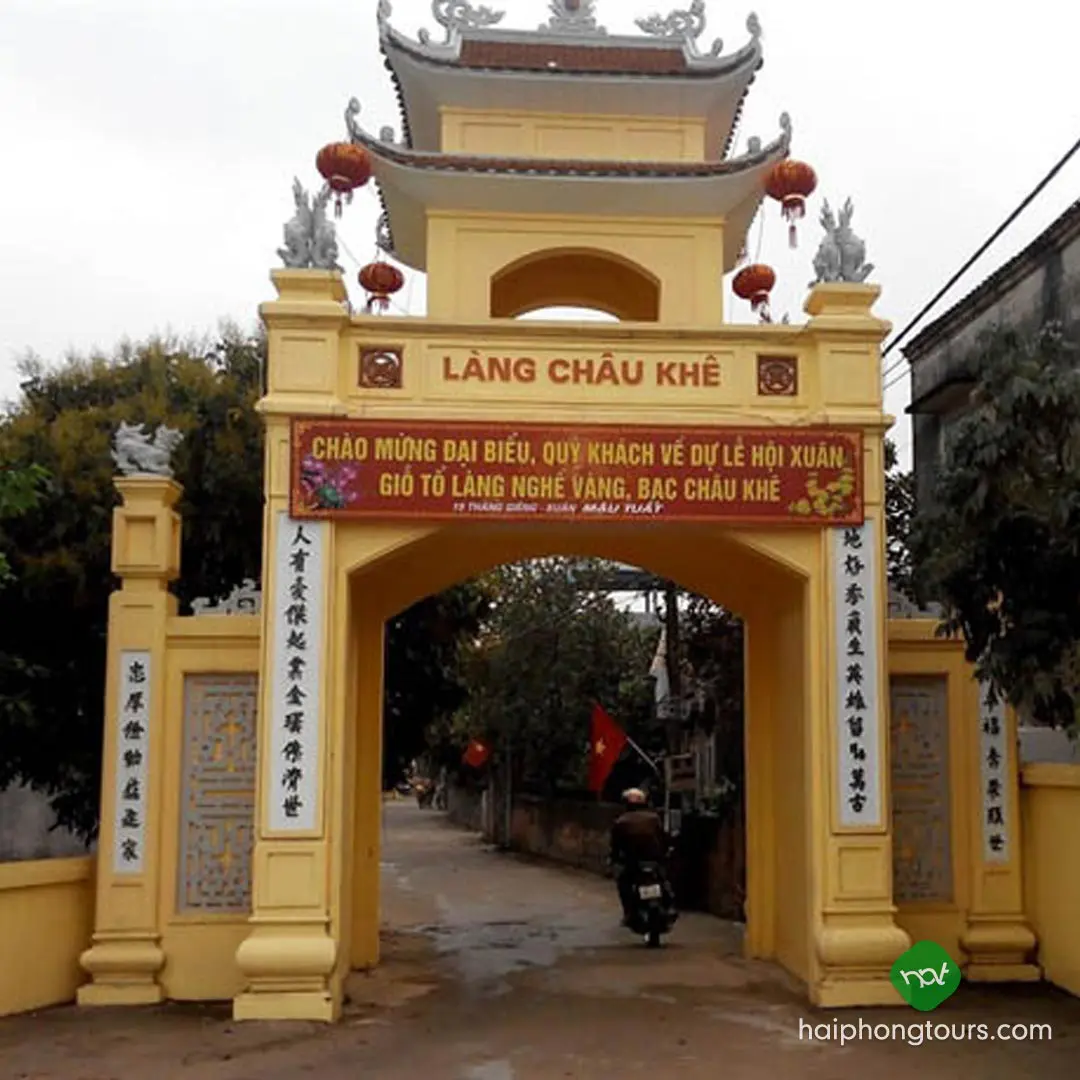
Where is Chau Khe?
The village is in the inland western part of Hai Phong. Older addresses place it in Thuc Khang commune, Binh Giang district, Hai Duong province; the current commune is Duong An.
Give your driver the village name and the exact workshop or meeting point. A general destination labeled “Chau Khe craft village” will not necessarily take you to the person expecting you. Arrange the return journey and waiting time as part of the same trip.
From silver ingots to Hang Bac Street
Chau Khe’s metalworking tradition is associated with Luu Xuan Tin, an official from the village during the reign of Le Thanh Tong in the fifteenth century. He organized silver-ingot production in Thang Long, now Hanoi, bringing workers from Chau Khe to the capital.
When imperial silver-ingot production moved to Hue under the Nguyen dynasty, Chau Khe craftsmen in Hanoi developed other forms of silverwork and jewelry. Their work became part of the history of Hang Bac, alongside craftspeople from places such as Dinh Cong and Dong Xam silver-carving village.
This connection helps explain why the village matters beyond its present-day workshops. The trade linked rural families, specialist skills and the capital’s commercial streets, with knowledge passing between generations and places.
What to look for in the craft
The village’s work includes jewelry and decorative metal objects. Contemporary production combines hand skills with modern tools, so ask your host to explain how a particular piece is made rather than assuming the whole process is performed by hand.
During an arranged visit, useful things to discuss include how the design is developed, which parts are shaped or decorated by hand, and how the final surface is finished. Seeing an unfinished piece alongside a completed one can make these differences easier to understand.
Ask before photographing people, designs or workbenches. Stay in the area your host indicates, and do not handle tools, materials or unfinished orders without permission. Watching production and taking a hands-on class require different arrangements.
Arrange a visit before setting out
- Purpose: explain whether you want to learn about the craft, buy a finished item or discuss a commission.
- Access: confirm the workshop name, meeting point and a time when someone can receive you.
- Activities: ask which stages you can observe and whether any demonstration or practical activity has been agreed.
- Communication: arrange language support if you want a detailed explanation of techniques or materials.
- Cost: clarify any visit or demonstration fee separately from purchases.
The village’s spring traditions honor the craft ancestor in the first lunar month. If you want to visit during a festival, check the program for your travel year and confirm workshop availability separately; a celebration can change the normal working day.
Buying jewelry or commissioning a piece
For a purchase, ask the seller to describe the metal, any plating, stones and the relevant weight or measurements. Obtain an itemized total that makes the material and making charges clear, together with a receipt and any resizing, repair or return terms.
For a commission, agree on the design, dimensions, finish, completion date and collection or delivery arrangements in writing. Do not assume that a piece displayed in a workshop is available to buy immediately or can be completed before you leave Vietnam.
Chau Khe suits travelers with a specific interest in metalwork and craft history. An agreed appointment and a clear purpose will make the visit more worthwhile than arriving without knowing which workshop can receive you.
Would you like help fitting this experience into your trip? Contact us with your travel dates, starting point, available time and group size. Tell us about walking limits or special interests so we can suggest a practical itinerary.