
Cho Thuong covered bridge is a small architectural stop in the countryside outside Nam Dinh, with a tiled roof and timber frame sheltering a stone crossing over the Ngoc River. Visit for the construction and village setting, rather than expecting a large attraction with a full program of activities. Around 20–40 minutes is a reasonable planning allowance for a measured look and photographs, excluding the road journey.
Search for Cầu ngói Chợ Thượng or Cầu ngói Thượng Nông. The bridge is in Thượng Nông, Nam Minh commune, Ninh Bình province; older directions use Bình Minh commune, Nam Trực district, Nam Định. It is a different bridge from the covered bridge at Chùa Lương in Hai Anh.
A bridge built like a house
The Vietnamese expression thượng gia hạ kiều describes a house above a bridge. At Cho Thuong, a sequence of 11 bays supports the tiled roof over a crossing roughly 17 meters long. The short span is part of its appeal: you can study the relationship between roof, timber frame, stone surface and river without needing a long walking route.
Start from a safe position outside to see the roof as a whole. Then, where access permits, look along the repeated columns and roof members. Notice how the covered space provides shelter as well as a way across the water; the bridge belonged to the social and trading life around the old Thuong market.
The bridge’s origins are associated with the Later Le period and Nguyễn Thị Ngọc Xuân, a woman from Thượng Nông who became a consort of a Trinh lord and contributed to its construction. It has been maintained and restored over time, including work in 2019. Appreciate the surviving form and craftsmanship without assuming every visible piece of timber is original.
 The entrance and timber walkway of Cho Thuong covered bridge.
Find the right covered bridge
Show a driver the full name Cầu ngói Chợ Thượng, Thượng Nông, Nam Minh and the corresponding map pin. Adding the older Nam Truc and Nam Dinh names can help when local directions or a saved listing still use them. Do not use only “Ninh Binh covered bridge,” which is too broad.
Cầu ngói Chùa Lương, also called the Luong market covered bridge, belongs to a different village circuit in Hai Anh. The Hai Hau countryside guide explains that bridge, its nearby pagoda and possible village activities. Choose the bridge that fits your actual route, or plan a deliberate architectural comparison with separate road legs.
Build a Nam Dinh outing around it
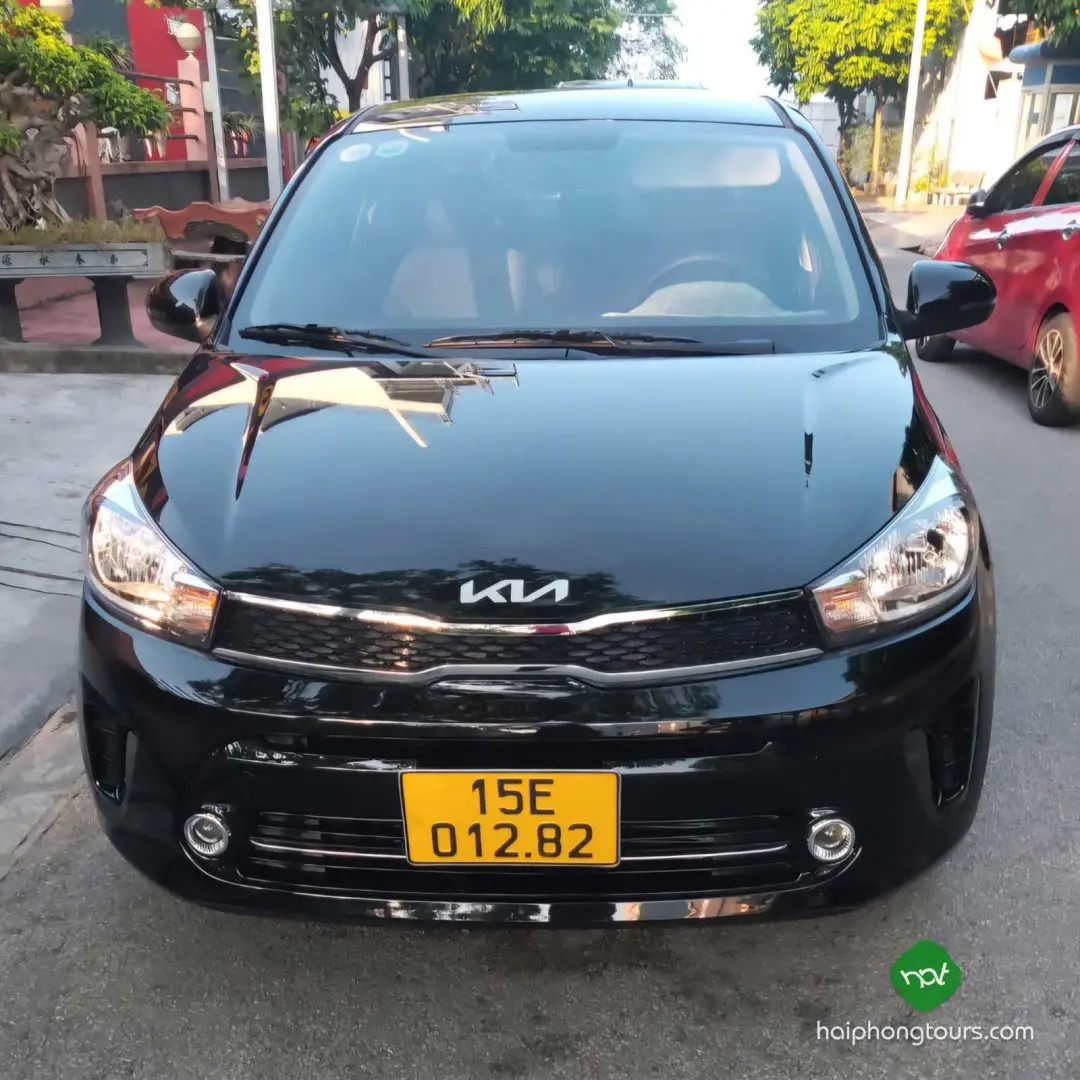
From central Nam Dinh, arrange a car or taxi to the precise bridge and agree on waiting time or a return pickup. A one-way fare does not include a vehicle staying while you explore. If you are combining the bridge with a meal or another heritage site, send the complete sequence before accepting the price.
Travelers arriving from Hanoi can use the Hanoi–Nam Dinh train guide to choose the rail journey, then arrange the countryside connection separately. The station and the bridge are different destinations. A return train leaves less flexibility for an unplanned detour than an overnight stay.
Hai Phong Tours suggests treating Cho Thuong as one focused stop in a Nam Dinh-area day. Give yourself time to look at the roof and crossing, then continue to the meal or visit you have already chosen. Traveling from Tam Coc specifically for this small bridge makes most sense when village architecture is a strong interest, not when it displaces the main reason for your Ninh Binh stay.
Photograph the architecture without blocking the crossing
A view from either approach shows how the roof sits over the river. Inside, a straight view along the bays helps reveal the repeated structure. Wait for a clear moment instead of asking everyone using the bridge to move for your photograph.
Keep bags and tripod legs out of the passage, and ask before making close portraits of residents. Stay on accessible paths rather than climbing onto the roof, stone supports or riverbank edges for a different angle. A quiet visit can include a short pause under the roof, but leave room for other people.
Set practical expectations
Cho Thuong is best approached as a short heritage stop. Do not build the trip around an assumed English-speaking guide, visitor center, toilet, cafe or fixed market session beside the bridge. Arrange any interpretation you want with your guide and take care of meal and toilet stops along the wider route.
Choose daylight for studying the structure and finding the approach. Check local conditions before setting out during heavy rain, and take care on wet stone. If mobility is a concern, ask a local driver or receiving guide to confirm the approach, surface and any level changes before promising a complete crossing.
The visit works when you want to understand a modest piece of village architecture in its setting. Confirm the correct pin, keep the road journey proportionate and give the bridge a little attention rather than expecting it to fill half a day.
Would you like help fitting this experience into your trip? Contact us with your travel dates, starting point, available time and group size. Tell us about walking limits or special interests so we can suggest a practical itinerary.