
Chu Dau Pottery Village is a place to explore Vietnamese ceramic design, visit a production showroom and arrange time with the craft itself. It is in Thai Tan commune, Hai Phong, in the former Hai Duong area. Older directions may use Nam Sach district; this is a separate trip from downtown coastal Hai Phong.
Plan your visit around the Chu Dau Ceramic company’s village factory and showroom. If you want to watch production or try shaping or painting, contact the company first to confirm what can be arranged on your date. A showroom visit and a hands-on session need different arrangements.
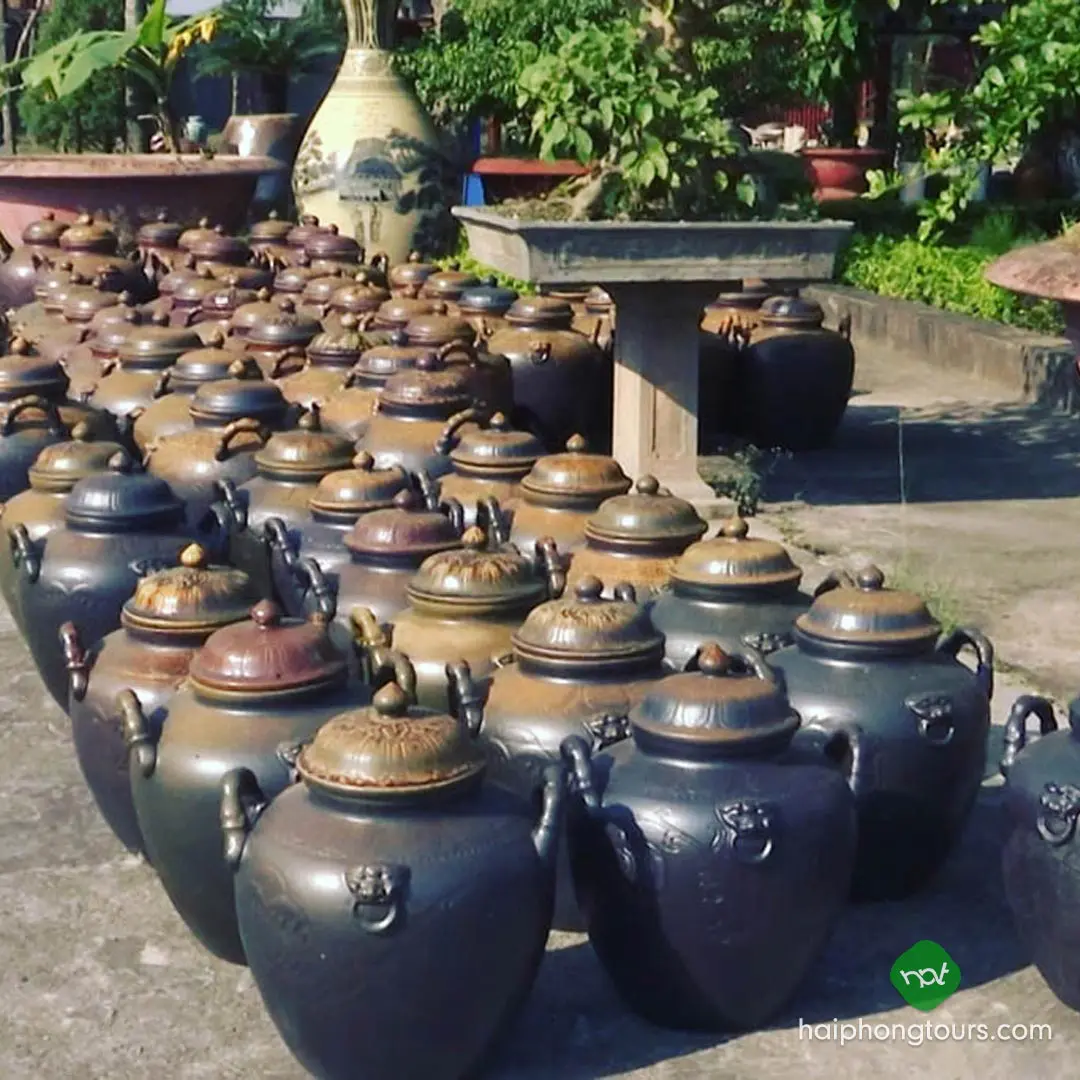
What to look for in Chu Dau ceramics
Start with the shape, painted decoration and glaze. Blue-and-white designs are a recognizable part of the tradition, with plant, flower and bird motifs appearing across different forms. The company’s traditional range also includes glazes made with rice-husk ash.
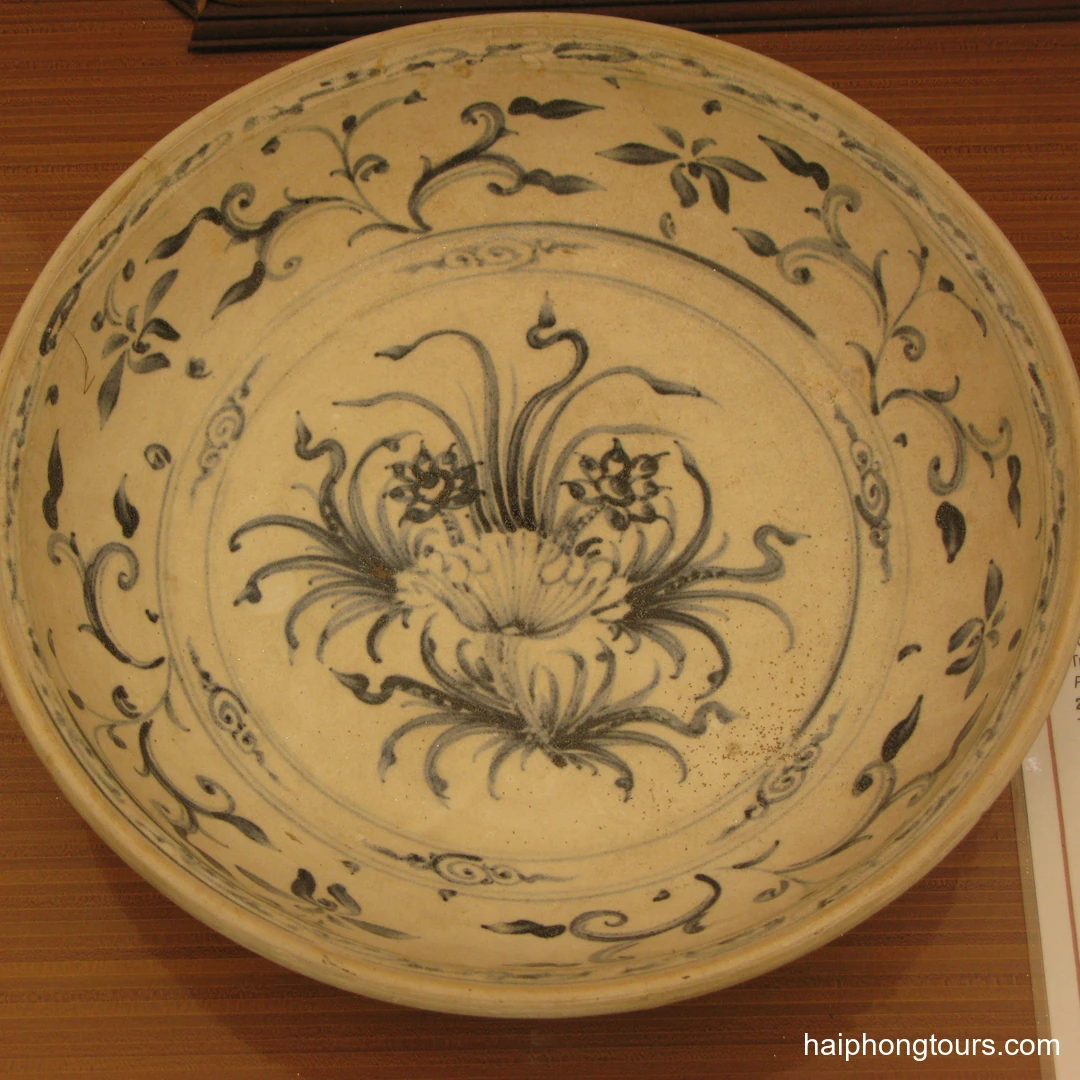
Two forms worth comparing are the garlic-shaped vase, with a rounded body and narrow neck, and the ty ba vase, named for its resemblance to a lute. They are often presented as a pair with complementary traditional symbolism. Ask a host to explain the motifs on the particular pieces you are viewing.
Today’s products range from tea sets and incense vessels to large decorative vases. Hand shaping, finishing and painting continue alongside modern production methods. Seeing a maker decorate a piece helps explain the skill involved more clearly than assuming every object is made in exactly the same way.
A pottery tradition revived after a long decline
Chu Dau’s ceramic history reaches back to around the 14th century, with a period of strong production in the 15th and 16th centuries. Ceramics circulated through overseas trade, and surviving works are held in international museum collections.
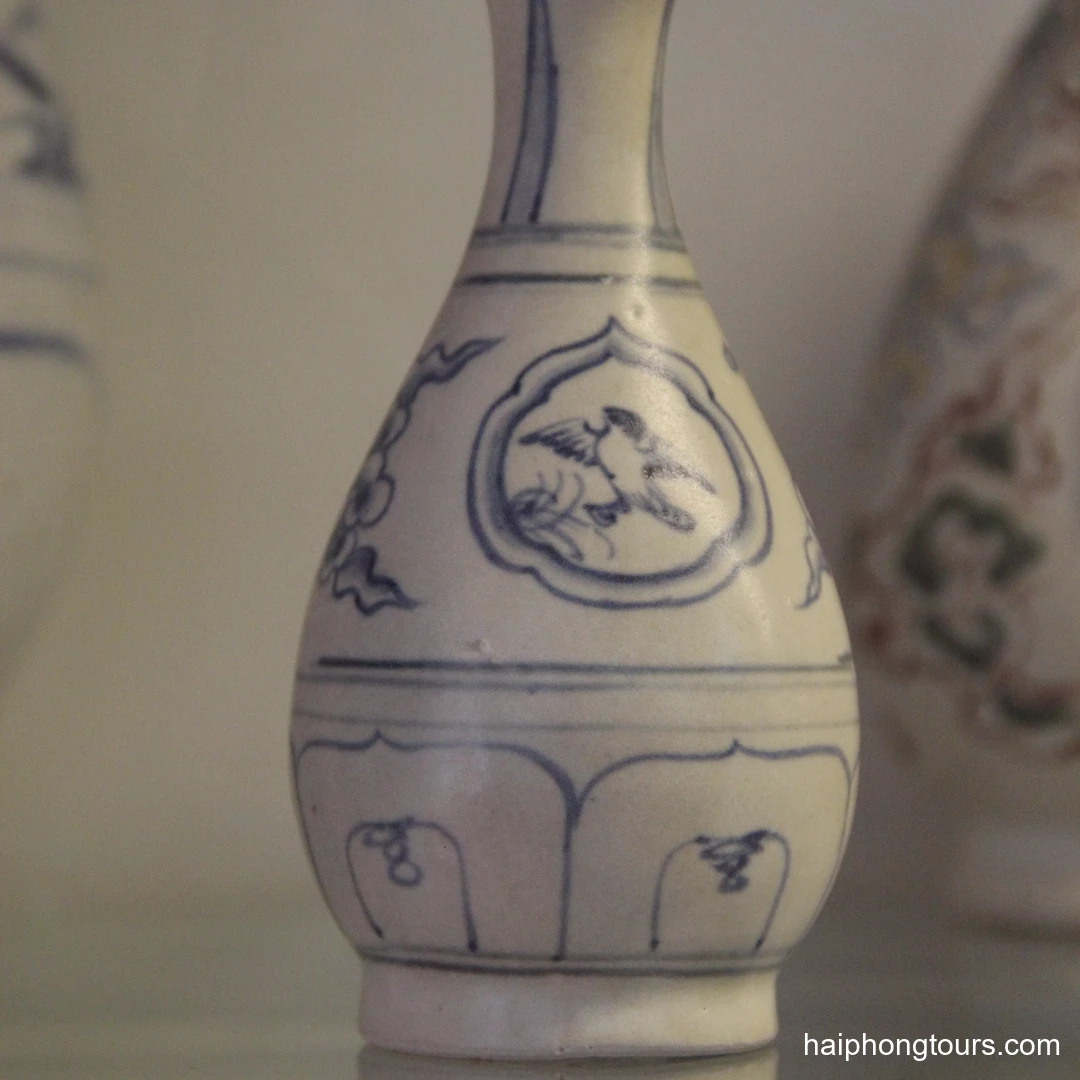
A vase dated 1450 in Istanbul’s Topkapi Saray Museum helped renew attention to the pottery’s origins through an inquiry by Japanese diplomat Makoto Anabuki. Investigations and excavations in the 1980s brought further evidence of the historic production area to light.
Organized modern revival began in 2001. The village’s appeal today combines that history with an active ceramics business, so the pieces offered for sale should be understood as modern production. If antique ceramics are your main interest, ask how the showroom explains the relationship between historic forms and contemporary designs.
Arrange the visit you want
For the company’s general contact, call from within Vietnam, or from abroad. Specify the village factory and showroom in Thai Tan, because the company also lists retail and office contacts in Hanoi.
- For a showroom visit: confirm opening on your date, the entrance or meeting pin, and whether someone can explain the collection in English if needed.
- For watching production: ask which stages you may see, whether a host is needed and where photography is permitted.
- For shaping or painting: confirm the activity, group size, suitability for children, total charge and what materials are included.
- For taking home your work: ask whether firing is required, how long it takes and whether collection or delivery is possible. Do not plan on carrying away a finished fired piece immediately.
Ask for the expected visit length before arranging your driver. Keep the village stop distinct from a quick retail purchase, and allow time for the specific activity you have confirmed.
For Buddhist printing heritage, arrange a separate visit to Tram Gian Pagoda in An Ninh and confirm woodblock viewing beforehand.
Choosing and transporting a ceramic purchase
Decide whether you want a decorative object or something for serving food and drinks. Ask about the intended use and care of that particular piece, including any restrictions on hot liquids, dishwashers or microwaves.
Check the surface, rim and any handles before paying. Request protective packing and an itemized receipt; for a large vase, agree delivery costs and responsibility for damage in transit. A smaller tea set or vase may be easier to carry, but it still needs packing appropriate to your onward journey.
Would you like help fitting this experience into your trip? Contact us with your travel dates, starting point, available time and group size. Tell us about walking limits or special interests so we can suggest a practical itinerary.