
Co Le Pagoda is worth a stop if you are exploring the Nam Dinh area and enjoy religious architecture. Its vaulted Buddhist sanctuary, lotus tower, bridges and large bronze bell make a distinctive cultural visit. Allow roughly 60–90 minutes on site for a first look, longer if you have a guide or arrive during a festival.
The main planning trap is its address. Co Le now belongs to Ninh Binh Province, but it is in the former Nam Dinh area, not beside Tam Coc or Trang An. Choose it as part of a Nam Dinh countryside day rather than assuming it is another nearby stop on the familiar Ninh Binh boat-and-bicycle circuit.

Where Co Le Pagoda is and how to plan the journey
Use the map name Chùa Cổ Lễ, also known as Thần Quang tự, in Co Le Commune, Ninh Binh. Older guides place it in Co Le, Truc Ninh District, Nam Dinh Province. Those descriptions refer to the same pagoda.
From accommodation in central Nam Dinh, arrange a car or taxi with waiting time and a return pickup. From Hanoi, give the outing a full day and combine the pagoda with a meal and a modest amount of other sightseeing. A special return journey just for a quick photograph is harder to justify.
 Day Tour
Hanoi
Private Hanoi City Tour: Full-Day Highlights
 Day Tour
Hanoi
Hanoi City Group Tour
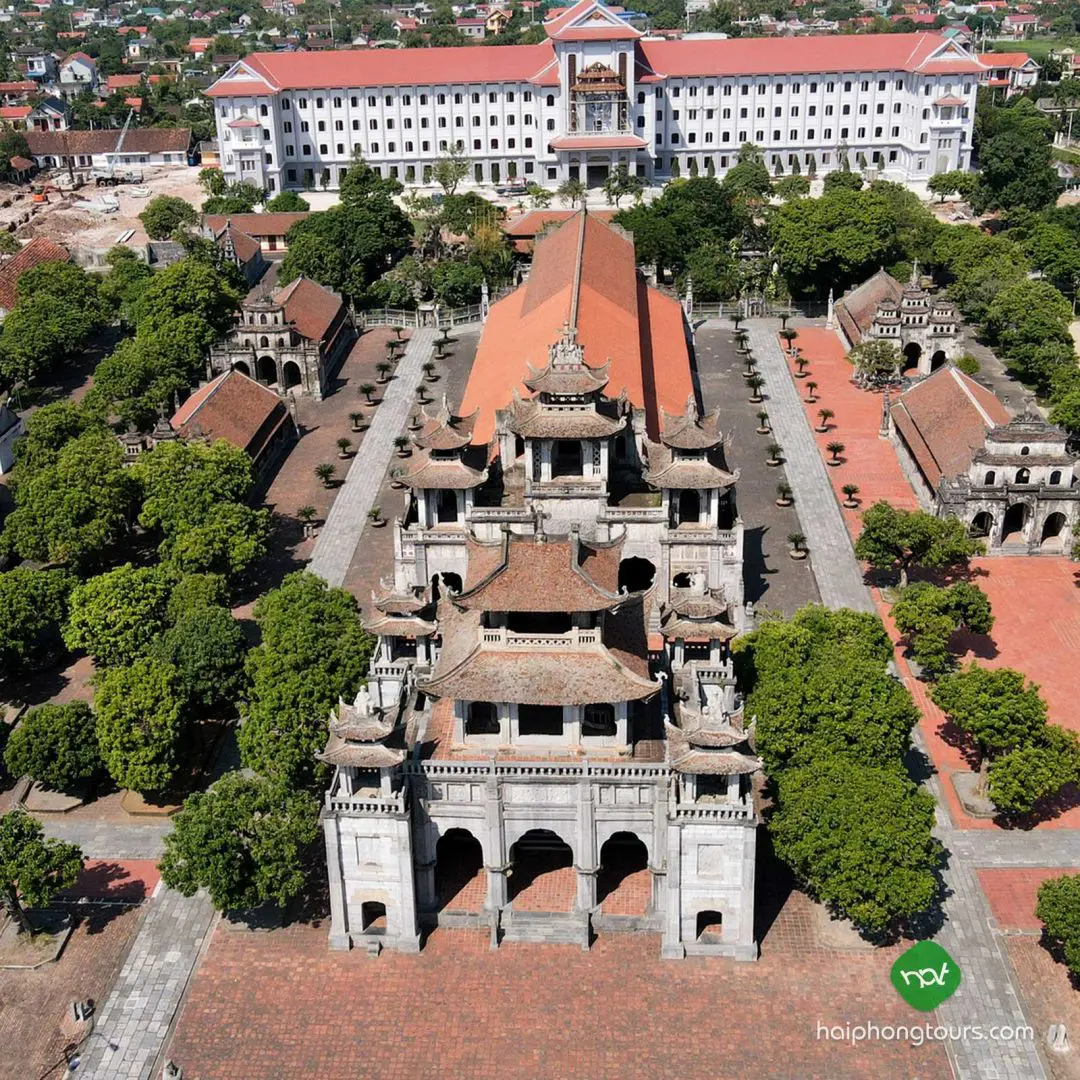
From Tam Coc, send your driver both your hotel pin and the pagoda pin before agreeing on a schedule. Ask for the total return journey, not simply the distance to a place labeled “Ninh Binh.” If you want religious architecture on a more established half-day route from Tam Coc, compare visiting Phat Diem Cathedral before committing to Co Le.
- Set the return plan before arrival: agree where the driver will wait and whether waiting and parking are included.
- Keep a daylight buffer: the grounds, bridge approaches and exterior details are the reason to come; a late arrival leaves less flexibility.
- Separate sightseeing from interpretation: a vehicle booking does not automatically include an English-speaking guide.
Why a Buddhist pagoda looks partly like a European church
Co Le is a Buddhist place of worship with Gothic architectural influences. The arches and height of the main building can suggest a church, but the religious setting, altars and surrounding structures tell a different story. Look at how the vaulted spaces coexist with curved roofs, Buddhist imagery and the arrangement around water.
The religious foundation dates to the Ly period and is associated with the monk Nguyen Minh Khong. Much of the architecture you see belongs to rebuilding and additions in the early twentieth century, notably under Pham Quang Tuyen. The age of the institution should not be mistaken for the age of every present building.
A useful way to appreciate the site is to compare the tall sanctuary with the smaller worship buildings and bridges. A guide can help identify individual figures and explain why Buddhist worship, the veneration of historical people and Mother Goddess traditions appear within the same complex.
A simple route through the grounds
Start with the lotus tower and the approach over water
The Cuu Pham Lien Hoa tower stands on a turtle-shaped base and rises through a series of lotus forms. Study it from ground level before moving toward the entrance: the base and changing proportions are easier to understand when you take in the whole structure.
Continue across the arched bridge toward the gate and courtyard. Treat any internal stairway or closed gate as restricted unless a caretaker explicitly permits entry. This visit works well without climbing the tower.
Pause at the front worship buildings
The Buddhist assembly hall stands in the front part of the complex, with a shrine to Tran Hung Dao and associated historical figures on one side and a Mother Goddess shrine on the other. These are active devotional spaces, not interchangeable rooms to photograph in rapid succession.
Give anyone praying room to finish. If a hall is occupied or closed, continue around the accessible courtyards and return only if access becomes appropriate.
Look for the large bell before entering the main sanctuary
A nine-ton bronze bell cast in 1936 is one of Co Le’s notable objects, set in the water area before the main sanctuary. The complex also has a separate bell tower and other bells, so identifying the location matters more than assuming every large bell you see is the same historic object.
View the bell from an accessible path. Do not step over barriers, reach out over water or strike a bell for a photograph.
Finish with the vaulted hall and quieter rear areas
Inside the main building, when entry is permitted, look upward at the arches and then at the changing levels of the worship space. The experience differs from a low timber hall with a single level. Follow the permitted visitor route rather than trying to reach every altar.
The rear grounds include memorial and burial areas connected with the pagoda’s monks. Co Le also commemorates monks and nuns who joined Vietnam’s wartime armed forces and those who died. Approach these areas as places of remembrance, with the same restraint you would use in a cemetery.
Choose between an ordinary day and the festival
The traditional Co Le festival takes place from the 13th to the 16th days of the ninth lunar month. These are not fixed dates in September. Convert the dates for your travel year and confirm the local program before arranging transport specifically for the event.
The festival honors Nguyen Minh Khong and includes religious ceremonies and traditional community activities. Boat racing is part of its tradition, but a particular race or procession should be checked against that year’s schedule. Arriving on a festival day does not mean every activity runs throughout the day.
Choose the festival for living local culture and accept crowds, waiting and a more complicated pickup. Choose an ordinary weekday for unhurried architectural viewing. A quiet-day visit and a festival visit offer different experiences; neither should be planned around a guaranteed empty courtyard.
Access, costs and what to bring
Ask your accommodation or local guide to confirm visiting access shortly before departure, particularly if interiors are essential to you. Daylight is the sensible visiting window, but it is not a promise that every hall remains open continuously.
Carry small-denomination cash and check any posted charges on arrival. Keep admission, parking and voluntary donations separate when discussing costs. You do not need to purchase an offering simply to appreciate the architecture respectfully.
The route includes bridges, thresholds and changes in level. Anyone who needs step-free access should ask about the exact route from vehicle drop-off to the grounds and main hall. The presence of open courtyards does not establish wheelchair access to the whole complex.
- Cover shoulders and knees, remove hats inside worship spaces, and follow signs or caretaker instructions about shoes.
- Ask before photographing interiors, ceremonies, monks or worshippers. Avoid flash around altars.
- Wear shoes with grip for wet bridge surfaces and paving, and supervise children beside water.
- Carry water and sun or rain protection; leave refreshments for a suitable place outside worship areas.
Build a manageable Nam Dinh day around the visit
A practical first visit is one main cultural stop followed by a food stop, leaving space for travel rather than adding every religious building in the region. The Nam Dinh food guide helps you choose a noodle meal, a savory pastry or a small food gift without turning lunch into another long detour.
If you already have an overnight stay in the countryside, let your host place Co Le into the route around your accommodation. If you are based in Hanoi or Tam Coc, first decide whether the pagoda’s architecture is a real priority. Protect enough time to walk the grounds, understand the different worship spaces and return comfortably.
Would you like help fitting this experience into your trip? Contact us with your travel dates, starting point, available time and group size. Tell us about walking limits or special interests so we can suggest a practical itinerary.