
Đào Xá is a working musical-instrument village where a useful visit follows an instrument from shaped wood to its first properly adjusted notes. It suits musicians, woodworkers and curious travelers who want a conversation with a maker. Arrange a workshop appointment before leaving Hanoi, particularly if hearing an instrument is the main reason for the journey.
Where to go and whom to contact
Use làng nghề nhạc cụ Đào Xá, xã Ứng Hòa, Hà Nội when arranging transport. The village stands beside the Nhuệ River, approximately 50 km south of central Hanoi. Older listings use Đông Lỗ commune, Ứng Hòa district. Those older administrative names refer to the same village.
The Ứng Hòa – Miền Di Sản Ngoại Đô heritage portal lists 0397 604 181, internationally +84 397 604 181, and disanunghoa@gmail.com for tour inquiries. This is a heritage-tourism contact, not an individual instrument maker’s telephone.
Request a receiving workshop, a demonstration if wanted, and interpretation in your preferred language. Get the maker’s name and entrance pin before booking the car. The portal’s village entry marks opening hours and admission prices as unavailable, so there is no verified village-wide visiting timetable or published entry tariff to quote.
Recognize the instruments before entering the workshop
A few names make the visit easier to follow. Photograph the instrument you want to discuss, or save its Vietnamese name. These are useful visual distinctions rather than a promise that every type will be ready to play during your appointment.
| Instrument | What to notice | A useful comparison |
|---|---|---|
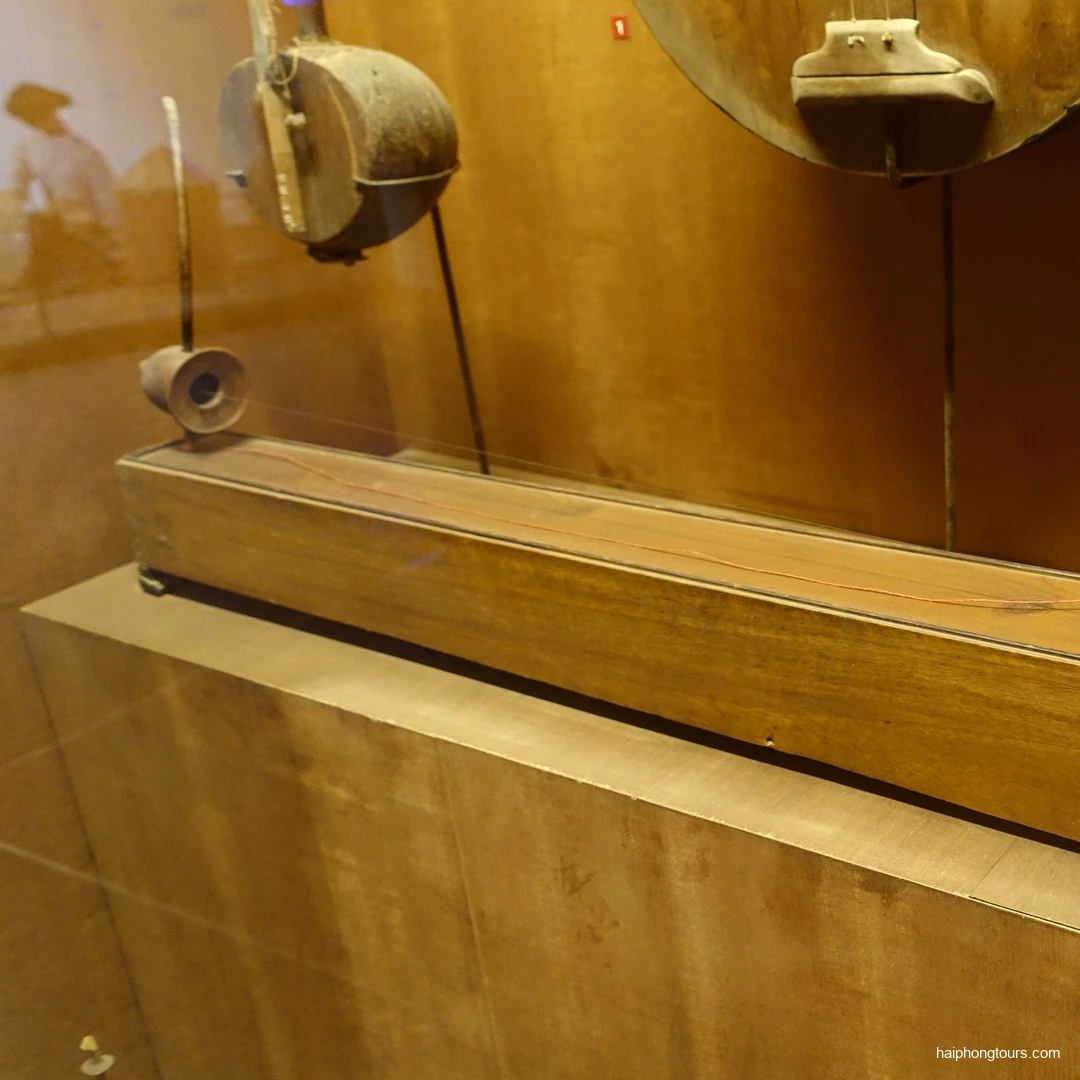
| Đàn bầu | A long body, one string and a flexible rod used to change string tension and pitch. | Hear a steady note followed by a pitch bend. |
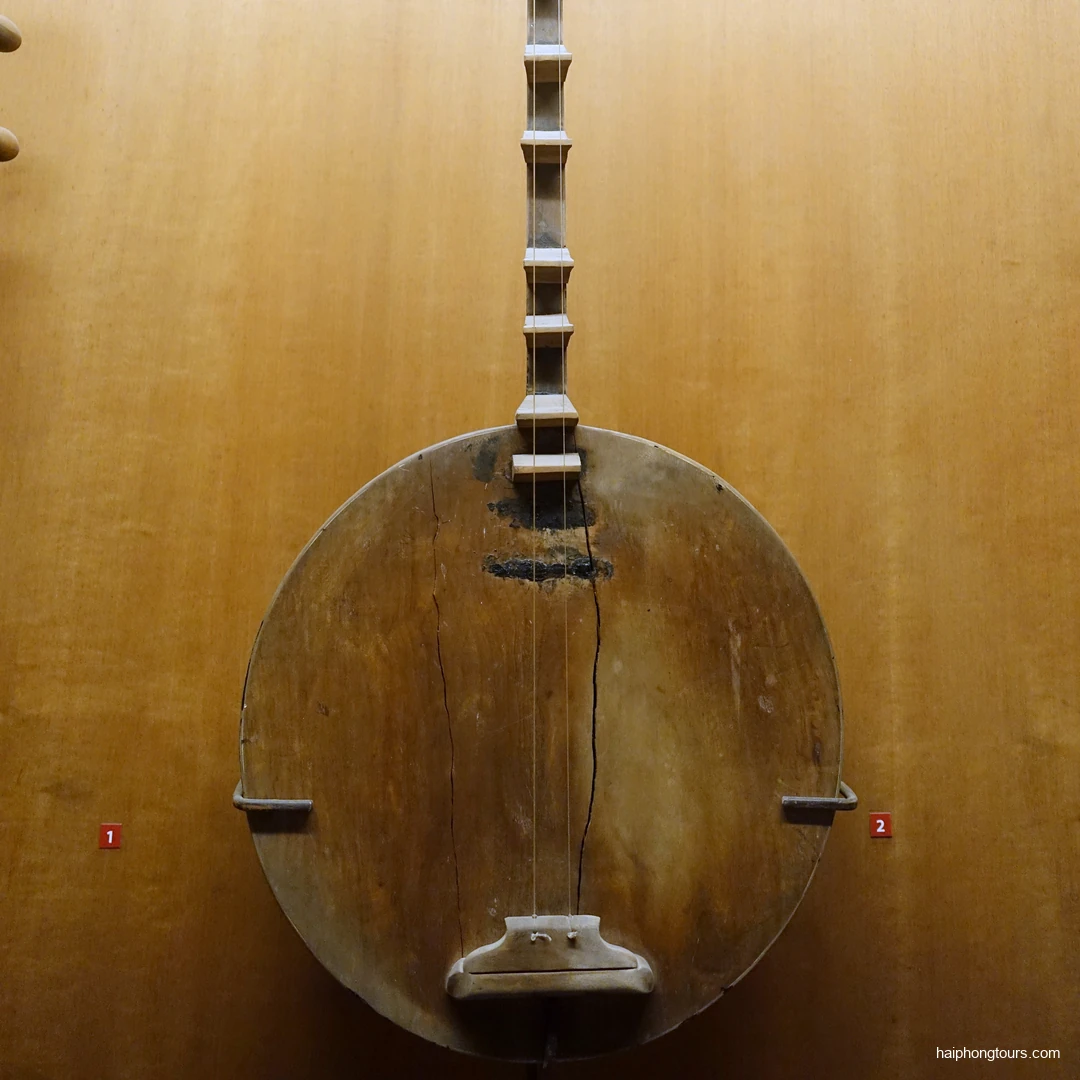
| Đàn nguyệt | A round soundbox, long neck, raised frets and two strings. | Compare the completed instrument with a body before its neck and frets are fitted. |
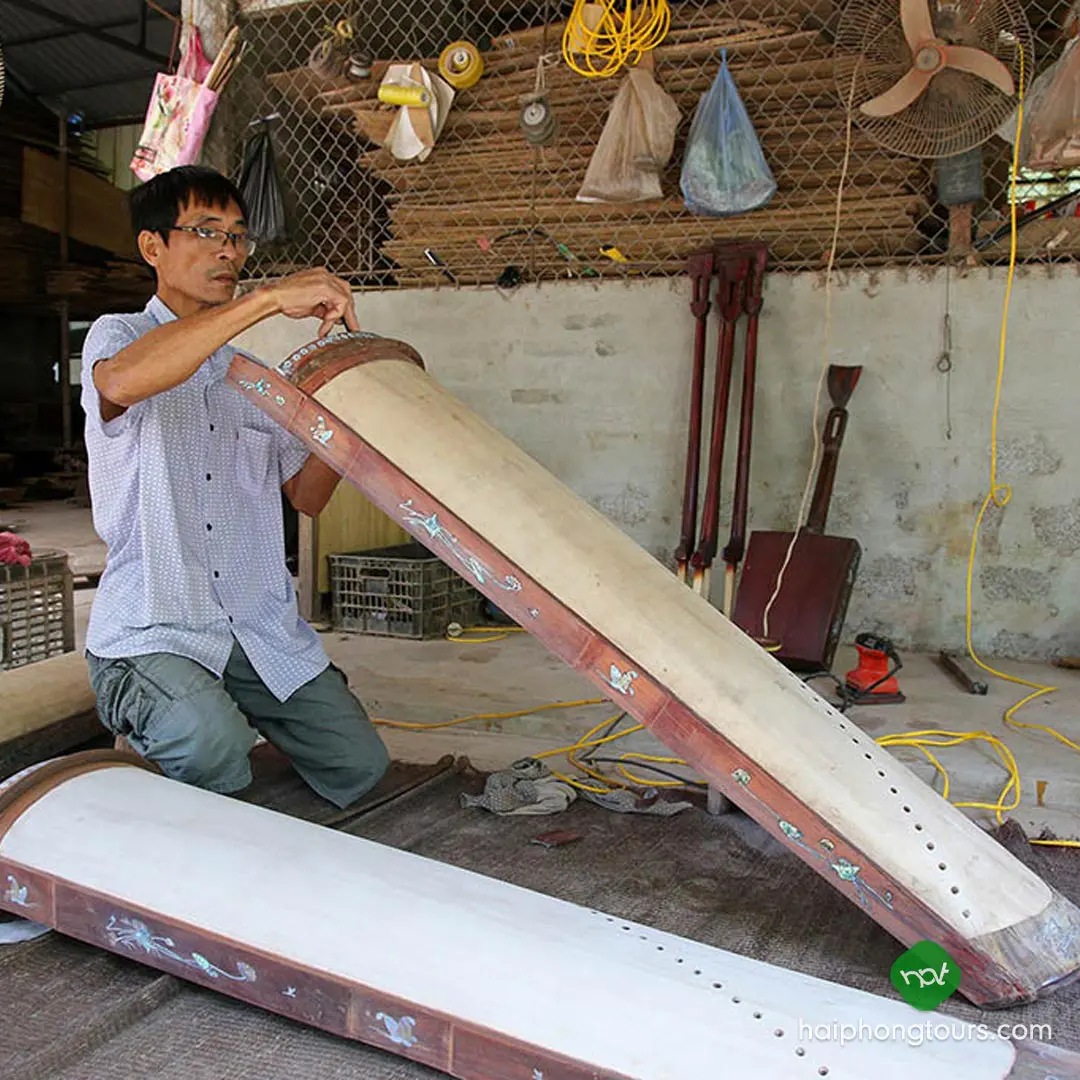
| Đàn tranh | An elongated zither with strings running along its soundboard. | Look at the bare soundboard before strings and bridges are installed. |
| Tỳ bà | A lute with a pear-shaped body. | Compare its outline and construction with the circular đàn nguyệt. |
Follow the work from wood to sound
In an interview published by Quân Đội Nhân Dân, maker Đào Anh Tuấn described a sequence of 13 stages, including wood selection, drying, shaping, carving, assembly and final adjustment by ear. His account distinguishes ngô đồng soundboards used for đàn tranh and tỳ bà from the skin-covered wooden body of a đàn tam. The construction depends on the instrument.
Start with an unfinished body. Find the soundboard, sides, joints and space that will become the resonating chamber. Then compare it with a completed example. The useful question is what each component does, rather than whether the most elaborately decorated instrument is automatically the best one.
Move next to fitting and finishing. Hanoi’s broadcaster documents the positioning of frets and careful string adjustment in Tuấn’s workshop. Ask the maker to show a loose component beside its finished position. A fret seen close up explains more than a row of instruments photographed from the doorway.
Finish with listening, if a demonstration has been arranged. Hear the same short phrase twice, then compare two instruments of the same type if available. Let the player explain the difference before choosing a favorite. A maker’s short sound test is a distinct activity from a concert or a lesson for the visitor.
The family tradition behind the craft
Local tradition credits Đào Xuân Lan with learning instrument making and bringing it home to teach villagers during quieter agricultural periods. Later generations carried the trade to other cities. The account is a craft-origin tradition, not a claim that Vietnam’s musical instruments were all invented here.
Keeping the skill alive involves more than preserving old tools. The local government’s account describes competition and younger people taking industrial jobs. In June 2025 Hanoi authorized use of the Đào Xá place name for an instrument certification-mark application. That administrative step should not be read as a guarantee that every item offered to visitors carries a certified mark.
Buying a playable instrument
Decide whether the purchase is for learning, performance or display. For a playable instrument, send a photograph or specification to your teacher before the visit. A musician who knows the instrument can help assess the sound, setup and fit for your intended repertoire.
Request a quote for one identified instrument, with its dimensions, materials, accessories and case listed. Establish whether you are taking that exact item or ordering another one. For a custom order, record the deposit, completion date, approval process and delivery arrangements. No current universal Đào Xá retail price list was verified for this guide.
Before payment, hear the instrument demonstrated and inspect the joints, finish, strings and fittings with the maker. Obtain the correct replacement-string specification and a contact for later questions. If electrical equipment is part of the setup, have the seller list what is included and demonstrate the complete arrangement.
Measure the packed case before planning the journey home. Check your airline’s actual instrument and baggage conditions, and obtain a separate packing or shipping quote if needed. A workshop’s willingness to sell an instrument does not establish how your carrier will transport it.
A focused countryside itinerary
Hai Phong Tours suggests allowing 60–90 minutes at the workshop, within a half-day or longer outing from Hanoi. This is an editorial planning allowance, not a bookable session length. Put the appointment first and plan the drive around it.
A practical sequence is Hanoi, Đào Xá for the workshop, lunch, then the return journey. A waiting car makes it easier to carry a purchase and keep the return flexible. Send the driver the host’s pin rather than relying on the commune name alone.
For a fuller craft day, consider Trạch Xá áo dài village, also in Ứng Hòa commune, as a separately arranged second appointment. Pairing wood and sound with tailoring gives the day a clear theme. Leave enough time for both makers instead of adding several brief village stops.
If your main aim is to play, the Hanoi đàn bầu lesson guide offers a more direct next step. Use the village visit to understand construction and a teaching appointment to develop technique.
At the workbench
Keep bags and drinks away from instruments, saws and work surfaces. Ask before handling a customer’s order or recording a demonstration. For children, request a finished object or sample to examine under supervision. Anyone who needs seating or step-free access should have the host describe the actual workshop entrance and work area before travel.
Planning an instrument-making visit? Contact Hai Phong Tours with your Hanoi hotel, date, group size and instrument of interest. Say whether you want observation, a demonstration or help discussing a purchase, so the workshop appointment and transport can be arranged around that purpose.