
The direct road from Dien Bien Phu to Sapa is the useful choice when you want to continue across northwestern Vietnam without returning to Hanoi. Compare an overnight sleeper bus with a private daytime car. Both follow a long mountain corridor; the better option depends on sleep, scenery, luggage and what you will do immediately after reaching Sapa.
Allow roughly 8–10 hours as a practical planning window, depending on the vehicle, pickup, stops, road and weather. A ticket may show a shorter scheduled time, but it should not be used to promise an immediate tour, train or flight connection.
Choose by your first hours in Sapa
- Overnight sleeper bus: useful for saving daytime, provided you can tolerate the berth and have arranged an early Sapa arrival.
- Private car by day: useful for a family, small group, large luggage or travelers who want controlled breaks and mountain views.
- Muong Lay overnight: useful when the northwest road journey is part of the trip and you prefer two shorter stages.
- Return through Hanoi: useful only when Hanoi is another destination or a direct option is unavailable. It is a major detour for this route.
The route through Muong Lay and Lai Chau
The overland corridor runs north from Dien Bien Phu toward Muong Lay, continues through the wider Lai Chau region and approaches Sapa through the O Quy Ho mountain corridor. Operators commonly describe approximately 270–280 kilometers, but curves, settlements, stops and mountain conditions make road time more important than distance.
Muong Lay is roughly 90 kilometers north of Dien Bien Phu and can be a deliberate overnight base. It does not split the full trip into equal halves. The name “Lai Chau” can also cause confusion: present-day Lai Chau city and the old Lai Chau area associated with Muong Lay are different places. Always send the exact accommodation pin.
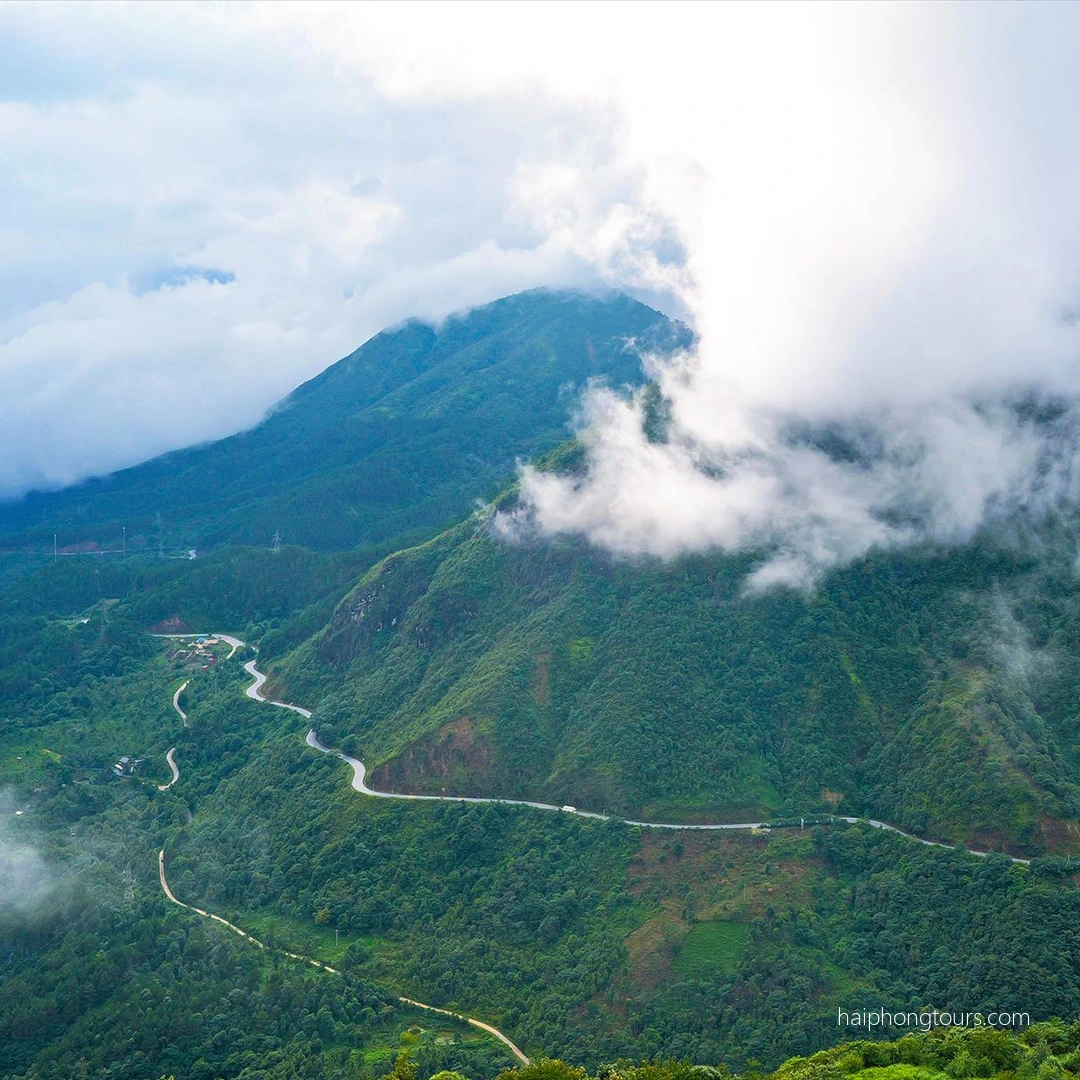
Near the Sapa end, fog, rain and traffic around O Quy Ho can slow the journey. Let the driver or operating company respond to current conditions instead of insisting on an advertised clock.
Taking an overnight bus
Overnight services are commonly sold for this corridor, with advertised journey times around eight to nine hours. The exact operating company, pickup and arrival vary by ticket seller. Several websites may list seats on the same departure, so the number of online offers does not prove that several different buses run.
Ask for the carrier name, vehicle photograph, berth class, reporting time, exact boarding pin and final Sapa stop. Confirm whether you stay on one bus and whether the service carries through passengers toward Laos. A domestic Dien Bien Phu–Sapa ticket should not require you to cross an international border.
For the berth, ask about usable length, upper or lower position and whether a “double cabin” is shared. Keep your passport, phone, medication and warm layer in a small bag. Large luggage may be inaccessible until arrival.
Make the Sapa arrival usable
A bus may reach Sapa before hotel check-in and before many cafés or reception desks are fully active. Send the scheduled arrival and drop-off to the accommodation. If you need to sleep immediately, book the previous night with a confirmed late arrival or obtain a guaranteed early room; luggage storage alone is not a bed.
Do not commit to a strenuous trek on arrival morning. Allow time for breakfast, a shower and weather adjustment. Sapa can be cold and wet even when Dien Bien Phu felt warm.
Hiring a private car
A private car gives hotel-to-hotel movement, flexible toilet breaks and control over luggage. It also lets you travel mainly in daylight. The total cost is higher than one bus seat but can make sense when shared by several people.
Request a quote for the exact Dien Bien Phu pickup and Sapa hotel. State the number of passengers, large cases and any child seat. Ask whether tolls, parking, driver meals and waiting are included, and choose a vehicle that still has luggage capacity when every passenger seat is occupied.
Hai Phong Tours recommends treating 8–10 hours as a full-day estimate rather than promising a fixed arrival. A direct run may be quicker in good conditions, while lunch, viewpoints, fog or road work can extend it. Keep the evening flexible.
Scenic stops are not a guided tour
Agree on one or two short safe stops before departure. A transfer driver may pause at a practical viewpoint, but admission to a ticketed attraction, a guide and unlimited waiting are separate services. In dense cloud, continuing safely matters more than reproducing a photograph.
The O Quy Ho Pass and Heaven Gate guide explains the road corridor and the separate visitor attractions near Sapa.
Breaking the journey in Muong Lay
Use an overnight in Muong Lay when you want a slower reservoir-side journey or do not want one long road day. Confirm the accommodation, evening meal and vehicle access before leaving Dien Bien Phu.
A through-bus ticket normally cannot be paused for one night and resumed the next day. Book separate legs or arrange a private itinerary. Confirm the next departure locally because a timetable for a passing bus may not guarantee a reserved seat.
Dien Bien Phu departure checks
Dien Bien Phu city is not the entire province. A rural homestay, battlefield excursion or airport pickup may add time before the intercity journey. Give the seller the exact address and find out whether pickup is at a terminal, an office, a main-road point or your hotel.
If you are sightseeing on departure day, protect enough time to return for luggage and reach the bus. Historical sites around the city are easier to combine than a distant excursion. The Dien Bien Phu travel guide helps group the sites without risking the onward journey.
Choose the correct Sapa drop-off
A ticket labeled “Sapa” may end at a bus office or roadside point rather than your hotel. Sapa town, Ta Van, Lao Chai, Ta Phin and other villages require different last-mile journeys. Send your lodging pin before booking and ask whether village delivery is included.
If the bus ends in town, arrange a local car with room for your luggage. Village roads can be steep, narrow or affected by rain; do not assume every vehicle reaches the accommodation door.
The Sapa travel guide helps choose between a town base and a valley stay. Decide that before selecting the drop-off.
Reverse direction
For the opposite journey, use the Sapa to Dien Bien Phu transport guide. It focuses on leaving Sapa, early Dien Bien Phu arrival and the same mountain corridor in reverse.
Booking checklist
- Send both accommodation pins, not just the two city names.
- Confirm carrier, vehicle, berth and any change of vehicle.
- Ask for reporting time, exact pickup and exact Sapa drop-off.
- State passenger heights, children and large luggage.
- Arrange room access or luggage storage after a night bus.
- Keep the arrival day free from a tight trek or onward connection.
- Reconfirm road conditions and departure shortly before travel.
We travel on [date] from [Dien Bien Phu address] to [Sapa hotel or village]. There are [number] passengers with [bag details]. Please confirm the operator, pickup, berth or vehicle, any transfers, exact drop-off, expected arrival and total price.
Choose the overnight bus when saving daylight matters and you have solved the early-arrival problem. Choose a daytime car when the road, luggage and flexible stops matter more. Either way, a precise Sapa drop-off and a realistic first-day plan are more useful than the shortest advertised time.
Useful guides for your trip
Would a private transfer make this journey easier? Contact us with your travel date, exact pickup and drop-off, number of travelers and bags. Include any flight, train or cruise deadline so we can assess a suitable plan and quotation.