
Dong Ho painting village is worth a trip from Hanoi if you want to understand Vietnamese woodblock printing and arrange time with a practitioner. The key is to book the experience itself: visiting an exhibition, watching an artisan print and making a print under instruction are different activities.
For a first visit, choose one confirmed workshop or demonstration and allow a generous half-day from Hanoi. Do not base the trip on the village name alone. A collection of finished pictures can explain the imagery, but it will not necessarily give you access to the printing process.
What makes a Dong Ho print different
Dong Ho pictures are made with carved wooden printing blocks. Color layers are printed in sequence onto prepared paper, with a separate block supplying the black outlines. Traditional materials include natural pigments and handmade dó paper coated with powdered scallop shell, often called giấy điệp.
The craft involves much more than pressing a block. Someone must design the image, carve the blocks, prepare the paper and mix the colors. A visitor session can introduce printing from an existing block; it should not be confused with learning to carve a complete set or producing a print from raw materials.
Look beyond the bright animals. Familiar subjects include village life, celebrations, family wishes and social commentary. The well-known Đám cưới chuột, or Mouse Wedding, is a useful image to ask an artisan to explain: its characters and procession carry more meaning than a decorative souvenir suggests.
The heritage recognition is about a living skill
UNESCO inscribed the craft of making Dong Ho folk woodblock printings on its List of Intangible Cultural Heritage in Need of Urgent Safeguarding in 2025. The recognition concerns knowledge and practice passed between people, with only a small number of families continuing the craft.
That makes the practitioner central to the visit. Pay for the time and activity you arrange, ask before handling blocks, and give the host room to work. Historical blocks can be family heirlooms rather than equipment offered for visitor use.
Choose between the conservation center and an artisan household
A display or heritage introduction
The Dong Ho Folk Painting Conservation Center, known in Vietnamese as Trung tâm Bảo tồn tranh dân gian Đông Hồ, is a place to ask about exhibitions and organized heritage activities. Confirm the program on your date: a display visit, a festival demonstration and a booked printing activity may have different arrangements.
Choose this approach if your main interest is seeing examples and understanding the wider tradition. If making a print matters, ask for that explicitly before committing to transport.
A visit to a practicing family
An artisan household can bring the tools, finished work and family setting together. For example, the Nguyen Huu Hoa–Nguyen Thi Oanh family has a home, workshop and display space associated with the craft. Confirm who will receive you and what the visit includes; the name of a respected artisan does not guarantee that person will be present.
This option suits a traveler with specific questions about printmaking or the meaning of an image. Arrange interpretation if you want a detailed discussion in English. Do not assume that a driver also provides translation or that every family member teaches visitors.
A shop visit
Choose a shop when buying a picture is the main goal. Ask who printed it, what paper and colors were used, and whether you are buying a handmade print, a reproduction or another product carrying a Dong Ho design. A handmade print can be one of many impressions from the same block; being reproducible is part of printmaking.
Getting there from Hanoi without a vague drop-off
Dong Ho is in Bac Ninh, northeast of Hanoi, in the Dong Khe area of Thuan Thanh ward. Older maps and descriptions may use Song Ho commune and Thuan Thanh district. Send your driver the exact workshop or center name and its map pin, rather than simply asking for “Bac Ninh” or “Dong Ho village.”

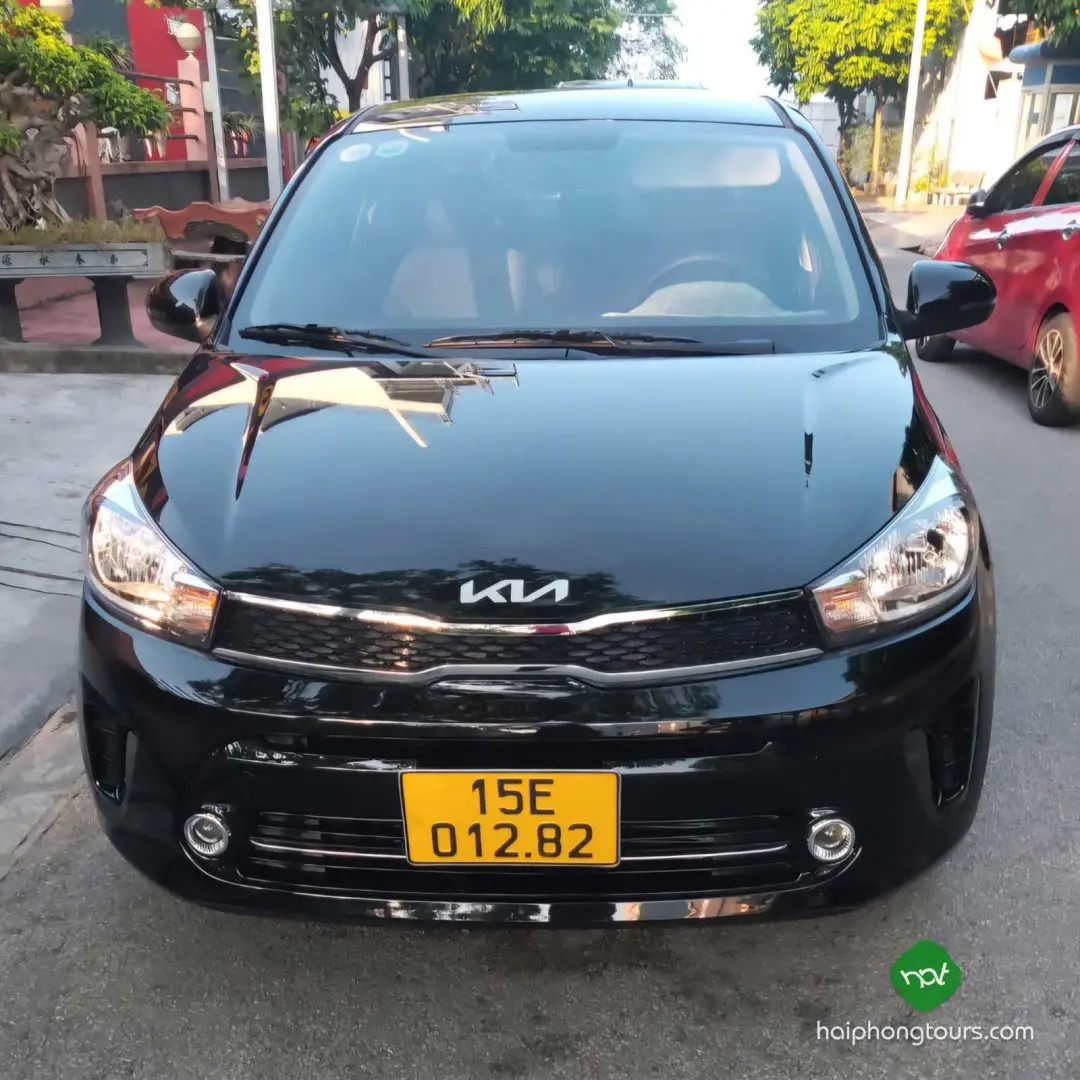
A car with a prearranged return is practical when your visit depends on an appointment. Confirm whether the quoted transport includes waiting, any additional stops and the return to your Hanoi hotel. If traveling one way by taxi or an app, arrange the return before leaving; an outward booking does not reserve a vehicle for later.
Build the day around the host’s available time. Check the journey estimate from your own hotel, add room for traffic and keep a fixed airport or train departure off the back of a tightly timed visit. For a craft-focused outing, one unhurried appointment is more useful than several brief village stops.
What to confirm before leaving Hanoi
- Your participation: whether you will print, watch a demonstration or only see the collection.
- The process: whether the session uses one block or several color layers, and which steps the instructor performs.
- Language and timing: the available explanation, appointment length and latest arrival time.
- The total price: instruction, paper, a take-home print, interpretation and any separate admission or purchases.
- The finished work: whether it can leave with you that day and how it will be protected for the journey.
- Your group’s needs: children’s ages, seating, steps, toilet access and any help needed between the vehicle and work area.
A useful first message is: “We would like to visit Dong Ho on [date]. Can we arrange a hands-on woodblock printing session for [number] people, with an explanation in English? Please confirm the exact location, activity, duration, total cost and whether we can take the print home.” The Vietnamese phrase trải nghiệm in tranh Đông Hồ helps identify a printing experience.
Getting more from the time at the printing table
Ask to see how the color blocks relate to the outline block. Comparing a block with its impression makes the reversed image and the need to align each layer easier to understand. Then choose one picture and ask about its title and meaning, rather than rushing through a large collection without context.
Wear clothes that tolerate a mark and follow the instructor’s handling instructions. Ask before photographing people, private rooms or close details of stored blocks. With children, confirm that an adult can stay beside the printing activity; do not assume carving tools are part of a beginner session.
Before packing a purchase, ask the maker whether it is dry and how it should travel. Keep the work away from rain, food and pressure from luggage. A paper sleeve alone may not prevent a crease, so discuss suitable support or packaging before you leave.
When another craft outing is a better fit
Dong Ho is a strong choice for an interest in illustration, printing and folk imagery. It is less convenient if you need an immediate, guaranteed English-language activity without advance arrangements, or if your only free time is a short gap between Hanoi appointments.
If a practitioner cannot receive you, compare the different activities in the North Vietnam craft workshop guide. Choose the craft and confirmed session you actually want, then organize transport around it. For Dong Ho, a named host and a clear printing appointment are the most useful starting points.
Would you like help fitting this experience into your trip? Contact us with your travel dates, starting point, available time and group size. Tell us about walking limits or special interests so we can suggest a practical itinerary.