
You may be able to fly a drone in Ha Long Bay, but there is no blanket permission for tourists. The legal answer depends on the drone’s takeoff weight, purpose, registration, pilot credentials, exact coordinates, and whether the flight is inside a prohibited or restricted area. Launching from a cruise also requires the operator’s agreement.
For most international cruise passengers, the practical answer is simple: do not launch unless the paperwork and exact flight area were cleared before the trip. A small drone, a green zone in a manufacturer app, permission from a crew member, or footage posted by another traveler does not by itself make the flight legal.
Quick answer by situation
- Drone under 250 g used only for recreation: a flight-permit exemption may apply, but only outside prohibited and restricted areas and within direct, unaided visual line of sight. Registration, foreign-operator conditions, required notifications, and permission to use the launch site still need attention.
- Drone weighing 250 g or more: expect registration, an appropriate pilot credential, a flight permit, a Vietnamese guarantor for a foreign operator, and cruise or launch-site approval.
- Drone weighing 2 kg or more, or a flight beyond visual line of sight: higher pilot-licensing requirements apply. This is not a casual cruise-passenger setup.
- Drone photos offered in a cruise itinerary: that is the operator’s arranged activity. It does not authorize you to fly your own aircraft.
If you cannot verify every applicable layer for your exact flight, keep the drone packed.
The four checks that decide whether you can fly
1. The aircraft must be lawfully documented and registered
Vietnam requires a drone to have a valid registration or temporary-registration certificate before it is operated. Current registration rules also set eligibility conditions for foreign individuals and require documentation supporting lawful ownership or import, depending on the case.
Do not assume that carrying a drone through an airport, buying it abroad, or registering it in your home country completes the Vietnamese process. Registration in Vietnam, customs or temporary-import requirements, and airline battery rules are separate questions.
2. The exact flight area must be checked
Ha Long Bay should not be treated as one uniform airspace block. Vietnam’s Ministry of Defence publishes an official map of prohibited and restricted flight areas. Check the proposed route by coordinates, not just by the name “Ha Long Bay,” because a cruise moves between ports, channels, islands, anchorages, and excursion sites.

A prohibited area is not available for an ordinary tourist flight. A restricted area may require conditions or authorization that the sub-250 g exemption cannot bypass. Temporary defense, security, civil-aviation, or safety restrictions may also affect a location, so repeat the official check close to the planned date.
3. The flight may need a permit and pilot license
For a normal tourist flight that does not meet the narrow under-250 g exception, apply for a flight permit for the specific purpose, aircraft, location, altitude, date, and time. A foreign person using or directly operating the drone must also have a Vietnamese organization or individual acting as guarantor.
A drone operator handling an aircraft from 250 g to under 2 kg needs the appropriate visual-flight pilot license. An aircraft of 2 kg or more, a flight beyond visual line of sight, or a pre-programmed flight through a central controller requires the higher instrument-observation credential or an accepted equivalent.
4. A cruise or launch site can impose its own rule
A national flight permit does not give you an automatic right to use a cruise ship, tender, marina, beach facility, or other controlled property as a launch and landing site. The operator remains responsible for passenger safety and vessel operations and may refuse guest drone use.
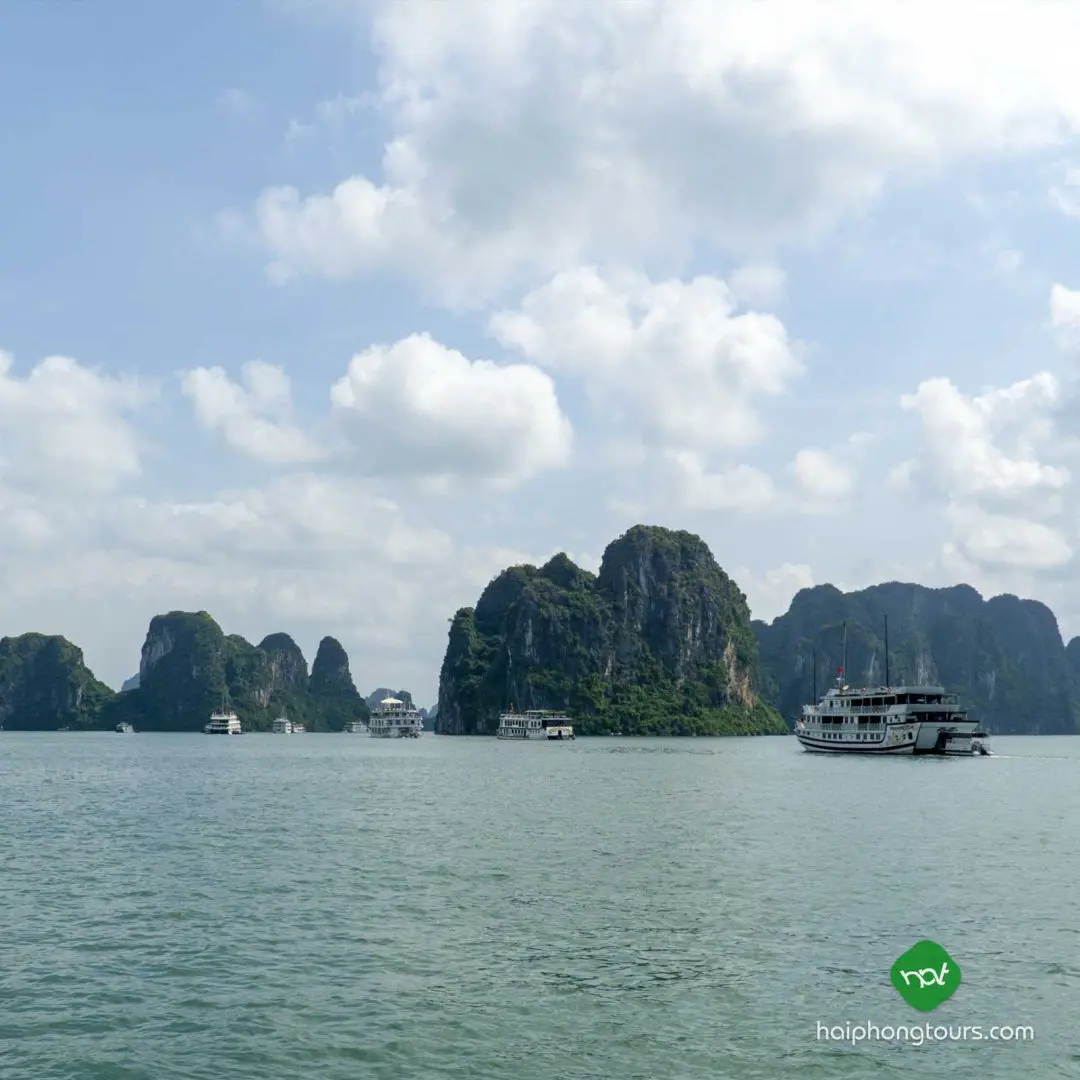
Policies differ by operator and can change by vessel, route, and day. Obtain a written answer from the exact cruise company rather than relying on a reseller, an old forum post, or a rule quoted for another ship.
What the under-250 g exception really means
Vietnamese law provides a flight-permit exemption for a drone with a maximum takeoff weight below 0.25 kg when all three conditions are met:
- the purpose is recreation;
- the flight stays outside prohibited and restricted areas; and
- the drone remains within direct visual line of sight using the naked eye.
This is an exemption from the flight permit, not a universal exemption from drone regulation. The aircraft still needs valid registration, a foreign operator still faces the applicable guarantor and registration-eligibility rules, and local military or police notification can be required. Permission from the vessel or launch-site operator is still separate.
The exception also disappears when the flight is not recreational or the route enters a prohibited or restricted area. A DJI Mini model or another advertised “sub-250 g” drone qualifies by its actual maximum takeoff weight and operating setup, not by its product family name alone.
How the Vietnam drone permit process affects a Ha Long trip
A standard application uses the prescribed flight-permit form and identifies the operator, aircraft registration, pilot, purpose, dates, times, altitude, takeoff and landing location, and exact flight area. A route or polygon needs an area diagram. A foreign applicant also needs the Vietnamese guarantor documentation.
The application must normally reach the competent authority at least seven days before the flight. A flight that requires an aviation notice has a minimum 12-day filing period. The authority’s processing period begins only after it receives a complete, valid file, so these minimums are not a safe last-minute planning window.
A permit can cover only the approved details. If weather, the cruise schedule, or an itinerary change moves the ship to another anchorage, do not improvise a new launch location or time. The approved flight may also be suspended or canceled for defense, security, or flight-safety reasons.
How to check your cruise’s drone rule
Ask the exact operator these questions before paying for a cruise if drone use matters to your trip:
- May a guest bring the drone aboard, and how must it be stored?
- Does the company allow a guest-owned drone to be launched or landed from the vessel, tender, marina, or any excursion stop?
- Who can give final operational approval: the company office, captain, or cruise manager?
- Is a drone-photo session shown in the itinerary operated by the cruise rather than by guests?
- What happens if weather or a route change moves the vessel outside the approved coordinates or time?
Some exact cruise companies publicly advertise a scheduled or included drone-photography service. That wording describes their arranged activity only. It is not evidence that passengers may launch personal drones, and it should never be generalized to another operator.
Keep the written response with your booking documents. Even when an office says guest use may be considered, the captain or cruise manager can still stop a launch because of the vessel’s position, passenger activity, wind, visibility, or another operational concern.
What to carry if your flight is approved
- the valid flight permit, unless the narrow under-250 g exemption clearly applies;
- the drone’s registration or temporary-registration certificate;
- the required pilot license or recognized credential;
- your passport and the Vietnamese guarantor documentation;
- the approved coordinate map, dates, times, altitude, and takeoff or landing details;
- written cruise-operator or launch-site approval;
- evidence that any required local notification or coordination was completed.
Before takeoff, compare the actual location and time with the permit and official airspace map. Maintain direct visual control when required, keep clear of passengers and vessel operations, and stop if the operator or competent authority instructs you to do so.
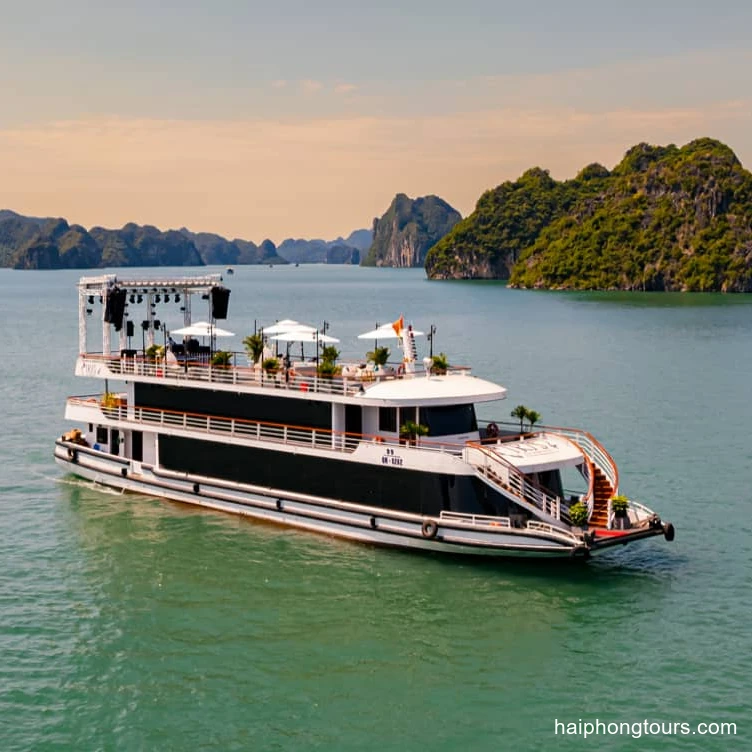
Common Ha Long Bay drone questions
Is all of Ha Long Bay a no-fly zone?
Do not describe the entire bay as either open or prohibited. The decisive check is the official map and the coordinates of the proposed flight, together with any temporary restriction and the conditions written in your permit.
Does a green DJI map mean I can fly?
No. A manufacturer’s geofencing display is not the Vietnamese government’s prohibited-and-restricted-area map, a registration certificate, a flight permit, or cruise approval.
Can cruise staff give me legal permission?
The operator can decide whether you may use its vessel or controlled launch site, but it cannot replace government registration, airspace, pilot, permit, guarantor, notification, or coordination requirements.
Can I bring a drone aboard without flying it?
Possibly, but ask the airline and exact cruise operator about carriage, batteries, storage, and any check-in restriction. Permission to carry the equipment is not permission to operate it.
What can happen after an unauthorized flight?
Vietnamese authorities can suspend or suppress a non-compliant flight and may temporarily seize the aircraft in cases covered by law. Flying outside the permit, without the required registration, or with an unqualified operator is not a minor paperwork issue.
Bottom line
A tourist drone flight in Ha Long Bay is possible only when the exact operation satisfies Vietnam’s current registration, airspace, pilot, permit or exemption, guarantor, notification, and coordination rules, plus the cruise or launch-site policy. If those checks were not completed in advance, enjoy the bay from the deck and leave the drone packed.
Useful guides for your trip
- Ha Long, Lan Ha and Bai Tu Long Cruise Itineraries
- Halong Attractions: Bay Cruises, Museum, Beaches and Parks
Need help choosing the cruise or coordinating the shore transfer? Contact us with your date, preferred route, group size and starting point. Tell us about any dietary, mobility or onward-connection needs before booking.