
These three Vietnamese noodle soup recipes give you a choice between spicy lemongrass chicken, beef brisket pho and vegan mushroom pho. Choose the chicken for a lighter meat broth with adjustable heat, the beef for a longer cooking project, or the mushroom version when you want a meal without animal ingredients.
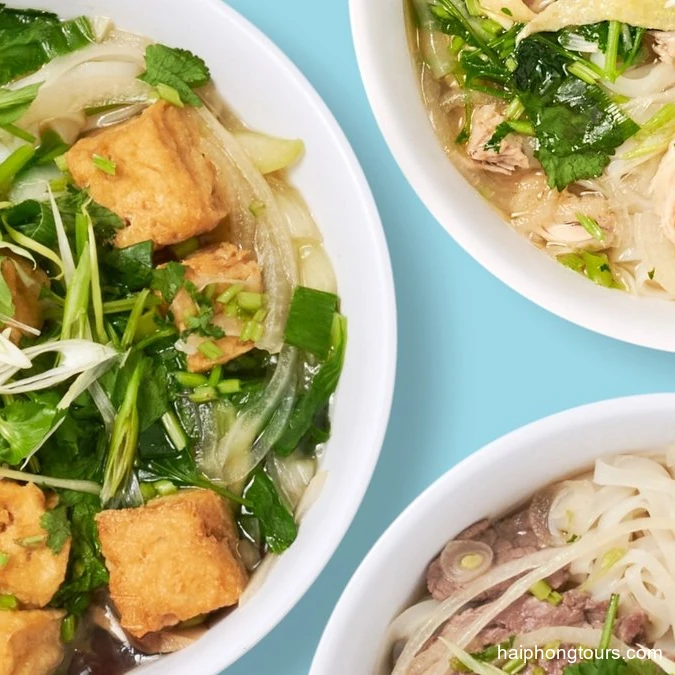
Each home-style recipe makes four main-course bowls. Pho uses flat rice noodles called bánh phở; the chicken soup below uses round bún noodles. They belong to the same broad family of noodle soups, but the names and broths are not interchangeable.
Choose a recipe and prepare your kitchen
- Hue-style spicy chicken noodle soup: allow about 2 hours, including preparation. Make the chili oil separately so each person can control the heat.
- Beef brisket pho: allow about 4 hours, sometimes longer for a thick or particularly firm piece of brisket. Much of that time is gentle simmering.
- Vegan mushroom pho: allow about 1 hour. Vegetable broth, mushrooms and tofu provide the base without a long bone-stock stage.
Use a large stockpot for either meat broth, a smaller saucepan for noodles, a fine strainer and a food thermometer. The measurements below use a 15 ml tablespoon and a 5 ml teaspoon. Saltiness varies between sauces, so reserve the final adjustment until the broth has finished reducing.
1. Hue-style spicy chicken noodle soup
This is a chicken variation on a lemongrass-and-chili noodle soup, sometimes called bún gà Huế. It is different from bún bò Huế, the better-known beef noodle soup, and from the milder chicken pho called phở gà.
Ingredients for four bowls
- 1.2 kg bone-in chicken thighs, with excess loose fat trimmed
- 3 liters water, plus a little extra if needed
- 1 large onion, peeled and halved; 40 g ginger, split lengthwise
- 4 lemongrass stalks: 3 trimmed and bruised for the broth, 1 with its tender inner base finely minced for the chili oil
- 250 g peeled daikon, cut into large pieces
- 2 star anise and one 3 cm cinnamon stick
- 2 tablespoons fish sauce, plus more to taste; 2 teaspoons sugar; salt to taste
- 300 g dried round rice noodles, labeled bún
- For the chili oil: 2 tablespoons neutral oil, 1 small shallot finely chopped, 2 garlic cloves minced, the minced lemongrass and 1–2 teaspoons chili flakes
- To serve: 2 sliced scallions, a small handful each of cilantro and Thai basil, and 1 lime cut into wedges
Method
- Prepare the aromatics. Brown the cut surfaces of the onion and ginger in a dry heavy pan. Remove any loose, burnt pieces. Warm the star anise and cinnamon briefly in the pan until fragrant.
- Cook the chicken. Place the chicken, water, onion, ginger, bruised lemongrass, daikon and spices in the stockpot. The chicken should be submerged; add water if necessary. Bring to a boil, skim the foam, then reduce to a gentle simmer. Start checking the thighs after about 30 minutes. Remove them only when the thickest flesh reaches 165°F/74°C, with the thermometer away from the bone.
- Finish the broth. When the chicken is cool enough to handle, separate the meat and return the bones to the pot for another 30–45 minutes. Refrigerate the meat promptly while the broth finishes. Strain, then aim for about 2 liters of broth: reduce it if weak, or add hot water if too concentrated. Stir in the fish sauce and sugar; add salt or more fish sauce gradually.
- Make the chili oil. Cook the shallot and minced lemongrass gently in the oil until softened. Add the garlic and stir until fragrant, without browning it darkly. Take the pan off the heat before stirring in the chili flakes. Start with the smaller quantity if you are unsure of their strength.
- Assemble. Cook and drain the noodles according to their package. Return the chicken to the broth and heat it through; refrigerated cooked meat should reach 165°F/74°C. Divide the noodles and chicken among four bowls, add the broth and scallions, and serve with herbs, lime and the chili oil separately.
Useful adjustment: taste a spoonful with a few noodles before adding more seasoning. If the broth is already salty enough but you want more aroma, add a little chili oil to your own bowl instead of more fish sauce.
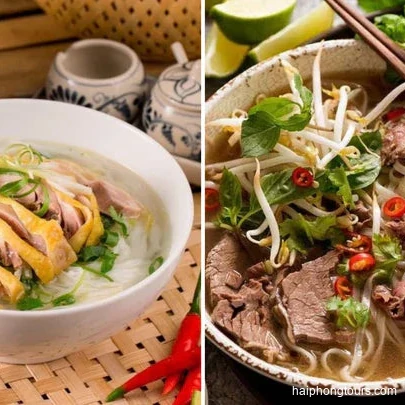
2. Beef brisket pho: phở bò chín
Chín means cooked. This version uses sliced, fully cooked brisket rather than raw steak warmed by broth in the serving bowl. Buy a mixture of meaty beef soup bones and marrow or knuckle bones; ask the butcher to cut large bones to fit your pot.
Ingredients for four bowls
- 1.25 kg beef soup bones, preferably a mixture of meaty and marrow or knuckle bones
- 650 g boneless beef brisket, divided into two similar pieces
- 3.5 liters water for the broth, plus water for parboiling
- 1 large onion, peeled and halved; 50 g ginger, split lengthwise
- 3 star anise, one 5 cm cinnamon stick, 3 cloves and 1 teaspoon coriander seeds
- 2 tablespoons fish sauce, 2 teaspoons sugar and salt to taste
- 300 g dried flat pho noodles
- To serve: half a small onion sliced very thinly, 2 sliced scallions, a small handful of cilantro, Thai basil if desired, and 1 lime cut into wedges
Method
- Start a clean broth. Cover the bones with water, bring to a boil and cook for about 3 minutes. Drain carefully and remove clinging foam from the bones. Clean the pot before returning the bones with the brisket and 3.5 liters of fresh water. This first water is discarded; the next batch becomes your soup.
- Add the aroma. Brown the onion and ginger in a dry pan. Briefly toast the whole spices, then place them in a spice bag or tea infuser. Add the onion, ginger and spices to the pot. Bring to a boil, skim, and lower the heat until the surface moves gently.
- Check the meat separately. Begin testing the brisket after 90 minutes; it may need 2–3 hours depending on its thickness. A skewer should enter with little resistance, while the meat still holds together for slicing. Remove the brisket when ready, portion it into a shallow container with a little broth, and refrigerate promptly.
- Finish and season. Continue simmering the bones for about 3–4 hours in total. Keep them covered with liquid, adding hot water if needed. Taste occasionally and remove the spice bag once the aroma is strong enough. Strain, skim excess surface fat, and adjust to about 2 liters of broth by reducing or adding hot water. Add fish sauce and sugar, then salt to taste.
- Serve. Slice the brisket thinly across the grain and reheat it in the broth to 165°F/74°C if chilled. Cook the noodles separately according to their package and drain. Divide between four bowls with the beef, sliced onion, scallions and cilantro. Add hot broth and serve lime and any extra herbs at the table.
Useful adjustment: tough brisket needs more gentle cooking, not thinner raw slices. If it becomes too soft to slice neatly, serve tender pieces rather than continuing to simmer it with the bones. Taste the broth before adding lime, hoisin or chili sauce to an individual bowl.
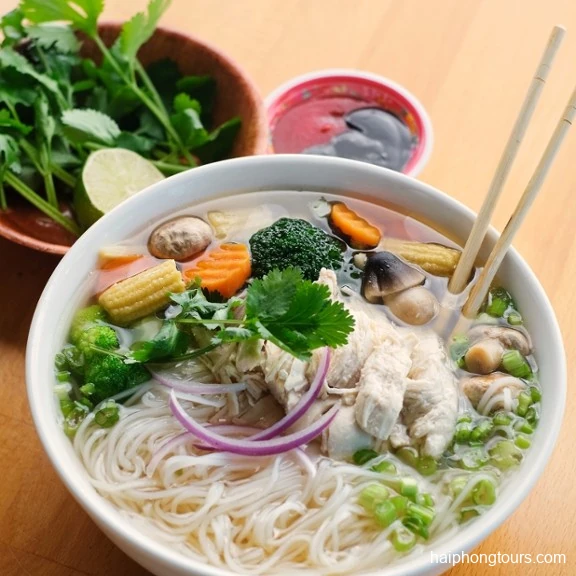
3. Vegan mushroom and tofu pho: phở chay
Mushrooms, aromatic vegetables and whole spices create a different broth from beef pho. Use a vegetable stock without animal ingredients and check the labels on sauces and seasoning powders; changing the meat topping alone does not make a soup vegan.
Ingredients for four bowls
- 2.25 liters unsalted vegetable stock, labeled vegan
- 1 large onion, peeled and halved; 40 g ginger, split lengthwise
- 2 medium carrots, cut into chunks
- 2 star anise, one 5 cm cinnamon stick, 2 cloves and 1 teaspoon coriander seeds
- 300 g fresh mushrooms, such as oyster, shiitake or white button mushrooms, trimmed and sliced
- 400 g firm tofu, drained and cut into bite-size pieces
- 2 tablespoons neutral oil
- 1 tablespoon light soy sauce, plus more to taste; salt and up to 1 teaspoon sugar if needed
- 300 g dried flat pho noodles
- To serve: 2 sliced scallions, a small handful each of cilantro and Thai basil, 1 lime cut into wedges, and sliced chili if desired
Method
- Build the broth. Brown the onion and ginger in a dry pan. Toast the spices briefly until fragrant. Put these ingredients in a saucepan with the vegetable stock and carrots. Bring to a boil, then simmer gently, partly covered, for about 30 minutes.
- Cook the toppings. Pat the tofu dry and pan-fry it in 1 tablespoon oil until golden on several sides. Set aside. Use the remaining oil to cook the mushrooms until softened and lightly browned; work in batches if the pan is crowded.
- Strain and adjust. Strain the broth, reserving the cooked carrots if you want to eat them. Aim for about 2 liters. Add the soy sauce, then taste before adding salt or sugar. Stir in the mushrooms and tofu and simmer for another 5 minutes.
- Serve. Prepare the noodles separately following their package, drain and divide between four bowls. Add the tofu, mushrooms and hot broth, then finish with scallions and herbs. Offer lime and chili separately.
Useful adjustment: avoid strongly tomato-flavored vegetable stock, which can dominate the spices. For a gluten-free version, check the noodles and stock and use certified gluten-free tamari instead of ordinary soy sauce. Tofu and soy-based sauces remain unsuitable for someone with a soy allergy.
Keep the noodles, broth and garnishes in balance
The noodle weights above are for dried noodles. Fresh noodles contain more water, so use the package’s portion guidance rather than replacing dried noodles gram for gram. Prepare them close to serving, drain thoroughly and keep them out of the main stockpot; noodles left soaking in broth become soft and absorb your soup.
Start with a small amount of lime and chili, then taste again. For extra vegetables, cook sliced bok choy or cabbage separately and add a modest portion to each bowl. Cook bean sprouts thoroughly if using them, especially when serving someone at higher risk from foodborne illness.
Make ahead and store safely
Keep raw meat and its utensils away from ready-to-eat herbs and garnishes. Do not wash raw chicken: splashing can spread bacteria around the kitchen. Wash your hands and clean work surfaces after handling it.
Divide leftover broth and cooked toppings into small, shallow containers and refrigerate within 2 hours, or within 1 hour when the room or outdoor temperature exceeds 90°F/32°C. Do not leave a large pot on the counter overnight to cool. Keep the refrigerator at 40°F/4°C or below.
Use refrigerated leftovers within 3–4 days, or freeze portions sooner for a later meal. Store noodles separately. When reheating, bring soup to a rolling boil and make sure cooked toppings reach 165°F/74°C throughout. Add freshly prepared noodles and herbs just before serving.
Would you like to include local food in a city visit? Contact us with your destination, date, group size and dietary needs to discuss a suitable tour or private itinerary.