
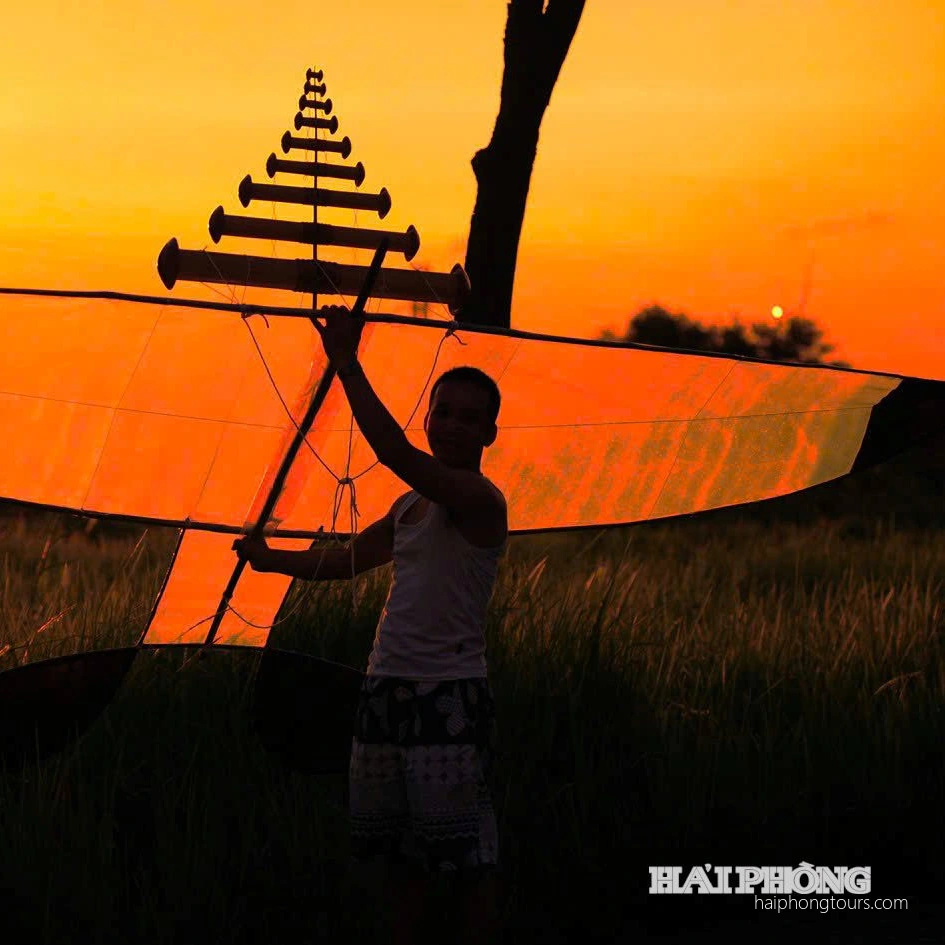
Dai Tra’s flute kites combine a bamboo-framed kite with a set of instruments that sound in the wind. The village is in Kien Minh commune, Hai Phong; older maps and articles may place it in Dong Phuong, Kien Thuy. It is a rewarding subject for travelers interested in local craft and rural music, especially when a visit to a maker can be arranged.
Plan around the person you hope to meet rather than assuming there is a daily demonstration. Kite flying depends on wind and the local flyers’ availability. Ask your accommodation or a local contact to help confirm a host, meeting point and suitable time before traveling to the village.

For a separately arranged lesson near Hanoi, the Ba Duong Noi kite workshop guide explains a full village day with an artisan-led activity. Its traditional tail-less flute kites differ from Dai Tra’s curved-tail design; confirm the lesson and possible flying separately.
What makes Dai Tra kites distinctive
The sound matters as much as the kite’s appearance. Flutes of different sizes produce lower and higher notes, and makers adjust the openings and balance of the set so they work together in the wind. The largest flute is known as sao cai. Sets vary in size and number; there is no single flute count that defines every Dai Tra kite.
A recognizable feature of the traditional design is its pair of curved tail forms. Local elders associate this shape with fertility symbolism. Together with the flute set, it gives the kite a distinctive outline and a connection to village customs.
Craftsmanship behind the sound
Makers shape and balance the bamboo frame to carry both the covering and the weight of the flutes. Paper and synthetic coverings are both used. The choice of material and the way it is prepared vary between makers and designs.
Flute making is a separate skill. Bamboo or reed bodies are fitted with carefully shaped mouths, including wooden pieces made from jackfruit wood. Small adjustments affect the sound, so tuning requires listening as well as woodworking.
If you meet a maker, ask to see a flute set up close and learn how it is fitted to the kite. Comparing the different sizes and hearing an explanation of tuning can make the visit worthwhile even when the wind is unsuitable for flying.
A tradition maintained by local families
Local tradition credits Tran Quoc Thi, a figure honored in the area, with introducing the craft. Kite making and flying remain part of Dai Tra’s community life, with experienced makers passing on skills and enthusiasts sharing them through a local club.
For visitors, the interest is in that living practice: shaping a frame, refining a flute and listening to the result outdoors. Ask permission before photographing a maker at work or entering a family’s yard.

Planning a respectful visit
- Confirm the activity: a workshop visit, a conversation with a maker and outdoor flying are different arrangements. Ask which is possible on your date.
- Allow flexibility: a windy late afternoon may suit flying, but weather and the host’s advice should determine the plan.
- Watch from a safe position: let experienced flyers handle large kites. Keep clear of taut lines, roads and overhead wires, and avoid walking through crops.
- If buying: agree whether the price covers a kite, a flute set or both. Ask about packing, transport, assembly and suitable conditions for use.
Dai Tra suits a traveler willing to arrange a personal craft visit and follow local guidance. Confirming a maker and a meeting point is more useful than arriving with an expectation of a scheduled show.
Useful guides for your trip
Would you like help fitting this experience into your trip? Contact us with your travel dates, starting point, available time and group size. Tell us about walking limits or special interests so we can suggest a practical itinerary.