
Halong Bay cruise food can be a mix of Vietnamese dishes, seafood and international cooking, with different meal styles on the same trip. If food is part of the reason you are going, compare the actual menu and service format before choosing a vessel. A cabin upgrade or a “luxury dining” label does not tell you whether you will enjoy the meals.
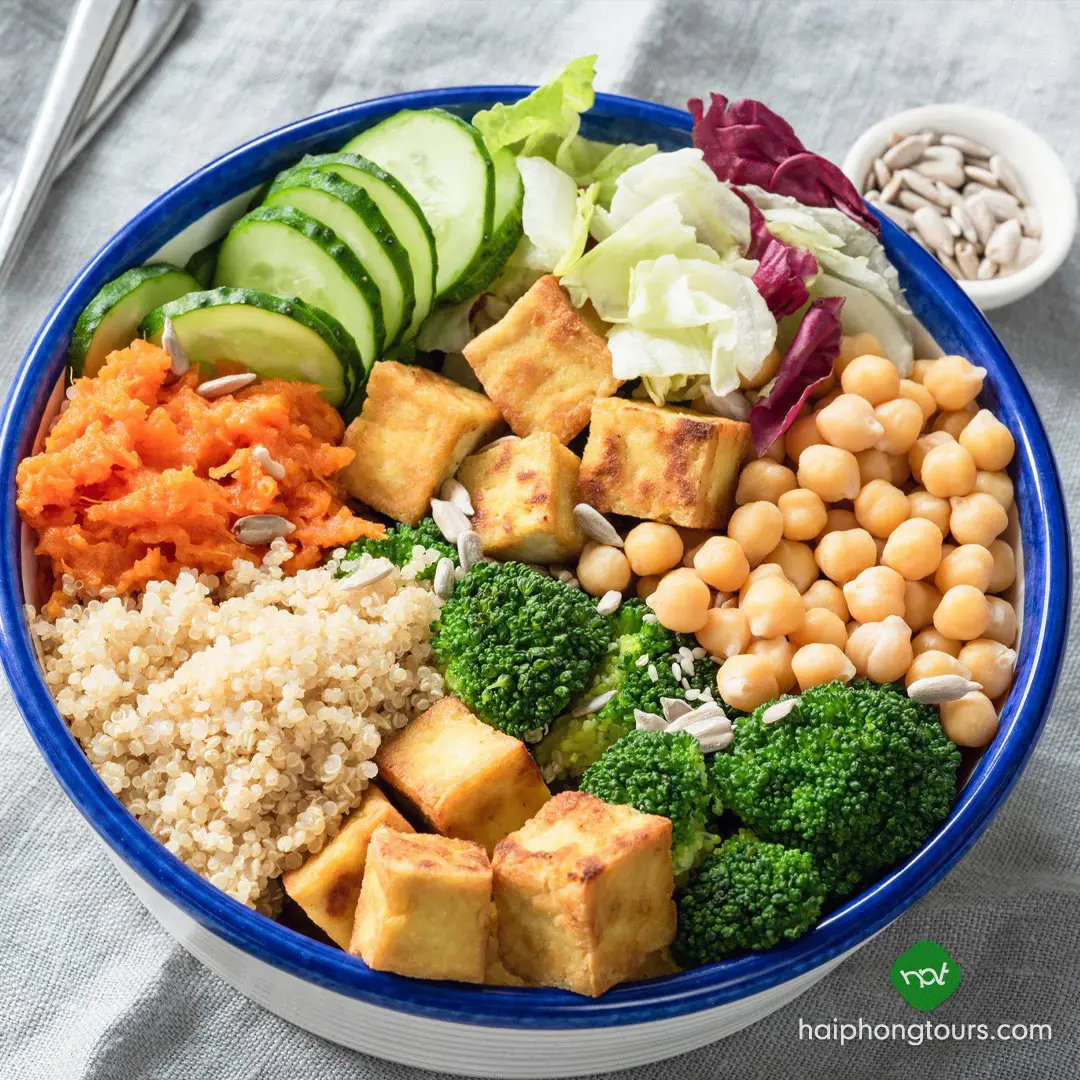
Start with what would make eating on the bay enjoyable for you: trying Vietnamese flavors, sharing several dishes, choosing freely from a buffet or sitting through a served dinner. Then match that preference to a day cruise or overnight itinerary. Cruises marketed under the wider Halong name may visit Ha Long Bay, Lan Ha Bay or Bai Tu Long Bay; the bay name alone does not determine the food.
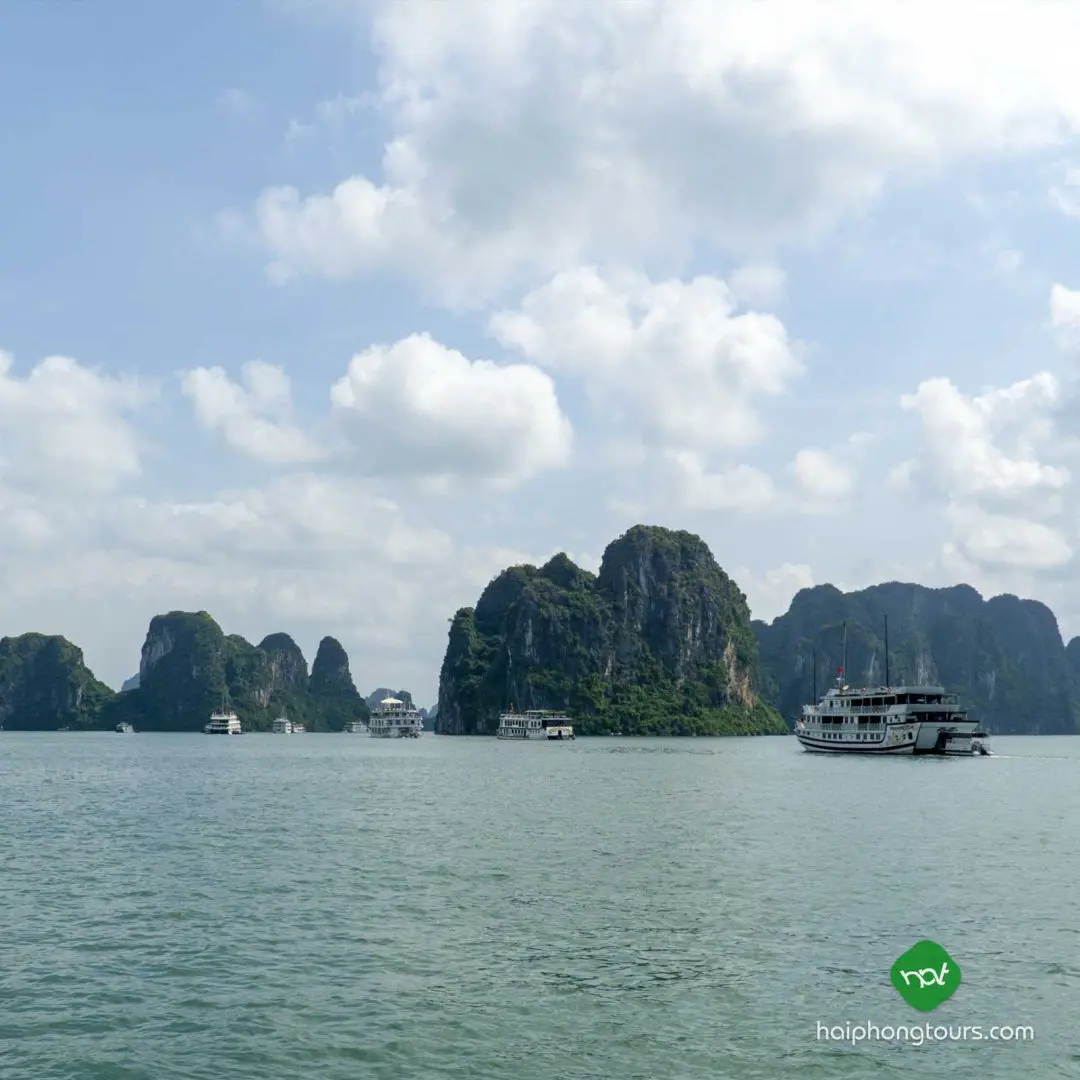
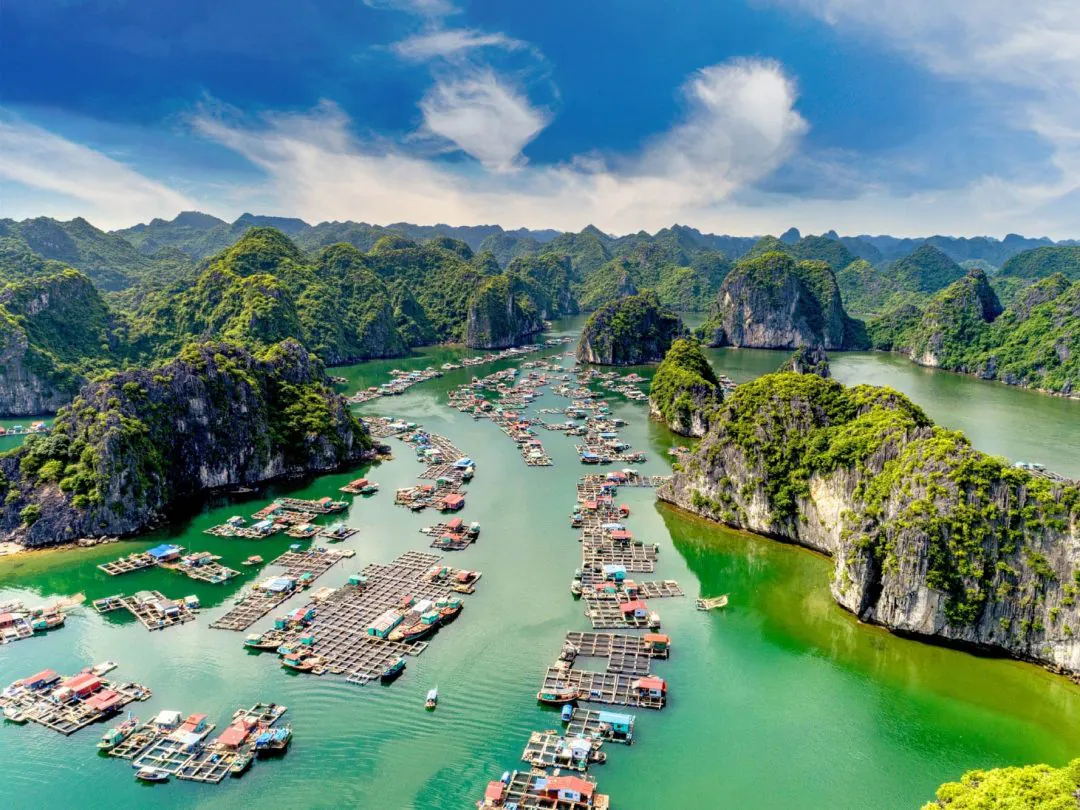
Cruise boats, floating houses and limestone scenery around the bay.
Choose the meal experience you want
- You want more Vietnamese food: look for identifiable dishes and cooking styles across the whole menu, including breakfast and dessert.
- Your group has different tastes: a mixed buffet may offer useful choice, but check what is available for the people with the narrowest preferences.
- You want an unhurried shared dinner: compare the dining schedule, table arrangement and service style on an overnight cruise.
- You mainly want the scenery: a day cruise with a lunch you like can be enough; you can choose another restaurant ashore that evening.
A large number of dishes is not automatically better. A shorter menu that you genuinely want to eat can suit you more than an extensive buffet containing only a few appealing choices.
Buffet, set menu and shared dishes mean different things
Buffet: choice within a meal window
A buffet lets you choose dishes and portion sizes. It can work well for a group in which one person wants seafood and another prefers chicken, rice or vegetables. Take a small first selection, then return to the dishes you enjoy instead of filling a plate before seeing all the options.
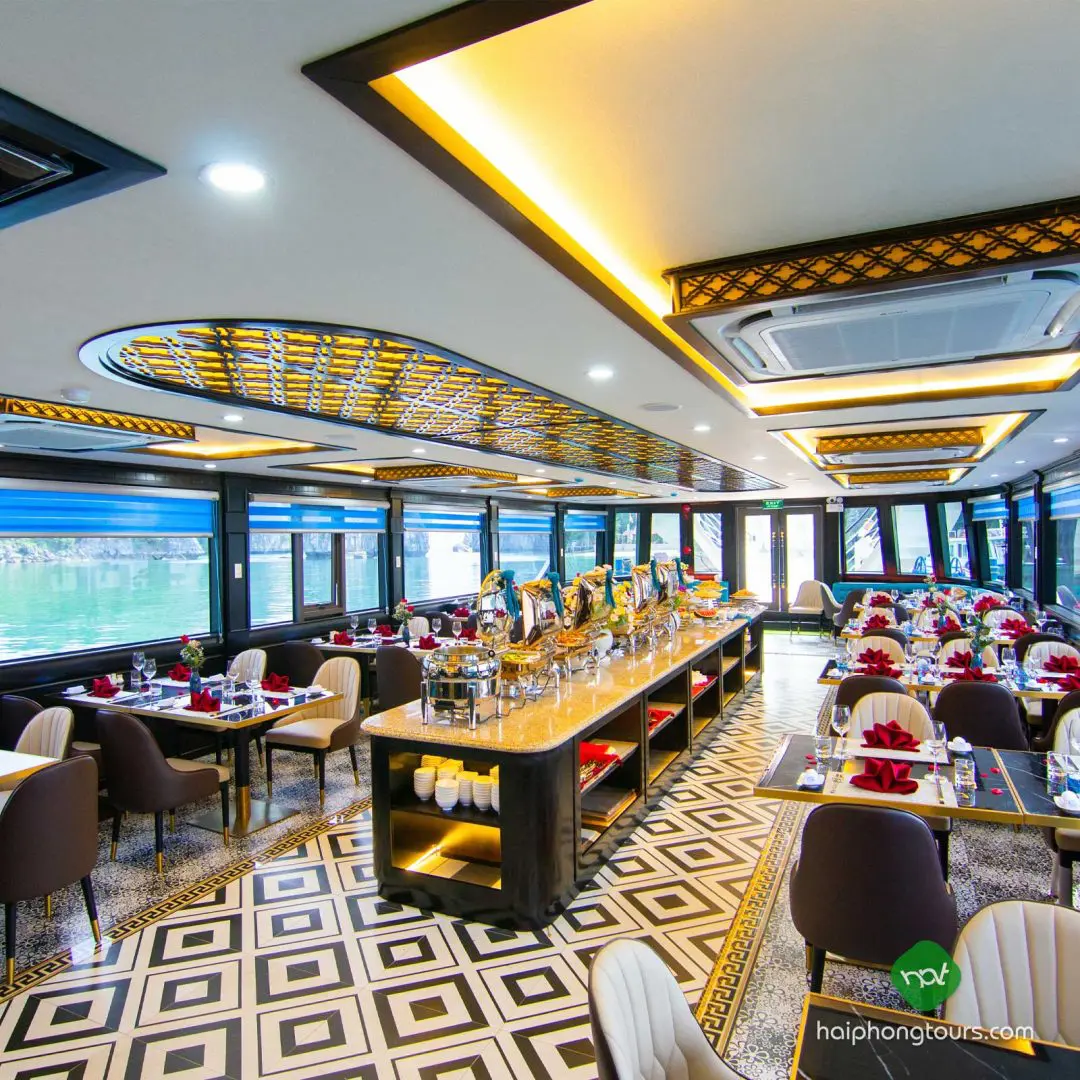
Check the meal window against the itinerary. A buffet is not necessarily open throughout the afternoon, and a larger selection does not guarantee that every dish remains available until the last minute. If you need a specific prepared meal, arrange it separately rather than relying on finding something on the buffet.
Set menu: a planned meal, not necessarily a choice of courses
A set menu tells you what the kitchen plans to serve, but not automatically how it reaches your table. Ask whether the dishes are individually plated, shared by the table or served in a mixture of both styles. Also check whether you choose an alternative main course or everyone receives the same sequence.
A served meal can make dinner feel like an occasion, especially when you would rather stay seated and talk. It is less flexible if you dislike several dishes and substitutions have not been agreed before boarding.
Shared dishes: make the table arrangement clear
If a meal is served on shared platters, confirm whether your party has its own table or sits with other guests. Sharing several dishes can be enjoyable when your group wants to taste a little of everything. A private table matters more when you are planning a quiet dinner or need to keep a separately prepared meal distinct.
Ask how seafood portions are allocated. A dish shown in a photograph may be a table portion, not an individual serving, and “seafood buffet” does not mean every premium item is unlimited.
Two current examples show why the menu matters
Catamaran Premium: different lunch formats on a Lan Ha day trip
The Catamaran Premium Day Cruise visits Lan Ha Bay from Tuan Chau and publishes both set-menu and buffet lunch examples. The applicable format can depend on the passenger count, so confirm which one applies to your sailing.
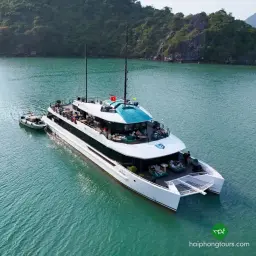
Its set-menu example mixes shrimp-and-pork noodle rolls with pumpkin soup and rosemary chicken. The buffet example includes fish with galangal, seafood spring rolls and shrimp, alongside dishes such as fries and barbecue ribs. This is a useful illustration of a mixed menu rather than an exclusively Vietnamese meal.
Choose it if a bay day with lunch, activities and an afternoon cooking demonstration fits your plans. Check seasonal substitutions and children’s portions before treating a particular dish in the sample menu as a booking promise.
Mila Grand: different food choices across an overnight stay
The Mila Grand two-day Lan Ha cruise gives you several meals rather than a single lunch. Its sample standard menu includes Vietnamese braised pork and spring rolls, alongside dishes such as chicken in garlic-butter sauce. The dessert selection includes Vietnamese sweet bean soup as well as cake or fruit.
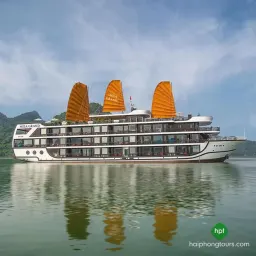
The breakfast example combines pho and eggs with bread and pastries. This makes breakfast another opportunity to try a Vietnamese dish, even when dinner has more international influences. Check the menu for the exact two-day program: a dish listed for an additional night is not automatically part of a one-night booking.
Mila Grand’s itinerary includes breakfast and a later meal before disembarkation. Read that final morning together with the activity schedule, rather than assuming “two days” provides two full days of restaurant service.
Read a menu for flavors, not just familiar ingredients
Seafood alone does not make a menu specifically Vietnamese. Look at how it is prepared: galangal with fish, lemongrass with prawns or scallion oil with oysters give you more useful clues than a heading such as “fresh seafood.” Equally, a Vietnamese dish can sit comfortably beside a Western soup or dessert on the same menu.
When you see a dish you do not recognize, ask for a short explanation of its main ingredients and how it is served. Note two or three things you are curious to try. That creates a more personal food experience than judging the whole cruise by whether every course feels unfamiliar.
For a group with different preferences, agree on the priority before comparing boats. You might want a Vietnamese breakfast and seafood lunch, while your companion values a familiar dinner. A mixed menu can satisfy both, provided you have checked the actual options.
Make time to enjoy the meals
On a day trip, lunch may begin soon after boarding. Have breakfast before a long transfer and check the planned lunch time, especially when traveling with children. Afternoon tea, cakes or a cooking demonstration should not be assumed to replace dinner after the cruise.
On an overnight itinerary, decide whether you want to join every activity or leave yourself time to shower and change before dinner. Ask the crew how the meal and evening activities fit together. A relaxed meal is more enjoyable when you are not expecting to leave the table midway through the main course.

Confirm an outdoor dinner separately if it matters to you. A sundeck photograph does not guarantee that your meal will be served outside, and weather can change the setting. For the wider daily rhythm, see what to expect on an overnight bay cruise.
Enjoy the cooking activity for what it is
A short onboard cooking demonstration can be a pleasant way to learn about one dish and share an activity with your companions. Ask whether you will prepare something yourself or mainly watch the demonstration. Do not choose an entire cruise expecting a full cooking course when the itinerary allows only a brief session.
If a recipe interests you, ask for its name and a simple ingredient list to take home. That can be a more useful souvenir than trying to memorize the whole menu. Check whether tasting is part of the session and how it fits with the next meal.
Separate preferences from dietary requirements
Wanting more Vietnamese food is a preference; needing a meal without an allergen requires a different conversation. State both clearly before booking. Use the vegetarian and vegan cruise food guide for plant-based arrangements, or the food allergy and celiac cruise checklist when preparation and cross-contact matter.
For children, check what they will actually receive, not just their fare discount. A smaller portion, a separate children’s menu and the adult meal without a premium item are different arrangements. Agree on a suitable option before the kitchen plans supplies.
Ask for the menu that applies to your booking
Please send the sample menu for [vessel, date and trip length]. We would especially enjoy [Vietnamese dishes / seafood / a mixed menu]. Which meals are buffet, shared or individually served, and can the format change? Please confirm children’s meals, our stated dietary requirements, meal times, drink charges and any dish or private dining arrangement that would cost extra.
Compare the replies alongside the cruise’s meal and drink inclusions. Then choose the itinerary whose food, pace and scenery work together for your group. A menu you understand and look forward to is more useful than a promise of the “best food on the bay.”
Useful guides for your trip
Need help choosing the cruise or coordinating the shore transfer? Contact us with your date, preferred route, group size and starting point. Tell us about any dietary, mobility or onward-connection needs before booking.