
Gia Vi Cave, or Hang Già Vị, is a limestone cave in the Núi Voi complex southwest of central Hai Phong. Visit it as part of an Elephant Mountain walk combining cave formations, local wartime history and countryside views. It suits travelers who are comfortable with uneven ground, steep sections and a darker cave interior.
Allow roughly half a day from the city for a combined mountain outing. A route taking in Long Hoa Pagoda, Gia Vi Cave and the upper viewpoints can occupy about 2.5–3 hours on site, depending on your pace and conditions. Arrange someone who knows the route, wear shoes with grip and confirm access before traveling.
Where Gia Vi Cave is and how to reach it
Núi Voi, meaning Elephant Mountain, lies about 20 km southwest of downtown Hai Phong in the former An Lão district. The wider heritage complex now falls within An Lão and An Trường communes. Older maps may still show the former administrative names.
A taxi or prearranged car can take you to the mountain area, but the drop-off point needs to match your walking route. Tell the driver you want Hang Già Vị at Núi Voi, then agree on the actual meeting point with your guide. A pin for the mountain or a nearby temple is not necessarily the cave entrance.
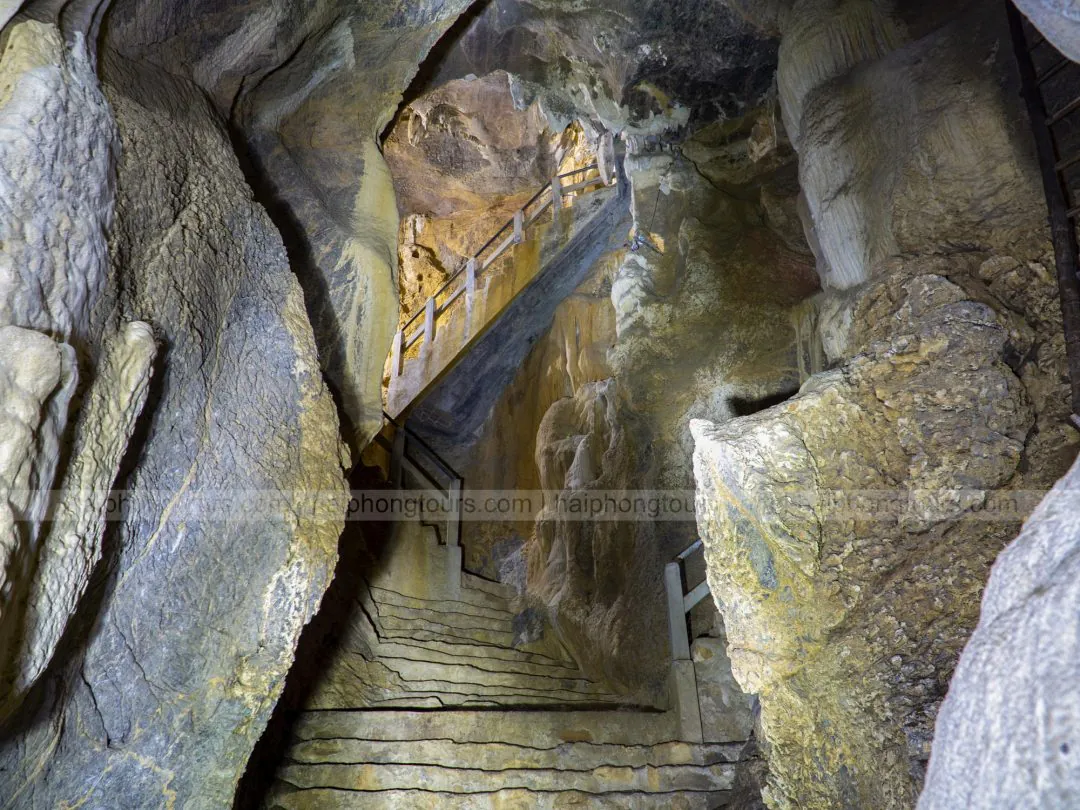

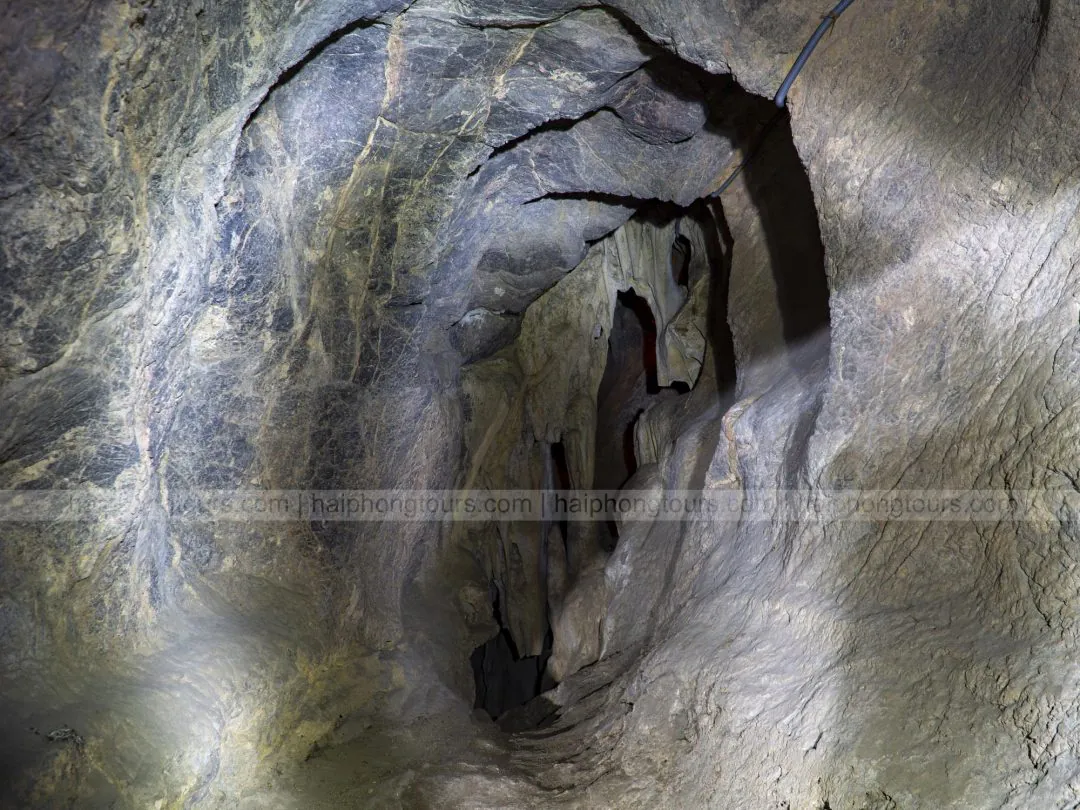
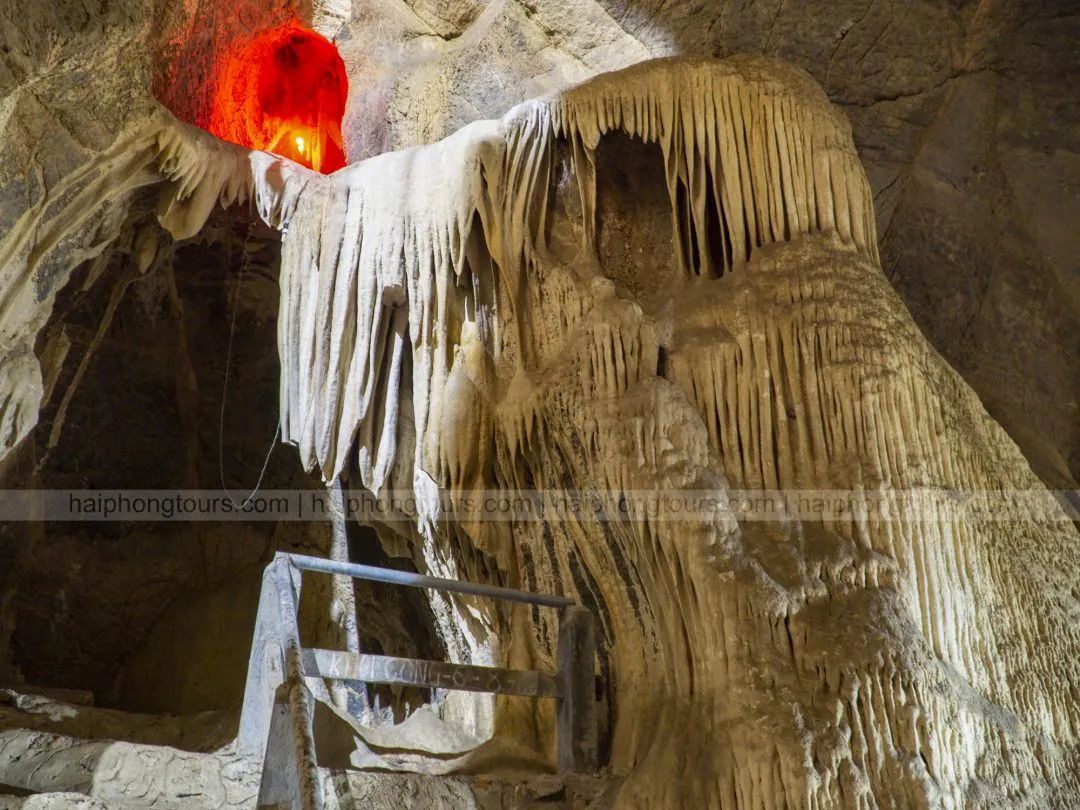

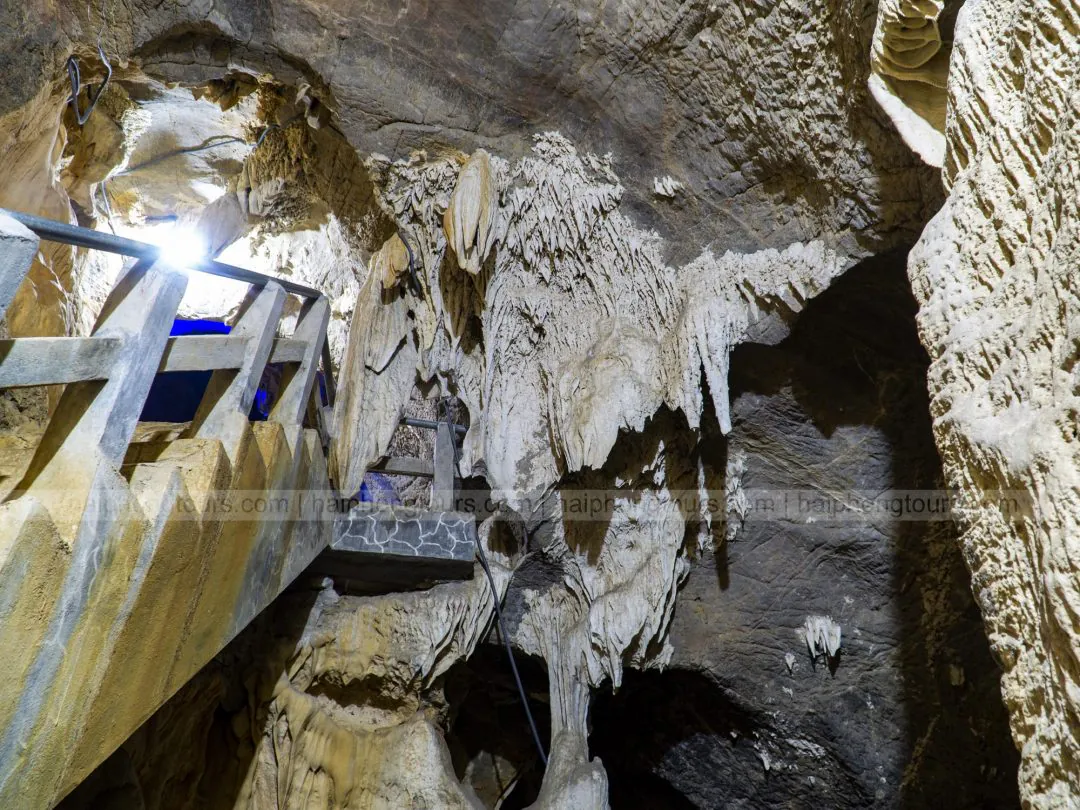
Gia Vi Cave entrance, steps and limestone interior.
Arrange your return ride before starting. If your walk finishes on another side of the mountain, send the driver that pickup point and agree on waiting arrangements. Leave large luggage at your hotel or arrange vehicle storage in advance; carry only a small daypack on the trail.

Choose a cave visit or a longer mountain walk
For the cave and local history
Make Gia Vi Cave the main stop and ask for the shortest suitable approach. You will still need to walk and negotiate the cave access; a shorter route does not make it step-free. Tell your guide about difficulty with knees, balance or low light before choosing this option.
The cave has descending sections and natural rock surfaces. Take your time going in, and remember that the return requires climbing back out. Stop at a comfortable point if the footing or enclosed space does not suit you.
For a broader Elephant Mountain outing
Combine Long Hoa Pagoda and Gia Vi Cave with the Elephant’s Back and Fairy Chessboard viewpoint when the weather and your fitness allow. This adds open-air climbing and views across the surrounding countryside to the cave visit.
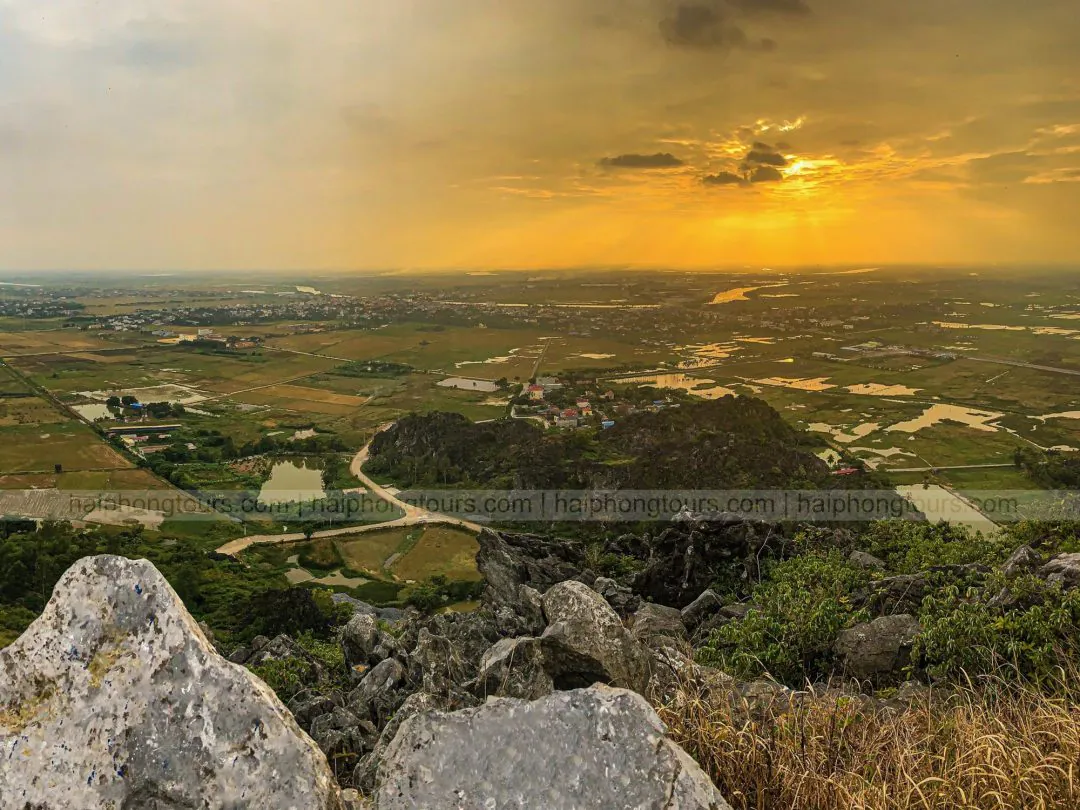
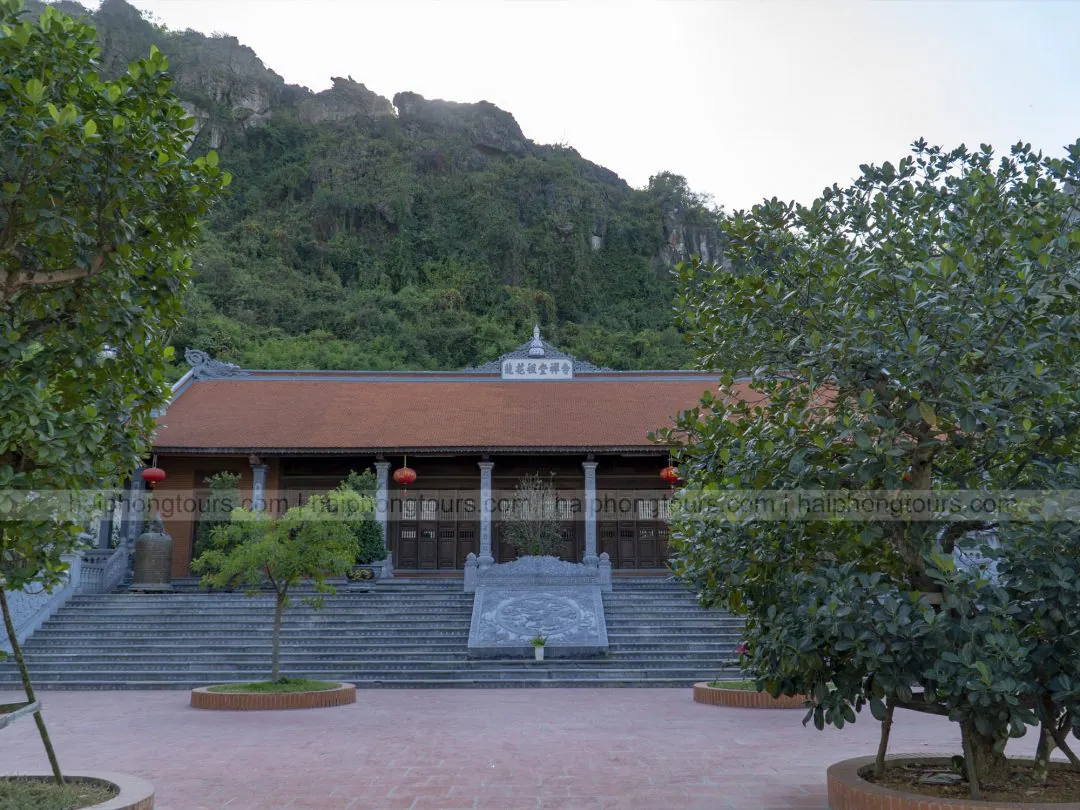
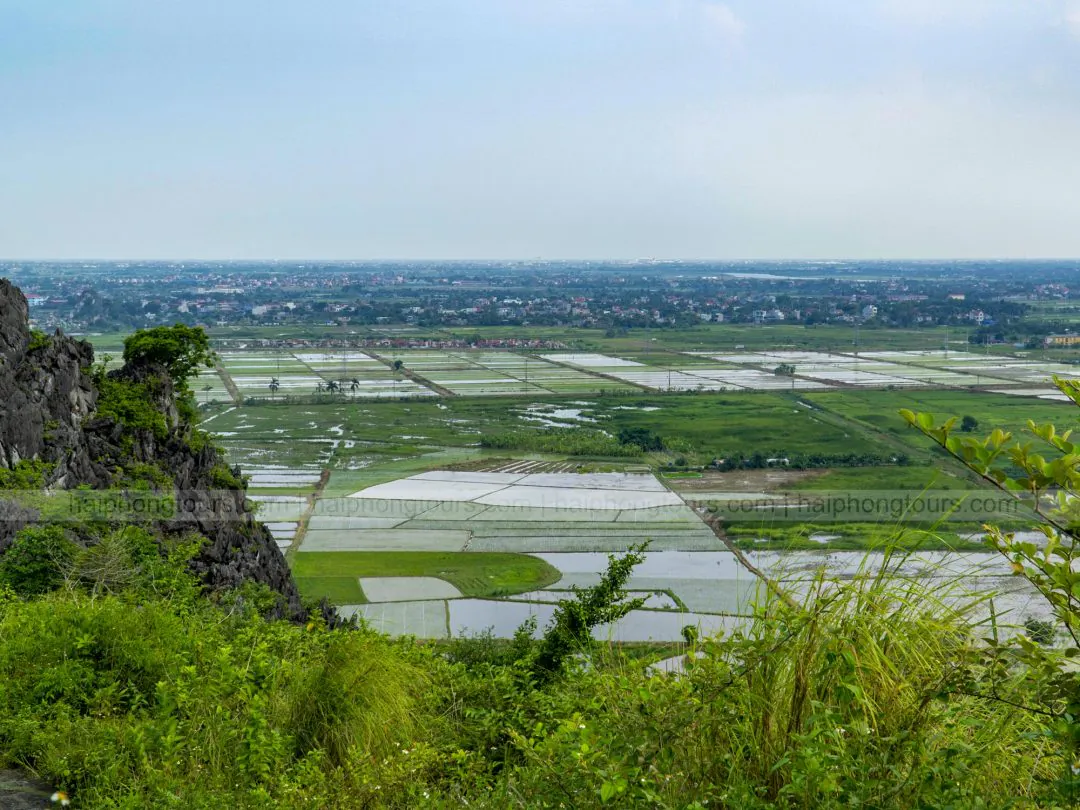
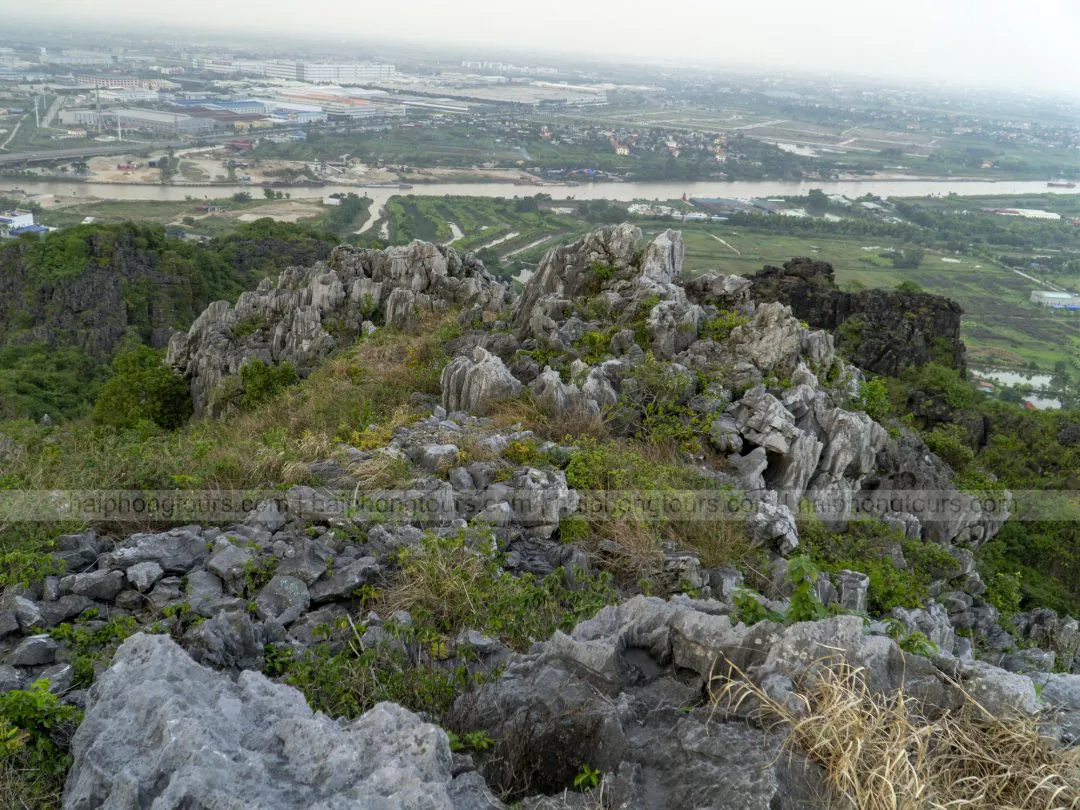

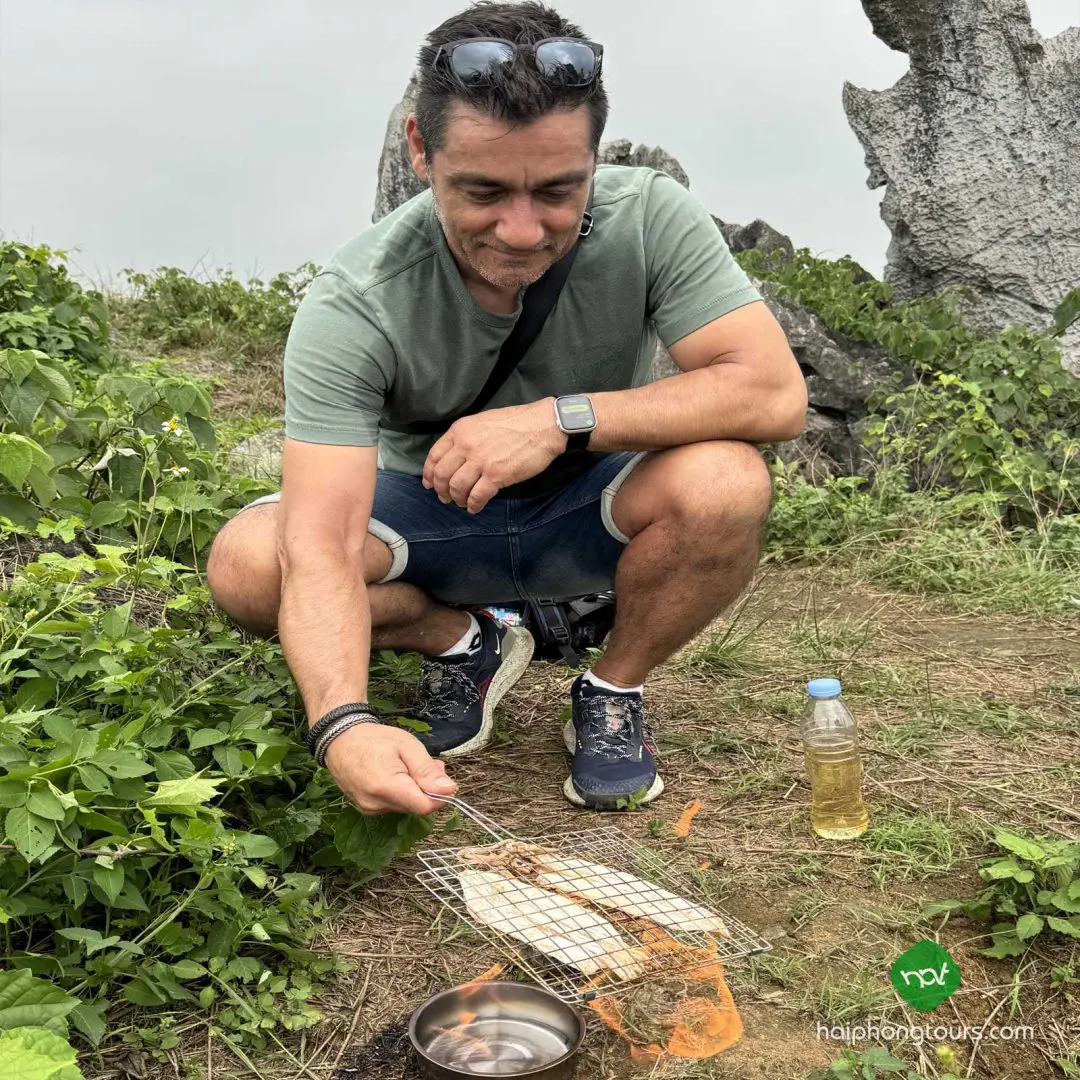
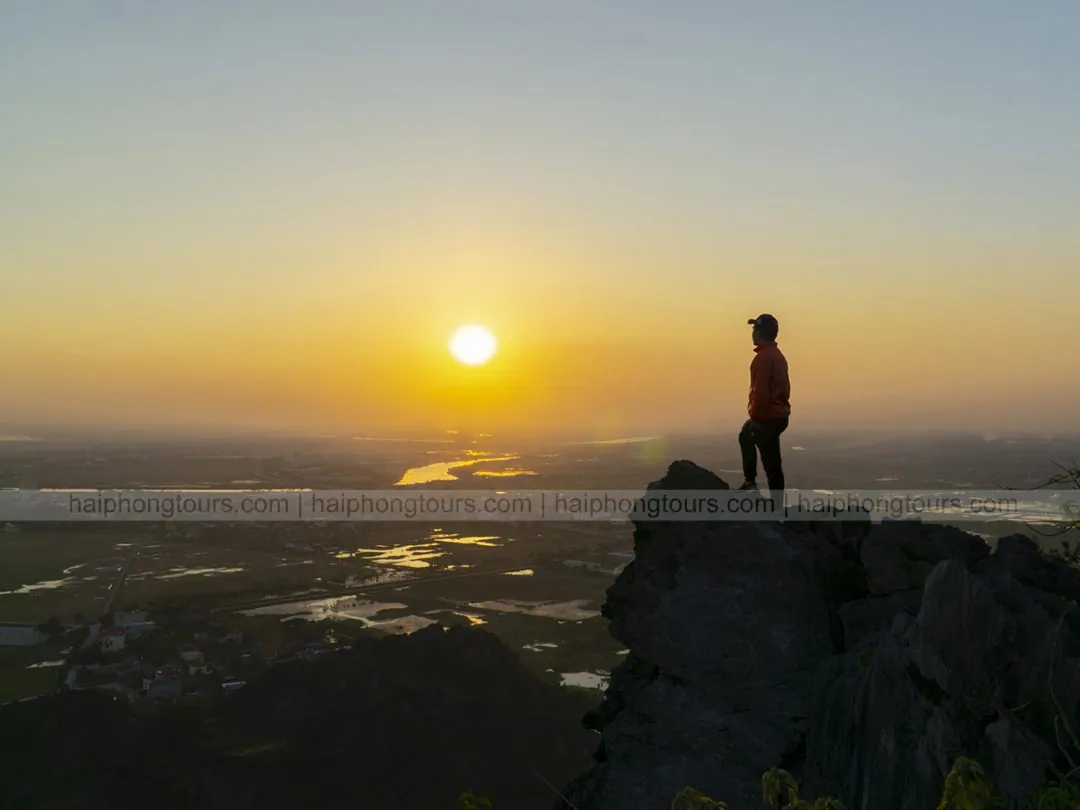
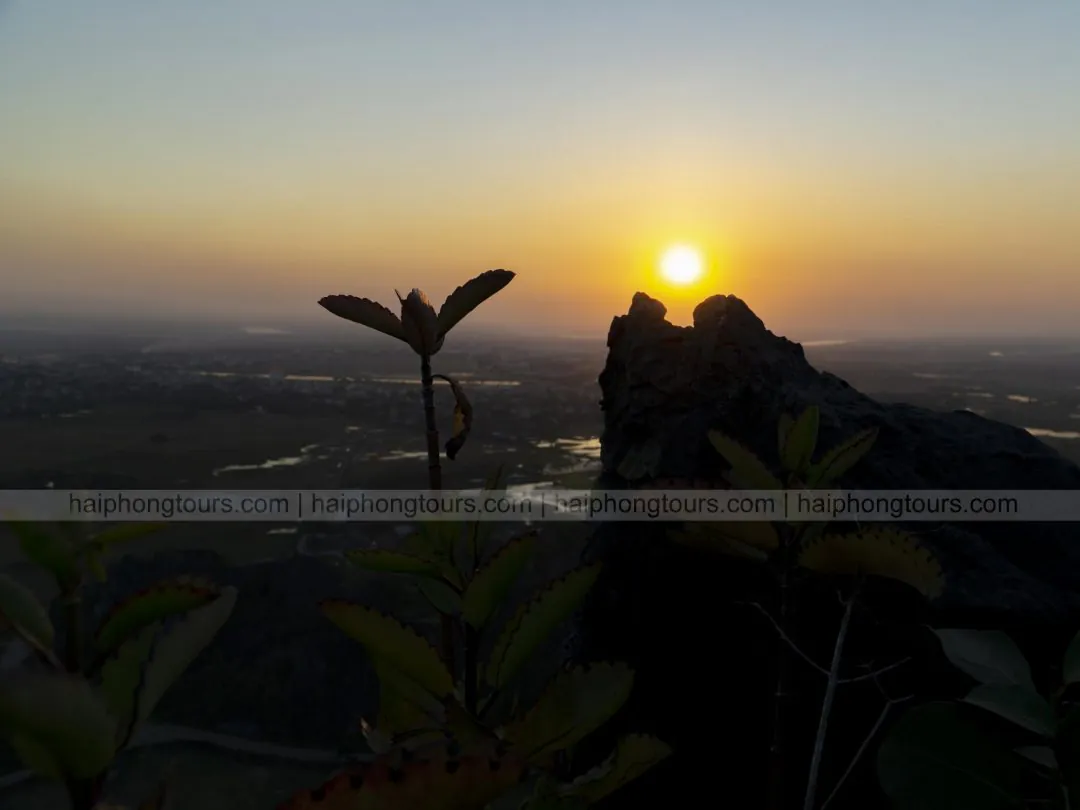
Elephant Mountain trails, countryside views, Long Hoa Pagoda and a local dried-squid snack.
Treat the upper viewpoints as optional. If the cave approach is already tiring, shorten the walk instead of pushing on to complete every stop. Start with enough daylight for the descent, and avoid planning a summit sunset unless a guide has agreed on a suitable return route and timing.
The Hai Phong Hiking Tour covering Gia Vi Cave and Elephant Mountain combines these stops with transport, an English-speaking guide and a local noodle meal. Hai Phong hotel pickup is available; a Halong cruise-port start requires an additional transfer arrangement. Confirm your exact pickup, drop-off and overall duration when booking, especially if you have a flight afterward.

What to look for inside Gia Vi Cave
The limestone formations are the main natural attraction. Look for hanging stalactites, layered curtains of rock and the changing shapes of the walls as your light moves across them. The approach passes through the mountain’s greenery, with local descriptions also noting tea gardens along the trail.
Give your eyes time to adjust as daylight fades. Watch the ground as well as the ceiling, and stop on a secure surface before looking closely at a formation. A headlamp leaves your hands free; a phone flashlight should not be your only lighting plan.

Leave formations and loose objects where they are. Do not climb on stalactites, mark the walls or take stones away. If you encounter bats, keep your distance, lower your voice and direct your light away from them.
The story behind the name Già Vị
Local history connects the cave’s name with Ôn Văn Vị, an elderly member of the Núi Voi guerrilla forces during the resistance against French colonial rule. His role included keeping watch from the mountain and sounding a warning when troops approached, giving villagers and other fighters time to respond.
The story describes him taking refuge in the cave when French troops pursued him. The name Già Vị commemorates this local fighter, making the cave a place of remembrance as well as a natural feature. Ask your guide to explain its place in the wider history of the Núi Voi resistance area.
The national heritage designation from 1962 applies to the Núi Voi historical and scenic complex. Archaeological discoveries of stone tools and bronze objects also belong to the wider mountain area’s history. They should not be understood as an exhibit you will necessarily see inside Gia Vi Cave.
Conditions that should shape your plans
- Rain or thunderstorms: postpone the mountain route when conditions are poor. Rock can remain slippery after rain has stopped, so reassess the trail rather than relying only on a clear sky.
- Limited mobility: the cave and upper walking route involve uneven terrain and are unsuitable for a wheelchair or stroller itinerary. Discuss accessible stops separately before arranging transport.
- Children: choose a route they can walk themselves, supervise them closely and keep them with the group. Do not assume the full circuit suits every family.
- A tight departure: allow for both the walk and the return drive. If your flight or onward connection leaves little flexibility, choose a central-city activity instead.
- Festival visits: the Núi Voi festival takes place in the first lunar month. Check the year’s program if you want ceremonies or performances; choose another day if a quieter walk matters more.
Long Hoa Pagoda can be a cultural focus for a shorter outing, but confirm its particular access route if steps are a concern. It is an active place of worship: dress modestly, keep voices low around prayer areas and follow instructions about shoes and photography.
What to prepare before leaving Hai Phong
- Footwear and clothing: closed shoes with a grippy sole, long pants and clothing that will not catch on vegetation.
- Lighting: a charged headlamp or flashlight plus a reliable backup. Confirm any further equipment needed with your guide before entering darker sections.
- Personal supplies: drinking water, insect repellent and a small snack for a break outside the cave.
- Route information: the agreed meeting point, driver contact and expected return time, shared with someone outside your walking group.
- Before the climb: use available facilities at the starting area and ask about current entry, parking or guide charges. Carry some Vietnamese cash for local expenses.
Stay with your guide on the visitor route. Do not enter unmarked passages or attempt deeper exploration because an opening looks accessible. Turn back if lighting, footing or the condition of anyone in the group makes continuing uncomfortable.
Gia Vi Cave works well when you want a countryside hike with a specific local story to understand along the way. Confirm the approach and return arrangements first, then choose the length of your walk around the people and conditions on the day.
Useful guides for your trip
Would you like help fitting this experience into your trip? Contact us with your travel dates, starting point, available time and group size. Tell us about walking limits or special interests so we can suggest a practical itinerary.