
If you want to study in northern Vietnam, start with the course and the university’s admission route, then choose where to live. For a semester or longer in Hanoi, the teaching language, credit recognition, visa arrangements and daily journey to campus matter more than a general promise of low living costs.
A degree, an exchange semester and a short Vietnamese-language course are different commitments. Decide which one you need before applying, and obtain the host institution’s written acceptance and arrival instructions before making nonrefundable travel plans.
Choose the type of study that fits your purpose
- A full degree: Check admission requirements, the qualification awarded, the teaching language and recognition of that qualification where you intend to work or continue studying.
- An exchange semester: Start with your home university’s international office. Confirm the partnership, nomination process, available subjects and how credits will transfer.
- A short language course: Ask about your entry level, classroom hours, start dates and the certificate awarded. A short course does not automatically provide degree credits.
- A research placement: Confirm the host department, supervisor, project dates and access arrangements. Admission to ordinary classes does not automatically include a laboratory placement.
Compare Hanoi institutions by course and campus
The following institutions offer different starting points. Choose by the specific program available to international applicants, not by a ranking or the assumption that every subject is taught in English.
Foreign Trade University: business and economics
Foreign Trade University, usually called FTU, has its Hanoi headquarters at 91 Chua Lang Street. Its international study options include business, economics, finance and logistics subjects. For an exchange, request the course list for your actual semester and confirm that your place is at the Hanoi campus.
A general program list does not guarantee that every module will run or fit your timetable. Prepare alternative modules with your home university in case classes clash or do not open. Start inquiries through FTU’s Office of International Affairs.
Hanoi University: languages and Vietnamese studies
Hanoi University, or HANU, is at Km 9, Nguyen Trai Street. Its Vietnamese Studies Department offers a four-year Vietnamese-language and culture degree as well as shorter language courses, including one-month and three-month options. Confirm the available level, teaching format and intake before planning a stay around a particular duration.
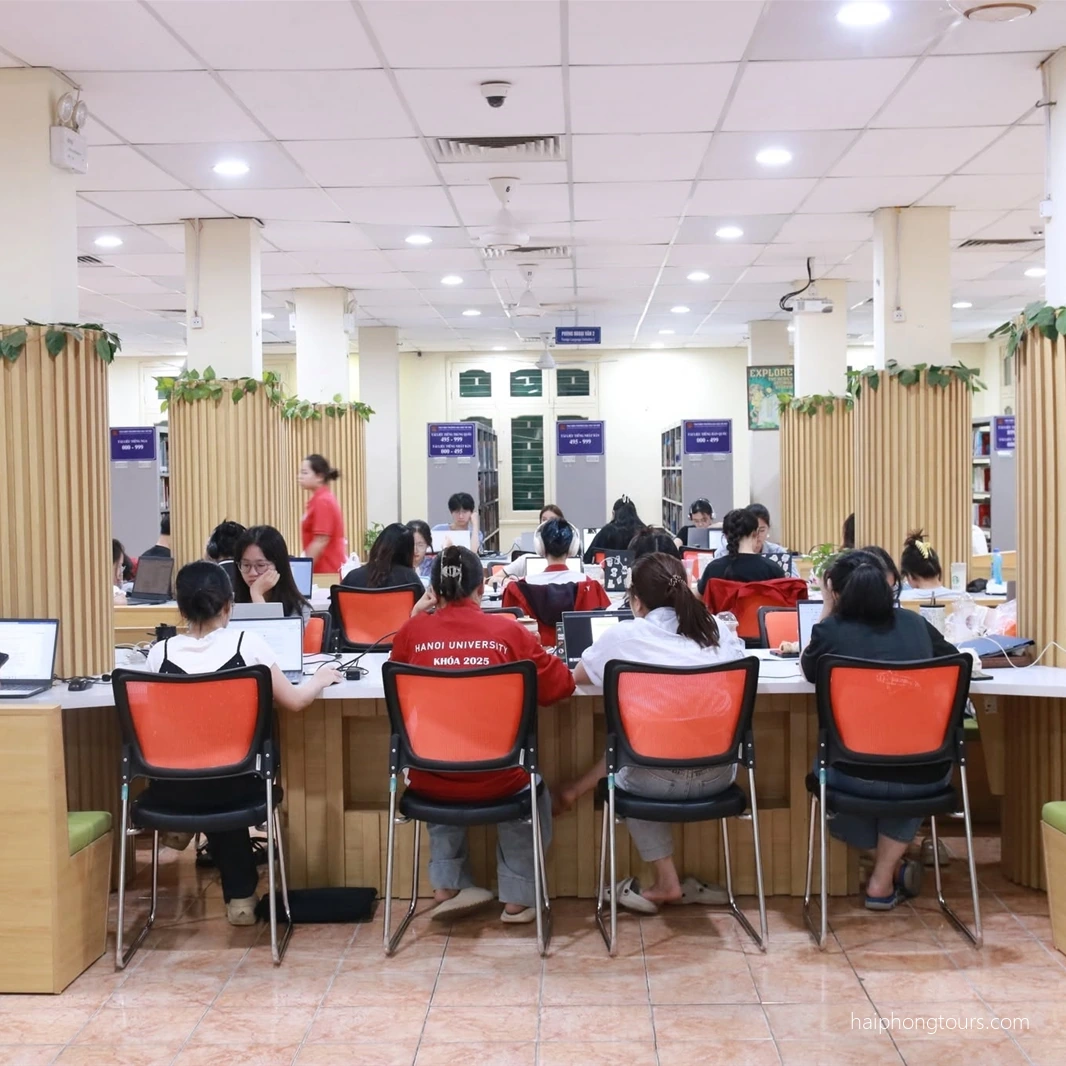 Students studying in the Hanoi University library.
HANU also receives exchange students in other subjects, with teaching languages varying by program. Hanoi University is a separate institution from Vietnam National University, Hanoi; check the full university and department name on every application. Use the International Office’s published contact details for enquiries.
Hanoi University of Science and Technology: engineering and technical study
Hanoi University of Science and Technology, or HUST, is at 1 Dai Co Viet Road. Its incoming exchange options include English-taught engineering, computing and other subjects, while research internships follow their own arrangements. Ask the Department of Partnership and Engagement which courses or research groups can receive you during your intended period.
A course being advertised for one semester does not mean admission remains open or that the same timetable applies to the next. Obtain the relevant intake notice and distinguish the home university’s nomination deadline from your own application deadline.
Check language, credits and the complete academic calendar
Ask for the teaching and assessment language of each course you intend to take. An English-language university website is not evidence that an entire degree is taught in English. For Vietnamese-taught study, clarify the required language level and whether preparatory study is available.
For an exchange, agree on a learning plan with both universities before departure. Confirm minimum and maximum course loads, prerequisites, attendance requirements and the process for changing modules after arrival. Credit transfer needs your home institution’s approval; completing a course abroad does not by itself settle that decision.
Use the full academic calendar when buying flights. Orientation, registration, final examinations and possible resits can fall outside the dates shown for ordinary lectures. Also ask when the transcript will be issued if your next semester or graduation depends on it.
Prepare the document checklist supplied for your own admission route. It may include your passport, academic record, proof of enrollment or graduation, language evidence and health documents. Check translation and certification requirements before paying to prepare papers that the school may not accept.
Arrange immigration documents through the host institution
Contact the university’s international office as soon as your place is confirmed and explain the full length and purpose of your stay. Formal study commonly uses a student visa, known as DH, with the receiving institution involved in sponsorship and approval. Follow the route specified for your program and nationality rather than assuming a tourist entry will cover a semester.
Acceptance and visa approval are separate steps. The school may need to issue an admission decision before it can submit the immigration paperwork. Allow time for this process and confirm exactly where and how you will collect the visa; arrangements can differ between universities and individual approvals.
Check the visa’s start and end dates, passport number and permitted entries. If you want to travel before classes or leave Vietnam during a break, clear that plan with the international office first. Do not assume that the school will extend your stay after the program ends or that a single-entry visa allows a side trip abroad and return.
Choose housing for the campus and build a complete budget
Get the actual teaching address before committing to accommodation. FTU on Chua Lang, HANU on Nguyen Trai and HUST on Dai Co Viet are different daily commutes. Staying in the Old Quarter may be convenient for a short sightseeing visit, but judge a semester address by the journey you will make repeatedly for classes.
Ask whether your particular intake can reserve university housing. A university residence, a privately operated room near campus and a hotel recommended by a student are different arrangements. Confirm the bed or room you will receive, move-in date, payment recipient and contract terms directly.
When comparing accommodation, check:
- The price unit: Is the charge for one bed or the whole room, and is it monthly or for a semester?
- Extra costs: Electricity, water, internet, laundry, cleaning and any service charge.
- Study conditions: A desk, usable internet, noise levels, shared-room occupancy and access to quiet study space.
- Living rules: Cooking, visitors, curfew or late entry, and access during university holidays.
- The agreement: Deposit, notice period, refund conditions and who handles temporary residence registration.
Separate academic charges from living expenses. A tuition waiver under an exchange agreement may still leave an international-student fee, home-university charges, insurance, books and all accommodation costs to pay. Ask for a written fee breakdown for your intake rather than treating an old online price as a quote.
Budget for the first month as well as an ordinary month: a housing deposit, initial supplies, airport transport and document fees can arrive together. Keep an emergency reserve and a separate amount for weekend travel. Assess affordability using your actual course and room costs, not a claim that all study in Vietnam is inexpensive.
Settle into Hanoi before planning semester trips
Confirm airport pickup or the first night’s check-in with the university or accommodation, including what happens if your flight arrives late. Bring the original documents requested for enrollment and keep the international office’s contact details accessible offline.
During the first week, test your commute at the time you will attend class, locate your department and learn the course-registration system. Ask about student clubs, language exchanges and academic support through the university. Use those services if coursework is difficult; submitting purchased assignments can jeopardize your studies.
For weekends in Ninh Binh, Hai Phong, Cat Ba or the northern mountains, check assignment deadlines and attendance obligations before booking. Leave time to return before the next class, especially when a trip depends on a boat or mountain road. Once your timetable, housing and immigration dates are settled, you can plan those outings around the study program you came for.
Useful guides for your trip
Would you like help fitting this experience into your trip? Contact us with your travel dates, starting point, available time and group size. Tell us about walking limits or special interests so we can suggest a practical itinerary.