
The Ha Giang Loop is a multi-day mountain road journey that starts and ends around Ha Giang city in northern Vietnam. It is not a single attraction and it does not begin in Hanoi. For most first-time visitors, four days on the loop is the strongest plan: three days can cover the main road, while four days gives you safer driving margins, more village time and a realistic Du Gia section.
You do not need to drive a motorcycle to experience it. A licensed self-drive rider, a passenger with an experienced rider, and a traveler using a private car can follow much of the same landscape. The right choice depends on your licence, road experience, comfort as a passenger, weather and how much physical exposure you want.

Ha Giang Loop at a glance
- Start and finish: Ha Giang city area, after a separate journey from Hanoi or another destination.
- Useful trip length: four days for most first visits; three days for a tighter route with fewer stops.
- Main places: Quan Ba, Yen Minh, Dong Van, Ma Pi Leng, Meo Vac and, on many four-day routes, Du Gia.
- Landscape: high karst plateaus, passes, valleys, river canyons, farming settlements and market towns.
- Main decision: self-drive motorcycle, experienced rider with you as passenger, or car.
- Main risks: steep and narrow roads, blind bends, buses and trucks, rain, fog, landslides, fatigue and inappropriate licences or insurance.
- UNESCO status: Dong Van Karst Plateau is a UNESCO Global Geopark, not a UNESCO World Heritage Site.
What the loop actually includes
The tourism route is commonly described as roughly 350 kilometers, but the number is only a planning reference. Detours to Lung Cu, local villages, viewpoints, the Nho Que area or Du Gia change the distance. Slow sections, photo stops, meals and road works make daily hours more important than the number on a map.
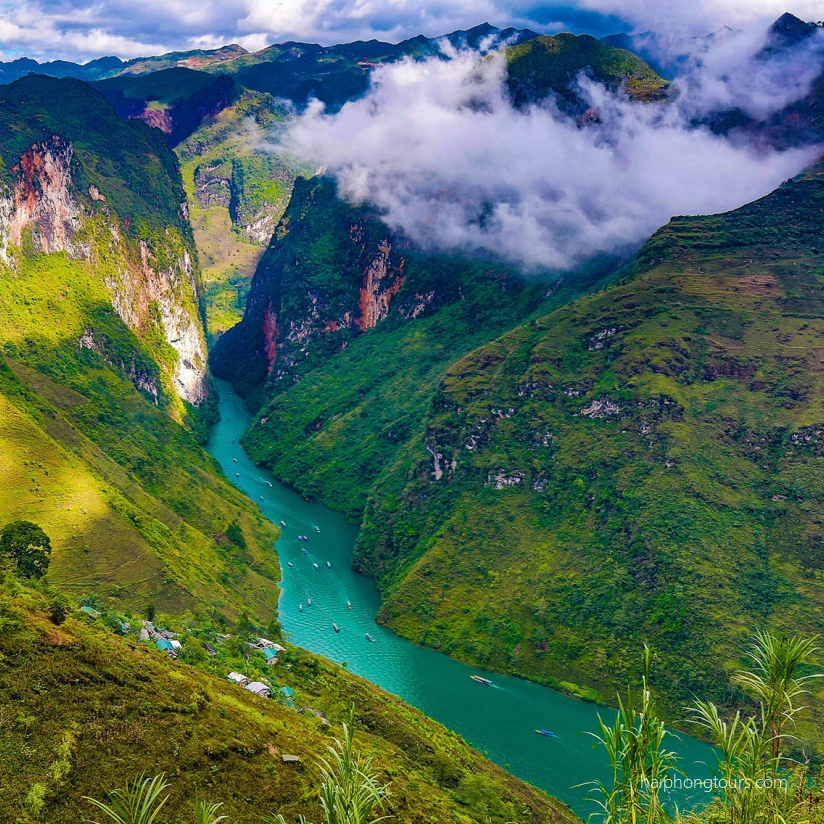
The classic northern arc leaves Ha Giang through Quan Ba and Yen Minh, reaches Dong Van, crosses Ma Pi Leng toward Meo Vac, and returns south. A four-day version often returns through Mau Due and Du Gia. Operators may reverse the order or use a different overnight stop when road or accommodation conditions require it.
The Loop overlaps the Dong Van Karst Plateau UNESCO Global Geopark, a large living landscape with geology, biodiversity and the homes of many ethnic communities. The road is part of the experience, but the region should not be reduced to viewpoints between group photographs.
Three days or four days?
Choose three days when time is fixed
A three-day loop can cover Quan Ba, the Yen Minh corridor, Dong Van, Ma Pi Leng and Meo Vac before returning to Ha Giang. It works when you arrive rested, accept longer riding or driving blocks and do not try to add every detour.
The weak point is compression. A late first-day start, fog, heavy rain, a road closure or a slow group can remove the time intended for villages and geological stops. Do not solve a delay by riding faster after dark.
Choose four days for the better first visit
Four days lets you divide the road into shorter sections, keep a daylight buffer and include Du Gia without turning it into a late arrival. It also gives you more freedom to stop at a market, walk through a village, wait for fog to lift or rest when a passenger becomes uncomfortable.
The extra day does not need to add more attractions. Its main value is reducing pressure. A route with the same major places can be more useful when each day has fewer compulsory stops.
A realistic four-day route
Day 1: Ha Giang to Quan Ba and Yen Minh
Complete the vehicle, licence, helmet and luggage checks before leaving the city. The road climbs toward Quan Ba Heaven Gate and the limestone landscape. Use Yen Minh or another confirmed stop as the first overnight base rather than making Dong Van compulsory after a delayed start.
This is the day to learn the group’s real pace. If you are a passenger, notice whether the seat, footrests, helmet and luggage position remain comfortable after several hours. If they do not, fix the problem before the higher northern sections.
Day 2: Yen Minh to Dong Van
Continue through the geopark toward Sa Phin and Dong Van. The Vuong Family residence and a Lung Cu detour can add cultural and road time; include both only when daylight and energy allow. Dong Van makes a practical overnight base with food and accommodation choices, but busy periods require advance booking.
Do not make the Lung Cu Flag Tower a compulsory definition of “completing” Ha Giang. It adds a branch from the main road and involves steps at the site. The surrounding northern landscape can be valuable even when weather, mobility or timing makes the climb unsuitable.
Day 3: Dong Van, Ma Pi Leng, Meo Vac and Du Gia direction
Cross Ma Pi Leng in daylight and stop only at a place where the vehicle is fully clear of traffic. The pass and Nho Que canyon are major reasons to travel, but looking for a photo while riding is dangerous. A boat excursion adds a separate descent, ticket and transfer; it should be planned rather than assumed to fit every loop.
Continue through Meo Vac and toward the night stop selected for your route. Du Gia is common in four-day plans, although road condition and arrival time must decide whether it is sensible on the day.
For an overnight near the Ma Pi Leng stage, the Pa Vi Hmong village stay guide explains room choices, meals and booking a named property. Adjust the following road day before replacing a Du Gia night with this stop.
Day 4: Du Gia area to Ha Giang
Use the last day for the return rather than treating it as a short transfer. Mountain roads remain demanding when the scenery feels less dramatic. Keep stops limited enough to reach Ha Giang in daylight, return the vehicle properly and collect stored luggage.
Do not book a Hanoi flight, an important train or a tightly timed connection for the same evening. Road delays and vehicle checks can consume the margin you expected to have.
A practical three-day version
- Day 1: Ha Giang through Quan Ba and Yen Minh to Dong Van, with only the stops that fit daylight.
- Day 2: Dong Van, Ma Pi Leng and Meo Vac, then an overnight point chosen for the return route.
- Day 3: return to Ha Giang with a conservative handover and onward-travel buffer.
This version is a road-focused introduction. It is a poor match for a late arrival, a first-time motorcycle rider, a group that wants long cultural visits or a traveler who needs frequent rests.
Choose how you will travel
Self-drive motorcycle
Self-driving gives you control over stops, but it also makes you responsible for the licence, vehicle, route, weather decisions and every bend. Choose it only when your national licence and a qualifying international driving permit are valid for the motorcycle class in Vietnam, your insurance covers the activity, and you already have strong experience on steep mountain roads.
Being able to balance a scooter in a city is not the same as controlling a loaded motorcycle on wet descents, broken surfaces and blind curves. A short rental lesson cannot create that experience.
Traveling as an easy-rider passenger
An experienced local rider handles the motorcycle while you ride behind. This preserves the open-air experience and removes the need for you to control the vehicle. It does not remove exposure to rain, cold, dust, long sitting or the consequences of another road user’s mistake.
Ask who the actual rider will be, how their licence and insurance are checked, the maximum group size, how luggage is secured, what protective equipment is supplied and whether the daily pace can change.
Private car
A car offers weather protection, a seat belt, more luggage space and an easier option for families, older travelers and people who do not want to sit on a motorcycle. It can follow the main loop roads but may not use every narrow side track or stop at every small roadside shoulder.
Choose the car for comfort and risk reduction, not because it removes mountain-road risk. Confirm an experienced local driver, working seat belts for every passenger, the exact overnight route and how often the group can stop.
Legal and insurance checks for self-driving
Vietnam recognizes international driving permits issued under the 1968 Vienna Convention when used with the corresponding national driving licence. The permit must cover the class of motorcycle you ride. A rental shop handing over a bike is not proof that you are legally licensed.
Check the original documents, not a website’s generic statement that an international licence is accepted. Travelers from a country using a different international-permit convention may not have a qualifying document for Vietnam.
Read the travel-insurance wording for motorcycle engine size, licence class, helmet use, passenger cover and excluded activities. If the policy requires lawful riding, an invalid licence can affect a claim. Keep emergency and insurer contact details offline.
Road safety that changes the itinerary
- Ride or drive in daylight: animals, stopped vehicles, debris and broken edges become harder to see after dark.
- Slow before blind bends: assume another vehicle may cross the center line.
- Keep distance: braking room matters on wet descents and behind trucks.
- Use a certified, correctly fitted helmet: a decorative or loose helmet is inadequate.
- No alcohol before driving: save local drinks for after the vehicle is parked for the night.
- Do not film while moving: stop fully in a safe place before using a phone or camera.
- Accept a route change: rain, fog, a landslide or official closure should remove a road from the plan.
If you are a passenger and the rider is speeding, using a phone, drinking before departure or pushing on after dark, ask to stop. A prepaid tour does not require you to accept unsafe behavior.
Weather and seasons
There is no month that guarantees clear passes, dry roads and flowers. Mountain weather can change within one day and varies by elevation. Spring can bring mist; summer rain can trigger flooding and landslides; autumn attracts travelers for fields and flowers; winter can be cold, damp and visibility-limited.
Check the national and local forecast close to departure, then ask about the actual road each morning. A phone forecast for Ha Giang city does not describe Ma Pi Leng, Dong Van and Du Gia at the same hour.
Pack layers and waterproof protection even when the city is warm. In poor visibility, the correct response is slower travel, a lower route or a stopped journey, not racing to keep the original list.
Luggage, cash and connectivity
Leave your large suitcase at secure accommodation in Ha Giang and take a small bag for the loop. Confirm storage access after your return and never leave a passport, cash or essential medicine inside an unlocked rental shop.
Use waterproof inner bags for documents and electronics. Balance motorcycle luggage evenly and keep straps away from wheels, chains and exhausts. A passenger should not carry a heavy backpack for full riding days.
Carry enough Vietnamese cash for rural meals, fuel, small admissions and places without reliable card payment. Keep more than one payment method and do not depend on mobile signal for every booking, map or translation. Download the route and save accommodation phone numbers before leaving the city.
Accommodation and food
Use confirmed overnight towns rather than arriving late and searching after dark. Ask about secure vehicle parking, dinner time, hot water, heating or blankets in cold weather, private versus dormitory rooms and the exact access road.
Group packages can use shared rooms or communal meals. Confirm room occupancy, bathroom arrangement, dietary needs and whether drinks are charged separately. The Ha Giang food guide explains regional dishes and safer ways to order unfamiliar ingredients.
Border-area and identity checks
Parts of the northern route are close to Vietnam’s international border. Carry the travel documents required for your stay, use official roads and obey signs restricting access. Do not follow an unverified map track toward a border marker or controlled area.
Foreign-guest registration and any local border-area procedure should be confirmed with your licensed operator and each accommodation before the trip. Send your correct passport details early, but use a secure channel and ask who stores the data. Procedures and administrative names can change, so a fixed fee or form described in an old blog should not control your plan.
Current place names after the provincial merger
Former Ha Giang Province merged with Tuyen Quang in 2025. Tourism businesses, maps and travelers still commonly use “Ha Giang” for the city area and loop region, while newer official addresses may use Tuyen Quang Province and new commune names.
The landscape did not move. Save the exact accommodation and attraction pins, Vietnamese names and phone contacts. Do not rely on a province or former district label alone when arranging pickup.
Travel respectfully in living communities
Ask before photographing a person, a home, a ceremony or a child. A market is a place of trade and social life, not a staged attraction. Keep enough distance for people to work and buy something only when you want it.
Use locally owned accommodation and services where they meet your needs, pay agreed prices and avoid gifts that encourage children to approach traffic. Do not fly a drone without checking current permission and local restrictions.
Before and after the loop
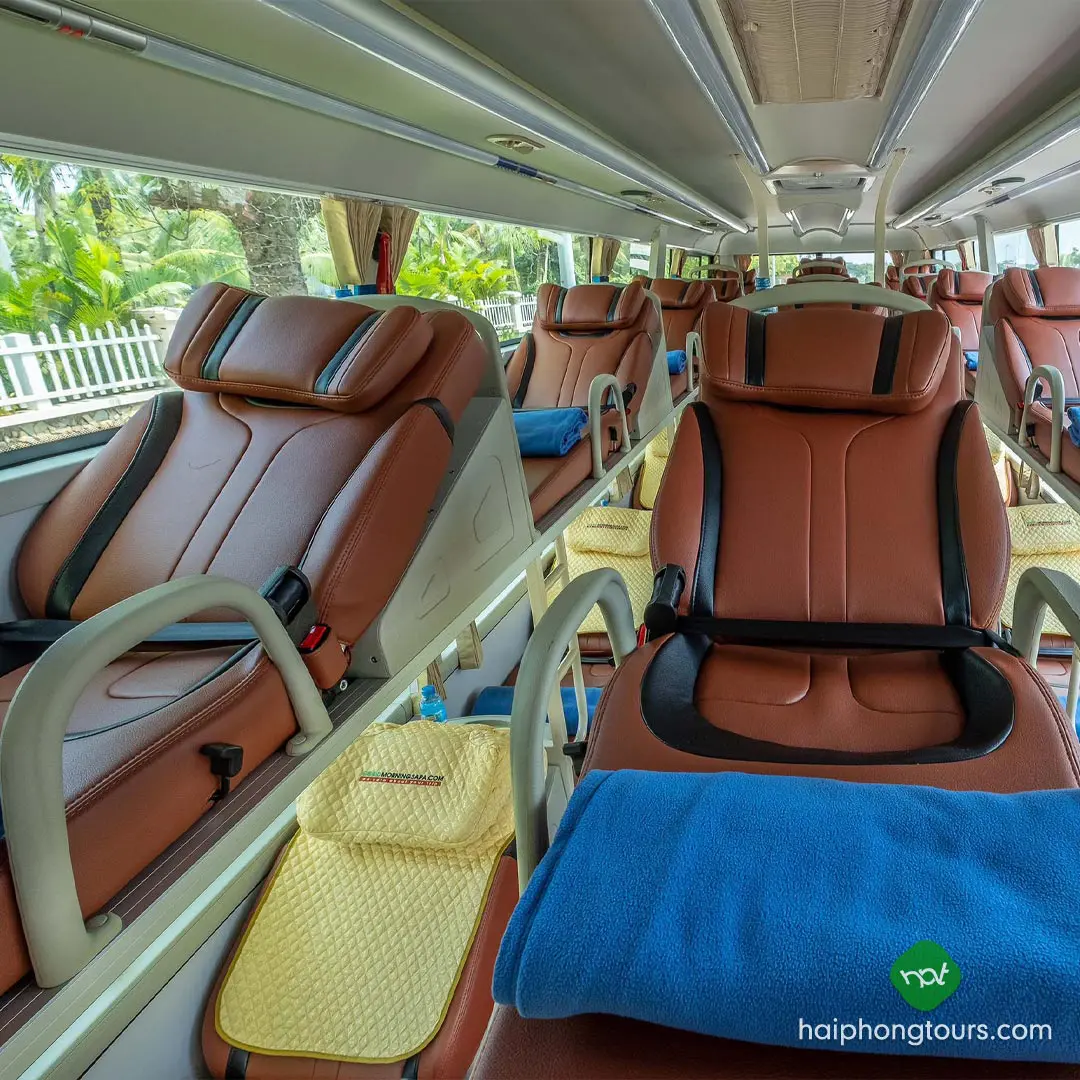
From Hanoi, compare a daytime bus, sleeper cabin and private car in the Hanoi to Ha Giang transport guide. Confirm the city pickup point and final accommodation connection before fixing the first Loop day.
Starting on the coast? The Hai Phong to Ha Giang transport guide compares direct daytime and overnight buses with a private car, including pickup locations and arranging a room before dawn.
Arrive in Ha Giang early enough to sleep, check equipment and begin after daylight. Starting immediately after a night bus can combine poor sleep with the hardest learning hours of the trip. Store large luggage and confirm the first night before departure.
For a separate heritage stop, plan a visit to Sung Khanh Pagoda near Ha Giang.
For a village base near the city, see the Thon Tha Tày village stay guide before choosing your pre-Loop night.
After the loop, allow time to shower, eat, return the vehicle and deal with any damage record or deposit. If you continue south, the Ha Giang to Ninh Binh planning guide explains the trade-off between a sleeper bus, early arrival and recovery time.
Booking checklist
- Choose three or four days before choosing individual stops.
- Select self-drive, passenger or car based on real road experience and comfort.
- Verify licences, insurance and the actual vehicle or rider.
- Ask for the route and overnight places in writing.
- Confirm room type, meals, luggage storage and protective equipment.
- Keep a daylight and weather buffer every day.
- Save offline maps, contacts and essential documents.
- Protect the return day from a tight flight or train connection.
Who should reconsider the loop?
Reconsider self-driving if you lack the correct licence, insurance or mountain experience. Choose a car or a shorter regional stay if long motorcycle days, cold exposure, motion sickness, back or joint pain, pregnancy, recent surgery or limited balance make the standard format unsuitable.
Ha Giang is still worth considering when you skip the motorcycle. The lasting value comes from the karst landscape, communities and slower movement through the plateau, not from proving that you personally controlled a bike.
Final decision
Choose four days, arrive rested and use the safest transport mode you can verify. Keep Ma Pi Leng, Dong Van and the geopark landscape as priorities, then let weather and daylight decide the optional branches.
A successful Ha Giang Loop is not the fastest completion or the longest checklist. It is a route finished without hiding licence problems, rushing dangerous roads or treating the communities along it as scenery.
Would you like help fitting this experience into your trip? Contact us with your travel dates, starting point, available time and group size. Tell us about walking limits or special interests so we can suggest a practical itinerary.