
Understand the published admission categories
The provincial fee schedule sets the Ha Giang museum’s standard admission at 30,000 VND per person. Children under six are exempt, while other children and qualifying students receive a fifty-percent reduction, making that reduced ticket 15,000 VND. These are admission categories, so a teenager’s age and student status matter more than a hotel’s definition of a child.

For example, two adults and one ten-year-old produce a 75,000 VND admission budget using that published scale. Two adults and a seventeen-year-old qualifying for the student category produce 75,000 VND. These are transparent calculations, not a package including transport, a guide or other services. Carry suitable student identification when requesting a student rate, and use the museum’s displayed tariff for the final purchase.
Temporary free-entry promotions and group arrangements should be treated separately from ordinary admission. Likewise, a photograph of an old opening announcement does not establish the session on your intended day. Use the museum contact above to settle the actual visit session, then leave your meal and transport outside that block.
Give a return visit a different purpose
Someone who visited before the mountain journey can return with specific observations instead of repeating the same room-by-room tour. Bring one photograph of a building, one detail of a tool or textile, and one landscape question. Use the relevant displays to identify what you noticed and where an interpretation needs correcting.
Keep three kinds of evidence separate: the place where an object was found, the community that used it, and the age or period given on its label. Those details are not interchangeable. A textile displayed in Ha Giang does not mean every community in the region wore it, and an archaeological object may have a much wider geographical story than the town where the museum stands.
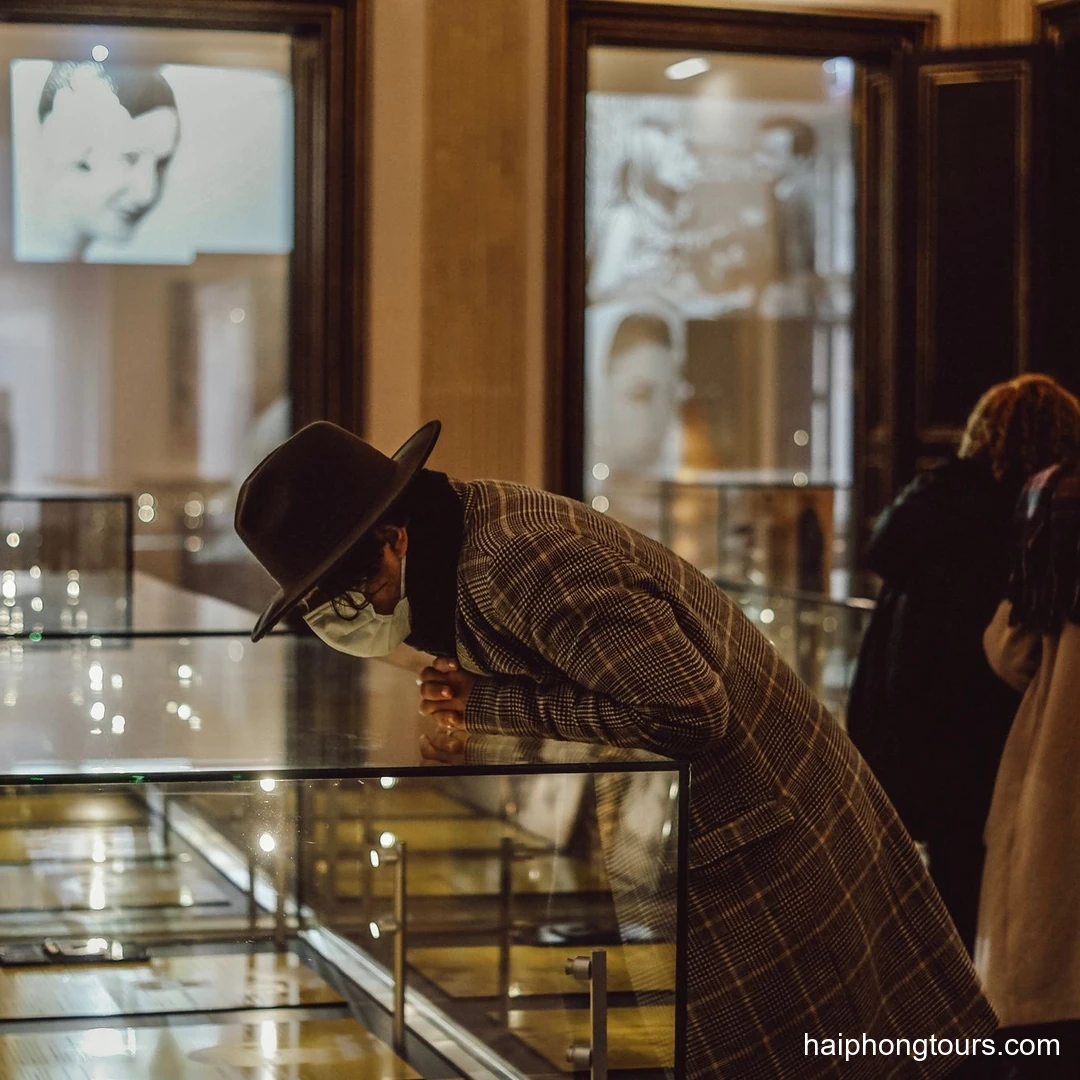
Special exhibitions can also make a return worthwhile. The institution has hosted temporary heritage displays alongside its collection, but an earlier exhibition announcement is not a current booking promise. When enquiring, name your interest, such as weaving, archaeology or modern history, so staff can explain the relevant display rather than simply confirming that the building is open.
Ha Giang Museum, now Tuyen Quang Museum Site 2, offers an indoor introduction to the landscapes and communities you encounter on the Ha Giang Loop. Choose it when you want context before the mountain journey or have questions after returning.
Hai Phong Tours recommends allowing roughly an hour to 90 minutes for this visit, with longer for interpretation. Keep it separate from your departure rush: a short town stay gives you more freedom to read and ask questions.
Find the Ha Giang building
Use 148 Tran Hung Dao, Ha Giang 1 ward, near Yen Bien Bridge and the Lo River. Save the name Bảo tàng Tuyên Quang, cơ sở 2 Hà Giang with the address for your driver.
The museum beside Tan Quang Lake in Tuyen Quang is a different building with its own collection. A search for the institution’s name alone can send you to that branch; check the street and bridge before setting off.
Start with the landscape beneath the scenery
The ground-floor historical displays include marine fossils, limestone samples and traces of prehistoric life. These provide a different starting point from the mountain-pass photographs that usually introduce Ha Giang.
Use this section to choose something specific to notice outside: a rock texture, the relationship between settlements and terrain, or a place name to ask your guide about. Read the label for each object’s location and age; a fossil from the wider region does not establish the age of every cliff on your route.
The Dong Van Karst Plateau guide helps connect that interest with actual stops. Let the museum add meaning to your route rather than turning the day into a hunt for every display location.
Look beyond a single picture of highland life
Upstairs, the exhibition follows three themes: ecological regions, cultural diversity and the development of contemporary life. Digital interpretation includes screens and audiovisual elements alongside the physical displays.
Compare objects by their purpose and community, rather than treating different traditions as interchangeable. Ask whether an item was everyday clothing, ceremonial dress or a tool, and whether the practice continues today. Those distinctions make later conversations in villages more thoughtful.
For children, choose one object to sketch or describe and one question to take into the trip. This gives a short visit a focus without expecting them to absorb every historical panel.
Notice the objects behind a public event
The museum also holds a speech manuscript, microphone, recording tape and recorder associated with Ho Chi Minh’s 1961 visit to Ha Giang. They offer a tangible entry into the region’s modern political history.
Look at how the objects were used to communicate with an audience and preserve a voice. If political history is unfamiliar, request a short explanation of the event before reading the longer narrative. Distinguish the physical artifact from the museum’s interpretation of its significance.
Arrange a visit you can understand
For enquiries, call within Vietnam, or internationally. Specify the Ha Giang building when confirming your visit.
Ask about the opening session on your intended day, admission, and whether English interpretation or an English audio option is available. If you need a guide, agree the language, duration and any charge in advance. Digital equipment alone does not guarantee an English explanation.
If stairs would limit your visit, ask specifically about access to the upper-floor displays. Confirm photography rules before using flash or photographing sensitive exhibits; use interactive equipment as directed and leave original objects untouched.

Place the museum in a rested afternoon or a spare morning around your Ha Giang Loop itinerary. Leave enough time to collect luggage and meet your onward transport. If your priority is the mountain journey and town time is very short, protect that departure instead of squeezing in a hurried museum circuit.
Would you like help fitting this experience into your trip? Contact us with your travel dates, starting point, available time and group size. Tell us about walking limits or special interests so we can suggest a practical itinerary.