
Ha Lau is a highland area near Tien Yen in Quang Ninh, known for its market, Dao communities and forested countryside. Plan a visit around a confirmed market morning or an arranged village visit: the appeal is meeting people and seeing local life, rather than following a circuit of staffed attractions.
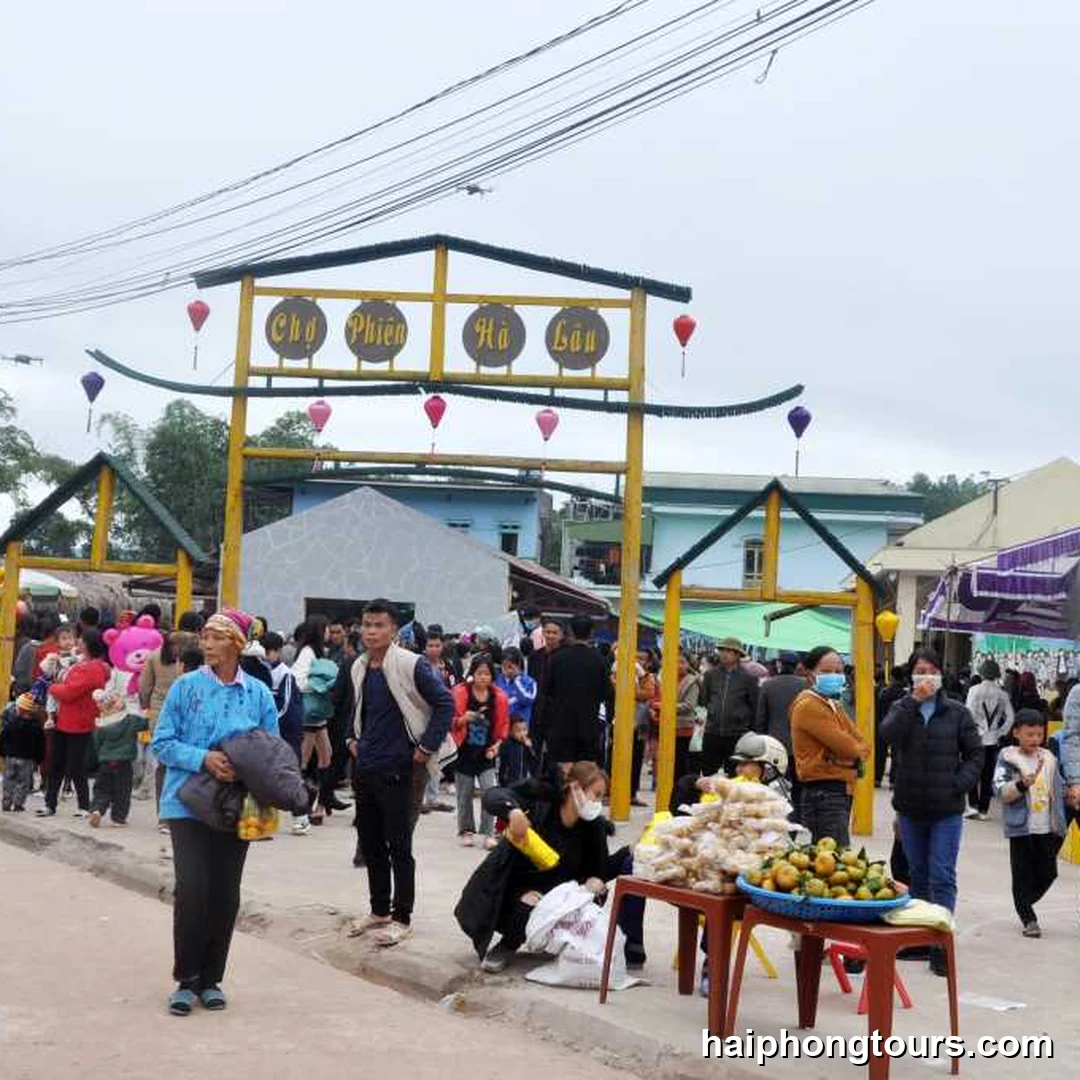 Ha Lau market is a community gathering whose schedule should be confirmed before travel.
The area now belongs to Dien Xa commune, although Ha Lau and Tien Yen remain useful names when asking for directions. It is an inland excursion requiring its own transport arrangements; allow a separate day if you are staying in Halong.
When to visit Ha Lau market
Sunday morning is the usual time to plan for Ha Lau market. Before arranging a long drive, ask your accommodation or a Vietnamese-speaking contact to confirm that the market will take place on your chosen date and where to meet. Use the name Chợ phiên Hà Lâu, xã Điền Xá to distinguish it from markets elsewhere in Quang Ninh.
A regular market and a major cultural festival offer different experiences. Larger events can bring extra food stalls, embroidery demonstrations, folk games, music and staged presentations of Dao traditions. These programs have their own dates; arriving on a Sunday does not guarantee a full festival.
For shopping and breakfast, arrive in the morning rather than saving the market for an afternoon stop. If performances are your priority, get the event program first and plan your arrival around it. A village visit on a non-market day needs separate arrangements.
What to eat and look for
Ha Lau market brings together Dao, Tay and other communities from the surrounding uplands. Food and agricultural products are part of its everyday purpose, alongside textiles and the social occasion of meeting neighbors.
- Tien Yen chicken: a regional specialty worth looking for among prepared dishes. Ask whether the portion and price are for one person, a plate or a whole chicken.
- Khau nhuc: a rich, slow-cooked pork dish suited to a shared meal. The name may appear without accents as “khau nhuc.”
- Rice cakes and local produce: look for banh chung gu, bamboo shoots, upland rice, vegetables and honey. The selection depends on the season and vendors present.
- Embroidered clothing and accessories: ask about the maker, material and intended use before buying. Request permission before handling garments or photographing someone at close range.
Bring small-denomination cash and choose freshly cooked food. Tell the seller about dietary restrictions before ordering; a vegetable-looking dish may contain meat or animal fat. Rice wine may be offered socially, but you can decline, and anyone driving should leave it untouched.
Khe Le village and Dao culture
Khe Le, written Khe Lẹ in Vietnamese, is a Dao community associated with the Ha Lau area. It is a residential village, so a visit works best when a local contact has agreed to receive you and explain what is appropriate to see.
Embroidery, traditional clothing, wedding customs and the cap sac initiation ceremony are distinctive parts of Dao cultural life. A festival may present some of these traditions publicly; a family wedding or religious ceremony is a private occasion. Join only when invited, ask before taking photographs, and keep clear of altars and ceremonial objects unless your host guides you.
If you want to stay overnight, obtain confirmation from a named host before traveling. Ask about the sleeping arrangement, bathroom, meals, arrival point and whether someone can communicate with you. A reference to the “Khe Le homestay village” is not enough to reserve a room. Without a confirmed host, base yourself in Tien Yen and visit during the day.

Forest walks, Hang Rong and Ca Nhay waterfall
Beyond the market, the Ha Lau area includes forest around Ban Danh and Na Hac. Hang Rong, or Dragon Cave, is associated with Ban Danh and has rock formations resembling animals. Ca Nhay waterfall is associated with Na Hac.
Treat these as outings to arrange with someone who knows the current route and access conditions. Before committing, establish the actual walking distance, steep sections, stream crossings, permissions and whether the cave can be entered. A place name on a map does not establish a maintained visitor trail.
For a first visit, choose one walk that fits your ability. Wear shoes with grip, carry water and rain protection, and turn back if the route becomes unsafe. Avoid caves, stream crossings and waterfall approaches during or after heavy rain. Do not assume a waterfall pool is a supervised swimming area.
Getting there and arranging your day
From Tien Yen, the approach to Ha Lau connects with National Highway 4B and local roads into the hills. Send your driver the agreed meeting point, rather than just “Dien Xa,” which covers a much larger area. Ask the driver or host to check the usable route before departure, especially after bad weather.

If you travel to Tien Yen by intercity bus, arrange the onward ride to Ha Lau in advance. Confirm where the bus actually drops passengers, your local pickup and the return connection. For a hired car, agree whether the driver will wait, which village or walking stop is included, and the latest departure time.
A manageable day could look like this:
- Morning: travel from Tien Yen to a confirmed market session, eat breakfast and browse the stalls.
- Late morning or lunch: make an arranged village visit or stay for a scheduled cultural activity.
- Afternoon: take one agreed countryside walk if conditions allow, then return before dark. Skip the walk if travel or festival activities have already filled the day.
Ha Lau suits travelers interested in upland communities who can make a few local arrangements ahead of time. Confirm the market date and your return transport first; add a village meal, overnight stay or forest excursion only when someone has agreed to provide it.
Would you like help fitting this experience into your trip? Contact us with your travel dates, starting point, available time and group size. Tell us about walking limits or special interests so we can suggest a practical itinerary.