
A Hai Hau countryside stay suits travelers who want a family meal, village lanes, craft traditions and time to understand the lowland communities beyond Nam Dinh. One night gives you an afternoon and a morning without repeating the Hanoi drive. Two nights are worthwhile when you want to add a separate wetland or church excursion.
Choose the receiving house and the experience together. A homestay room can provide a comfortable base, but an English-speaking guide, an artisan visit and a cooking activity need their own arrangements. The most useful plan is a small village circuit and time with your hosts, rather than a long list of distant stops.
Understand the location before choosing accommodation
Hai Hau belongs to the former Nam Dinh area, now within Ninh Binh Province. Travel descriptions still use the old district name for a wider countryside region. A property labeled “Ninh Binh” here is not beside the limestone scenery of Tam Coc or Trang An.
For the stay itself, request the property’s precise map pin. Hai Trung, Hai Hung, Hai Anh and other local names can refer to different places within the broader trip. Confirm the final house name on your booking, particularly when a company works with several host families.

Two different house settings to consider
Hai Trung Ecohost: a family base in Cuu Khuc
Hai Trung Ecohost is in the Cuu Khuc village area, with a courtyard, garden and traditional ancestral-house setting. The receiving family is Mr. and Mrs. Phong. It suits visitors who want to spend part of the stay around the house, sharing a meal and learning how family gatherings and ancestor remembrance fit into local life.
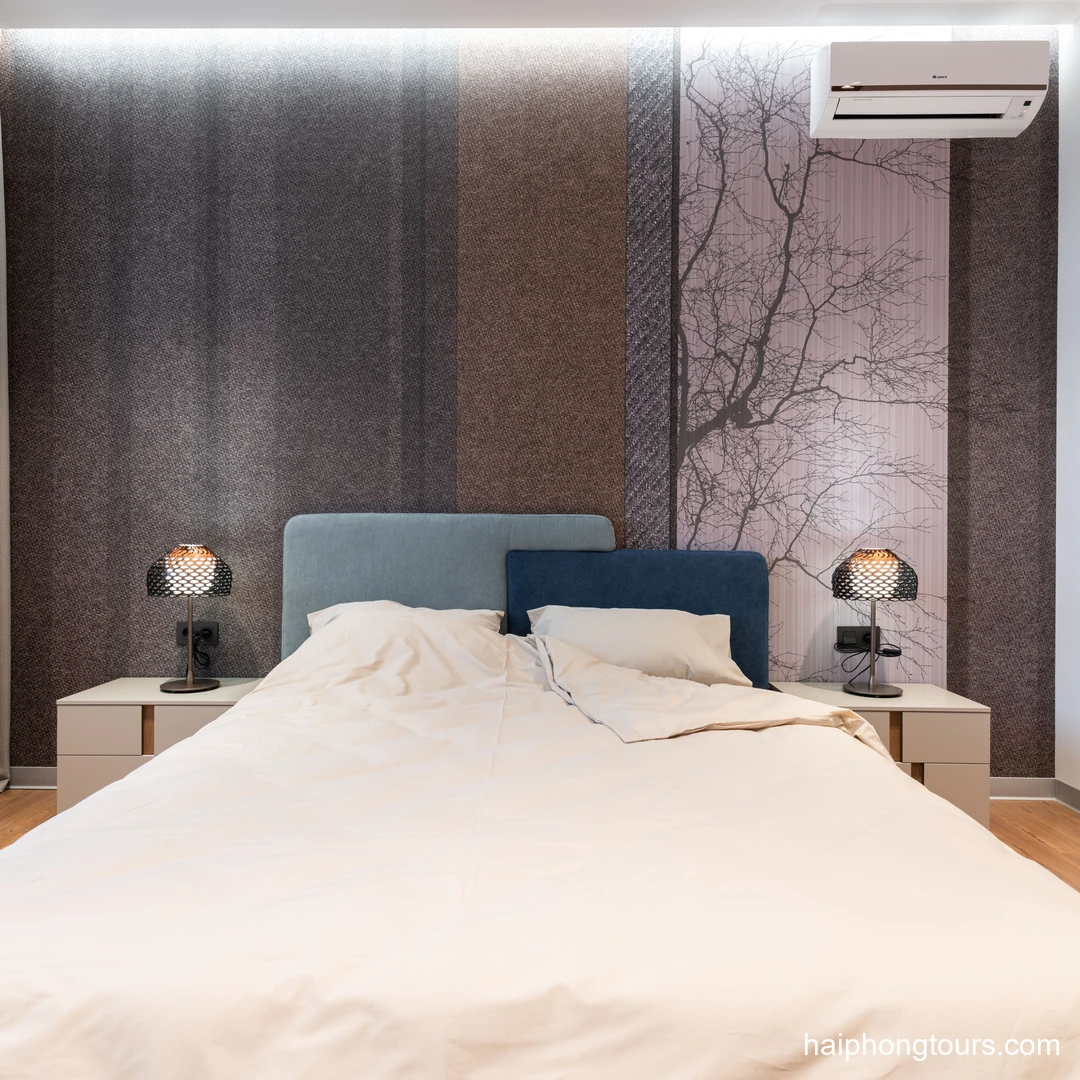
The accommodation lists twin and triple room options, air-conditioning and Wi-Fi. Pick the actual room configuration for your party instead of assuming every northern homestay means floor mattresses or a shared dormitory. Arrange cooking or a local walk when you reserve; their availability should not be inferred from a room photograph.
Hai Hung Ecohost: a villa format for a shared trip
Hai Hung Ecohost has a different layout: a three-story villa with five bedrooms, a shared living room and a tea area beside a small koi pond. Consider it if your family or friends want a common space between outings, with a more modern house format.
Clarify whether you are booking individual rooms or exclusive use of the house. If stairs are a concern, obtain the bedroom floor and bathroom layout before paying. The property’s name does not establish that all the rooms or shared spaces are reserved for your group.
Book the host, room and program explicitly
When contacting Ecohost, send your dates, party size, preferred property and starting point. Ask for the full cost with accommodation, meals, guiding, local activities and transport identified separately.
A room booking and a guided countryside package can have different inclusions. For example, a longer package may use shared accommodation while a private room costs extra. Agree on arrival time with the receiving household and keep that person’s contact, not just the name of the booking company.
Make the Luong covered bridge your architectural stop
Cau Ngoi Chua Luong, also called the Luong market covered bridge, is in Hai Anh. The pagoda and market are close to the bridge, making this a concentrated village stop rather than three separate excursions. Its roofed structure is the main reason to pause.
Look first from outside to understand the tiled roof, the curved crossing and the stone supports. Then, where access permits, notice how the timber frame creates a sheltered space over the water. The bridge combines a route through the village with the proportions and roof construction of a building.
Its history reaches back to the early sixteenth century, but the structure has been repaired and rebuilt over time, including a major restoration in 1922. Treat the craftsmanship you see as a maintained heritage structure rather than assuming every timber is five centuries old.
Continue to the pagoda if it is open for visitors. Wear clothing suitable for worship spaces and keep the crossing clear for other people. The Quan Anh festival brings the bridge, pagoda and founders’ temple into a larger community occasion; book for the published annual program if a festival is your priority, rather than expecting performances on an ordinary visit.
Allow time for Luong Pagoda beyond the bridge
The pagoda is roughly 100 meters from the covered bridge. Its formal name is Phúc Lâm Tự, and it is also known as Chùa Trăm Gian. Its origins reach back to the early sixteenth century, but later extensions and restorations created the larger complex you see today. Do not interpret the building as one untouched structure from a single date.
When the worship areas are open, look at the timber joints and dragon carvings, then notice how the halls, corridors and bell tower form a connected ensemble. Outside, the pond and gateway provide another way to understand the layout without entering a ceremony. One unusual detail to ask your host about is the well built with layers of stone mortars arranged in circles. View it respectfully; it is part of the pagoda setting, not a source of drinking water for visitors.
Allow an additional 20–30 minutes as a planning estimate if you want to see the pagoda after the bridge. Your host can help check a suitable receiving time and explain details that are easy to miss on a photo-only stop. Follow the caretaker’s directions about the rooms open to visitors, and leave a ceremony undisturbed if one is taking place.
Add a conversation with a maker in Pham Phao
Pham Phao’s brass-instrument tradition gives this countryside a distinctive cultural subject. Making and repairing horns developed alongside the Catholic community’s musical life. A visit becomes more interesting when a maker explains how shaping metal, joining parts and adjusting the sound fit together.
Ask your host or guide to arrange a receiving workshop. Choose a short explanation of a real task instead of expecting to make an instrument yourself. Leave the working bench and tools clear, and ask before photographing someone at close range.
The parish church provides context for the music, but a church visit and an instrument demonstration are separate arrangements. Do not plan around hearing a large brass band: music for a service or celebration follows the community’s calendar, not a daily tourist schedule.
For a different craft experience on the journey into the countryside, arrange a stop at Rach water puppet village in the former Nam Truc area. Reserve the artisan visit or performance explicitly and adjust the local outing around it; this is a separate road stop, not a walk from the Hai Hau homestay.
Leave room for the meal
A countryside dinner is a good reason to stay overnight. Ask the host what they plan to cook and choose a manageable shared menu. A cooking experience needs more than a dinner reservation: agree on whether you will shop, prepare ingredients, help cook or simply watch a particular dish being made.
For something specific to try with tea, ask about banh nhan. These crisp, round sweets resemble longans but are made from glutinous rice flour and egg, fried and coated with sugar. Traditional recipes use pork fat, so check the ingredients if you avoid pork or animal products.
A cake-making session can be arranged within some countryside programs, but buying or tasting a fresh batch is enough if a class is unavailable. For a meal on the way through town, the Nam Dinh food guide helps distinguish local noodle dishes, pastries and gifts.
A workable two-day visit
Day one: travel to your receiving house, have an agreed lunch and settle in. Use the afternoon for the covered bridge and a modest walk or bicycle circuit selected by the host. Return with time to join the meal preparations or talk over tea before dinner.
Day two: choose the maker visit that has actually been arranged, or a short village walk and a food activity. Finish with lunch before the onward journey. This leaves the stay centered on Hai Hau instead of spending both days in a vehicle.
Cycling is optional. Ask about the proposed distance, road traffic, bicycle size and helmets; village lanes are shared working routes. A shorter walk or vehicle-supported circuit can serve the same cultural purpose. For children, one tangible task and a short outing are often more useful than several lengthy explanations.
Use a second night for a separate interest
If you want birds and estuary scenery, arrange Xuan Thuy National Park as a separate outing. A Hai Hau bed is not automatically near the park’s agreed meeting point. Let the park guide’s tide and observation window determine whether to travel from Hai Hau or sleep closer to the wetlands.
For more religious architecture, use another session for Phu Nhai Basilica and Bui Chu Cathedral. That is a broader road circuit, not part of a short walk from the homestay. Choose the church outing or the wetland outing according to your interest rather than adding both automatically.
For an architectural stop within a Hai Hau countryside plan, consider Hung Nghia Church. Arrange a quiet receiving time if you want to see the interior, and pair the shrine with the covered bridge or a local meal instead of adding the entire two-church circuit.
For a coastal extension, Hai Phong Tours suggests a separate afternoon or overnight at Thinh Long Beach in Hai Thinh. Choose it for a seaside walk and seafood, confirm the beach conditions and arrange the road connection from your village accommodation. A Hai Hau homestay and a beach hotel are different bases.
Get the journey and comfort details right
From Hanoi, a prearranged car to the exact house is the simplest option for a first stay. Include the return or onward destination in the quote. If using a train to Nam Dinh, arrange the separate station-to-house connection before choosing the train time; arrival in the city does not put you in the countryside accommodation.

Bring comfortable shoes and weather protection for the village circuit, and keep an indoor meal or conversation as the alternative to cycling in poor weather. Confirm the bathroom, stairs, cooling and sleeping arrangement that matter to your group. A historic house setting and modern comforts can coexist, but the details vary by room.
The best use of an overnight here is to slow the itinerary enough for a host or maker to explain something properly. Agree on one house, one main local outing and one shared meal first. Add the wider Nam Dinh attractions only when there is enough time left to enjoy them.
Would you like help fitting this experience into your trip? Contact us with your travel dates, starting point, available time and group size. Tell us about walking limits or special interests so we can suggest a practical itinerary.