
Hai Phong bus 01 links Vinh Niem Bus Station with Du Nghia. It can work for a local journey when the boarding side, destination stop and available time all fit. The most useful preparation is a Vietnamese stop name saved on your phone and a plan for the return journey before you leave.
Know which company runs this bus
The city council’s report of its 20 August 2026 visit identifies Công ty Cổ phần Đường bộ Hải Phòng as the operator of route 01. Use that company name when requesting service information.
The company’s public office contact is +84 225 3700 555, with email congtyduongbohp@gmail.com. Ask for the bus operations team and give your stop, direction and date. This is the company contact, not a particular driver’s mobile number.
A useful enquiry is: “Tôi muốn đi xe buýt số 01 từ [điểm lên] đến [điểm xuống] ngày [ngày]. Xin cho biết giờ xe chạy và giá vé.” This means: “I want route 01 from [boarding stop] to [destination] on [date]. Please tell me the departure time and fare.”
Use the stop for your direction
Selected stops in the approved route list are:
| Area | Toward Du Nghia | Toward Vinh Niem |
|---|---|---|
| Vinh Niem coach station | Opposite the station | At the station |
| Lach Tray | 283; stadium | 4, 74 or 188 |
| To Hieu | 114 or 204 | 81 or 191–193 |
| Mang Nuoc | 2 or 158 | 5 or 111 |
These are separate stops, not interchangeable addresses for one platform. Choose the one closest to the actual destination entrance, then look for the current stop sign. A map pin across the road does not establish where you should stand. Make any crossing at a suitable pedestrian crossing before the bus approaches.
Understand the operating window
The Construction Department’s dataset published on 29 June 2026 lists 05:00–20:20 as route 01’s operating window. It does not divide that entry into terminal departures for each direction. In particular, 20:20 is not a confirmed last departure from your stop.
For an early journey, obtain the first departure from the end that sends a bus toward you. For an evening return, obtain the last usable departure in your direction and leave time to reach its stop. A bus beginning its journey elsewhere will pass an intermediate stop later, with traffic affecting the exact minute.
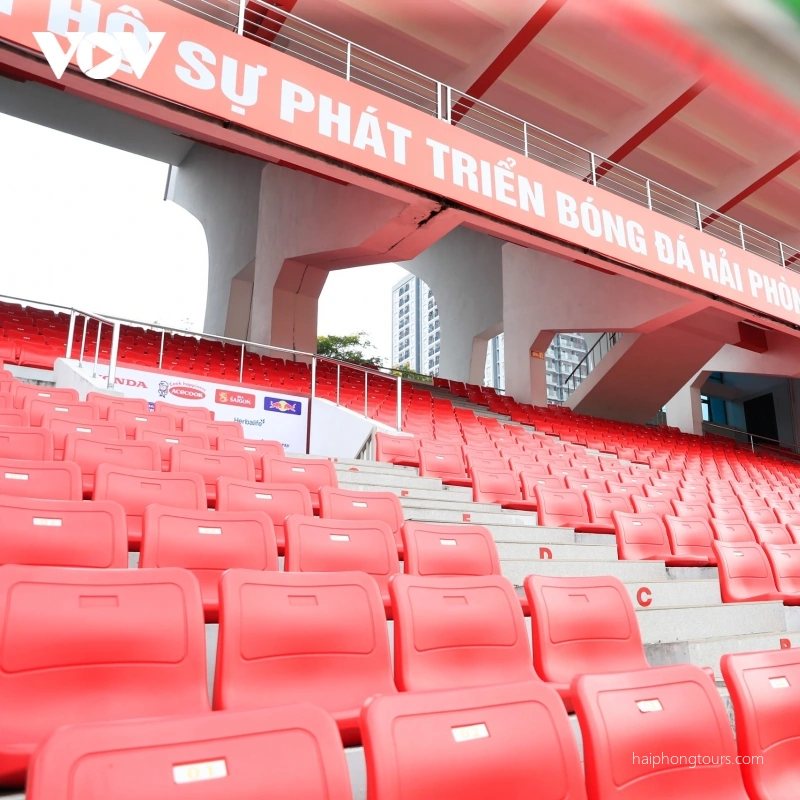
If you cannot establish a workable evening service, arrange another ride before the outward journey. This is especially useful for a restaurant booking, workplace visit or football match that might finish after your intended bus. The Lach Tray football guide covers planning an evening around a confirmed game.
Pay for the journey you are actually making
Have small Vietnamese đồng notes available and establish the fare with the crew before relying on a cashless option. State how many people are traveling and where you want to get off. For a child or concession, establish eligibility before calculating a reduced total.
“Vé đến [điểm xuống] bao nhiêu tiền một người?” asks how much one person’s ticket costs to the named stop. Follow the payment instructions on that vehicle and keep any ticket issued until the journey ends. Do not assume a ticket or app used in another city covers this service.
For a return outing, budget for both rides and any local journey after alighting. A monthly pass is worth considering only after the operator explains its validity and purchase requirements; it is unnecessary to solve that process for a single short visit.
Make boarding and alighting straightforward
Stand at the signed stop where you can see the approaching vehicle. Read both the route number and the destination display. Show the saved stop name to the crew before getting settled, particularly if your destination is an address rather than a large landmark.
Keep your day bag manageable and avoid blocking the aisle with a case or folded stroller. An intercity coach’s luggage compartment does not imply that a local bus has the same arrangement. If a bag cannot be carried securely, choose another vehicle for that leg.
Follow your progress on a map, but use the crew and actual stop signs to identify where to leave. “Cho tôi xuống ở điểm [tên điểm], làm ơn” means “Please let me off at [stop name].” Prepare to alight in time without standing unsafely while the bus is moving.
Arrange the meeting after the bus
If a host or workplace asks you to come to a station, gate or roadside landmark, request the exact meeting pin and a reachable contact. Save those details before boarding. The bus destination alone does not identify a factory entrance or the vehicle collecting you.
A place called “ga” means station in Vietnamese, but that label on a bus route is not a booked rail connection. If your next journey is by train, work from the rail ticket’s boarding station and departure date. For a local pickup, agree how your host will identify you and where you can wait without obstructing traffic.
Protect an onward coach connection
Read the coach ticket before choosing the local bus. The Hai Phong bus station guide helps distinguish the terminals and private company pickup points. Allow time to get off, collect belongings, locate the correct counter and reach the coach.
Work backwards from the reporting deadline. For example, suppose the coach asks you to report at 15:30. If you allocate 15 minutes inside the station, 20 minutes of reserve and the operator estimates a 45-minute local-bus ride, you need to board by 14:10. These are planning assumptions, not measured route times.
If the next expected bus is later than that, change the local transfer rather than spending the reserve waiting. When carrying several cases or traveling with someone who needs help with steps, the simpler boarding arrangement may matter more than the cheapest fare.
Keep a backup that matches the actual destination
For a car, send the current stop pin, destination entrance, party size and luggage count. If the plan changes while you are waiting, update the pickup location before the driver sets off. Retain the vehicle details and check every seat and luggage space before leaving it.
Need help arranging the local leg around a coach or other fixed booking? Send Hai Phong Tours the actual pickup point, destination and reporting deadline for a suitable transfer proposal.