
Use the BUS HP app or Hai Phong bus tracker to search from your actual starting point to your destination, then check the route number, travel direction and exact boarding stop before you walk there. Treat the arrival countdown as an estimate: confirm the route’s current operating window and any same-day change notice, especially for the last bus.

The tracker is most useful when you enter a landmark or map pin rather than only a district name. If the suggested trip requires a transfer, check both legs and the final connection before boarding the first bus.
Quick workflow for finding the right bus
- Set your origin from your current location or place a pin on the correct side of the road.
- Enter the destination as a specific landmark, station, hotel or map pin.
- Compare the suggested trips by number of buses, total time and walking distance.
- Open the chosen route and confirm its direction, boarding stop and alighting stop.
- Check the vehicle’s estimated arrival, then compare it with the route’s operating information.
- Before boarding, match the route number and destination direction shown on the bus.
Route, direction and stop are three different checks
A route number alone is not enough. Most services run in two directions, and the stop for the return trip may be across a divided road, around a junction or on another street. Open the route detail and read the terminal direction before following the map to the stop.
At the stop, compare the route numbers on the sign with the tracker result. When the road has two carriageways, zoom in and confirm that the marker is on the side used by traffic traveling toward your destination. This small check prevents the most common wrong-direction mistake.
How to search when an English place name fails
Local transport databases may recognize Vietnamese names more reliably than English spellings. Copy the Vietnamese name from your map listing, search a nearby landmark, or place a pin at the entrance you intend to use. For large sites such as a bus station, hospital or university, choose the entrance beside a public road rather than the center of the property.
Hotels with similar names can also produce the wrong result. Compare the street and district shown in the result with your booking, and keep the destination pin saved offline. A hotel receptionist can help write the stop or landmark name in Vietnamese if the search remains unclear.
Read the whole journey, including transfers and walking
BUS HP can suggest trips from your current position or between two selected points. Its route planner can compare options with fewer buses, shorter overall time or less walking. These priorities are not interchangeable: the fastest result may include a tight transfer, while the least-walking result may take longer.
Open every leg before leaving. Note the route number, direction and transfer stop, then check how far you must walk between the two stop markers. If the second service is infrequent or close to its last departure, a one-bus option or taxi may be safer even when the planner displays a longer travel time.
What an arrival estimate actually tells you
The stop view can show buses serving that stop, their direction, distance, estimated arrival and vehicle plate number. This is useful for identifying an approaching bus, but it is not a guaranteed departure time. Traffic, a vehicle turning short, a delayed data update or an operating change can move the countdown.
Use the estimate together with the route’s published operating information. If no vehicle appears, refresh once and check that you selected the correct direction. Do not keep waiting indefinitely when the service should be ending or the road conditions do not match the map.
Why saved screenshots can become outdated
Hai Phong adjusted several bus routes from January 1, 2026, including routes 01, 16B, 16C, 18B and 22. Route alignments, stop sequences and operating details can change again, so an old screenshot or travel blog should not be your final source.
Check the app’s news section and the current city bus-route notices on the day of travel. If the route line on the map conflicts with a fresh notice or a posted stop sign, use the newer official information and ask locally before boarding.
Verify the last bus and your return trip first
For an evening journey, plan backward from the return trip. Check the last operating period for both directions and allow time to reach the correct stop. With a transfer, the first bus may still be running after the connecting bus has stopped.
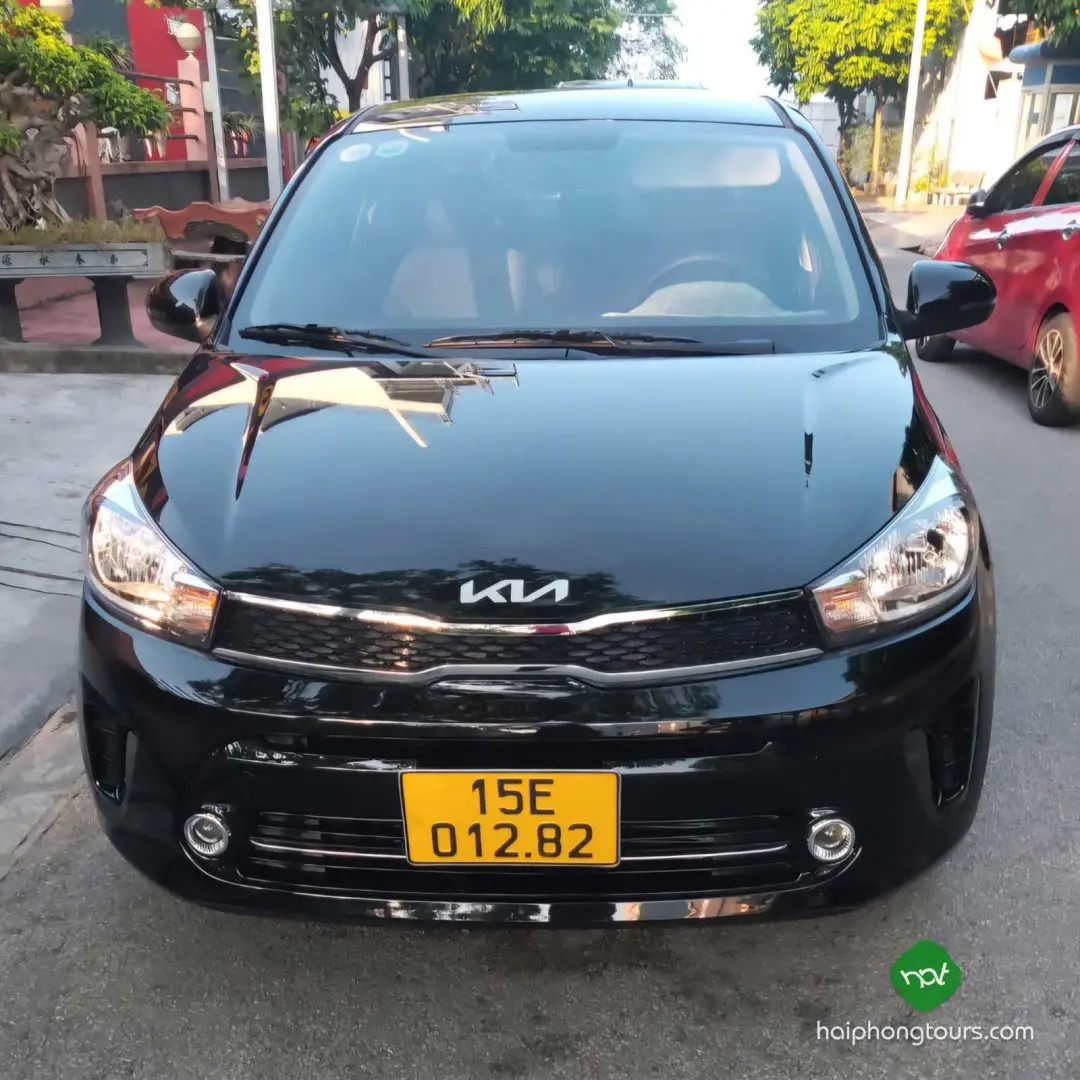
Hai Phong Tours recommends keeping a taxi fallback when a missed connection would affect a train, flight, ferry, hotel check-in or other fixed booking. Save the destination address in Vietnamese and keep enough phone battery and mobile data to request the backup.
Checks to make when the bus arrives
- Match the large route number with the tracker result.
- Confirm the terminal or direction board, not only the route number.
- When available, compare the vehicle plate with the live stop result.
- Show the destination pin to the driver or conductor if the stop name is difficult to pronounce.
- Follow your position on the map and prepare to alight one stop early enough to avoid rushing.
If the bus display and the app disagree, ask before paying or boarding fully. Route numbers can serve a long corridor, and boarding the correct number in the wrong direction can add a substantial detour.
Luggage, accessibility and payment
A route result does not guarantee space for a suitcase, step-free boarding or a particular payment method. With bulky luggage, avoid a tight transfer and allow extra time to cross the road or reach the stop. Travelers who cannot manage steps or long walks should confirm the vehicle and stop conditions locally or choose a door-to-door option.
Carry small Vietnamese-dong notes unless the current route information clearly confirms another payment method. Ask the driver or conductor before assuming a bank card or foreign mobile wallet will work. Keep valuables close and avoid blocking the aisle or door.
Safe fallback when the tracker is unavailable
If the web portal or app cannot be reached safely, shows inconsistent data or stops updating, do not bypass a browser security warning. Use the current route notices published by Hai Phong city, read the route list at the stop, and ask your accommodation or station staff to confirm the boarding side and direction.
Save screenshots of the route number, Vietnamese destination name and transfer point while you still have a connection, but refresh them before a later trip. For broader planning, the guides to Hai Phong bus stations and getting around Hai Phong without a motorbike explain when a local bus is practical and when another mode is easier.
Final boarding checklist
- Correct origin pin and destination pin
- Correct route number and direction
- Correct side of the road
- Current operating period and return option
- Transfer timing checked for every leg
- Vietnamese destination saved offline
- Taxi fallback ready for a fixed connection
The tracker is a planning and live-orientation tool, not a promise that every displayed bus will arrive exactly on time. Combining its route, stop and vehicle information with current notices and an on-street direction check is the most reliable way to use Hai Phong’s local bus network.
Useful guides for your trip
Would a private transfer make this journey easier? Contact us with your travel date, exact pickup and drop-off, number of travelers and bags. Include any flight, train or cruise deadline so we can assess a suitable plan and quotation.
