
Hai Phong’s old trading streets cluster around Tam Bac and Ly Thuong Kiet, beside the Tam Bac River in the city center. Walk here for port-city history and older shopfronts mixed with working businesses, homes and newer buildings.
For a simple loop, start where Ly Thuong Kiet meets Dien Bien Phu near Lac Long Bridge, follow Ly Thuong Kiet to Trang Trinh Street, then return along the Tam Bac riverfront. Allow roughly 45–90 minutes as a planning estimate, including stops to look at the buildings. You do not need to cross the river.
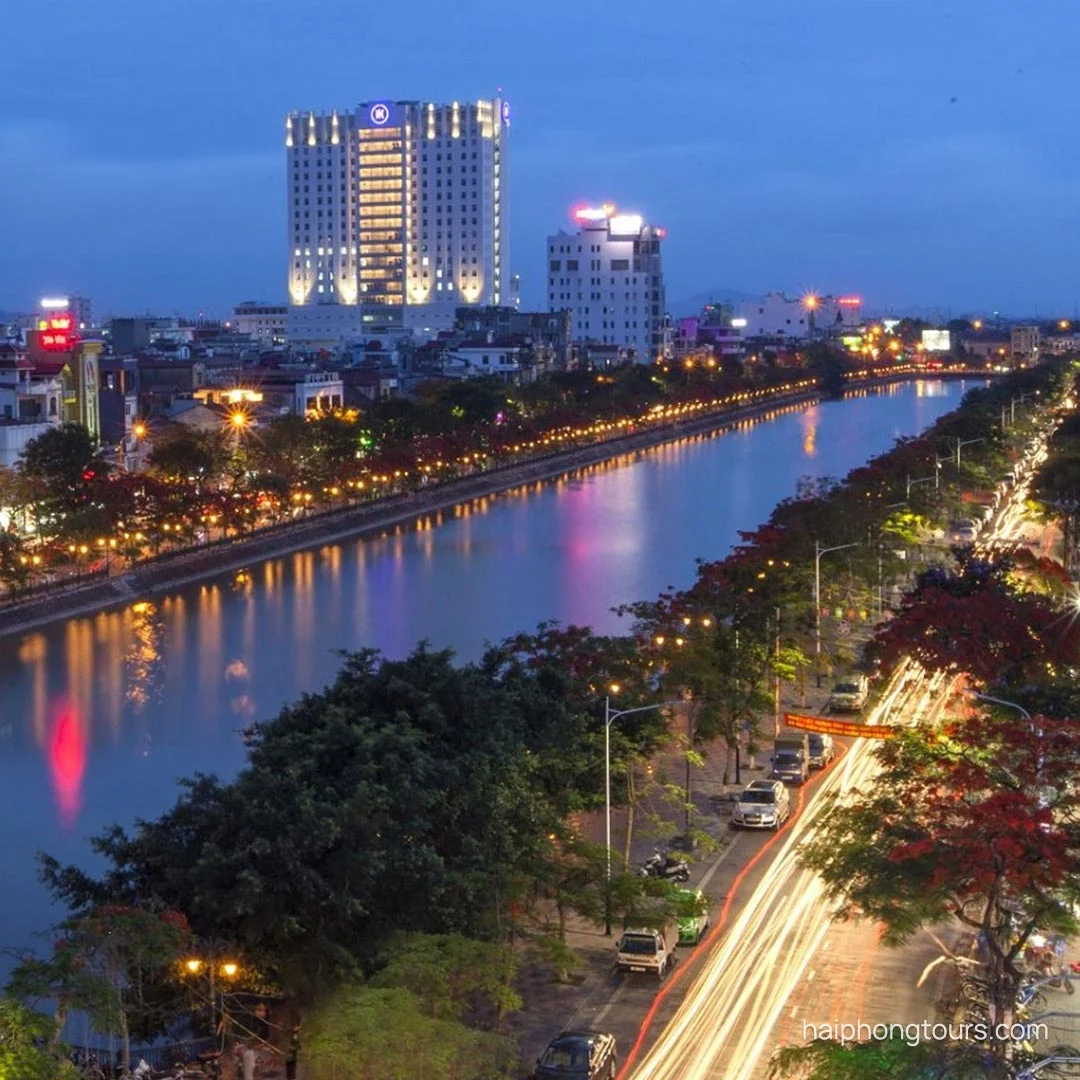
Hai Phong Old Quarter at a glance
- Main streets: Ly Thuong Kiet and Tam Bac.
- Area: Hồng Bàng Ward in central Hai Phong.
- Entrance: none; these are public streets.
- Time to allow: roughly 45–90 minutes for a slow walk and photo stops.
- Best time: early morning or late afternoon for cooler weather and softer light.
For a taxi drop-off, show ngã ba Lý Thường Kiệt – Điện Biên Phủ, gần cầu Lạc Long. This identifies the junction on the city-center side of the bridge, rather than a vague “Tam Bac” destination that could be interpreted as the lake or another riverside section. Ask the driver to stop at a safe permitted point nearby, not on the bridge.
Why Tam Bac and Ly Thuong Kiet are called the Old Quarter
Hai Phong developed as a river and port city. The early urban core grew around the Tam Bac and Cam rivers, with markets and trading streets on the western side and a French-planned civic area farther east. Ly Thuong Kiet and Tam Bac retain part of the former Vietnamese and Chinese commercial quarter.
Older buildings are interspersed with renovated properties and new construction. Look for surviving details above the shop signs as well as the street-level businesses.
1. Ly Thuong Kiet Street
Ly Thuong Kiet was an important commercial street during Hai Phong’s early urban development. Look for narrow attached houses, faded yellow walls, old roof tiles and traditional upper floors. The most interesting details are often above modern shop signs, so it helps to walk slowly and look beyond the ground-floor storefronts.
This is the more useful street for understanding the public face of the old trading quarter. Surviving facades are not continuous, however, and some buildings have been heavily altered.
2. Tam Bac Street and riverfront
Tam Bac Street follows the river that once carried boats and goods into the city’s market area. In some sections, the buildings facing the river were historically the rear elevations of houses whose main entrances opened toward Ly Thuong Kiet. Their uneven windows, doors and rooflines gave the riverside a less formal appearance that became a familiar subject for local artists.
The riverfront has since been reshaped and modernized, while part of the older building stock has disappeared or been renovated. Walk here for the contrast between the remaining old houses and present-day Hai Phong rather than for an untouched historic scene.
A simple walking route
- Begin at Ly Thuong Kiet and Dien Bien Phu: orient yourself at the Lac Long Bridge end of the street, then follow Ly Thuong Kiet away from the bridge.
- Continue to Trang Trinh: look at the upper floors, tiled roofs and surviving older facades along the trading street. Keep to public space; an open doorway does not mean a house welcomes visitors.
- Use Trang Trinh to reach the river: at the junction, take the direction toward Tam Bac Street and the water, rather than toward Quang Trung. Read the street signs instead of cutting through a private lane or the former market site.
- Return along Tam Bac toward Lac Long Bridge: compare the riverside elevations with the street-facing houses you have just passed. Finish near your starting junction on the same bank.
Shorter option: turn from Ly Thuong Kiet onto Tran Quang Khai toward Tam Bac before reaching Trang Trinh, then return by the river. Choose this smaller loop when heat, tired children or limited time make a longer walk less appealing. There is no need to cover every block, because the old buildings are scattered.
Hai Phong Tours recommends walking the shopfront side in daylight, then taking the riverfront return as the afternoon cools. If architecture is your main interest, arriving only after dark makes many roof and upper-floor details harder to appreciate.
The former Tam Bac Market is not a shortcut
The old Tam Bac Market site is separate from the public streets around it and has been designated for a garden and streetscape project. Do not plan on an operating indoor market there, a newly completed park or a passage through the site. Follow any barriers and pavement diversions; if a connecting street is obstructed, shorten the walk rather than stepping into a work area.
For a longer city outing, make the Tam Bac Lake and central-gardens walk a separate extension. The lake, Le Chan statue and Opera House are different waypoints from this riverfront loop.
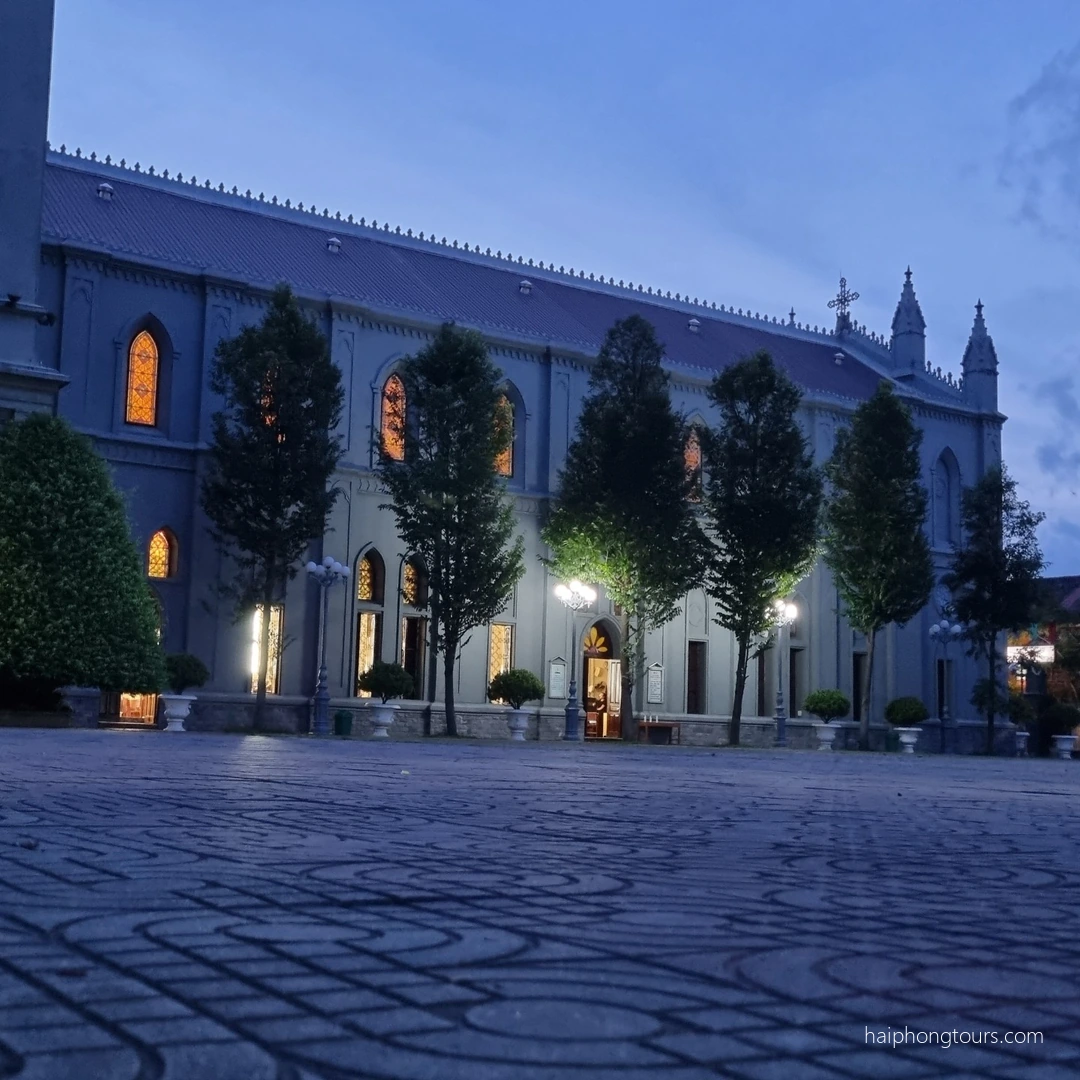
Old quarter, French quarter and Tam Bac walking area
Three nearby city experiences are often mixed together. Ly Thuong Kiet and the older parts of Tam Bac represent the former trading quarter. The historic Hai Phong Opera House, old Post Office and Hai Phong Museum at 66 Dien Bien Phu belong to the French-influenced civic center. The landscaped Tam Bac riverfront and walking areas are modern public spaces layered onto the historic setting.
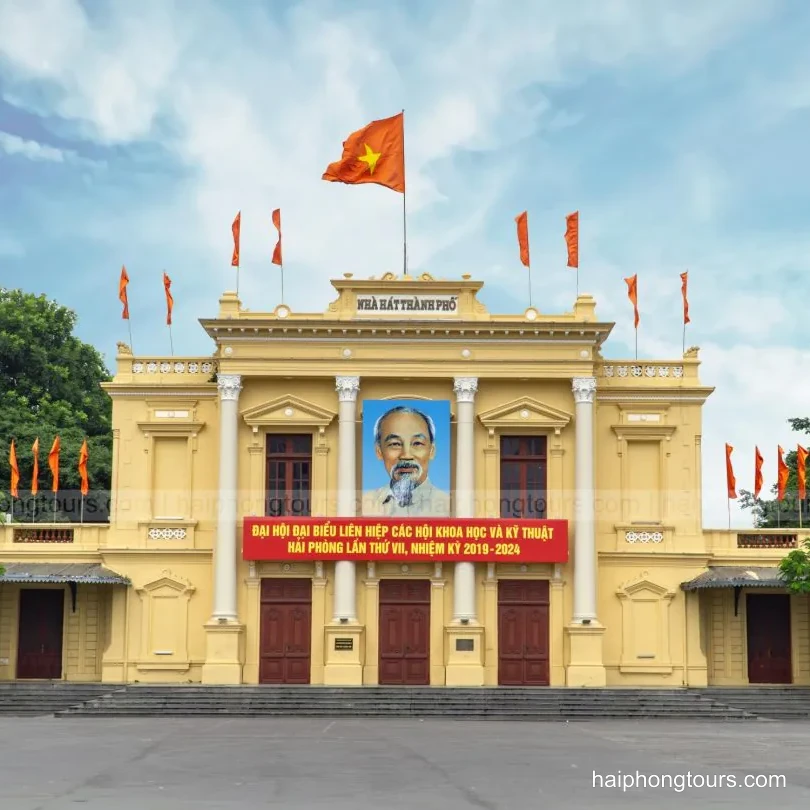

Hai Phong Opera House, including a comparison with its historical facade.
Tam Bac is also used in the names of a street, river, lake and pedestrian area. Do not assume that every section is vehicle-free or that food stalls and performances operate on a fixed daily schedule. Follow local traffic signs and check the same-day city event program if an evening market or performance is the main reason for your visit.
Practical tips for visiting
- Visit in daylight for architecture: old rooflines and upper-story details are easier to see before dark.
- Expect a working neighborhood: scooters, deliveries and parked vehicles may interrupt the walk.
- For a stroller or wheelchair: do not assume a continuous step-free loop. Check the surface and crossings as you go, and choose an out-and-back section if a curb or obstruction prevents a comfortable circuit.
- For the return pickup: send a nearby street address or a map pin where a vehicle can stop. “Tam Bac” alone is not a precise meeting point.
- Respect private property: most old houses are homes or businesses, not attractions open to visitors.
- Use care when photographing: take exterior photos from public space and avoid blocking doors or shop entrances.
- Prepare for the weather: bring water and sun protection in hot months; old sidewalks and riverside surfaces can be slippery after rain.
For a short visit, keep the walk to Ly Thuong Kiet and the Tam Bac riverfront. Add the French-influenced civic center when you have more time for another part of Hai Phong’s urban history.
Useful guides for your trip
Would you like help fitting this experience into your trip? Contact us with your travel dates, starting point, available time and group size. Tell us about walking limits or special interests so we can suggest a practical itinerary.