
Hai Phong Opera House is the historic theater facing the city-center square, also called Nhà hát thành phố or Nhà hát lớn Hải Phòng. It is worth including in a central walking route for its French-era architecture and its place in the city’s public life. Plan on seeing the exterior; enter the auditorium only when you have confirmed admission to a performance or an organized visit.
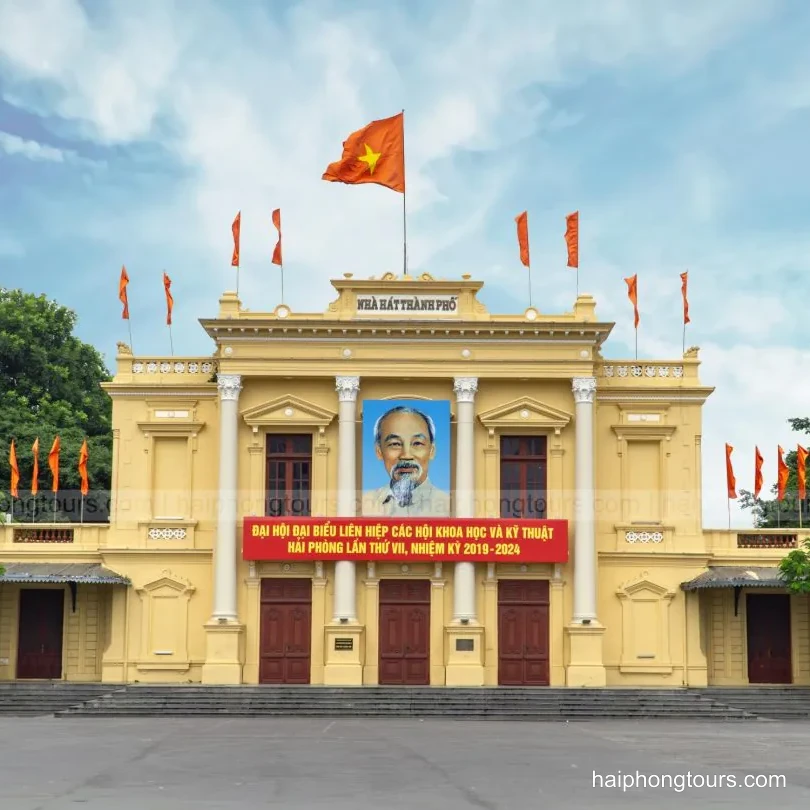
If you are going to a concert, check the venue carefully. Nhà hát Hoa Phượng is a different theater at the city’s Convention and Performance Center in the Bắc Sông Cấm urban area, north of the Cam River. A ticket for Hoa Phuong does not bring you to the old Opera House downtown.
Choose the right theater before setting out
- For the historic building: use the map name Nhà hát lớn Hải Phòng or Nhà hát thành phố Hải Phòng and check that the pin is at the central theater square near the city gardens.
- For Nhà hát Hoa Phượng: use the event’s full address, normally listed as the Convention and Performance Center, 1 Trần Kiên, Bắc Sông Cấm urban area, Thủy Nguyên Ward, Hải Phòng.
- For an outdoor event: check the named square or stage. A program at Quảng trường Nhà hát thành phố takes place at the old theater square; it does not automatically include access to the auditorium.
Send your driver the Vietnamese venue name and the location shown on your ticket, rather than asking for “the theater.” If the ticket names Hoa Phuong, allow for a separate journey across the river instead of treating the concert as the end of a downtown walking tour.
What makes the old Opera House worth seeing
The building dates from the early twentieth century, when the French colonial administration developed Hai Phong as a port and civic center. Its Baroque-influenced architecture gives the theater a more ceremonial character than the narrow trading houses around Tam Bac and Ly Thuong Kiet streets. It became a nationally recognized heritage site in 2015.
Its significance also extends beyond performances. The square was a setting for the proclamation of revolutionary government in August 1945 and celebrations when the city was liberated in May 1955. The theater itself is associated with fighting in November 1946. These layers help explain why the building remains a civic landmark as well as a cultural venue.

View it from a safe public position in the square, then look at how it relates to the gardens and surrounding streets. Daylight is more useful for studying architectural details; an evening visit gives you a different impression of the city center, especially when a public program is taking place.
Admission, opening hours and performances
Exterior sightseeing and entry to a show are separate decisions. You can plan a walk through the surrounding public space without buying a theater ticket, subject to event barriers and temporary closures. For the auditorium, arrange access around a confirmed performance or organized visit rather than relying on generic attraction hours shown on a map.
The words “Opera House” do not mean an opera is staged every evening. Programs may include different forms of music, theater and civic events. Check the actual show, language and format before deciding that it suits your evening.
Hai Phong Tours recommends confirming the venue first, then choosing seats and transport. A familiar photograph of the old theater in a travel guide is not enough to establish where a modern concert will take place.
Before buying or collecting tickets
- Match the date and address: old event pages remain online after a performance has finished.
- Check admission: establish whether the program sells public tickets, requires registration or is invitation-only.
- Check the audience rules: minimum ages, late-entry arrangements, photography and dress requirements can depend on the event.
- Check the seating plan: confirm the section and seat together, particularly if someone needs to avoid stairs.
- Allow an arrival margin: do not schedule dinner or a cross-river journey to finish exactly at the advertised start time.
For a family outing, check children’s admission before payment rather than assuming that a child can share an adult’s seat. For wheelchair access, ask specifically about the entrance, the route to your seats and accessible toilets at the named venue.
Build a short walk around the Opera House
Allow roughly 20–30 minutes as a planning estimate for the exterior and square. It works better as one stop in a city walk than as a half-day attraction by itself. Add time only if you have a confirmed interior visit or performance.
- Start at the theater square: orient yourself, look at the building and check whether event preparations affect the public paths.
- Continue toward the flower kiosks: the traditional roofed Quan Hoa kiosks, dating from 1944, give the central garden strip a different architectural character.
- Follow the gardens toward the Le Chan statue: keep to designated crossings wherever roads interrupt the walk.
- Extend to Tam Bac Lake: use the Tam Bac Lake walking guide to choose a lakeside section or a longer circuit.
For a different view of the port city’s history, make the Tam Bac and Ly Thuong Kiet old-quarter walk a separate extension. Those trading streets and the riverfront are distinct from the lake and the theater square. Do not assume that a destination labeled only “Tam Bac” will take you to the part you want.

Daytime, evening and wet-weather choices
Choose early morning or late afternoon for a more comfortable outdoor visit in hot weather. Take water and a hat if you intend to continue through the gardens; a city walk can still involve exposed sections. Wet paving and curbs require more care after rain.
An evening visit can fit well before dinner, but food stalls and street performances depend on the current city program. Check that day’s arrangements if entertainment is the main reason for going. Keep an ordinary cafe or restaurant as your meal plan rather than relying on a particular temporary stall.
In heavy rain, do not count on the auditorium as an indoor shelter or an attraction you can enter on demand. Shorten the outdoor stop and choose another confirmed indoor activity. If a concert is the purpose of the visit, keep the ticket’s venue pin and your return pickup point saved on your phone.
Is Hai Phong Opera House worth a special trip?
It is a worthwhile stop if you are already exploring central Hai Phong, enjoy urban history or want to connect the gardens with the old trading quarter. The exterior alone is usually too brief to justify a long journey solely for the building. For an evening performance, the program and confirmed admission matter more than the landmark’s name.
Keep the visit simple: choose the historic square for a city walk, and use the exact venue printed on your ticket for a show. That distinction avoids the most consequential planning mistake between the old Opera House and Hoa Phuong Theater.
Useful guides for your trip
Would you like help fitting this experience into your trip? Contact us with your travel dates, starting point, available time and group size. Tell us about walking limits or special interests so we can suggest a practical itinerary.