
A taxi or pre-arranged car is the simplest way to travel from Hai Phong Railway Station to the Cat Hai cable-car station. Bus 16C is the lower-cost alternative, but it does not leave from the railway platform: you must reach a signed stop on its city route or start at Thuong Ly Bus Station, then make sure the bus and cable-car operating windows still connect.
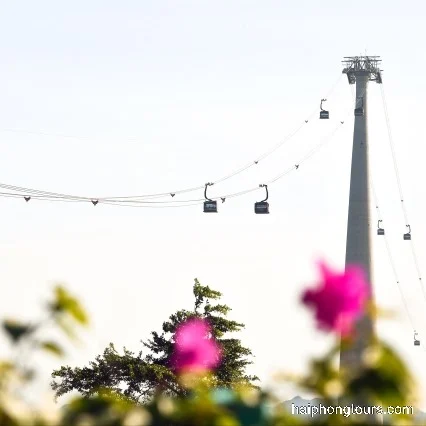
The Cat Hai station is the mainland-side cable-car terminal in the Dong Bai area. It is not Cat Ba town and it is not Dong Bai ferry terminal. The cable car crosses to Phu Long on Cat Ba Island, where you still need onward transport to the central hotel area.
Station-to-cable-car choices at a glance
- Least complicated: taxi or app-based car directly from Hai Phong Railway Station to the Cat Hai cable-car station.
- Lowest-cost public option: Bus 16C from Thuong Ly or a confirmed stop on its central Hai Phong route.
- Current bus route: Bus 16C runs between Thuong Ly Bus Station and Dong Bai ferry terminal and serves the cable-car station.
- Current operating target: Hai Phong’s 2026 plan lists 72 route trips per day; this is not a guaranteed wait time at one stop.
- Cable-car limit: the ride ends at Phu Long, not at a hotel in Cat Ba town.
First identify the correct railway station
Hai Phong Railway Station is the city-center station on Luong Khanh Thien Street. Check that your rail ticket says Hai Phong; Hai Phong has other railway stops, and a driver should not be asked simply for “the train station.”
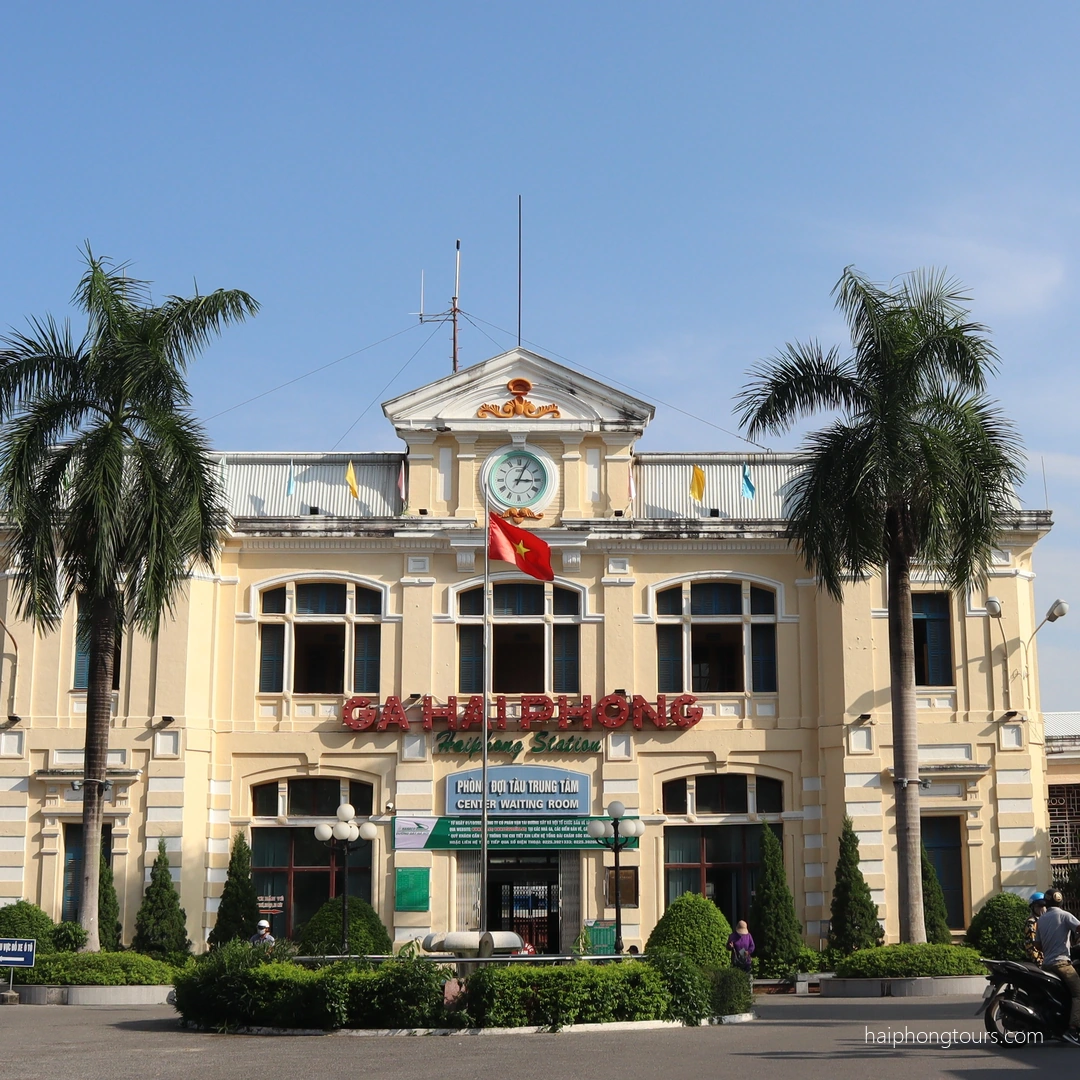
If you need arrival, exit or luggage details before arranging the next leg, use the Hai Phong Railway Station arrival guide. Save both the station exit and the cable-car terminal on your phone before the train reaches the city.
Option 1: Direct taxi or private car
A direct car avoids the transfer to Bus 16C and is normally the safer choice with suitcases, children, limited mobility or a cable-car departure that leaves little recovery time. Set the destination as the Cat Hai cable-car station, not Cat Ba town and not only “Dong Bai.”
Before leaving the station, show the driver the exact map pin and say that you need the mainland cable-car terminal. Confirm whether the quoted or app price covers the complete ride and any road charges. Do not accept a vague fare that can be reinterpreted at the terminal.

Road traffic, bridge conditions and weather can change the journey time. Build the connection around the cable car’s published operating block rather than assuming that a train arrival and a cable-car departure are coordinated.
Option 2: Bus 16C
Bus 16C connects Thuong Ly Bus Station with Dong Bai ferry terminal. The published route passes through central Hai Phong and serves the Cat Hai cable-car station before reaching Dong Bai. Hai Phong’s 2026 operating adjustment retained the route and listed 72 route trips per day.
The 72-trip figure covers the route’s full daily operation. It does not mean that a bus leaves the railway-station area every fixed number of minutes, and it does not guarantee a seat or luggage space.
How to board after a train arrival
- Leave Hai Phong Railway Station and check the live Bus 16C route and next departure.
- Use only a signed stop shown for the Cat Hai-bound direction. Do not wait in the station forecourt unless the live route confirms a stop there.
- If the nearest city stop is unclear, take a short taxi to Thuong Ly Bus Station and board at the route origin.
- Tell the conductor you need ga cap treo Cat Hai, not the final Dong Bai ferry stop.
- After leaving the bus, confirm the cable-car entrance and current departure before buying or activating a ticket.
The city section of the route has changed temporarily in the past because of traffic organization. Recheck the boarding point on the day of travel instead of relying on an old map or a photographed stop list.
Check the cable-car operation before leaving the station
Sun World operates the Cat Hai-Phu Long cable car in scheduled blocks rather than as an all-day walk-on service. Operating days and departures can change for maintenance, weather, season and holiday demand. Check the official Sun World Cat Ba website or app on the day you travel.
The operator sells the cable-car journey as a one-way ticket. Check the selected date, direction, validity and refund conditions before payment; do not assume a ticket covers a return journey or remains usable on another day.
Bus 16C and the cable car are separate services. A late train or bus does not oblige the cable-car operator to hold a cabin departure, refund another ticket or provide onward transport.
What happens after Phu Long
The cable car crosses from Cat Hai to Phu Long. Phu Long is on the western side of Cat Ba Island, while most hotels and the main tourism center are farther east. Follow the current signs for the onward electric bus, local vehicle or pre-arranged pickup.
Before buying the cable-car ticket, confirm how you will complete the Phu Long-to-hotel leg and whether the onward vehicle accepts your luggage. The last island connection can end earlier than restaurants and hotels in Cat Ba town.
When a complete transfer is the better choice
If the real destination is a hotel in Cat Ba town rather than the cable-car ride itself, separating the train, road, cable car and island vehicle creates extra handoffs. Hai Phong Tours offers a verified Hai Phong to Cat Ba transfer with pickup anywhere in Hai Phong and drop-off anywhere in Cat Ba; confirm the station pickup, luggage and exact operating route when booking.
A complete transfer is generally more practical for families, late arrivals, several bags or travelers who cannot easily move between a bus stop, terminal and onward island vehicle.
If the cable car is not operating
Do not travel to the cable-car station assuming an immediate alternative will be waiting. Check whether Bus 16C continues to Dong Bai and whether the Dong Bai-Cai Vieng ferry still fits your day. Ferry queues, vehicle restrictions and the onward trip from Cai Vieng can add substantial time.
If neither cable car nor ferry creates a safe same-day connection, stay in Hai Phong or arrange a confirmed direct transfer rather than improvising after the last departure.
Luggage and accessibility
Bus 16C is a public city bus, not a dedicated railway luggage shuttle. Large suitcases can be difficult when the bus is busy, and luggage must not block the aisle or doors. Keep documents, cash and electronics with you.
Travelers with limited mobility should ask about the railway-station exit, bus step, cable-car boarding gap and Phu Long onward vehicle before choosing the public-transport chain. A direct road transfer removes several of these transitions.
Common mistakes
- Going to Dong Bai ferry terminal by mistake: it is near the route but is not the cable-car entrance.
- Expecting the cable car to reach Cat Ba town: it ends at Phu Long.
- Waiting for Bus 16C inside the station: use a confirmed signed stop or Thuong Ly Bus Station.
- Using an old cable-car timetable: operating blocks change with maintenance and demand.
- Buying one direction and assuming it is a return ticket: verify the ticket direction and validity.
- Ignoring the onward island leg: arrange Phu Long-to-hotel transport before departure.
A practical connection plan
Use a direct car when the train arrives close to the cable-car operating window or when you carry more than a small bag. Use Bus 16C only when live information confirms the stop, direction and enough time for the cable car plus the onward Phu Long connection.
Whichever option you choose, verify the cable-car operation before leaving Hai Phong Railway Station and keep a ferry, complete transfer or overnight plan as the backup.
Useful guides for your trip
Would a private transfer make this journey easier? Contact us with your travel date, exact pickup and drop-off, number of travelers and bags. Include any flight, train or cruise deadline so we can assess a suitable plan and quotation.