
Sui din is Hai Phong’s hot dessert of chewy glutinous-rice dumplings in sweet ginger syrup, commonly served with peanuts, sesame and coconut. Try it as a small evening dessert rather than a substitute for dinner, particularly if you enjoy nutty fillings and the warmth of ginger.

For a straightforward first stop, look for Sủi Dìn Cô Út on Cầu Đất Street, around numbers 163–165. Allow time to sit down with a freshly served bowl, and check the filling before ordering if you have dietary restrictions.
What a bowl of sui din tastes like
The dumpling has a soft, sticky rice exterior surrounding a denser filling. Black sesame, roasted peanuts and coconut are common ingredients; mung-bean versions also exist. The surrounding liquid is a sweet ginger syrup, often made with cane syrup, rather than a savory broth.
You get several textures in one spoonful: chewy dough, a crumbly or smooth center, and crunchy toppings. Ginger adds a warming sharpness, which is different from chili heat. If strongly sweet desserts are not your preference, begin with one bowl and taste the syrup before deciding how much to drink.
The dish has roots in Hai Phong’s Chinese community and belongs to the city’s street-food tradition. Its appeal is the freshly served bowl and the contrast between its textures, so it makes more sense as a stop during your visit than as a souvenir to carry for hours.
Where to try it: Co Ut on Cau Dat Street
Shop name: Sủi Dìn Cô Út, also described as Sủi Dìn Chè Vừng Cô Út. Location: the 163–165 Cầu Đất stretch in central Hai Phong. Match the shop name as well as the street number when checking your map or showing the address to a driver.
Plan this as an evening stop. Confirm service on the day if you need to fit it between a train arrival and departure, and avoid depending on a last-minute bowl before heading to the station. Cold evenings can bring a queue, so keep your onward departure buffer separate from your food budget.
Choose sui din if you want filled dumplings. Chè vừng, another dessert associated with the shop, is a sesame dessert and should not be treated as simply another name for the same bowl. Point to the dumplings if you are unsure which menu item you are ordering.
Ask the current price and portion size before ordering. Old food-tour menus and short videos are useful for recognizing the dish, but they are not a price guarantee for your visit.
How to order without needing an English menu
- “Cho tôi một bát sủi dìn.” One bowl of sui din, please.
- “Nhân gì?” What is the filling?
- “Một bát bao nhiêu tiền?” How much is one bowl?
- “Ăn tại chỗ.” To eat here.
- “Mang về.” To take away.
Order a standard bowl first instead of assuming that every stall offers a mixed filling selection or custom sweetness. Syrup may already be prepared; asking for less syrup is a more specific request than expecting the whole recipe to be made without sugar.
Let the dumplings cool enough to eat comfortably. Break one with your spoon to see the filling before taking a large bite: the center and surrounding syrup may still be very hot.
Peanuts, sesame and other dietary considerations
Peanuts and sesame may be inside the dumpling as well as scattered over the bowl. Removing a topping does not remove ingredients already mixed into the filling. If you have a food allergy, show your exact restrictions in Vietnamese and check ingredients and shared preparation equipment with the seller before ordering.
A mung-bean filling is not automatically free of peanuts or sesame, and a plant-based-looking bowl is not a dietary certification. If the seller cannot establish whether it meets your requirements, choose another dessert. Do not rely on appearance or a photo menu for an allergy decision.
Fit it into a Hai Phong food outing
Hai Phong Tours recommends leaving your dessert choice until after your main meal: sui din is a good fit when you still want something hot and sweet, but ordering it alongside several other substantial snacks can leave little room to enjoy each one. Use the Hai Phong local-food guide to choose your savory stop first.
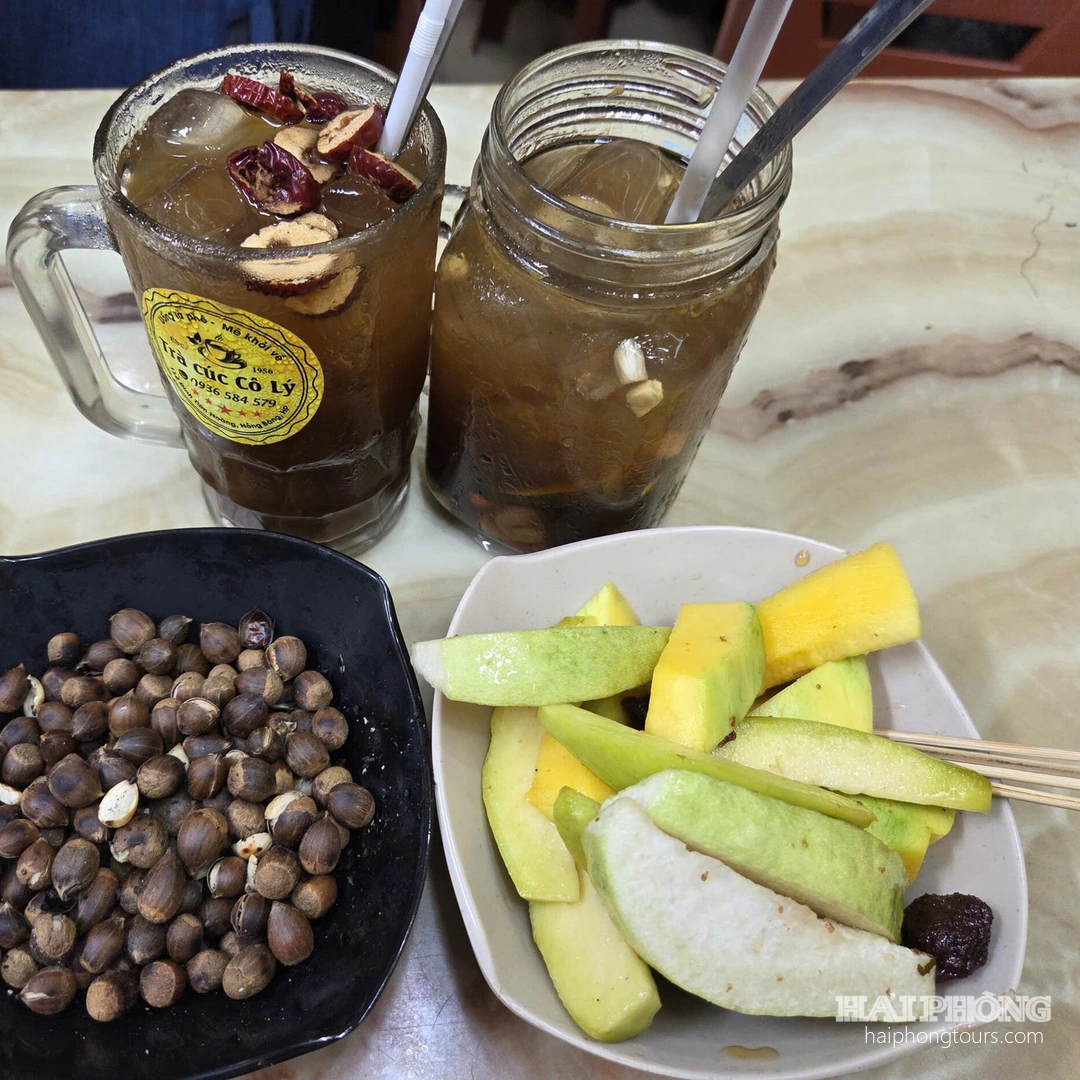
If you would rather spend the evening talking over a drink, compare a chrysanthemum-tea stop on Phan Boi Chau Street. Tea and sui din are different experiences; you do not need to squeeze both into a short visit.
Is it the same as Hanoi’s banh troi tau?
They are closely related in the eating experience: filled glutinous-rice dumplings served in a sweet, warming liquid. Use that comparison to understand what you are ordering, not as a promise that every shop uses the same filling, dumpling size or syrup. In Hai Phong, ask for sui din and check the day’s options at the counter.

Do you need to visit in winter?
No. Sui din is strongly associated with cooler weather, but you can also find it outside winter. In warm weather, decide whether you actually want a hot ginger dessert and check that your chosen shop is serving it that evening. The useful planning decision is the shop and time of day, not reserving a whole trip for a particular season.
Useful guides for your trip
Would you like help fitting this experience into your trip? Contact us with your travel dates, starting point, available time and group size. Tell us about walking limits or special interests so we can suggest a practical itinerary.