
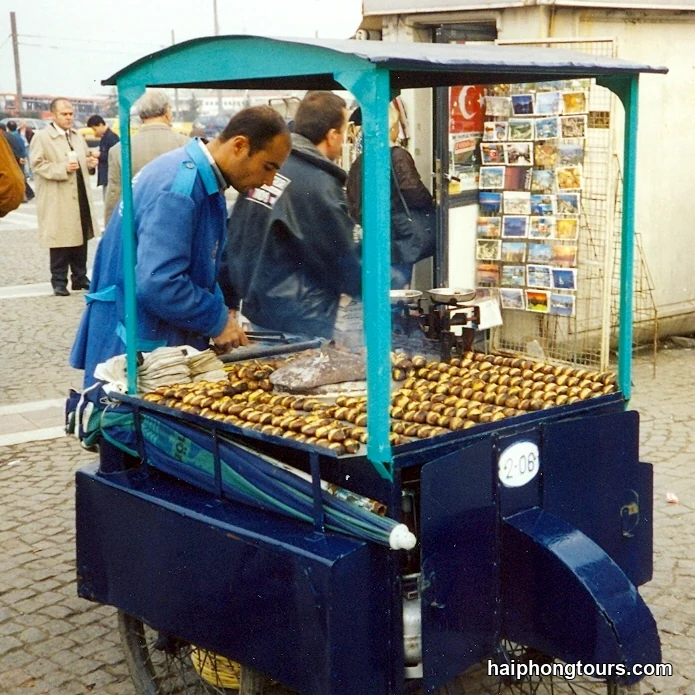
Order hạt dẻ rang for roasted whole chestnuts in Hai Phong. They are a warm, soft-centred snack to peel as you eat, with a starchy texture and gentle sweetness. For a takeaway bag, start with a named seller and a stated weight. For a longer break, combine a plate with the city’s chrysanthemum tea, trà cúc.
Two specific takeaway addresses
| Seller | Listed address | Foody-listed selling window |
|---|---|---|
| Sơn Dương – Bánh Hạt Dẻ & Hạt Dẻ Rang | 19 Nguyễn Công Trứ | 07:00–20:00 |
| Hạt Dẻ T&T | 23 Nguyễn Đức Cảnh | 18:00–22:00 |
Both names have ShopeeFood listings. These are platform-listed locations and hours, not a promise that a fresh batch is available throughout the day. Use the exact seller name in the app to see whether orders are currently accepted; neither listing provides a dependable public shop phone.
Sơn Dương’s name includes both whole chestnuts and chestnut pastries. Select the product carefully: a photograph of a round baked cake is not a portion of nuts in their shells. At either seller, look for the weight attached to the item before comparing prices or placing a delivery order.
The platforms show broad spending ranges, but these do not establish the price of 100 grams or one particular bag. Delivery charges and offers can also change the final checkout total. For hotel delivery, give the street address and reception handover point, then keep the order screen available until the bag arrives.
A seated alternative with chrysanthemum tea
The city’s Foodtour list gives 15–17 Phan Bội Châu for Trà Cúc, with contact numbers 0786 736 866 and 0774 351 032.
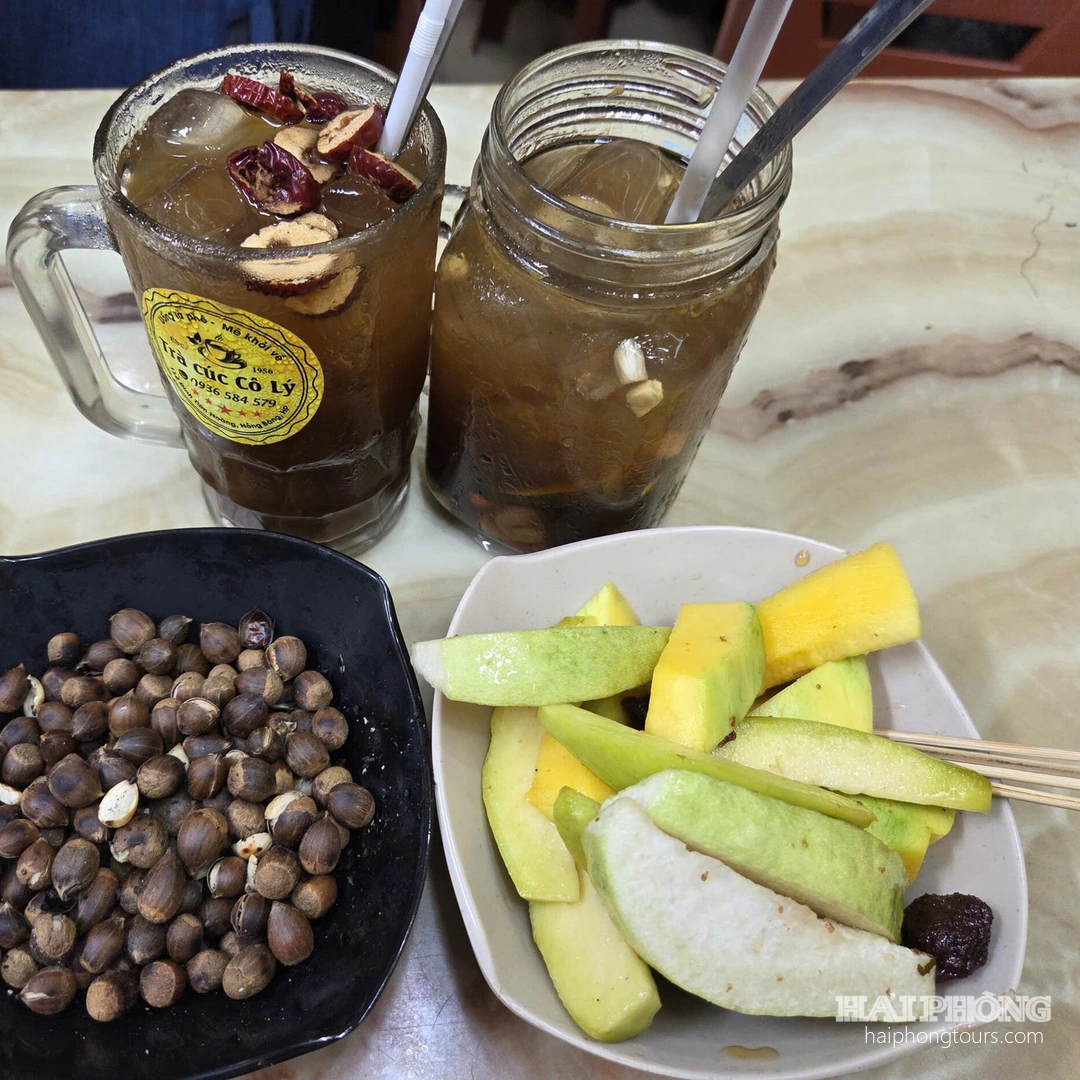
This is a useful contact when you want a table rather than takeaway. Ask whether roasted chestnuts are available and whether they are priced per plate or by weight. One shared plate and an individual drink for each person is a straightforward first order; a larger autumn snack tray makes more sense if you also want fruit or sweets.
Hai Phong’s trà cúc commonly combines tea, dried chrysanthemum, liquorice and kumquat. The result can be bitter, sweet and tart together. A September 2026 local report put a cup at VND 25,000–30,000; use that as a dated city reference, not a quoted price at every cafe. Request ít đường for less sugar or ít chua for less sourness if that is your preference.
Understand the names before ordering
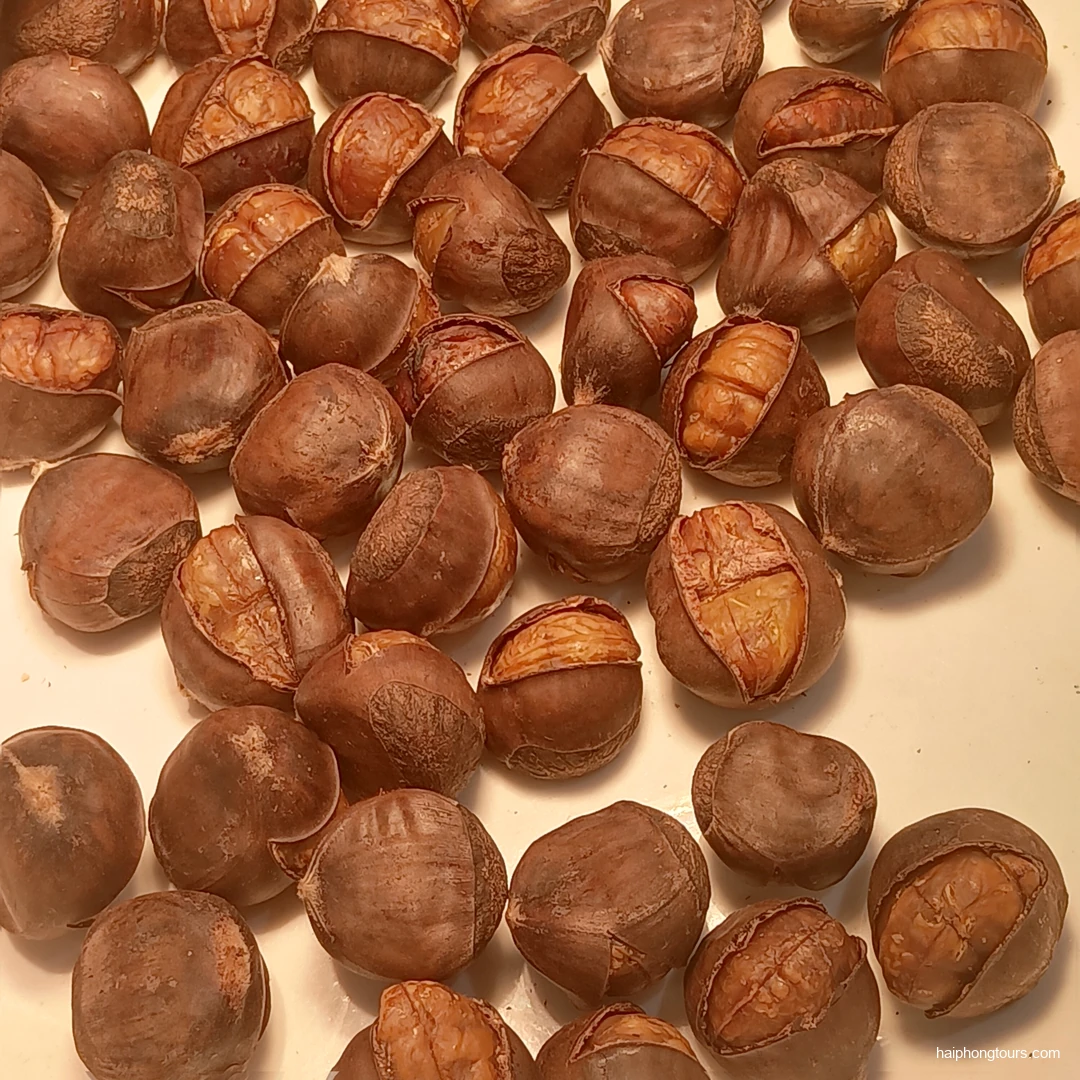
- Hạt dẻ rang: roasted chestnuts. The name alone does not specify the seasoning.
- Hạt dẻ rang muối: salt-roasted chestnuts. Ask about any other coating if you want a simple preparation.
- Hạt dẻ rang bơ đường: chestnuts prepared with a buttery, sweet coating. The fat used may vary.
- Bánh hạt dẻ: chestnut-filled pastry. This has a pastry exterior and should be compared by piece or box.
- Hạt dẻ cười: pistachios, a different nut. The extra word cười changes what you are ordering.
Whole roasted chestnuts require peeling, so they suit a relaxed stop more than eating while carrying luggage. The hard outer shell and thin inner skin are removed before eating the kernel. Let an especially hot batch cool enough to handle; keep the empty shells together for disposal.
Season, origin and the price difference
There is a chestnut-growing area within the wider Hai Phong municipality: the Chí Linh hills, including Nguyễn Trãi Ward. Local reporting on 24 October 2026 described harvesting around the ninth lunar month. It noted relatively small forest chestnuts and a local preparation that adds a little water during roasting before continuing to turn the nuts as the water evaporates.
The same report quoted VND 30,000–40,000 per kilogram in the harvest and trader-buying context. That is a raw-crop reference, not the price of a ready-to-eat city snack. Sorting, roasting, seasoning and retail portions make it unsuitable for calculating what a cafe should charge.
A seller’s use of “Trùng Khánh” is a product-origin claim, not proof that every nut comes from that area. If origin matters, ask where the batch was sourced. For a trip focused on the trees and harvest, see our separate Trung Khanh chestnut garden guide.
Weights and a useful small order
In everyday Vietnamese food shopping, one lạng means 100 grams; two lạng are 200 grams, and nửa cân is half a kilogram. A quoted kilogram price is ten times the equivalent 100-gram rate. Keep that conversion separate from a fixed-price plate whose weight is unspecified.
For a first taste, ask for 100 grams or the smallest available plate. Check whether the weight includes the shells, as whole chestnuts normally arrive unpeeled. A larger bag may suit several people, but it also means more peeling and less room for other food-tour stops.
- “Cho tôi một lạng hạt dẻ rang.” Please give me 100 grams of roasted chestnuts.
- “Túi này bao nhiêu gam?” How many grams are in this bag?
- “Loại này có bơ hoặc đường không?” Does this version contain butter or sugar?
- “Cho tôi xem giá một đĩa.” Please show me the price of one plate.
If you have an allergy, explain it before choosing a prepared batch. Asking for no extra topping will not remove ingredients already used in roasting. Buy an amount you intend to eat soon, and do not treat an unlabelled warm takeaway bag as a long-life packaged souvenir.
Fit the snack into a city outing
Choose takeaway when you already have a meal planned, and choose tea with chestnuts when sitting down is part of the experience. Leave time to peel the nuts and finish your drink instead of adding the stop immediately before a train departure. There is little advantage in crossing the city solely for an unconfirmed street cart.
For the rest of the day, use our Hai Phong city sightseeing guide to pair food stops with the centre’s walking areas. Contact Hai Phong Tours if you would like help arranging a food-focused itinerary around your arrival, departure and dietary needs.