
Choose Cua Van if you want the clearest introduction to Ha Long Bay’s former floating fishing culture. Choose Vung Vieng for a small-boat excursion framed by limestone scenery on a Bai Tu Long Bay route. Choose Viet Hai if you prefer cycling or an electric-cart ride through a living land village on Cat Ba Island.
These are not three versions of the same attraction. Cua Van and Vung Vieng preserve the memory and traditions of communities whose households were relocated ashore; Viet Hai is a residential village on land. Your best choice therefore depends on whether you value cultural interpretation, waterside scenery or an active village visit.
Quick comparison: Cua Van, Vung Vieng or Viet Hai
- Cua Van: fits travelers who want artifacts, stories and demonstrations connected with the bay’s fishing culture, combined with a kayak or locally rowed boat.
- Vung Vieng: fits travelers choosing a Bai Tu Long Bay cruise and prioritizing a scenic rowing or kayaking excursion around a former fishing community.
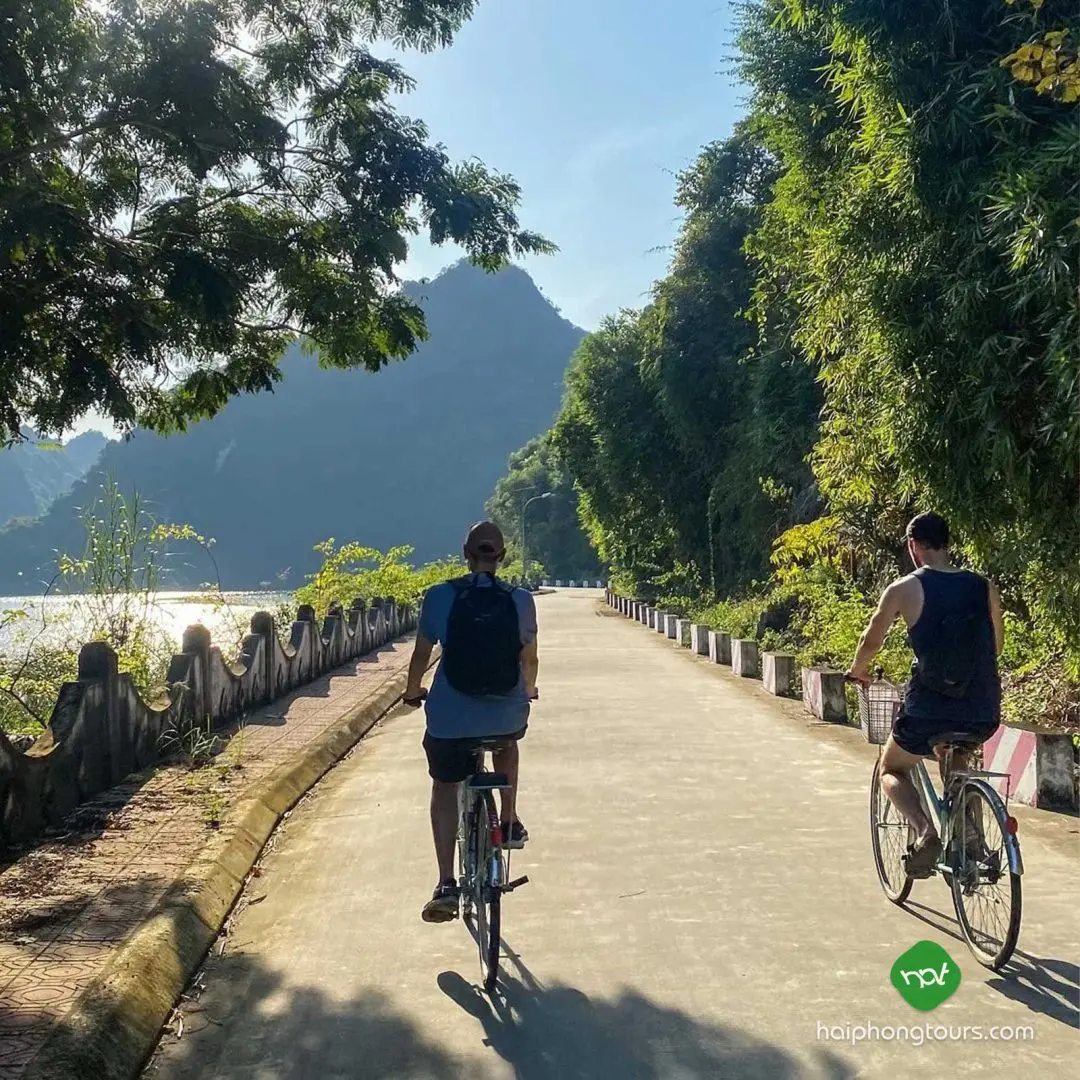
- Viet Hai: fits travelers who want to leave the cruise vessel, move inland and see a present-day Cat Ba village by bicycle, electric cart or on foot, depending on the operator.
If mobility or energy is a concern, the activity format matters as much as the place. A rowed boat may require less exertion than kayaking, while Viet Hai usually involves more transfers and time on land.
First, understand what “village stop” means
Ha Long Bay’s floating households were moved to mainland resettlement areas in 2014. Cua Van and Vung Vieng remain important cultural and scenic sites, but you should not expect a fully inhabited floating neighborhood operating as it did before relocation.
At these two stops, former residents may work in tourism, row boats or help present fishing traditions. The experience is a combination of preserved culture and a managed visitor excursion. Viet Hai is different: it is a living land community within the Cat Ba landscape, and cruise guests normally reach it from a pier before continuing inland.
Cua Van: for structured cultural interpretation
Cua Van is associated with the Floating Cultural Center on Ha Long Bay’s official Route 3. Its displays preserve photographs, objects and information about the material and spiritual life of local fishing families. Some visits also include traditional songs, craft demonstrations or an introduction to fishing equipment, although the exact program can vary.


Rowboats, floating structures and limestone scenery at Cua Van.
The water excursion is usually by kayak or a small boat rowed by a local operator. This lets you see the surrounding limestone walls and sheltered water while keeping the cultural center as the visit’s main point of reference.
Choose Cua Van when
- You want context about how fishing families lived, worked and maintained traditions on the bay.
- You prefer a structured cultural stop rather than a village name used only as a scenic waypoint.
- You want kayaking or a rowed-boat ride without adding a bicycle excursion on land.
Consider the trade-offs
Cua Van is an interpreted heritage experience, not an unscripted visit to an occupied floating settlement. A short itinerary may allow only the boat activity or a limited visit, so check whether the cultural center itself is included and how much time is scheduled there.
Vung Vieng: for a scenic Bai Tu Long excursion
Vung Vieng is on the bay authority’s Route 4 and is commonly included in cruises marketed for Bai Tu Long Bay. A natural rock arch marks the approach, and the excursion usually continues by locally rowed boat or kayak through the surrounding water.
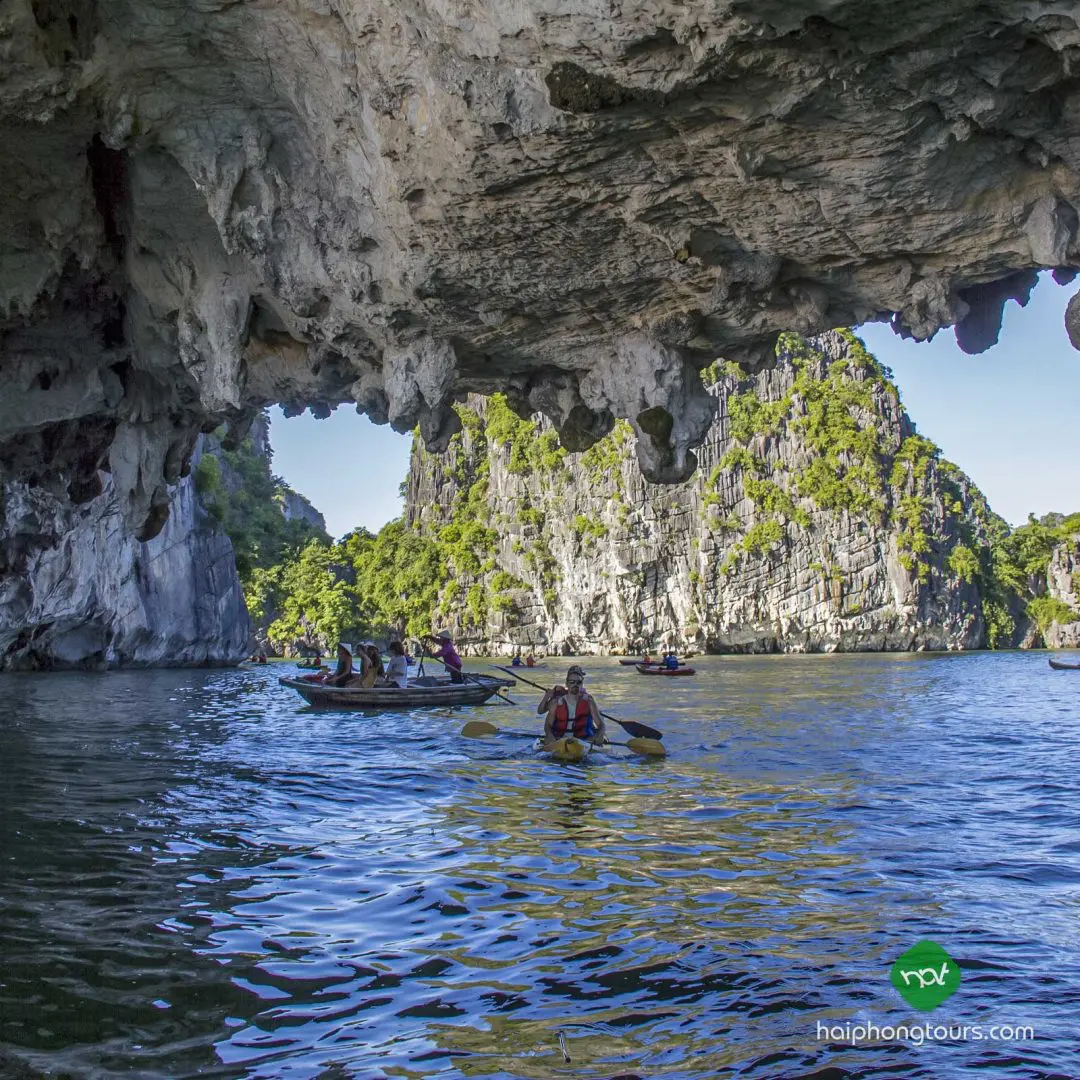
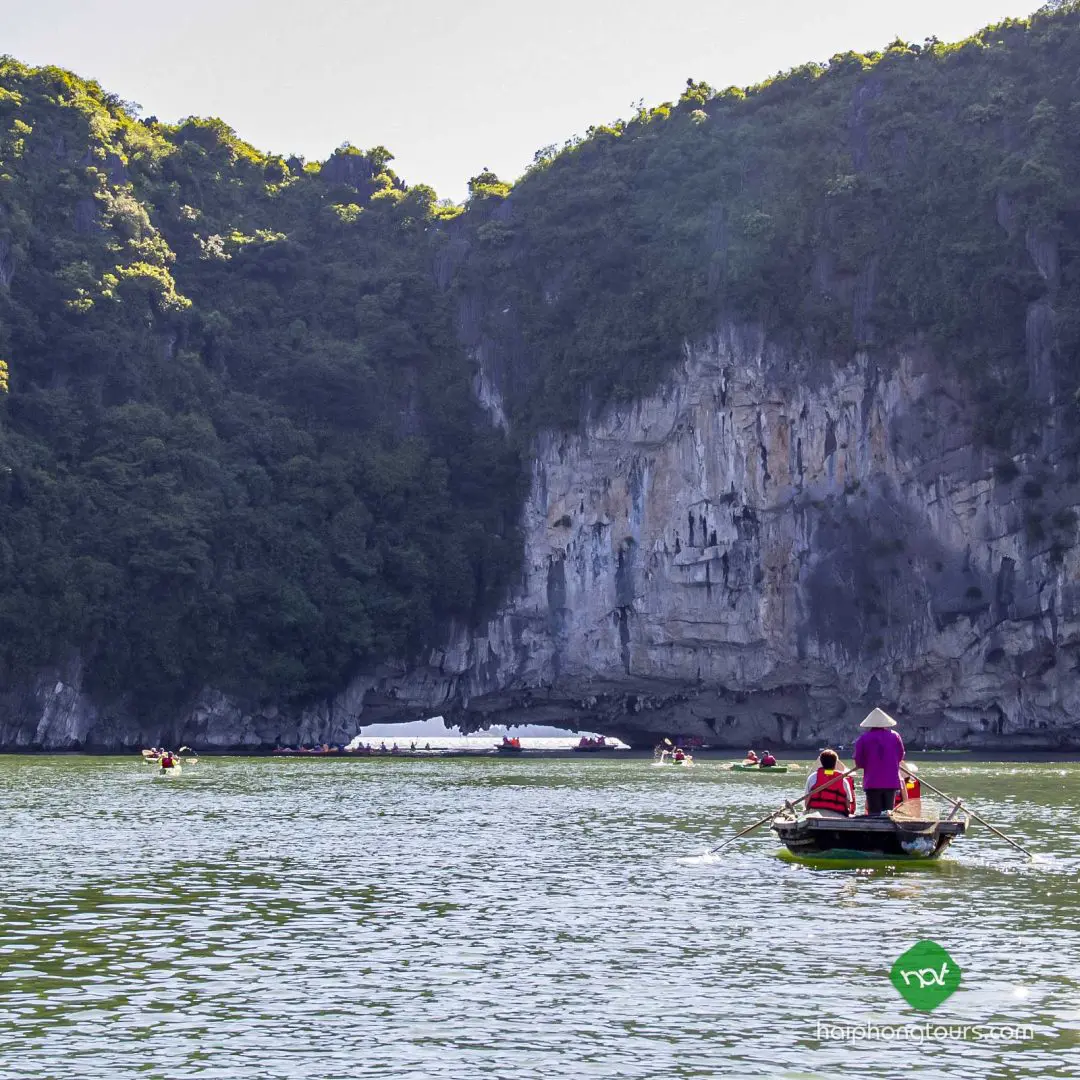
Small boats moving through limestone scenery at Vung Vieng.
The area was once home to a floating fishing community. Today, operators may introduce fishing customs, aquaculture or pearl cultivation, but the emphasis depends heavily on the itinerary. When a cruise lists only a rowing or kayaking loop, expect the landscape and time on the water to be more prominent than a museum-style cultural program.
Choose Vung Vieng when
- Your preferred ship already follows a Bai Tu Long Bay route.
- You want a rowed-boat or kayak excursion through a recognizable natural gateway.
- You are comfortable with a lighter cultural introduction than Cua Van may provide.
Consider the trade-offs
Vung Vieng is sometimes spelled Vong Vieng or Vông Viêng in cruise materials. More importantly, some operators replace it with another stop on particular dates or seasons. Confirm the actual excursion for your sailing instead of relying on a route summary or an undated brochure.
Viet Hai: for cycling and village life on land
Viet Hai is a land village on Cat Ba Island, surrounded by the national park and biosphere-reserve landscape. It is not a floating village. The community maintains residential, farming and fishing traditions, so the visit feels different from the preserved floating-culture sites in Ha Long Bay.

A cruise excursion often uses a smaller day boat to reach Viet Hai’s pier, followed by a bicycle ride toward the village. Some operators offer an electric cart for guests who do not want to cycle. The distance, gradient, walking component and availability of an alternative vehicle are operator-specific, so verify them before booking.
Choose Viet Hai when
- You prefer an active shore excursion to a boat-only visit.
- You want to see lanes, fields and everyday land-based community spaces.
- You are selecting a Lan Ha Bay or Cat Ba itinerary with enough time for a separate day-boat outing.
Consider the trade-offs
Viet Hai normally has more moving parts: transfer to a smaller vessel, disembarkation at a pier and onward transport by bicycle, electric cart or foot. Travelers with limited mobility should ask about boarding steps, vehicle availability, road conditions and the amount of walking. Do not assume that every operator provides an electric cart.
Choose by experience, not by the word “village”
- For the clearest heritage explanation: choose Cua Van and verify that the Floating Cultural Center is part of the visit.
- For scenery and time in a small boat: choose Vung Vieng and confirm whether the excursion is rowed or self-paddled.
- For cycling and a living land community: choose Viet Hai and check the transport alternatives.
- For lower physical effort: ask for a locally rowed boat at Cua Van or Vung Vieng. At Viet Hai, request written confirmation of an electric-cart option.
- For photography: each has a different setting, but ask permission before taking close portraits of residents, workers or performers.
Trip length alone does not settle the choice. Current operators place village excursions on different one-day, two-day and three-day programs, and longer cruises may still change a stop for weather or operational reasons. The named activity on your exact departure is more reliable than a general claim that a certain duration “always” includes a village.
How to verify the stop before you book
- Look for the exact place name. “Fishing village,” “local village” or “community visit” is not specific enough.
- Check what the visit includes. A cruise may pass the area, stop for a rowed boat, offer kayaking or enter a cultural center. These are different experiences.
- Confirm the dated itinerary. Ask whether your departure visits the named stop and whether seasonal substitutions apply.
- Check the activity alternative. If you will not kayak or cycle, confirm a rowed boat or electric cart rather than assuming one will be available.
- Ask about transfers and walking. This is particularly important at Viet Hai and for anyone who finds small-boat boarding difficult.
- Read the change policy. Weather, port instructions and operating conditions can alter the sequence or replace an excursion.
Two current route-specific examples
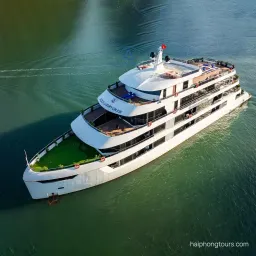
If Vung Vieng is your priority, the Renea Cruise 3-day, 2-night itinerary names a Vung Vieng boat ride or kayaking excursion on day two. For Viet Hai, the Aqua Luxury Cruise 3-day, 2-night itinerary names the village and a cycling activity.
 Overnight Cruise
Bai Tu Long Bay
Renea Cruise 3 day 2 night tour
 Overnight Cruise
Lan Ha Bay
Aqua Luxury cruise 3 day 2 night tour
These examples show why the exact itinerary matters; they do not make the stops universal across all cruises of the same length. Reconfirm the route and included activity for your departure before paying.
Common booking mistakes to avoid
- Choosing by bay name alone: ships using the same bay label can offer different village stops.
- Treating a pass-by as a visit: a photo opportunity from the vessel is not the same as boarding a small boat or going ashore.
- Expecting present-day floating household life: Cua Van and Vung Vieng now present the setting and heritage of former communities.
- Assuming kayaking is compulsory: a rowed boat may be available, but it must be confirmed.
- Assuming Viet Hai is effortless: an electric-cart alternative is operator-dependent, and transfers may still require steps or uneven surfaces.
Frequently asked questions
Is Viet Hai a floating village?
No. Viet Hai is a land village on Cat Ba Island. Cruise guests normally arrive at a pier and continue inland, often by bicycle or electric cart. It should not be treated as interchangeable with Cua Van or Vung Vieng.
Are Cua Van and Vung Vieng still inhabited floating villages?
Not in the former residential sense. Fishing households were relocated ashore in 2014. The sites now preserve cultural memory and support visitor activities, often with former residents participating in tourism services.
Can one cruise visit all three?
Some longer specialty itineraries may combine more than one community stop, but this is not standard on short cruises. If seeing multiple places matters, require an itinerary that names each stop instead of assuming a broad Ha Long, Bai Tu Long or Lan Ha route will include them.
Which stop is better for a traveler who does not kayak?
Cua Van or Vung Vieng can work when the operator offers a locally rowed boat. Viet Hai can work when an electric cart is confirmed. None is automatically step-free, so ask about transfers, boarding and walking as well as the main activity.
Does a three-day cruise guarantee a village visit?
No. A longer cruise creates more time for excursions, but the route, vessel, season and operating conditions still determine the stop. Compare the dated daily program, not only the number of nights.
The practical choice
Cua Van fits travelers who want the strongest cultural framework, Vung Vieng suits those prioritizing a scenic small-boat outing on a Bai Tu Long route, and Viet Hai suits travelers who want an active visit to a living land community. Whichever you choose, get the exact stop, transport method and substitution policy confirmed for your sailing date.
Useful guides for your trip
Would you like help fitting this experience into your trip? Contact us with your travel dates, starting point, available time and group size. Tell us about walking limits or special interests so we can suggest a practical itinerary.