
Halong Bay usually feels calmer than open sea because thousands of limestone islands break up long stretches of water and shelter many channels and anchorages. On a normal day, most travelers experience gentle movement rather than ocean-scale swells.
Calm does not mean motionless. Wind, sudden thunderstorms, wider channels, passing vessels and transfers by tender can all create noticeable movement. If you are prone to motion sickness, you can still enjoy Halong Bay, but the right cruise format, seating or cabin position and preparation matter more than a promise of “no waves.”
Quick answer: how rough is Halong Bay?
- Typical sheltered sections: often smooth or gently moving, especially between closely spaced islands.
- Wider passages: more exposed to wind and vessel wake, so movement may be easier to feel.
- Main cruise versus tender: the smaller transfer boat can feel livelier than the cruise vessel.
- Bad weather: conditions can change quickly; departures, routes and activities may be delayed, changed or suspended.
- Seasickness risk: usually lower than on an open-ocean journey, but never zero.
If your previous motion sickness was mild, a conventional Halong Bay cruise is often a reasonable choice with sensible preparation. If you have severe vomiting, migraine-triggered motion sickness, balance problems or anxiety about being away from land, discuss the trip with a healthcare professional and choose a plan that is easy to shorten.
Why the water is often sheltered
Wind-generated waves become larger when wind is stronger, lasts longer and travels across a longer uninterrupted area of water. That open distance is known as fetch. Halong Bay’s islands divide the water into passages, coves and basins, reducing the distance over which waves can build in many places.
The effect is local rather than uniform. An island can shield one anchorage from the current wind direction while a nearby channel remains exposed. A cruise may therefore move between very smooth water and a short choppier section during the same itinerary.

Where you are most likely to feel movement
Open channels and exposed turns
Movement can increase when the vessel leaves a sheltered cluster of islands, crosses a wider channel or turns across the wind. This does not mean the whole cruise will be rough. It may be a short part of a longer route.
Harbor departure and vessel wake
Ports and popular routes can be busy. The wake from another vessel may produce a few pronounced rolls even when the surface otherwise looks calm. Keep one hand free on stairs and do not assume a stationary-looking bay makes every deck completely steady.
Tenders, speedboats and small excursion boats
Some cruises board directly at the pier; others use a tender to reach the main vessel. Shore excursions may involve another tender, a rowed boat or a kayak. Smaller craft react more quickly to short waves and wake, so ask about every boat segment rather than judging the trip only by the size of the main cruise ship.
Wind, thunderstorms and tropical weather
Strong wind and local thunderstorms can change conditions rapidly. A clear sky at your hotel does not guarantee the same conditions across the bay later in the day. Port authorities can withhold departure permission, and captains can alter routes or stop water activities when safety requires it.
Treat a weather delay as an operational decision, not a service failure that should be bypassed. Never accept an unofficial departure after licensed boats have been suspended.
Can you get seasick without large waves?
Yes. Motion sickness develops when signals from the eyes and balance system do not agree. Sensitivity varies widely: one traveler may read indoors without difficulty while another becomes nauseated during gentle repetitive movement.
Early signs can include yawning, loss of appetite, warmth, pale skin, cold sweating, headache, dizziness and difficulty concentrating before nausea becomes obvious. Act when these signs begin. Waiting until repeated vomiting makes it harder to recover and harder to absorb an oral medicine.
A calm-water destination reduces one source of motion, but it cannot remove personal susceptibility, vessel vibration, turning, visual tasks or movement on a tender.
Choose the cruise around your tolerance
Day cruise or overnight cruise?
A day cruise limits your total time aboard and returns you to land the same day. This can be the easier first test for someone whose motion-sickness history is uncertain. It is not automatically smoother, because the route and weather still determine movement.
An overnight cruise gives you more time among the islands, a private cabin and a slower overall experience. It also commits you to more hours on the water and can include small-boat excursions. Choose it when the experience is worth the added exposure and you have a workable prevention plan.
Ask where the vessel boards
Confirm whether you walk directly onto the cruise at the port or transfer by tender. Ask how long the tender ride normally takes, whether luggage travels on the same boat and how many small-boat transfers the itinerary requires.
Choose position before choosing luxury level
The middle of a boat generally moves less than the bow or stern, and lower decks generally move less than very high decks. For an overnight cruise, ask for a midship cabin on a lower passenger deck with a window or easy access to outside air. Exact layouts differ, so describe the position you need rather than relying only on a cabin category name.
A large or expensive vessel is not a guarantee of zero motion. Hull design, speed, heading, weather and cabin location all affect what you feel.
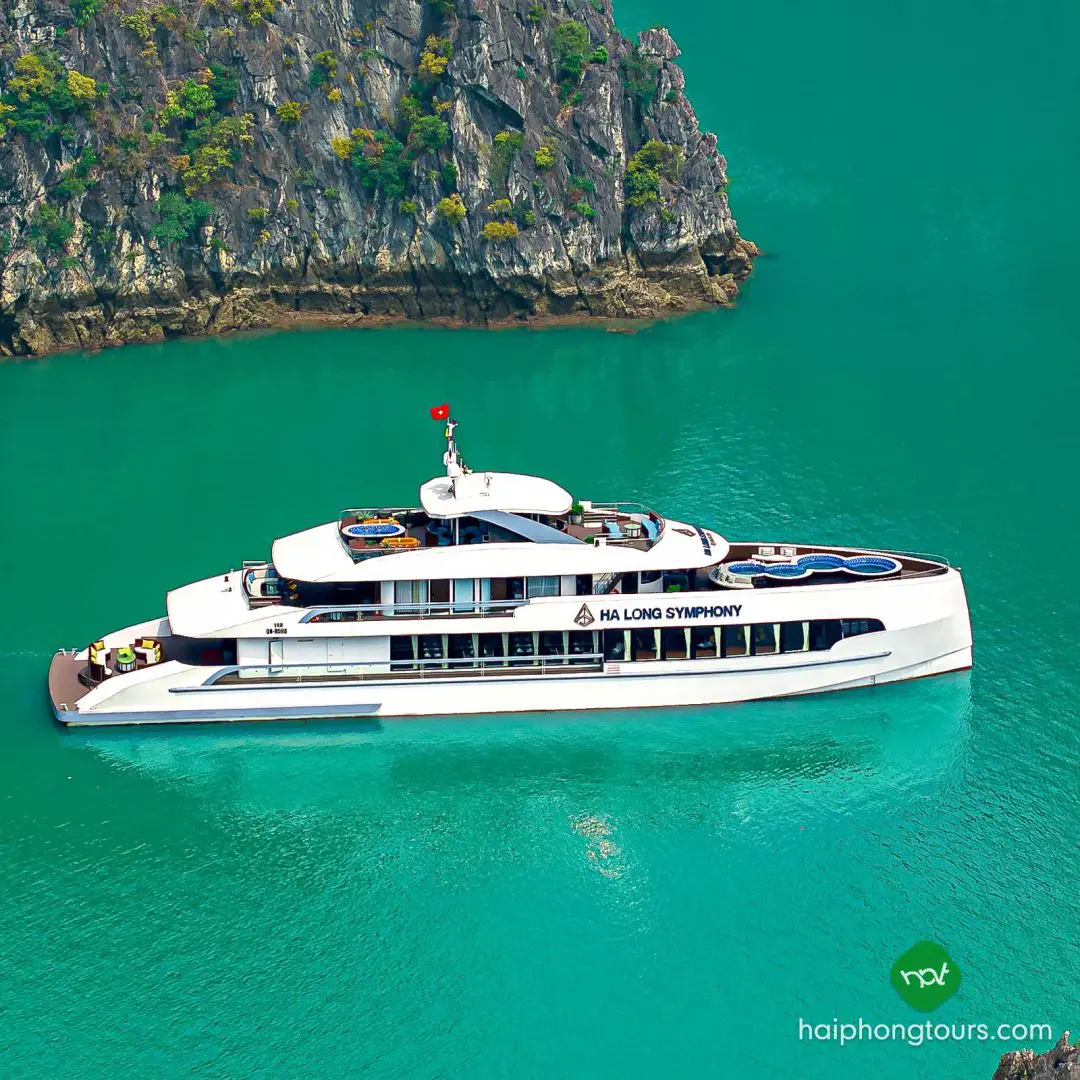
Use the current Halong Bay cruise collection to compare day and overnight options. Before paying, confirm the actual vessel, boarding method, approximate time on the water, cabin position and cancellation terms for the specific departure.
Prepare before departure
- Sleep properly: lack of sleep can make motion sickness worse.
- Eat lightly: avoid a heavy or spicy meal shortly before boarding, but do not begin a long day hungry.
- Avoid alcohol: it can worsen symptoms and interact with medicines that cause drowsiness.
- Pack water: hydration becomes especially important if nausea or vomiting occurs.
- Prepare a small kit: include tissues, a sealable bag, water and any medicine selected with professional advice.
- Tell your companion: agree that you will move to fresh air or skip an activity as soon as symptoms start.
What to do on the boat
- Sit near the middle of the vessel where you can see a stable horizon or distant island.
- Face forward when possible and keep your head supported or relatively still.
- Avoid reading, editing photos, scrolling on a phone or focusing on nearby moving water.
- Use fresh air and slow, controlled breathing. If the crew directs passengers indoors for safety, follow that instruction.
- Move early rather than waiting for strong nausea. Ask the crew for the calmest safe seating area.
- If symptoms intensify, recline or lie down where permitted, close your eyes and reduce head movement.
Do not stand alone on an exposed deck, lean over a rail or rush down stairs when dizzy. Tell the crew; they can identify a safe place to sit and provide the correct waste bag or assistance.
Medication: plan before the cruise
Motion-sickness medicines usually work better when taken before motion begins. The correct product and timing depend on the traveler, trip length, country of purchase, other medicines and medical history. Ask a pharmacist or clinician before travel instead of borrowing another passenger’s tablets.
Effective products can cause drowsiness, dry mouth, blurred vision or other side effects, and some are unsuitable with particular health conditions. A non-drowsy allergy tablet should not be assumed to prevent motion sickness. If a professional recommends a medicine, ask whether you should test it on a normal day before the cruise and whether it affects driving, alcohol use or other planned activities.
Get specific advice for children, pregnancy, breastfeeding, older travelers, glaucoma, urinary-retention risk, migraine, balance disorders or regular medication. Do not improvise a child’s dose or cut a medicated patch.
If symptoms start during the cruise
Stop reading or using a screen, move to the safest midship area with a horizon view, keep your head still and breathe slowly. Sip water if you can. If lying down is available and safe, it may reduce head movement.
Tell the crew early if you are vomiting, cannot keep fluids down, feel faint, become confused or have symptoms that do not match your usual motion sickness. Chest pain, trouble breathing, weakness on one side, severe headache or loss of consciousness needs urgent medical attention rather than being dismissed as seasickness.
Water activities need a separate decision
A calm-looking surface does not reveal current, depth or changing weather. Join kayaking, swimming or a rowed-boat excursion only at the approved place and time, with the required flotation equipment and crew instructions.
If you cannot swim or feel unsteady, a scenic cruise does not require entering the water. Ask whether you can remain safely on the main vessel or choose a crew-operated rowed boat. Boarding a small boat still requires a step between moving surfaces, so confirm assistance before the excursion begins.
When a land-based plan is the better choice
Choose a flexible day cruise instead of an overnight sailing when you want a simple exit at the end of the day. Consider a land-based Halong stay with viewpoints, museums or city activities when prior motion sickness has been severe, medical advice discourages boat travel, or rough-weather uncertainty would dominate the experience.
A traveler who feels well on ferries may still react differently to slow rolling at anchor, while someone who dislikes speedboats may be comfortable on a larger cruise vessel. Use your own history, including the type and duration of motion that caused symptoms.
Questions to ask before booking
- Which vessel is scheduled for this departure, and can it change?
- Does boarding require a tender?
- How many other small-boat transfers are included?
- Can a guest skip kayaking, swimming or a cave excursion and remain safely aboard?
- For an overnight cruise, which available cabins are midship and on a lower passenger deck?
- How are weather changes communicated before pickup and at the port?
- What happens to the booking if authorities delay or suspend departure?
- Is there a fixed onward flight, train or transfer that needs a weather buffer?
Practical verdict
Halong Bay is usually a favorable cruise setting for travelers concerned about open-sea waves. Its island-filled geography often limits wave build-up, but individual routes and weather still matter, and small boats may feel more active than the main vessel.
Choose a day or overnight format that matches your previous symptoms, request a practical position on the vessel, prepare before boarding and respond to early signs. The most useful promise is a clear plan for changing conditions, not a claim that the bay is always flat.