
Visit Hang Market on Sunday morning if you want to see the full weekly fair. This is when plant growers, secondhand sellers, animal traders and local shoppers fill the market grounds and surrounding streets. A weekday visit mainly shows the permanent shops and is a different experience.
Allow 60–90 minutes for a first visit. Hang Market is best for travelers who enjoy plants, practical household objects and everyday local trading; it is less suitable for a tightly timed tour, a smooth wheelchair route or shopping for souvenirs to carry through international customs.
Hang Market visitor essentials
- Vietnamese name: Chợ Hàng
- Area: around Chợ Hàng, Hoàng Minh Thảo and Nguyễn Văn Linh streets in Lê Chân, Hải Phòng
- Best time: Sunday morning, when the weekly fair is at its fullest
- Time to allow: about 60–90 minutes, or longer for serious plant shopping
- Main reasons to go: seedlings, ornamental plants, bonsai, aquarium supplies, animals, farm tools, household goods and secondhand browsing
- What to bring: small Vietnamese-dong notes, a secure bag, drinking water and weather protection
Where is Hang Market?
Hang Market grew from the former Dư Hàng village market and now occupies an urban area near the meeting point of Nguyễn Văn Linh, Chợ Hàng and Hoàng Minh Thảo streets. Sunday trading can spread outside the formal market into nearby streets and lanes. Search maps for “Chợ Hàng, Hải Phòng” and keep the Vietnamese name available for your driver.
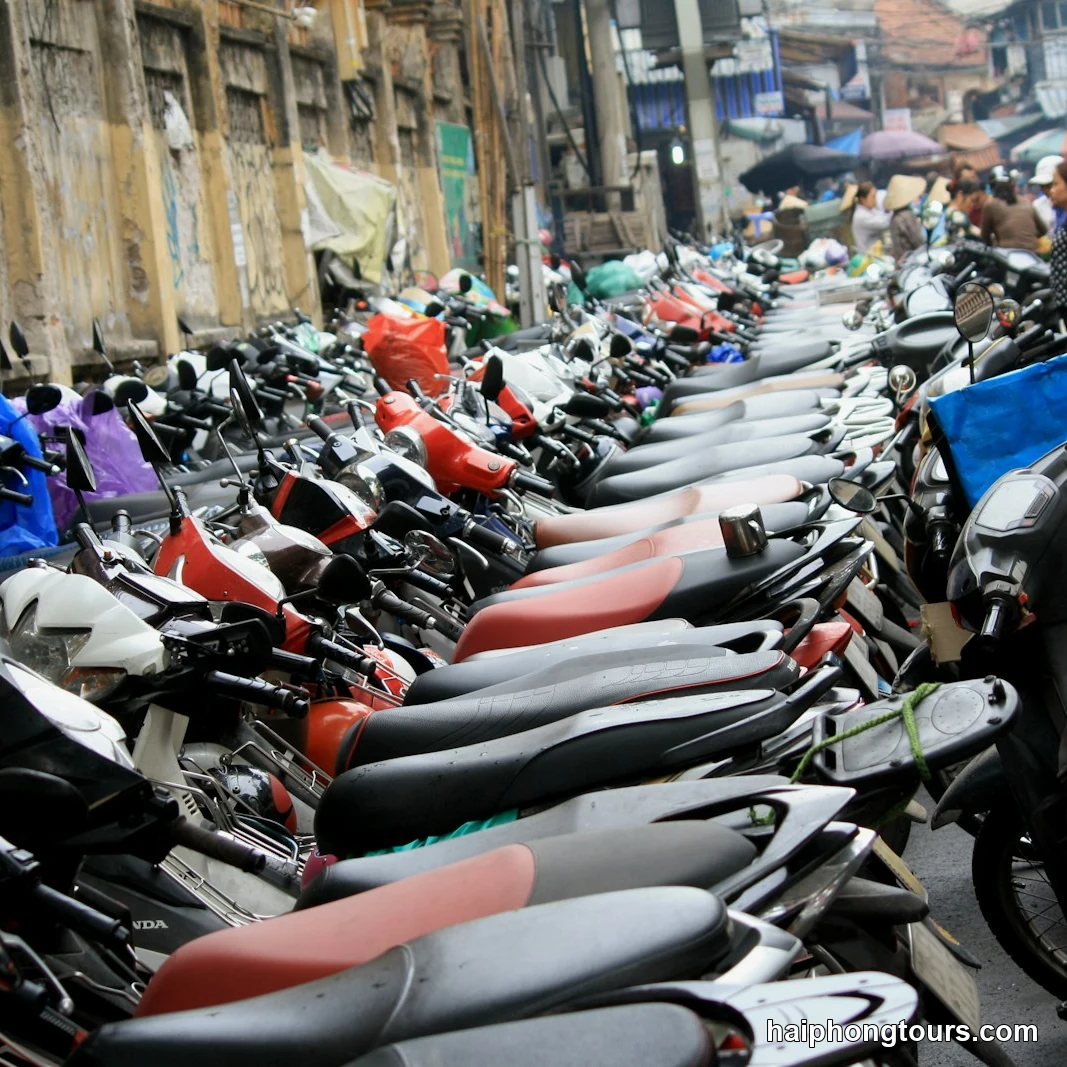
A car does not need to stop at the busiest entrance. On Sunday, choose a safe drop-off a short walk away and agree on an easy landmark for the return pickup. If you arrive by motorbike, use an attended parking area, ask the fee before leaving the bike and keep the parking ticket.
When does the weekly fair take place?
Sunday morning is the dependable choice. Sellers arrive early for the main weekly fair, and activity reduces later in the day. Some traders may set up or sell on Saturday, especially in busy periods, but Saturday should not be treated as a full substitute for Sunday.
There is no need to arrive before dawn as a casual visitor. An earlier morning gives you a wider selection and cooler walking conditions, while a later arrival can mean more traffic and some traders beginning to pack. If a particular nursery, permanent shop or seller is the purpose of your trip, confirm its own schedule rather than applying the fair’s pattern to every business in the area.
What will you find at Hang Market?
Plants, bonsai and seedlings
Plants remain the market’s strongest identity. The selection changes with the season and may include ornamental pots, flowers, fruit-tree stock, vegetable seedlings, orchids, bonsai and gardening supplies. Compare several stalls before buying because size, maturity, pot, growing medium and plant health all affect the price.
Check both sides of the leaves for pests or damage, look at the stem and visible roots, and ask whether the plant needs full sun, shade or frequent watering. If it is going to a local home, confirm whether the quoted price includes the pot and ask the seller to write down care instructions. For a large tree or heavy pot, arrange delivery before paying and record the exact address and charge.
Secondhand goods and old household objects
The secondhand area changes every week. You may see tools, cookware, small machines, speakers, electrical parts, ceramics, furniture pieces and objects that are simply difficult to classify. Browsing is part of the appeal, but age and authenticity are not guaranteed.
Inspect an item in daylight, ask what is included and request a safe demonstration if it is mechanical or electrical. Do not assume an old-looking object is an antique, and do not buy a device without considering voltage, plugs, repairs and the difficulty of returning it. Confirm the final price for the entire item or set before handing over money.
Aquarium fish, birds and other animals
Fish, birds, poultry, pets and animal supplies can appear in different sections of the fair. This part of the market can be crowded, noisy and uncomfortable for visitors concerned about animal welfare. You can avoid it by concentrating on the plant and household-goods areas.
Do not touch, feed or photograph an animal without the seller’s permission. Keep children close, watch for cages and containers at ground level, and wash or sanitize hands after contact with animal areas. A live animal is not a practical tourist purchase and may be subject to transport, health and destination-entry rules.
Farm tools and everyday goods
Traditional agricultural goods help explain why Hang Market is different from a souvenir market. Alongside modern household items, you can encounter baskets, bamboo implements, hand tools and equipment connected with gardening or small-scale farming. These goods reflect the market’s continuing link with the agricultural villages that once surrounded Hai Phong.
How to buy without confusion
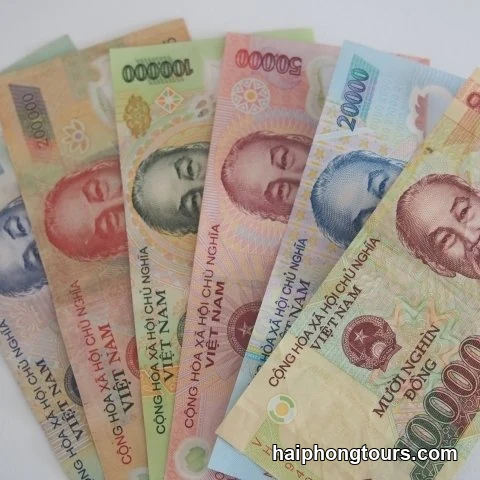
Many transactions are quick and informal. Carry small Vietnamese-dong notes as a backup, point clearly to the exact item and confirm whether the price is for one piece, one pot, a pair or a complete set. A calculator on your phone helps when spoken numbers are difficult to follow.
- “Bao nhiêu tiền?” means “How much?”
- “Một cái” means “one item.”
- “Có giao hàng không?” means “Do you offer delivery?”
- “Bao gồm chậu không?” means “Does that include the pot?”
Bargaining may be possible for some secondhand goods or larger purchases, but do it calmly and accept a refusal. For low-cost seedlings or clearly priced everyday items, a long negotiation wastes time for both sides. Count your change before leaving the stall and keep any seller details needed for delivery.
Should international travelers buy plants or seeds?
Plants, seeds, soil and untreated natural materials can be controlled by the destination country’s biosecurity rules and by airline or transit-country restrictions. A product that is openly sold in Hai Phong is not automatically legal to carry across a border. Soil attached to roots can create an additional problem.
Unless you have checked the rules for every part of the journey and obtained any required documents, treat the plant section as a place to browse rather than a source of international souvenirs. A locally made pot, basket or new household object is usually easier to transport, but baggage size and materials still need checking.
Crowds, weather and accessibility

Sunday activity extends across market lanes, pavements and roadside spaces. Expect uneven surfaces, narrow gaps, parked motorbikes and goods placed close to walking routes. Closed shoes are more practical than sandals, especially after rain or near plant and animal stalls.
A wheelchair user or traveler with limited mobility may find the full fair difficult because there is no single smooth route through every section. A companion can first identify the plant or shop area you need, and a driver can use a quieter edge of the market for drop-off. A compact stroller is easier than a large one, but holding a young child may still be safer in the densest lanes.
Much of the browsing is outdoors. In hot weather, go earlier, carry water and take shade breaks. In heavy rain, the ground and market edges can become less comfortable, so shorten the visit or return on another Sunday rather than trying to cover every lane.
Photography and market etiquette
- Ask before taking a close portrait of a seller, shopper or animal stall.
- Stand to one side before taking a photograph; do not block a narrow sales area.
- Handle plants, tools and secondhand objects only after receiving permission.
- Keep your phone and wallet secure and remain alert to motorbikes and handcarts.
- Do not present the animal or secondhand sections as staged attractions; they are working parts of a local market.
How to fit Hang Market into a Hai Phong day
Make the market your first Sunday stop, then continue to Dư Hàng Pagoda or the city center for lunch and an afternoon walk. The market itself does not need half a day unless you are shopping for plants or secondhand goods. Avoid scheduling a fixed train or flight immediately after the visit because Sunday traffic and the time needed to reach your pickup point can vary.
If this is your first visit to the city, use the Hai Phong travel guide to choose a compatible afternoon rather than trying to combine Hang Market with distant Cat Ba, Do Son or Elephant Mountain in the same short schedule.
For a temple stop after browsing, Pho Chieu Pagoda offers a pond-side One Pillar pavilion and a lotus tower in the Le Chan area. Hai Phong Tours recommends choosing one nearby cultural stop and leaving time for lunch, with access to worship spaces checked on arrival.
Is Hang Market worth visiting?
Hang Market is worth a Sunday-morning visit for travelers interested in plants, local commerce and the contrast between Hai Phong’s urban streets and its former village economy. It is not a polished tourist market, and that is the point: visit with time to browse, carry small cash, buy cautiously and leave live plants, seeds and animals behind unless you have confirmed every transport and border rule.
Useful guides for your trip
Would you like help fitting this experience into your trip? Contact us with your travel dates, starting point, available time and group size. Tell us about walking limits or special interests so we can suggest a practical itinerary.