
The Hanoi Five Gates Train, also called Hà Nội 5 Cửa Ô or The Hanoi Train, is a structured cultural excursion. Its daytime Thang Long–Kinh Bac journey runs from Hanoi Railway Station to Tu Son, includes a shuttle visit to Do Temple, stops briefly at Long Bien and returns to Hanoi. Allow a half-day for the approximately 3.5-hour program plus station arrival and hotel transfers.
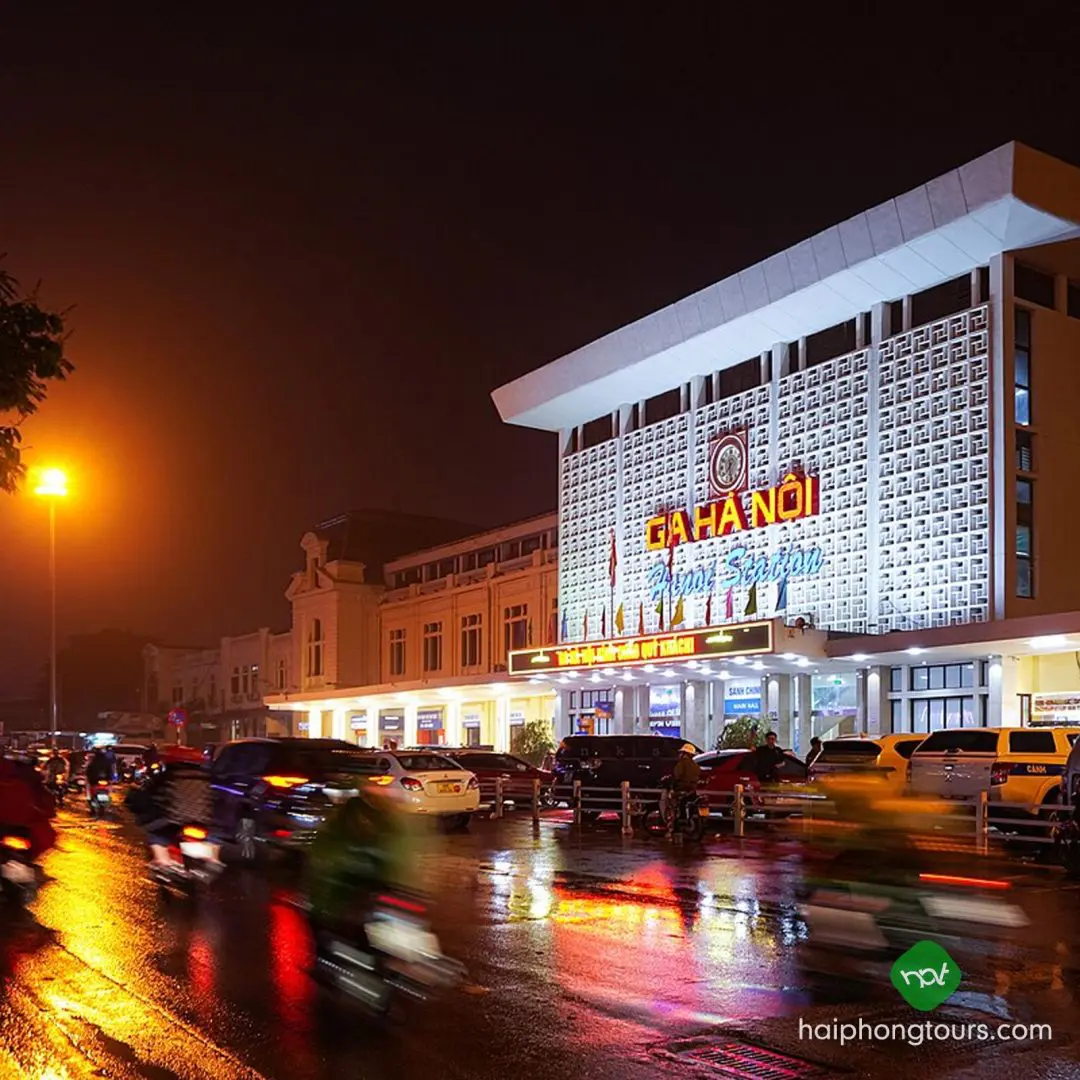
Choose it when the train ride, designed carriages and coordinated cultural activities are the attraction. For a longer temple visit or time to explore Dinh Bang independently, use our Do Temple and Dinh Bang guide instead. The excursion follows a shared timetable, so you cannot stay behind and rejoin a later train at will.
What the Five Gates name means
The five names belong to the carriage themes: O Cau Den, O Quan Chuong, O Cau Giay, O Cho Dua and O Dong Mac. They refer to Hanoi’s historic gates. The name does not describe five gate stops along the route.
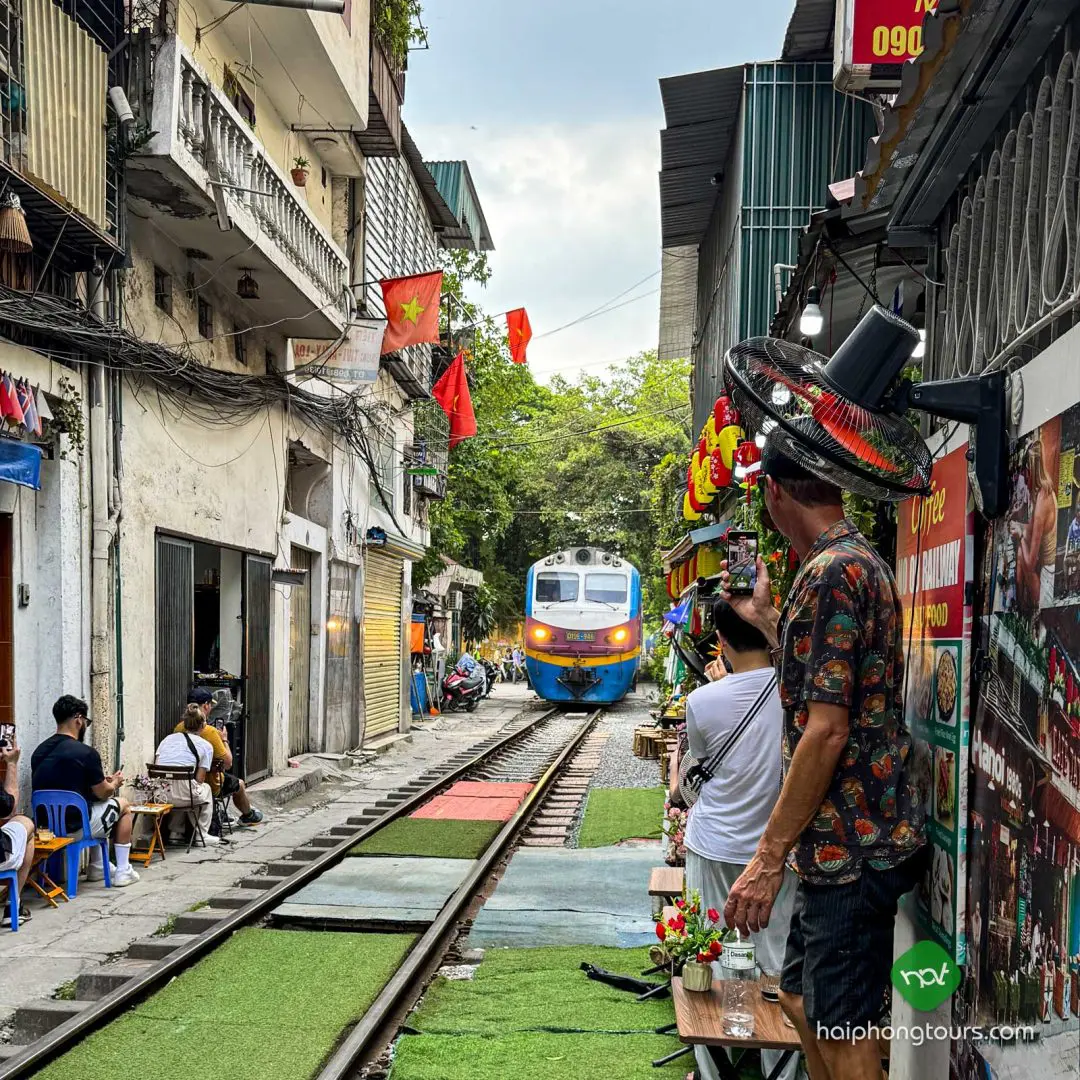
The train has five two-level passenger coaches and two dedicated photography spaces. Its interiors and onboard arts program form part of the experience, alongside the view from the windows. It is separate from watching a train at Hanoi Train Street; a cafe visit there is not a ticket for this excursion.
The daytime route in practical order
| Stage | What happens | What you need to do |
|---|---|---|
| Hanoi Station | Start at 120 Le Duan; the published meeting instruction is Gate 1C | Bring matching identification and follow the booked departure |
| Train to Tu Son | Rail journey and onboard cultural setting | Use your assigned place and follow crew directions for moving around |
| Do Temple | Included shuttle from Tu Son and about one hour for the temple program | Stay with the group and know the shuttle return time |
| Long Bien Station | A short scenic stop of around 20 minutes | Keep to permitted areas and return by the crew’s boarding call |
| Hanoi Station | Return to the starting station | Allow margin before the next reservation or transport connection |
The operator publishes 08:00 and 13:30 departure times on dates in its monthly calendar. Do not assume both departures run every day. Select an operating date and time before choosing a particular carriage or making plans around the expected return.
A morning departure leaves room for a relaxed lunch and afternoon in Hanoi. An afternoon departure suits a slower start, but you should eat lunch first and avoid a tightly timed early-evening booking. In both cases, reserve more than the advertised train-program duration in your personal itinerary.
What the Bac Ninh stop adds
Do Temple provides the historical setting for the journey: the Ly dynasty and the Kinh Bac cultural region. The program includes a guided introduction and activities associated with quan ho singing, Dong Ho prints and phu the cakes. The visit is an introduction to that heritage, with the timing controlled by the excursion.
A short print or cake activity does not mean you have toured a full production workshop or visited Dong Ho village. If traditional performance is your main interest, our northern Vietnam traditional-music guide helps you plan a more focused experience around it.
Ask which languages are supported on your departure if detailed English explanation matters to you. Enjoying a musical presentation does not require the same language support as following a historical tour. It is better to establish that distinction before purchasing than to expect a private guide within a shared program.
Carriages, levels and published price references
The operator’s public program examples have used the following fare structure. They are useful references for comparing seat categories, not a live quotation for every departure:
| Category in the published examples | Reference fare | What to examine on the seat plan |
|---|---|---|
| Regular lower level | 550,000 VND | Actual seat position and boarding access |
| Regular mezzanine or upper level | 650,000 VND | Stairs, seat layout and whether your group sits together |
| VIP O Cho Dua carriage | 750,000 VND | The specific place and inclusions on the selected departure |
Read the final price in the operator’s booking system for your date and passenger category. Spring-program articles or promotional images do not establish a current fare. Compare the complete booking, including the assigned seat, rather than choosing a carriage solely from a photograph.
For companions, inspect the seat numbers together before payment. One transaction does not necessarily place everyone in the same row or level. A lower-level seat may reduce stairs within the coach, but it does not establish step-free access through the station, shuttle and temple.
Inclusions and meals
The daytime program includes the return rail journey, Tu Son–Do Temple shuttle, listed cultural activities and a Hanoi food gift. Personal shopping is separate. Treat the gift as part of the experience, not a guaranteed replacement for a full lunch.
Eat breakfast before the morning departure or lunch before the afternoon departure. Discuss dietary requirements before booking and bring any essential personal food permitted by the operator. A shared cultural food offering may not have a suitable substitution for every allergy or diet.
Carry a small day bag, water as permitted and a compact rain layer for the temple stop. Leave large suitcases at your accommodation when practical. You will move between train, platform, shuttle and temple, so a lightly packed visit is easier to manage.
Booking rules and children
The standard policy effective 1 October 2026 allows up to 10 individual tickets per transaction, with a 10-minute seat hold. Have passenger details and agreed seat choices ready. For larger groups, ask the operator how to coordinate bookings before paying for separate batches.
One child under three may share each accompanying adult’s place free; a second under-three child with that adult requires an adult-priced ticket. Other concessions should be confirmed in the selected fare. Do not calculate a child or senior reduction from an older promotion.
Changes and cancellation
| Individual-ticket cancellation timing | Published charge |
|---|---|
| At least 15 days before departure | 10% |
| At least 7 days, but less than 15 days | 20% |
| At least 72 hours, but less than 7 days | 30% |
| Less than 72 hours | No refund |
A passenger name can be changed once, at least 12 hours before departure, through the ticket counter or hotline 1900 2695, for 50,000 VND per ticket. A wrong date or journey requires the applicable cancellation-and-rebooking process. Group contracts and special offers can have different conditions; accompanying services may add cancellation charges.
This makes the train better suited to a settled Hanoi itinerary than a speculative booking immediately after a potentially delayed arrival. Keep the issued confirmation and support contact offline. The operator has warned about impersonating sales pages, so begin with The Hanoi Train’s own booking channel or an identifiable authorized seller.
Boarding at Hanoi Station
The daytime program asks passengers to be at Gate 1C at least 15 minutes before departure with identification matching the electronic ticket. For an international visitor, keep the original passport ready. Treat 15 minutes as the minimum reporting instruction, then allow additional time to reach and find the correct entrance.
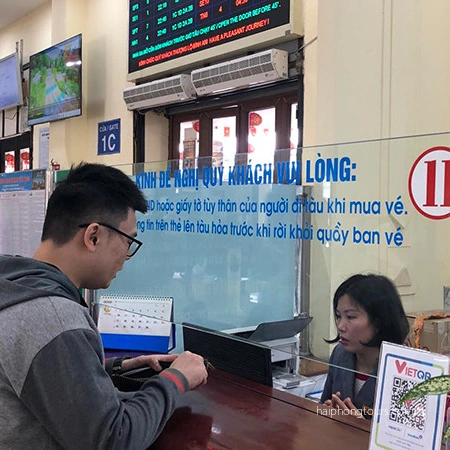
Long Bien appears in the itinerary as an intermediate stop; it is not the published starting point. Our Hanoi Railway Station guide explains the road approaches, ticket fields and checks before boarding.
For someone who has difficulty with steps, ask about the entire route before paying: train boarding, carriage stairs, toilet access, shuttle boarding and the temple paths. Explain the actual assistance needed. A seat-category name alone cannot answer those questions.
Use the Long Bien stop as intended
Listen for the crew’s return time and remain in the areas they permit. A short stop is enough for the organized scenic pause, not an independent bridge crossing. Keep off the railway tracks and avoid wandering away in search of a particular photograph.
If you want a longer walk, plan a separate visit using the Long Bien Bridge guide. That gives you time to assess the pedestrian route and river views without a waiting excursion train.
Daytime excursion or Hanoi by Night?
The Hanoi Train also markets an evening product under Hanoi by Night or Dem Ha Noi. Confirm its own route, schedule and inclusions. The daytime Do Temple visit and 3.5-hour program should not be assumed to apply to an evening ticket.
For a first visit, choose the daytime journey if the Bac Ninh temple stop and daylight views are your main reasons for traveling. Choose an independent outing if you want a long craft workshop, several temple visits or control over how long you remain in each place.
Our Hanoi sightseeing guide helps fit the excursion into a wider stay. For a transfer to the station or onward northern Vietnam planning, contact Hai Phong Tours with the booked departure, pickup address, passenger count and luggage.