
Hanoi’s 2026 low-emission-zone pilot is not a blanket ban on every petrol motorbike or car inside Ring Road 1. From July 1 through December 31, 2026, the pilot focuses on two areas in Hoan Kiem Ward. The clearest current prohibition is in Area 1, where all road vehicles, including motorbikes and cars, are barred from 7:00 p.m. to midnight on Friday, Saturday and Sunday.
If your hotel, restaurant or pickup point is inside the controlled streets, plan to finish the final section on foot and meet the vehicle beyond the active barrier. Outside the stated low-emission-zone hours, existing pedestrian-street closures, events and police traffic controls can still make access more restrictive than a map route suggests.

The practical rule for your visit
- Friday, Saturday and Sunday, 7:00 p.m.-midnight: all road vehicles are prohibited in Area 1, except legally defined priority vehicles.
- At other times: do not assume unrestricted door-to-door access. Pedestrian streets, temporary events, signs and police directions still control the actual road.
- Across Area 2: the 2026 pilot encourages lower-emission travel and restricts certain large passenger and goods vehicles, but it does not create a blanket petrol-car or petrol-motorbike ban for ordinary travelers.
- From January 1, 2027: the controlled area and mandatory vehicle restrictions are scheduled to expand, so advice written for late 2026 should not be reused without a fresh check.
The street sign, barrier and instruction in front of you take priority over a saved map. A navigation app may calculate a route through a road that has just closed for a walking zone, event or traffic operation.
Where Area 1 and Area 2 are
Area 1 is the core around Hoan Kiem Lake and the adjoining walking and night-market streets. The official boundary follows or is enclosed by Trang Tien, Hang Khay, Le Thai To, Hang Dao, Hang Ngang, Hang Buom, Ma May, Hang Bac, Hang Mam, Nguyen Huu Huan and Ly Thai To.
Area 2 covers the broader Old Quarter, bounded by Hang Dau, Phung Hung, Trang Thi, Hang Khay, Trang Tien, Tran Quang Khai and Tran Nhat Duat. A hotel described as being “near Hoan Kiem” is not automatically inside either area, while a property marketed as an Old Quarter hotel may be within the broader boundary.
Use the official current map to locate the exact entrance, then check the barrier on the day. Boundary roads, one-way approaches and partial street closures can change which side is reachable. Do not rely only on the district name or a large map pin centered on the property.
Low-emission rules and walking-street rules are different
The low-emission-zone pilot adds environmental and vehicle controls, but Hoan Kiem already had weekend pedestrian arrangements. Those walking spaces have their own operating pattern and can close some roads for longer than the 7:00 p.m.-midnight low-emission-zone core rule.
For example, a road around the lake may be inside a continuous weekend walking space even when the low-emission-zone summary lists an evening restriction. The Hanoi weekend walking-street guide explains the lake and Old Quarter schedules. Check both systems rather than treating either one as a complete access map.
Can a taxi or app-booked car enter?
A taxi, app-booked car or private car cannot enter Area 1 during the 7:00 p.m.-midnight Friday-to-Sunday prohibition merely because it has a passenger booking. Arrange the pickup on an open street beyond the barrier and allow time to walk there.
During the rest of the 2026 pilot, cars with 16 seats or fewer are encouraged to use cleaner energy and meet higher emission standards, but the official stage-one plan does not impose a general all-day ban on ordinary cars of this size throughout Areas 1 and 2. Temporary controls can still block a specific approach.
Agree on one side of the road, a visible business or landmark, and a backup point. Hai Phong Tours recommends sending the driver the reachable curb rather than the hotel’s reception pin when a barrier separates the two. The transfer pickup-pin guide shows what information to send.
What motorbike riders and motorbike-taxi passengers should know
Petrol motorbikes are not banned everywhere within Ring Road 1 during the 2026 pilot. In Areas 1 and 2, the city encourages app-based fossil-fuel motorbikes to limit operation and encourages older private motorcycles and mopeds to reduce travel. These stage-one measures are encouragements, not a citywide prohibition.
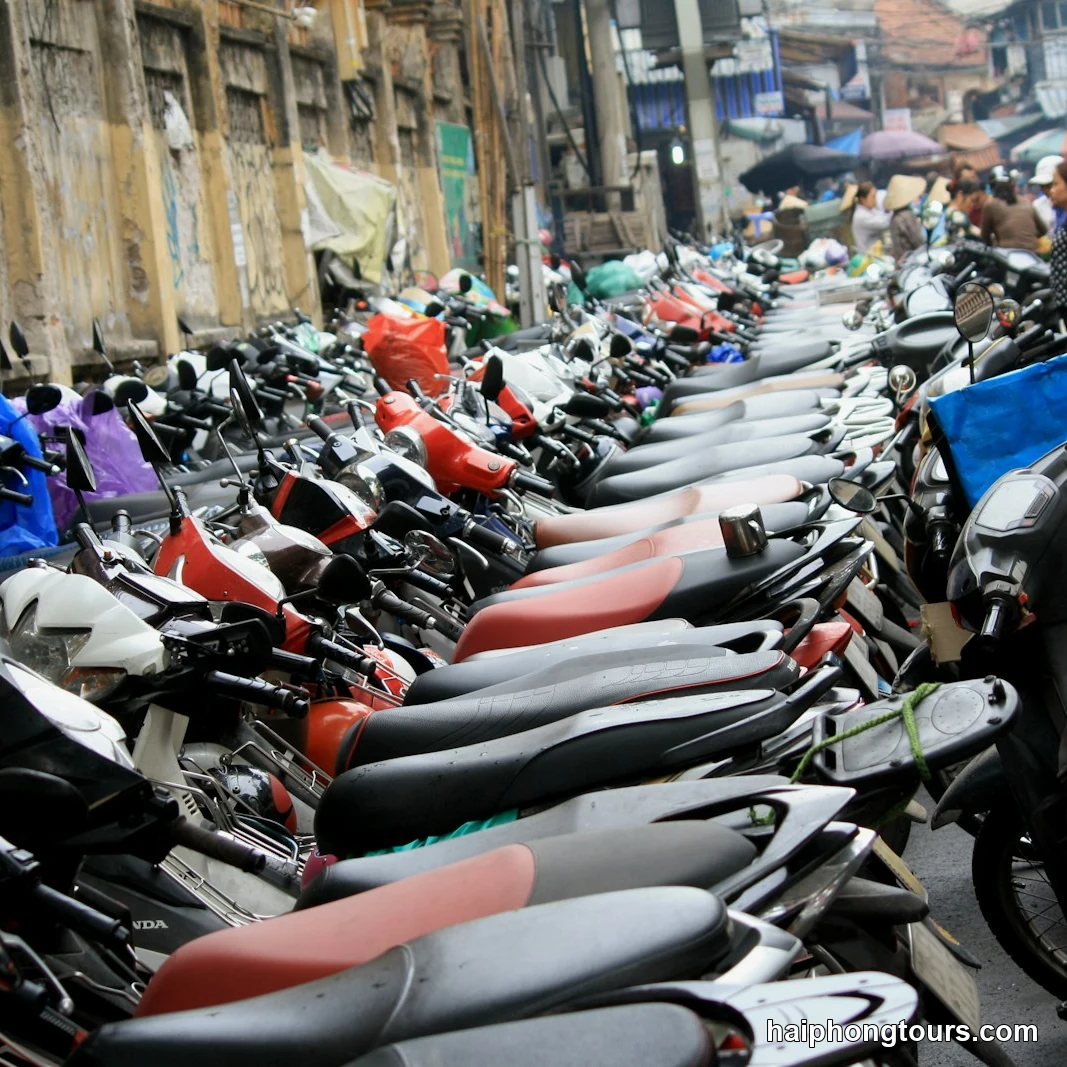
The hard Area 1 evening closure still applies to motorbikes of every fuel type unless the vehicle is legally exempt. A ride-hailing app may move its pickup pin, route the driver around the zone or show no convenient driver inside the barrier. Walk to an open road before requesting the ride so the driver does not circle the closure.
A rental motorbike does not create an exception. Follow the same barrier and signs, park only where permitted outside the controlled space, and never leave the vehicle in front of an access gate or on a pavement simply because the destination is close.
Large tour vehicles face an additional timing rule
In the 2026 stage, passenger vehicles with more than 16 seats, excluding public buses and school transport, may operate in the pilot areas only outside the defined peak periods unless Hanoi Police approves the trip in writing. The published peaks are 6:00-9:00 a.m. and 4:00-7:30 p.m. daily.
This matters when a shared tour advertises Old Quarter hotel pickup. A large coach may use a collection point outside the controlled streets, a smaller feeder vehicle or a departure outside the restricted period. Confirm the actual vehicle, meeting point and walking distance instead of treating “Old Quarter pickup” as a promise to stop at every hotel door.
Public transport and walking alternatives
Hanoi reports that 45 public bus routes provide free passenger journeys within Ring Road 1 from July 1, 2026 through June 30, 2027. The scheme excludes tourist and commercial buses. Confirm that your complete journey and boarding method qualify before assuming the fare is zero.
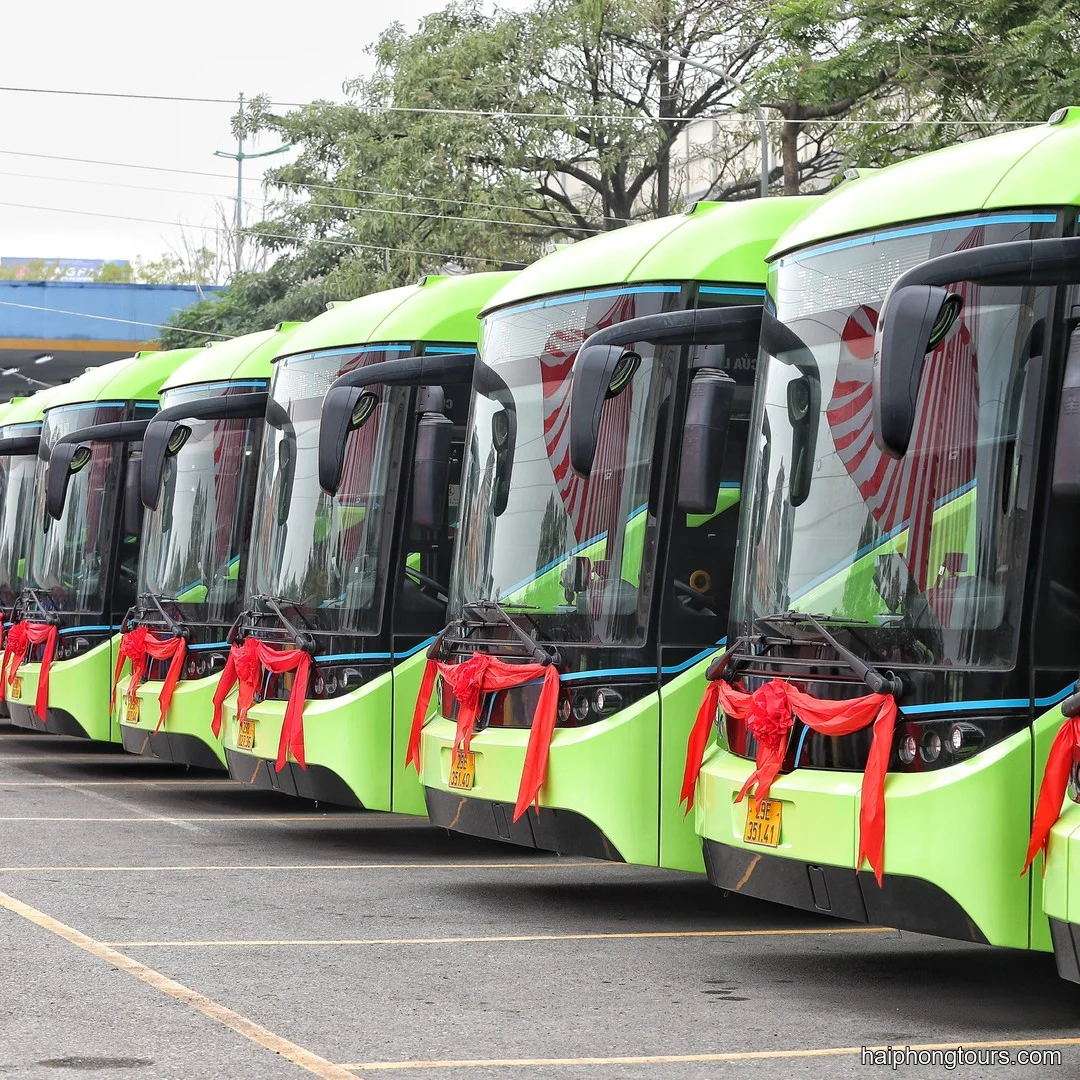
The city also reports that all public buses operating in the low-emission-zone pilot use green vehicles. A bus is most useful when its current stop leaves a manageable walk to your destination; it does not remove the need to check the final street crossing or barrier.
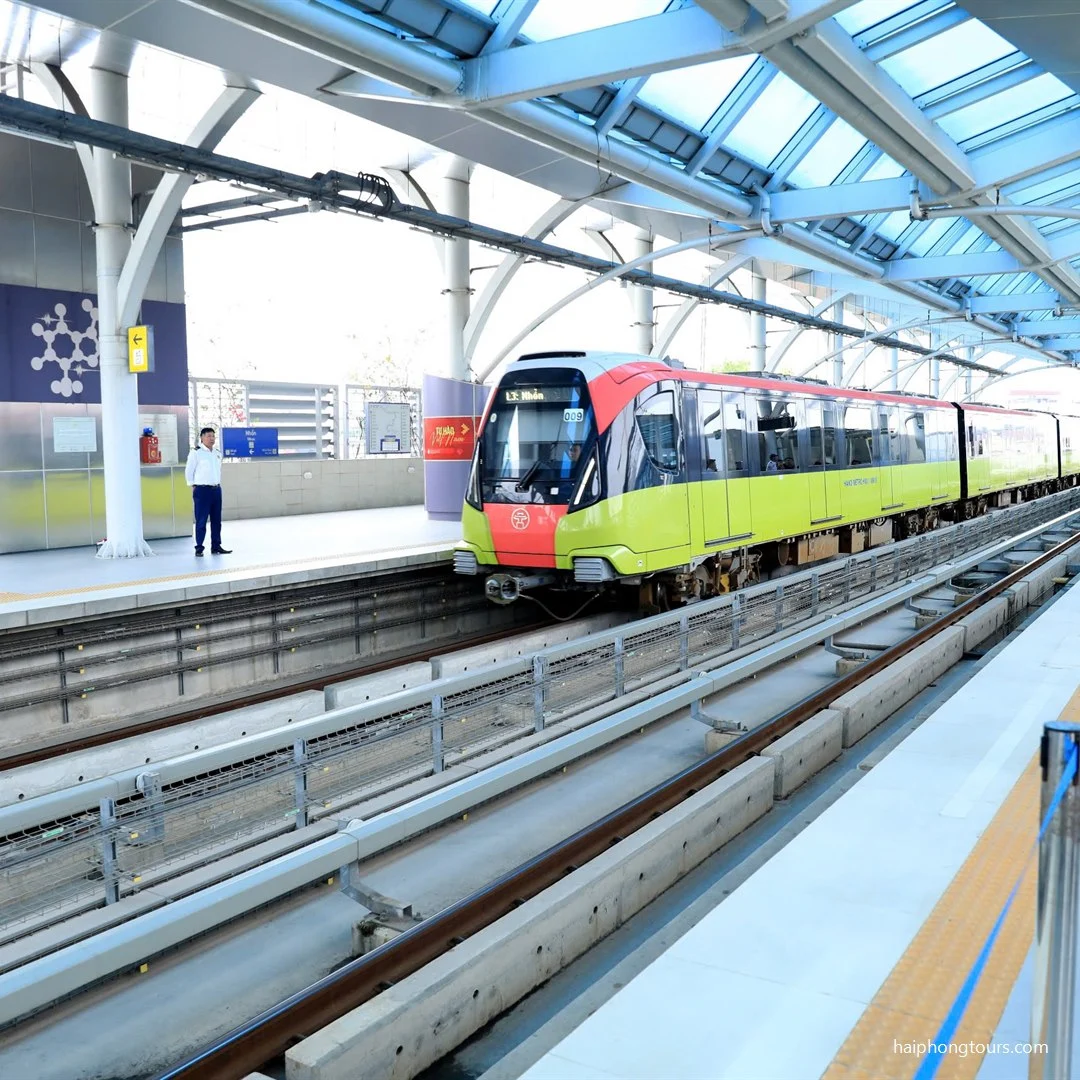
For a short central trip, walking is often the simplest answer. Keep luggage compact, choose a pickup point before leaving the hotel and avoid crossing a busy boundary road simply to meet a car on the wrong side. The Hanoi without a motorbike guide compares walking, bus, metro, taxi and ride-hailing for the rest of the city.
What changes from January 1, 2027
The approved second phase is scheduled to cover Areas 1, 2 and 3 in Hoan Kiem and Cua Nam wards throughout 2027. The planned controls become more mandatory:
- Fossil-fuel motorbikes used for app-based transport are not permitted to circulate within the controlled area.
- Fossil-fuel cars that do not meet emission standard level 4 are not permitted.
- Passenger vehicles over 16 seats continue to face peak-period controls in Areas 1 and 2, apart from public buses and school transport.
- Goods-vehicle restrictions become tighter, including a full prohibition on trucks over 3.5 tonnes within the zone.
National motorcycle and moped emission inspections are scheduled to begin in Hanoi on July 1, 2027. A traveler arriving in 2027 should therefore check the latest city notice, the operating app and street signage rather than using the 2026 pilot as a permanent rule.
The longer expansion toward 2028
From January 1, 2028 through the end of 2029, the low-emission zone is scheduled to expand across the full Ring Road 1 area. The approved plan prohibits motorcycles and mopeds below emission level 3 and fossil-fuel cars below level 4, while continuing the ban on fossil-fuel app-based motorbikes.
The wider Ring Road 1 scope includes Hoan Kiem, Cua Nam, Ba Dinh, Giang Vo, Ngoc Ha, Tay Ho, O Cho Dua, Hai Ba Trung and Van Mieu-Quoc Tu Giam wards. This future boundary should not be presented as the area of the limited 2026 pilot.
Plan a hotel or airport pickup without delay
- Ask the hotel whether a car can reach the entrance at the exact pickup time.
- Check whether the property is in Area 1, Area 2 or only near the zone.
- Obtain a reachable road pin and a named landmark outside any active barrier.
- Tell the operator about luggage, children and mobility limits before accepting a walking pickup.
- Leave the hotel early enough to walk without turning a traffic restriction into a missed flight, train or tour.
- Keep the driver’s contact active and match the vehicle plate at the agreed point.
For a flight, work backward from the required airport arrival time and add the walk to the vehicle. Do not ask a driver to cross a controlled barrier or wait illegally because the original pin was inside the zone.
Final checklist for central Hanoi
- Do not describe the 2026 pilot as a petrol-vehicle ban across all of Ring Road 1.
- Treat Area 1 as vehicle-free from 7:00 p.m. to midnight on Friday, Saturday and Sunday.
- Check the separate pedestrian-street schedule and any event notice.
- Follow live signs, barriers and police directions over an old route screenshot.
- Move taxi, car and motorbike pickups to an open street before booking.
- Confirm how a large tour vehicle handles peak-period access.
- Recheck the rules for any journey on or after January 1, 2027.
Useful guides for your trip
Would you like help fitting this experience into your trip? Contact us with your travel dates, starting point, available time and group size. Tell us about walking limits or special interests so we can suggest a practical itinerary.