
A Hanoi Metro one-day ticket is most useful when you expect several separate metro journeys on the same purchased day and want one time-based entitlement instead of repeated single-ticket purchases. Before buying, confirm the current official validity rule, eligible passenger identity, accepted gate medium, and exact line. Do not choose it only because the word “unlimited” sounds convenient.

Map the trips you will realistically make, including the return to your accommodation. If most sights still require long taxi or bus connections from the stations, separate single journeys may remain simpler. Hanoi Metro’s current FAQ or app should decide the ticket rule; an old price screenshot should not.
Count journeys rather than attractions
Write each metro entry and exit as one journey. A day with an outbound ride, a midday repositioning ride, and an evening return creates a stronger use case than a simple out-and-back trip. Walking between nearby places does not add metro value, and a taxi leg should not be counted as a metro journey.
Check station locations before buying. A destination described as being “near the metro” may still involve an unsuitable walk, a road crossing, or another vehicle. Include the travelers’ mobility, heat, rain, luggage, and the time needed to reach the platform.
Check the current ticket conditions
- Confirm that the day ticket is currently offered for the line you intend to use.
- Check when validity begins and when it ends; do not assume it lasts 24 hours.
- Identify whether the ticket is tied to an app identity, chip identity card, NFC medium, or another supported method.
- Confirm the passenger category and whether setup must be completed before purchase.
- Check the same-day price only in the official system or at the station.
The electronic identity rollout applies to Line 2A, and the current medium can depend on ticket type and passenger eligibility. Do not generalize one passenger’s setup to every traveler or every Hanoi rail service.
Set up the passenger before payment
A time-based ticket should be connected to the person who will travel. Complete the current identity or eligibility step first, then review the passenger name or account before paying. If a companion is purchasing, make sure the pass is not attached to the purchaser by mistake.
Foreign-passport verification can require processing time. A visitor whose registration is still pending should ask uniformed staff about the current counter-issued single-ticket fallback rather than sharing a passport image with an unofficial helper. A single paper QR solves a journey; it does not create day-ticket eligibility.
Use one medium consistently at the gates
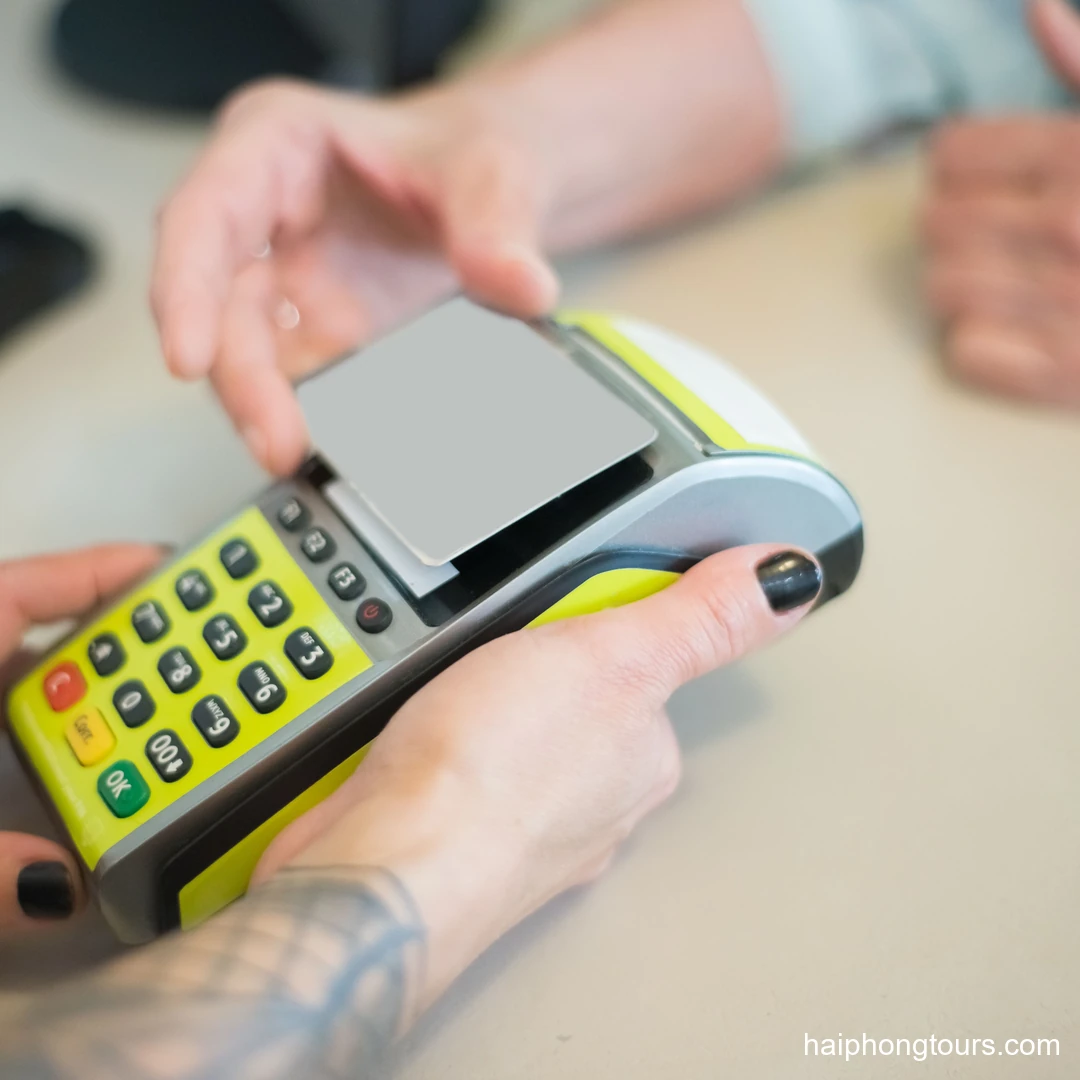
Know whether the entitlement is presented as an app QR, supported chip identity card, NFC medium, or another method confirmed by the system. Use that same valid medium for entry and exit. Mixing media can leave the entry and exit records unmatched.
Prepare before reaching the reader. Open the correct QR, increase screen brightness if needed, or take the approved card out of a wallet containing other contactless cards. Present it steadily and wait for the gate response. Do not slap, swipe repeatedly, tailgate, or force the barrier.
Plan for a rejected entitlement
If the gate rejects the day ticket, stop and move aside. Keep the app screen or card available and tell uniformed station staff whether the failure occurred at entry or exit. Staff need the ticket type, passenger identity medium, station, line, and journey state to diagnose the problem.
Do not buy duplicate tickets until staff checks whether the first tap created a record. If the entitlement is not active, ask what current ticket can be used for that journey. Preserve any receipt or reference and protect passwords, one-time codes, and passport data.
Build a realistic day itinerary
Group destinations by station rather than zigzagging simply to use the pass. Leave a buffer for walking, security, ticket checks, platform access, and the published service interval. An unlimited ticket does not create unlimited operating hours or guarantee an immediate train.
Keep the last practical return in mind without turning this article into a last-train timetable. Check the official service information on the travel day. A disruption, temporary holiday change, or gate problem can alter the plan.
Hai Phong Tours recommends separating the metro calculation from any fixed tour or transfer meeting time. If one missed train would break the booking, build an earlier cutoff and a surface-transport fallback even when the day ticket remains valid.
When separate singles are better
Choose single tickets when you will make only one or two journeys, your schedule is uncertain, identity setup is pending, or most destinations are not practical from the line. Single paper QR tickets can also provide a straightforward fallback for a foreign visitor who cannot yet use an identity-based time pass.
A single ticket may also reduce complexity for a group whose members have different eligibility or media. Do not force everyone onto one product if some travelers cannot set it up correctly.
Final decision checklist
- At least several realistic entries and exits are planned for the same valid day.
- The line and station walks suit every traveler.
- The current price and validity have been checked officially.
- The intended passenger’s identity and medium are ready.
- The same medium can be used at entry and exit.
- A rejected-gate and missed-connection fallback is prepared.
Buy the day ticket when it simplifies a genuine multi-journey plan. Use singles when the itinerary or identity setup does not support that decision. The right comparison is not “unlimited versus limited”; it is one usable entitlement versus the actual journeys you can complete that day.
Useful guides for your trip
Would you like help fitting this experience into your trip? Contact us with your travel dates, starting point, available time and group size. Tell us about walking limits or special interests so we can suggest a practical itinerary.