
Choose a Hanoi museum by subject, not by a universal ranking. Pick the Vietnam Museum of Ethnology for the cultures and traditional architecture of Vietnam’s ethnic groups, the Vietnam National Fine Arts Museum for art, the Vietnamese Women’s Museum for social and family history, or Hoa Lo Prison Relic for a focused visit to one difficult historical site.
For a larger specialist collection, set aside a separate journey to the new Vietnam Military History Museum. Choose Hanoi Museum when the capital itself is your subject. The Vietnam National Museum of History normally provides the broadest national timeline, but its ancient-history building at 1 Trang Tien is currently closed for renovation; only the modern-history site at 216 Tran Quang Khai is confirmed open.
Hanoi museums at a glance
The visit lengths below are planning estimates, not official limits. They assume time to read a useful selection of labels without studying every object.
- Vietnam Museum of Ethnology: ethnic cultures, daily life and traditional houses; Nguyen Van Huyen Street in western Hanoi; allow about 2.5–3.5 hours; normally closed Monday and during the Lunar New Year holiday.
- Vietnam National Museum of History: currently the mid-19th century to the present at 216 Tran Quang Khai; central Hanoi; allow about 1.5–2 hours for the open site; avoid Monday unless the museum confirms otherwise.
- Vietnam National Fine Arts Museum: painting, lacquer, sculpture, graphic art and ceramics; 66 Nguyen Thai Hoc; allow about 1.5–2 hours; normally closed Monday.
- Vietnamese Women’s Museum: women in family life, history and fashion; 36 Ly Thuong Kiet; allow about 1.5–2 hours; normally open daily.
- Hoa Lo Prison Relic: the preserved prison site, colonial detention and later wartime history; 1 Hoa Lo; allow about 1–1.5 hours; normally open daily.
- Ho Chi Minh Museum: the life of Ho Chi Minh in its wider Vietnamese and international context; 19 Ngoc Ha in Ba Dinh; allow about 1.5–2 hours; normally closed Monday and Friday.
- Vietnam Military History Museum: military history, campaigns, objects and large equipment; Km 6+500 Thang Long Avenue; allow about 2.5–4 hours plus transport; normally closed Monday and Friday.
- Hanoi Museum: the natural setting, people, history and development of the capital; Pham Hung Street; allow about 2–3 hours; normally closed Monday.
Holiday schedules, maintenance and temporary exhibitions can change the usable route. Check the museum’s own notice on the day before relying on these regular patterns.
Central museums for a shorter visit
Staying near the Old Quarter does not make every museum walkable. These central choices are easier to reach than the three western museums, but Hanoi traffic, road crossings and midday breaks still matter.
Vietnamese Women’s Museum: social history through lived experience
This museum organizes its permanent displays around women in the family, women in history and women’s fashion. That makes it a useful choice if you want personal stories, work, belief, clothing and social roles rather than a dynasty-by-dynasty account.
The museum is near Hoan Kiem Lake on Ly Thuong Kiet Street and publishes daily opening. It fits a central half-day without requiring a cross-city transfer. Temporary exhibitions may add another subject, so check what is showing if that affects your choice.
Choose it when: you want accessible social context and a theme broader than war alone.
The Vietnamese Women’s Museum visitor guide explains how to read the family, history and textile displays, choose English interpretation and plan a focused central-Hanoi visit.
Vietnam National Fine Arts Museum: history read through art
The Fine Arts Museum follows Vietnamese artistic development from prehistoric material to modern work. Its displays include painting, lacquer, sculpture, graphic art and other media, so it rewards close looking more than rapid checklist sightseeing.
Its Nguyen Thai Hoc location is near the Temple of Literature, which makes those two places a sensible geographic pairing. They are separate attractions with separate tickets and schedules. The museum normally opens Tuesday through Sunday from 8:30 to 17:00.
Choose it when: the visual language of Vietnam interests you more than military hardware or a continuous political narrative.
Hoa Lo Prison Relic: one place, two historical periods
Hoa Lo is a preserved historical relic, not a broad national museum. Its main story begins with the prison built by the French colonial administration and includes Vietnamese political prisoners; the site was later used for captured American pilots. Because only part of the former prison survives, the experience depends on the preserved spaces, objects and interpretation rather than the scale of the original complex.
The subject includes confinement, punishment and war. It may be emotionally difficult for younger children or sensitive visitors, and it is worth reading the displays instead of treating the site as a brief photo stop. The official visitor rules publish daytime opening from 8:00 to 17:00 every day, including holidays.
Choose it when: you want a concentrated site-specific account and are comfortable with serious material.
Hanoi Police Museum: city policing and modern history
The Hanoi Police Museum at 67 Ly Thuong Kiet focuses on the capital’s police history, investigations and equipment. Its regular admission is free, with Vietnamese, English and French display text. Choose a weekday morning or afternoon and allow for the lunch closure; it is a separate institution from the national People’s Police Museum.
Vietnam National Museum of History: verify the building before you go
The museum’s permanent collection is split by period. The building at 1 Trang Tien covers prehistory through the Nguyen dynasty, while 216 Tran Quang Khai covers the mid-19th century to the present. However, the Trang Tien exhibition has been closed for renovation since 15 December 2025, with no reopening date published.
Choose the open Tran Quang Khai site for modern and revolutionary history. The regular schedule is Tuesday through Sunday, with Monday closed except for separately announced public-holiday openings. The Vietnam National Museum of History visitor guide explains the open collection, the Trang Tien closure and how to follow modern history through newspapers, personal belongings and everyday objects.
The regular published sessions include a midday closure between 12:00 and 13:30. That break makes a late-morning arrival poor for a continuous visit.
Choose it when: modern national history is your priority while Trang Tien remains closed.
Ho Chi Minh Museum: a biographical museum in the Ba Dinh complex
This museum centers on the life and revolutionary activity of Ho Chi Minh, then places that biography within Vietnamese and world events. Its permanent display is thematic as well as chronological, so it is a more focused choice than a general history museum.
The museum belongs to the wider Ba Dinh sightseeing area, but it is not the Mausoleum, the Presidential Palace relic area or the One Pillar Pagoda. Each component has its own access rules. The museum currently publishes morning and afternoon sessions on Tuesday, Wednesday, Thursday, Saturday and Sunday, with a midday break and closures on Monday and Friday.
Choose it when: you specifically want Ho Chi Minh’s life and political context, especially as part of a Ba Dinh visit.
Western Hanoi museums that need dedicated transport
The Vietnam Museum of Ethnology, Hanoi Museum and Vietnam Military History Museum all sit west of the Old Quarter, but they do not form one compact walking cluster. Choose one as the anchor, then check road time before adding another.
Vietnam Museum of Ethnology: culture, objects and architecture
The museum has three substantial areas. The Bronze Drum building introduces Vietnam’s 54 ethnic groups; the Architecture Garden contains traditional structures; and the Kite building expands the view to Southeast Asia and other cultures. English and French accompany Vietnamese in the main Vietnam display.
This mix of indoor galleries and outdoor buildings suits travelers who learn through clothing, tools, ritual objects, domestic spaces and construction. It also makes a rushed one-hour visit a poor fit. Heat or heavy rain can reduce the value of the garden, so use the indoor buildings first when the weather is unstable.
The museum is on Nguyen Van Huyen Street and normally opens from 8:30 to 17:30, Tuesday through Sunday. Special performances and family activities are not guaranteed every day; confirm them separately rather than assuming they are part of admission.
Choose it when: you want cultural diversity and everyday life, with enough time for both galleries and outdoor architecture.
Vietnam Military History Museum: the new site, not the old Flag Tower address
The museum now operates at Km 6+500 Thang Long Avenue in Xuân Phuong. Old guides that send visitors to the former Dien Bien Phu Street site by the Hanoi Flag Tower are outdated.
The new museum presents military history across six chronological themes, from early state formation and defense through the wars of the 19th and 20th centuries to the present. Large equipment and outdoor displays add scale, but also walking distance and weather exposure. Treat the transfer and the visit as a major part of the day.
The official site currently lists opening from 8:00 to 16:30 on Tuesday, Wednesday, Thursday, Saturday and Sunday. It closes Monday and Friday, an unusual pattern that is easy to miss.
Choose it when: military history and large objects are the main reason for your museum day.
The Vietnam Military History Museum visitor guide covers the new Thang Long Avenue site, four important objects, current public visiting days and the bus journey back to central Hanoi.
For a narrower aviation interest, the Air Defense–Air Force Museum on Truong Chinh combines aircraft with radar, anti-aircraft guns and missile equipment. This is a separate collection from the Thang Long Avenue museum. Allow roughly 1.5–2 hours on site and confirm access to both its indoor and outdoor displays.
Hanoi Museum: the capital as the subject
Hanoi Museum is for city history rather than a national survey. Its permanent display follows the capital from its natural setting and early settlement through Thang Long, French–Vietnamese cultural contact, war, reconstruction and contemporary development.
This recommendation changed materially in 2026: the museum reopened its newly completed permanent exhibition on 3 February after an extended period when visitors could not rely on a full permanent display. Current visitor information lists Pham Hung Street and opening from 9:00 to 17:00, Tuesday through Sunday.
Choose it when: you want to understand how Hanoi itself formed and changed, and you can justify the western transfer.
The Hanoi Museum visitor guide explains which collection highlights to prioritize, current admission and when Friday or Saturday evening opening suits your plan. Give this Pham Hung destination its own western-Hanoi travel block.
Lai Xa: village photography and a family museum
The Lai Xa museums guide pairs the village’s photography heritage with the Nguyen Van Huyen family collection. Arrange each museum separately and give this western-suburban outing its own transport block.
Documentary Heritage Space: records and printing
For imperial documents and the history of printing, the free Vietnam Documentary Heritage Space at 12 Dao Tan offers a more focused alternative to a broad museum collection. Arrange a visit through the State Records and Archives Department, and confirm separately if you want an English explanation or a printing activity.
Which combinations make sense?
For art and education
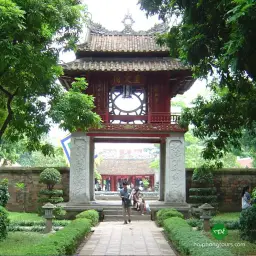
Pair the Fine Arts Museum with the Temple of Literature. The latter is a heritage complex associated with Confucian learning, courtyards and stone stelae, not a conventional museum. The pairing works because the sites are close, not because they share admission or management.
For social history and a difficult historic site
The Vietnamese Women’s Museum and Hoa Lo can fit the same central half-day for a traveler who reads at a moderate pace. The subjects are different, and Hoa Lo is emotionally heavier; use a break rather than treating both as one uninterrupted gallery.
For modern national history
Choose either the open Tran Quang Khai branch of the National Museum of History or the Ho Chi Minh Museum first. Adding both can become repetitive if your main interest is general context rather than detailed 20th-century history.
For western Hanoi
Do not build a three-museum day from Ethnology, Hanoi Museum and Military History simply because all are west of the center. Each needs transport and enough attention to justify the journey. One substantial museum plus a meal or an unrelated stop is usually more realistic.
Museum day or organized Hanoi tour?
A museum day lets you choose the subject and reading pace. A city tour makes more sense when you want transport and several headline sights, but a fixed itinerary is not a substitute for a custom museum route.
The Hanoi City Group Tour includes Hoa Lo Prison in its afternoon program, alongside the Temple of Literature, the outside of Ho Chi Minh Mausoleum and Ba Dinh Square, Tran Quoc Pagoda and egg coffee. Choose the afternoon or full-day option for Hoa Lo; the morning program visits Quang Phu Cau and Train Street instead. Pickup and drop-off are in Hanoi’s Old Quarter.

The Private Hanoi City Tour includes the Ho Chi Minh complex and its museum, followed by the Temple of Literature, Hoa Lo and the Hoan Kiem area. It combines a private vehicle, English-speaking guide and the listed entrance tickets, with Old Quarter hotel pickup. Museum opening days still determine access; confirm any replacement on a closure day rather than assuming the itinerary can include every museum in this guide.
Tour operation and museum admission are separate questions. A tour can run on a day when a museum is closed, during maintenance or when part of a complex is unavailable. Ask for the exact replacement or exterior-only plan before booking a Monday or Friday.
Practical checks before you leave
- Open the institution’s own notice, not only a map listing or search snippet.
- Confirm the exact building and entrance; this is essential for the National Museum of History and Military History Museum.
- Check for a midday closure before planning a continuous late-morning visit.
- Verify temporary gallery closures, last admission and holiday changes.
- Ask about lifts, ramps, seating and accessible toilets if mobility affects the route; an admission concession does not prove step-free access.
- Follow current bag and photography rules at the entrance rather than assuming one museum’s policy applies to another.
- For outdoor-heavy sites, adjust the plan for heat, rain and air quality.
Common questions
Are Hanoi museums open on Monday?
Some are, but many are not. Hoa Lo and the Vietnamese Women’s Museum publish daily opening. Ethnology, Fine Arts, Hanoi Museum and the National Museum of History normally close Monday; the Military History and Ho Chi Minh museums close Monday and Friday. Check a dated notice if you plan to visit during a public holiday.
Is the Vietnam Military History Museum still near the Hanoi Flag Tower?
No. The operating museum is now at Km 6+500 Thang Long Avenue in western Hanoi. The former central address remains common in old articles and map images.
Is Hanoi Museum worth considering now?
Yes if your subject is the capital. Its permanent exhibition officially reopened on 3 February 2026, so older accounts of a largely empty or incomplete display no longer describe the current visitor proposition.
Which museum works when it rains?
Fine Arts, the Vietnamese Women’s Museum, Hoa Lo and the currently open National History building rely mainly on indoor viewing. Ethnology and Military History lose part of their value when outdoor areas are uncomfortable. Heavy rain can still disrupt the road journey to any museum, so check local conditions before crossing the city.
Make the choice
For one central visit, select Fine Arts, the Vietnamese Women’s Museum or Hoa Lo according to subject. Give Ethnology, Military History or Hanoi Museum its own western-Hanoi block. Choose the National Museum of History only with its current building closure in mind, and always verify the museum’s latest notice before departure.