
For Hanoi to Bac Ninh, choose public bus 54 when its stops match your destination, a booked shared vehicle for a suitable city drop-off, or a private car for several temples, a village appointment or a business visit. The right choice depends less on the name “Bac Ninh” than on the exact gate or hotel you need to reach.
A bus to the Bac Ninh urban area does not complete a trip to But Thap Pagoda, Dau Pagoda or a particular industrial park. Decide on the final address first, then compare the transport and any onward connection. If you are landing at Noi Bai, request an airport-origin journey rather than automatically going into central Hanoi to start again.
Pin the destination before comparing vehicles
Bac Ninh can mean the familiar city area or the much wider administrative area, which also includes the former Bac Giang area. Booking systems and older addresses may use different labels. A destination described only as “Bac Ninh” is not precise enough for a reliable transfer quote.
- A city hotel: send its name, street address and map pin. Ask whether the shared service actually drops there.
- But Thap and Dau pagodas: use the individual monument pins in the Thuan Thanh area, now associated with Tri Qua ward. Plan the journey between the two sites as well as the Hanoi return.
- Diem Village: confirm the particular temple, singing venue or host’s meeting point rather than a generic “quan ho” destination.
- A factory or office: provide the company, industrial park, visitor gate and local host’s contact. An industrial park entrance can be a different place from the company’s reception.
If your destination is near Bac Giang, make that clear when booking. Do not use a journey time quoted for the older Bac Ninh city area to plan an appointment farther away.
Public bus 54: Long Bien to Bac Ninh
Route 54 connects Long Bien in Hanoi with Bac Ninh. It uses electric urban buses and runs frequently through the day into the evening. Check the current route and timetable in Transerco’s Tim Buyt service before leaving, including the stop you will use in each direction.
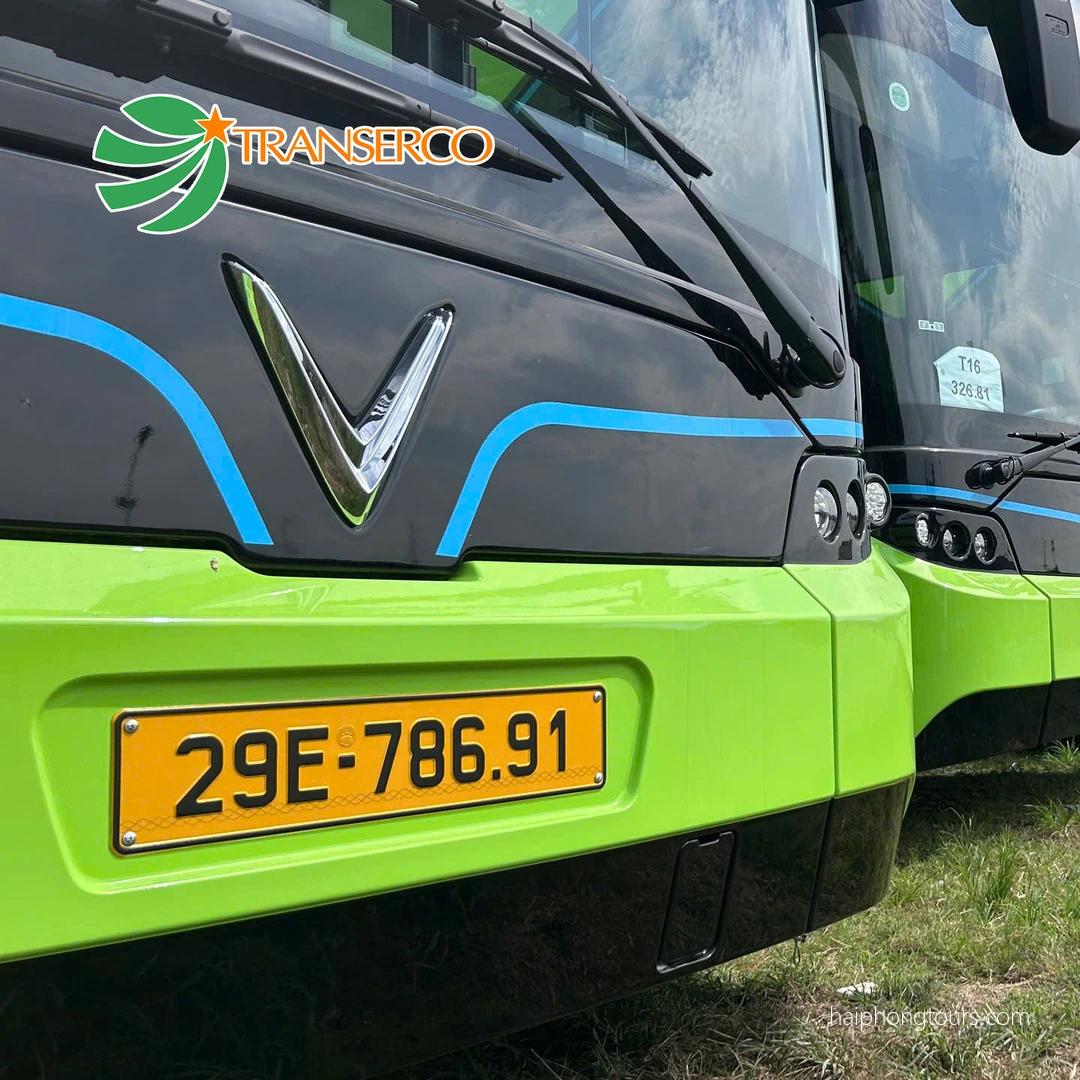 Route 54 connects Long Bien with Bac Ninh; check the stop nearest your destination.
Use the actual bus boarding point, not simply a map search for Long Bien Bridge or Long Bien railway station. Reach the correct side of the road and check that the destination display points toward Bac Ninh. For your return, save the boarding stop separately; it may not be the same pin where you got off.
This is a public transport journey with intermediate stops, not a reserved sightseeing shuttle. It suits a traveler with light belongings, flexible timing and a destination close to the route. With large suitcases, several children or an appointment requiring a precise arrival, weigh the first and last connections before choosing it.
The electric vehicles have low floors, but that alone does not guarantee an easy journey for every wheelchair user. The pavement, boarding position, available space and final walk still matter. Check the specific journey if step-free access is essential.
Shared limousines: inspect the drop-off, not just the route name
Shared services may sell Hanoi–Bac Ninh seats while using different city or roadside stops. Listings can show places such as Cau Bo Son, Cau Dai Phuc or Vincom Bac Ninh. These are different arrival points, and a short advertised running time between two stops is not your hotel-to-hotel travel time.
Before buying, ask where to meet in Hanoi, whether any feeder vehicle is involved, and how you will get from the final stop to your destination. A seat in a limousine does not by itself include door-to-door collection or a taxi after arrival.
Compare the total for your group: all passenger seats, luggage charges if applicable, the ride to the departure point and the final connection. A shared service can be good value when both stops fit. It becomes less convenient if you must cross Hanoi to board and then arrange another substantial ride in Bac Ninh.
Check the return separately. Do not assume that the vehicle will collect you from the same side of a bridge or that a driver dropping passengers can wait while you visit a temple.
The Five Gates Train is a cultural outing
The Hanoi Five Gates Train offers a structured sightseeing journey toward Tu Son and Do Temple. Consider it when the train and cultural program are the reason for your visit. Check the dated itinerary and return arrangements rather than treating an excursion ticket as a flexible one-way transfer to a Bac Ninh hotel, factory or unrelated pagoda.
Private car: one destination or a full day with waiting?
A one-way transfer suits a hotel arrival or an appointment where your host can organize the next journey. A car retained for the day is more useful when you want to connect several sites and return to Hanoi. Ask for those as different services so the price and waiting arrangement are clear.
For a sightseeing day, send an ordered list of stops, the approximate time needed at each, a lunch break and the final drop-off. Confirm parking, waiting limits and the cost of changing the plan. If a workshop or singing session is involved, book the appointment before fixing the driving sequence.
Hai Phong Tours recommends grouping the day around one part of Bac Ninh. Combining the Thuan Thanh pagodas, Diem Village and a distant business appointment can create more time in the car than the short distance from Hanoi initially suggests.
For But Thap, Dau and a craft visit
Use the But Thap and Dau pagoda guide to choose the stops. A car with agreed waiting and return transport keeps the two monuments together; a confirmed Dong Ho printing appointment can be considered if the day’s pace allows.

Do not book a generic Bac Ninh city drop-off and expect to walk between these sights. Ask the driver to confirm practical parking and a meeting point for collection. A driver and an English-speaking heritage guide perform different roles, so request interpretation explicitly if you want detailed explanations inside the monuments.
For a quan ho visit
A visit to Diem Village does not guarantee a performance. Arrange the host, location and start time first, then build the transfer around them. The Diem Village and quan ho guide explains the difference between a village encounter and a scheduled theater or boat program.

If the program ends in the evening, confirm the return car or the last workable public transport connection before attending. Do not rely on finding a vehicle at the end of an event in an unfamiliar village.
For a factory or business appointment
Send the driver the visitor entrance and ask your host about registration requirements. Allow time for security and walking from the drop-off to reception. If several people arrive from different hotels, agree on the pickup order rather than assuming each booking starts at the same time.
Decide whether the driver waits, returns at a fixed time or ends the service after drop-off. For a meeting with an uncertain finish, establish how to extend waiting and what notice the driver needs. A local contact who can explain the gate in Vietnamese is particularly useful.
Arriving at Noi Bai instead of central Hanoi
If your first hotel or appointment is in Bac Ninh, compare a direct airport pickup with the complete public transport alternative. Going into the Old Quarter solely to catch a second vehicle may create an unnecessary detour. Route 54 starts at Long Bien; it is not a direct Noi Bai airport bus.
Provide the flight number, arrival terminal, date and final address. Confirm when waiting time starts, how the driver handles a flight delay, and how to make contact after collecting luggage. A city pickup price should not be assumed to include an airport meeting or parking.
Plan the return before leaving Hanoi
For a short visit, choose one main cultural area or appointment and build the return around it. Add time for Hanoi traffic rather than treating a favorable map estimate as a guaranteed arrival. Festival days and busy temple visits may also change where vehicles can wait.
Keep a flight or train connection separate from an open-ended sightseeing plan. If you must continue directly to Noi Bai, name the airport as the final destination when requesting the car, reduce optional stops and follow your airline’s check-in allowance.
The most useful booking message contains your starting point, exact destination, passenger and bag count, required arrival time, and whether you need a return or waiting service. Once those details are settled, compare the bus, shared vehicle and private-car options on the same complete journey.
Useful guides for your trip
Would a private transfer make this journey easier? Contact us with your travel date, exact pickup and drop-off, number of travelers and bags. Include any flight, train or cruise deadline so we can assess a suitable plan and quotation.